
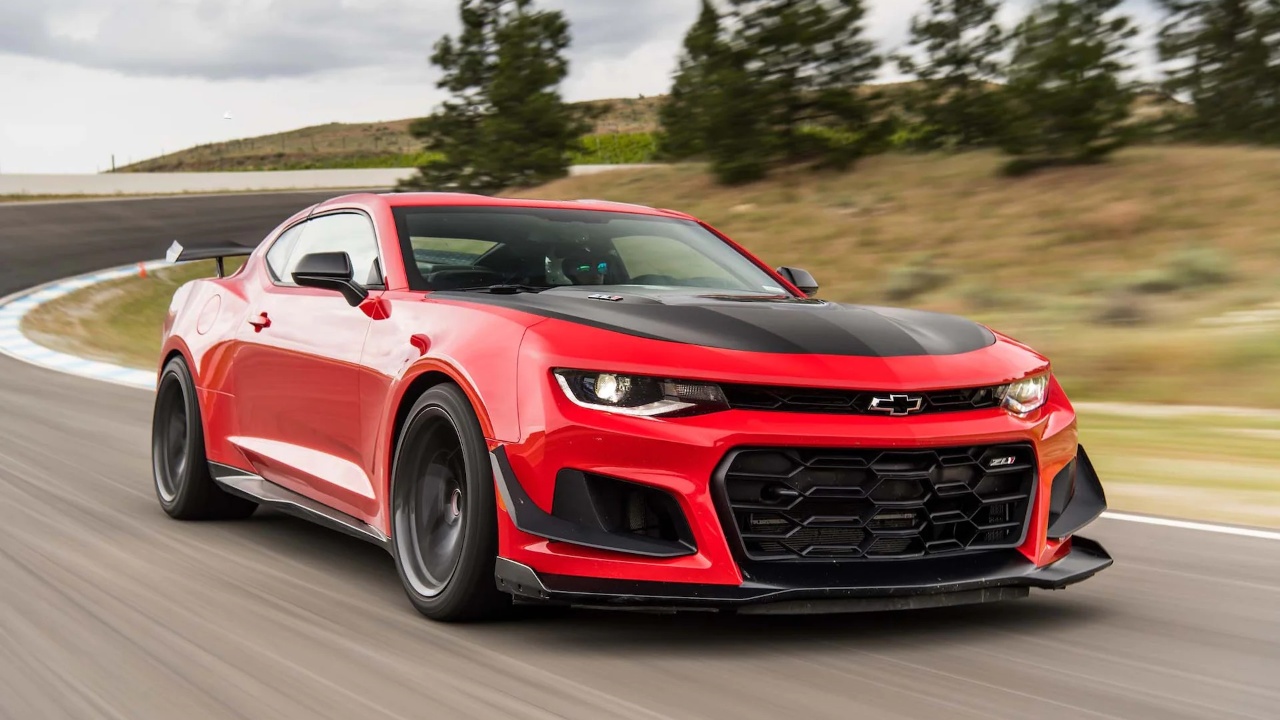
Chevrolet’s Camaro could return in a form that would have been almost unthinkable when the sixth-generation car ended production: a four-door performance sedan.
General Motors is reportedly developing a next-generation Camaro on a rear-wheel-drive architecture, with the most recent reporting pointing toward a four-door layout and a launch around the 2029 model year.
One caveat belongs up front. Although a long list of outlets has covered the story, nearly all of them trace back to a single origin, GM Authority, which has been tracking the program through industry sources. Car and Driver’s August 6 report, for instance, credits GM Authority’s reporting. So the volume of coverage reflects one sourcing chain repeated widely, not several publications independently confirming the same information.
General Motors has not released specifications, images, pricing, or a launch date for the next Camaro, and Chevrolet has previously declined to comment on speculative future-product reports.
Why Chevrolet May Be Considering a Four-Door Camaro
The headline change would be the move from a two-door coupe to a four-door sedan. For enthusiasts, that is a major departure from the formula that has defined the nameplate since its introduction for the 1967 model year. In nearly six decades, the Camaro has never been offered with four doors.
GM Authority’s sources describe a car roughly comparable in size to the Chevrolet Malibu or the short-lived Chevrolet SS, which puts it closer to a performance sedan than a traditional pony car.
There is a clear business logic behind the shift. The American market has moved steadily away from two-door cars. SUVs, crossovers, and pickups dominate new-vehicle sales, and automakers have thinned out their passenger-car portfolios in response. Even performance brands have had to rethink how they package sporty vehicles for buyers who want more practicality.
The Dodge Charger offers the closest parallel, though the history is often garbled. The Charger sold from 2011 to 2023 was a four-door sedan; the two-door of that era was the Dodge Challenger. Both were discontinued, and Dodge then revived the Charger name in 2024, launching a two-door first and adding a four-door version afterward. The result is a modern American muscle car available with rear doors, and evidence that the format can work commercially.
A four-door configuration could give Chevrolet access to buyers who want a performance car but cannot live with the compromises of a coupe. A usable rear seat, easier access, and better everyday practicality would make the Camaro far more credible as a daily driver.
It would also change who the Camaro competes against. Rather than making it a more direct Mustang rival, four doors would move the Camaro away from head-to-head competition with Ford and put it squarely against the Charger. Ford continues to sell the Mustang primarily as a two-door, which would leave it as the last mainstream two-door American muscle car if these reports prove accurate.
One detail remains unsettled: whether a four-door would replace the coupe entirely or sit alongside it. GM Authority’s reporting describes four doors in place of the traditional two-door layout, and Car and Driver has followed that framing. Other outlets have read the same reporting as describing a four-door added to the lineup rather than replacing the coupe. Chevrolet has confirmed neither version.
What none of the reporting suggests is that Chevrolet is walking away from performance.
Rear-Wheel Drive and Possible V8 Power Could Preserve the Camaro’s Character
The most encouraging detail for traditional Camaro fans is the platform.
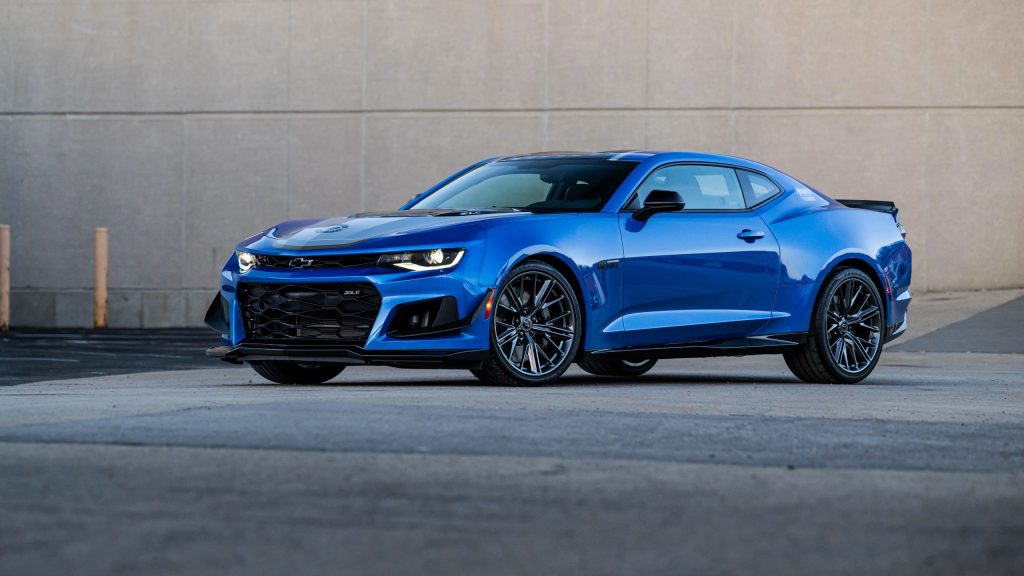
The next Camaro is expected to use GM’s Alpha 2 rear-wheel-drive architecture, an updated version of the Alpha platform that underpinned the sixth-generation car. The same architecture is expected to carry the next-generation Cadillac CT5 and a new Buick sedan, with production centered on GM’s Lansing Grand River plant in Michigan, the facility that built the last Camaro and currently builds the Cadillac CT4 and CT5.
Sticking with rear-wheel drive would preserve one of the fundamental characteristics of the nameplate. The outgoing sixth-generation car used the original Alpha architecture, which gave it strong handling and a clear performance identity regardless of trim.
The powertrain story is less certain. The same reporting points to both automatic and manual transmissions and a high-performance V8, which would give the Camaro a real advantage in a market where enthusiast-oriented choices keep shrinking. That information comes from the same GM Authority sourcing behind the four-door claim, so it should be treated as unconfirmed.
GM’s continued spending on V8 engineering makes it plausible, though it is not proof. In May 2025, the company announced an $888 million investment in its Tonawanda Propulsion plant near Buffalo, New York, to produce the sixth generation of its small-block V8. It was the largest single investment GM has ever made in an engine plant, and it followed a $579 million commitment to Flint Engine in Michigan for the same engine family.
GM framed both investments around full-size trucks and SUVs rather than performance cars, so neither says anything directly about the Camaro. What they do establish is that GM has committed roughly $1.5 billion to a new V8 architecture entering production in 2027, meaning the engineering will be available well into the next decade.
A rear-wheel-drive, V8-powered four-door Camaro would be a very different vehicle from the last one, but it could still retain the mechanical character that made the nameplate famous. It would also put Chevrolet in an unusual position: instead of recreating the old Camaro, GM would be building a performance sedan that pairs muscle-car hardware with conventional four-door practicality.
How the Camaro’s Return Came Together
The Camaro ended production after the 2024 model year, with the last sixth-generation car built at Lansing Grand River in January 2024. Chevrolet said at the time that it was not announcing an immediate successor, which left the nameplate’s future genuinely uncertain.
That changed in 2026. In April, MotorTrend reported, again citing GM Authority, that GM had approved a Camaro successor on the Alpha platform, with production possibly starting at Lansing Grand River in fall 2027 as a 2028 model. Chevrolet declined to comment when contacted. Car and Driver reported the same month that the Camaro was planned alongside a next-generation Cadillac CT5 and a new Buick sedan, all sharing the updated architecture.
The August reporting revised that timeline to a 2029 model year and added the four-door claim. A delay of that length would give GM more time to finalize engineering and positioning, which is consistent with developing a new body style on the platform.
For Chevrolet, a four-door may be what makes the Camaro financially viable in a market that has become punishing for traditional coupes. For enthusiasts, the question is whether a four-door Camaro can still feel like a Camaro. Rear-wheel drive, an available manual, and a V8 would preserve much of the mechanical character; four doors would change the car’s identity in a way no previous generation ever has.
For now, the accurate summary is a narrow one. GM Authority reports that GM is developing a four-door, rear-wheel-drive Camaro for 2029, and other outlets have amplified that reporting. Chevrolet has confirmed none of it: not the body style, not the timing, not the powertrain.
If the project reaches production as described, it would set up one of the more interesting performance-car matchups in years, with Ford holding the two-door line and Chevrolet and Dodge both betting that American muscle can have rear doors.
