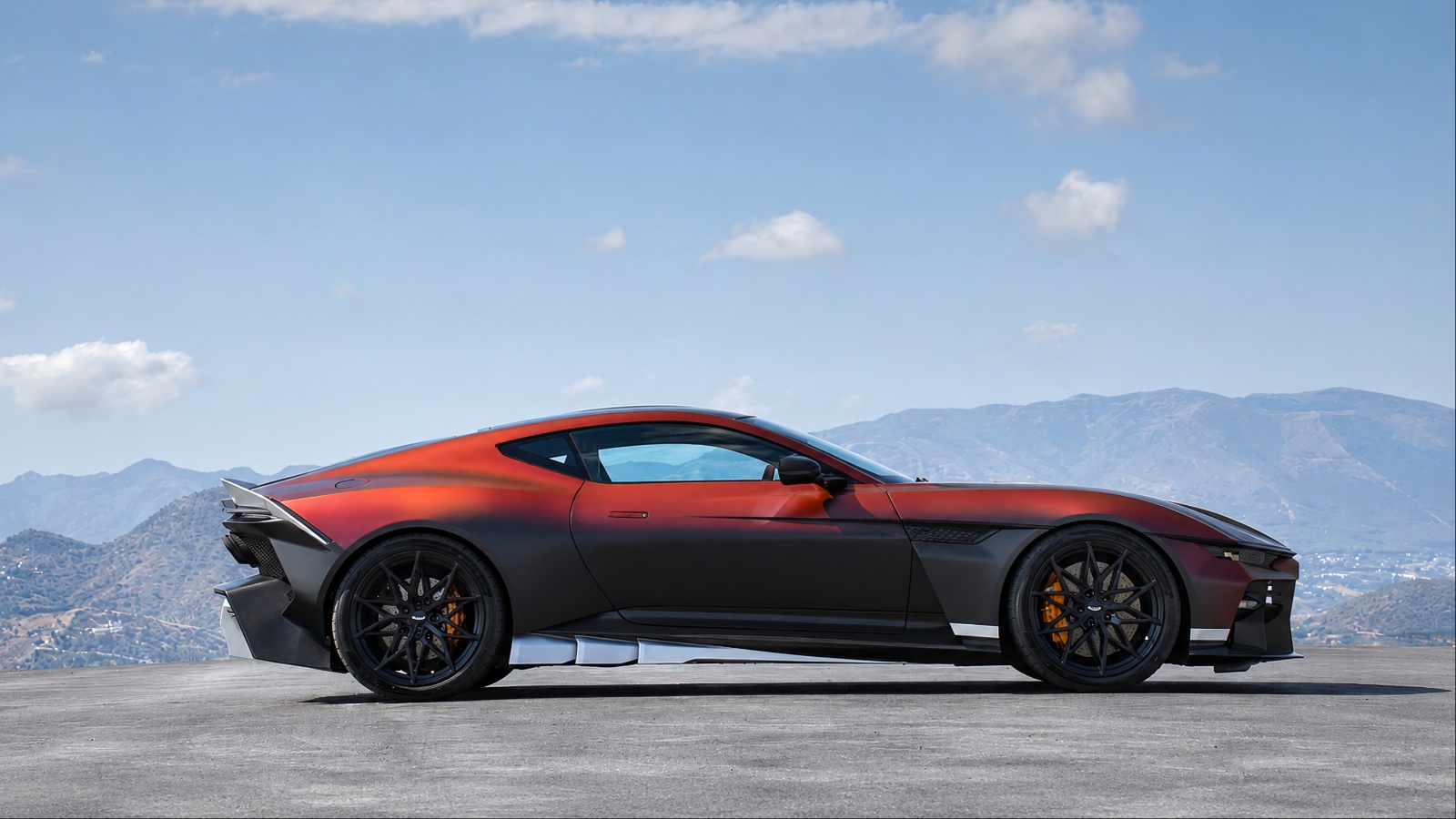
Aston Martin has introduced the Valen, an ultra-exclusive V12 performance car based on the current Vanquish. It adds another dramatic special edition to the automaker’s growing lineup of limited-production models.
Revealed during Monterey Car Week, the Valen takes the front-engine Vanquish formula and pushes it toward a much more aggressive performance character, combining a 625-kW twin-turbocharged V12 with extensive weight reduction, carbon-fiber bodywork, and heavily revised chassis hardware.
The numbers immediately make the Valen stand out. Its 5.2-liter twin-turbo V12 produces 850 PS, equivalent to approximately 838 horsepower, and 1,000 Nm of torque. Aston Martin says the car can accelerate from 0 to 60 mph in around 3.0 seconds and reach an electronically limited 214 mph.
According to Car and Driver, the Valen also sheds roughly 243 pounds compared with the standard Vanquish, making the new model considerably more focused despite sharing the same fundamental platform.
Production will be limited to only 150 examples worldwide, turning the Valen into a collector-focused model from the beginning. First deliveries are expected in the second quarter of 2027.
The Vanquish Gets a Much More Aggressive Transformation
Valen is not an entirely new platform. It is based on the current Vanquish, Aston Martin’s front-engine V12 flagship, but almost every aspect of the car has been reconsidered to make it more dramatic and performance-oriented.
The standard Vanquish already has formidable specifications. Aston Martin’s own technical information lists its 5.2-liter twin-turbo V12 at 835 PS and 1,000 Nm, with a 214-mph top speed and a 0-to-62-mph time of 3.3 seconds.
The Valen, therefore, does not rely on an enormous increase in engine output alone. Instead, Aston Martin has combined a modest power increase with substantial weight reduction and aerodynamic changes.
According to Road & Track, the Valen’s V12 produces 838 horsepower and 737 lb-ft of torque, while the car loses approximately 250 pounds through the extensive use of carbon fiber, magnesium, aluminum, and titanium.
That combination is important because reducing weight can improve acceleration, braking, cornering response, and driver feel without requiring another major increase in engine output.
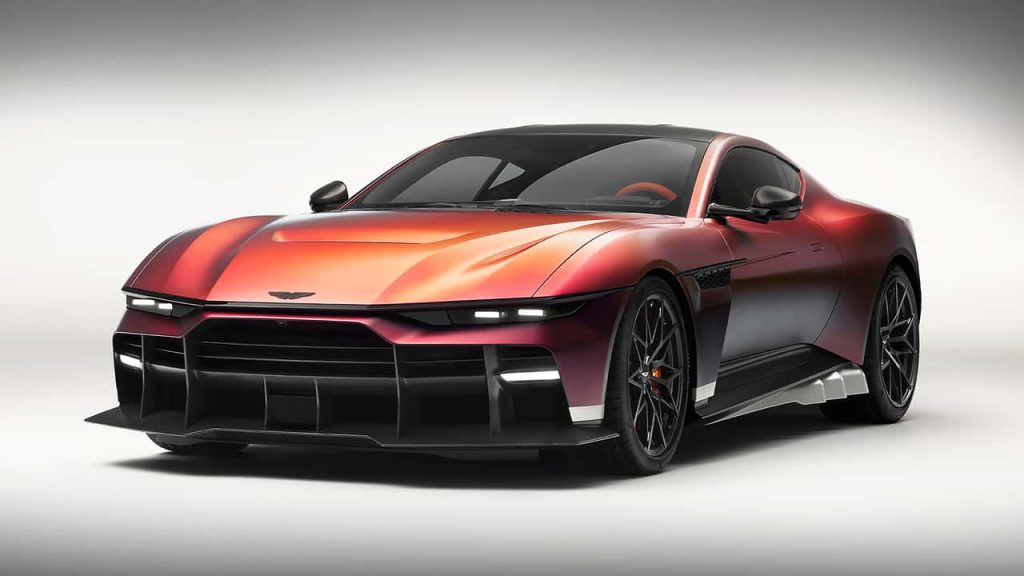
The bodywork is one of the most obvious differences. Aston Martin has replaced much of the standard Vanquish’s visual restraint with a much more aggressive design featuring a large front splitter, exposed carbon-fiber sections, revised lighting, aerodynamic elements, and a fixed rear wing.
The rear design also eliminates the conventional rear window, with a camera system providing the driver with rearward visibility. Car and Driver reported that the redesigned body contributes significantly to Valen’s more purposeful character.
The company has also developed a special titanium exhaust system with four outlets. According to Car and Driver, Aston Martin says the Valen’s exhaust is approximately 50% louder than the standard Vanquish, giving the V12 an even more pronounced character.
The system uses 3D-printed components, adding another piece of advanced manufacturing technology to a car that is deliberately built in extremely small numbers.
Underneath, the changes continue. The Valen receives revised suspension tuning, Bilstein DTX semi-active dampers, carbon-ceramic brakes, and specially selected Pirelli performance tires. It also rides on 21-inch magnesium wheels, which help reduce unsprung mass compared with heavier conventional wheels.
Autoweek reported that the car offers Sport, Sport+, and Track driving modes, giving drivers different levels of performance calibration depending on how the car is being used.
That hardware matters because the Valen is still a front-engine, rear-wheel-drive car. With 850 PS being sent through the rear axle, managing traction and maintaining predictable handling becomes just as important as producing power.
A V12 Statement as Aston Martin Moves Into a New Era
The Valen arrives at an interesting point in Aston Martin’s history. The company is simultaneously developing electrified performance cars while continuing to invest in its V12-powered flagship models.
Aston Martin’s Valhalla, for example, uses a plug-in hybrid powertrain combining a twin-turbo V8 with three electric motors for a total output of 1,012 PS. The company’s official material describes Valhalla as its first plug-in hybrid and part of its broader transition toward electrified performance.
The Valen takes the opposite approach. There is no hybrid system being used to increase its output. Instead, it represents an increasingly rare formula: a large-displacement internal-combustion V12, rear-wheel drive, and a conventional automatic transmission.
That makes the car significant beyond its performance figures. Aston Martin has repeatedly emphasized the importance of its V12 lineage.
In March 2026, the company marked 25 years of the modern Vanquish nameplate and noted that the latest generation remains the most powerful flagship production model in its history, with 835 PS and 1,000 Nm.
The Valen pushes that formula further while giving Aston Martin’s bespoke division another opportunity to demonstrate what can be achieved when production volume is no longer the primary objective.
The project was developed by Aston Martin’s Q division together with its Special Vehicle Operations department. Man of Many reported that the Valen represents the most powerful front-engine production Aston Martin yet built, while production will be restricted to 150 cars worldwide.
The exclusivity is therefore not simply about creating an expensive version of the Vanquish. Each Valen is intended to be highly personalized. Aston Martin’s Q operation allows customers to specify unusual combinations of materials, colors, and finishes, while the Valen’s interior incorporates lightweight components and 3D-printed details.
Pricing has not been officially disclosed by Aston Martin, although reports have placed the car in the multimillion-dollar range. Car and Driver reported a starting price of around $2 million, while other publications have described it as a seven-figure special without citing an official price.
That distinction matters because Aston Martin has not positioned the Valen as a mass-market performance model. With only 150 cars being produced, its primary competition is not simply other high-performance coupes.
It is competing for the attention of collectors who increasingly seek cars with rarity, bespoke construction and a distinctive mechanical identity.
The Valen also shows how Aston Martin is using limited-production models to extend the life and appeal of its core platforms.
Rather than developing an entirely separate architecture, the company has taken the Vanquish’s aluminum structure and V12 powertrain and transformed them through extensive changes to the body, suspension, wheels, exhaust, and interior. Performance is consequently only part of the story.
The Valen’s 214-mph top speed matches the figure already achieved by the standard Vanquish, but the special model is designed to feel more intense rather than simply being faster in a straight line.
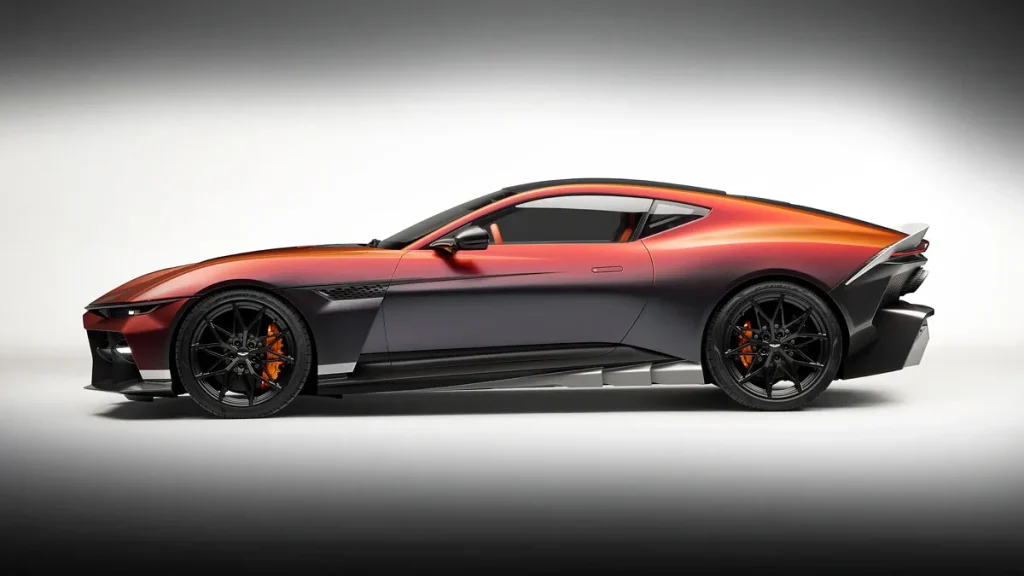
Its lower weight, revised suspension, aerodynamic bodywork, specialized tires and louder exhaust all contribute to that objective.
And while the automotive industry continues its rapid movement toward electrification, Aston Martin is using the Valen to demonstrate that there is still room for an uncompromising V12 at the very top of the market.
With production restricted to 150 cars and deliveries scheduled for 2027, the Valen is likely to become one of the rarest modern Aston Martins almost immediately.
More importantly, it serves as a statement about the company’s approach to ultra-luxury performance: electrification may define part of its future, but for customers who want the traditional Aston Martin experience, the V12 is not disappearing quietly.