
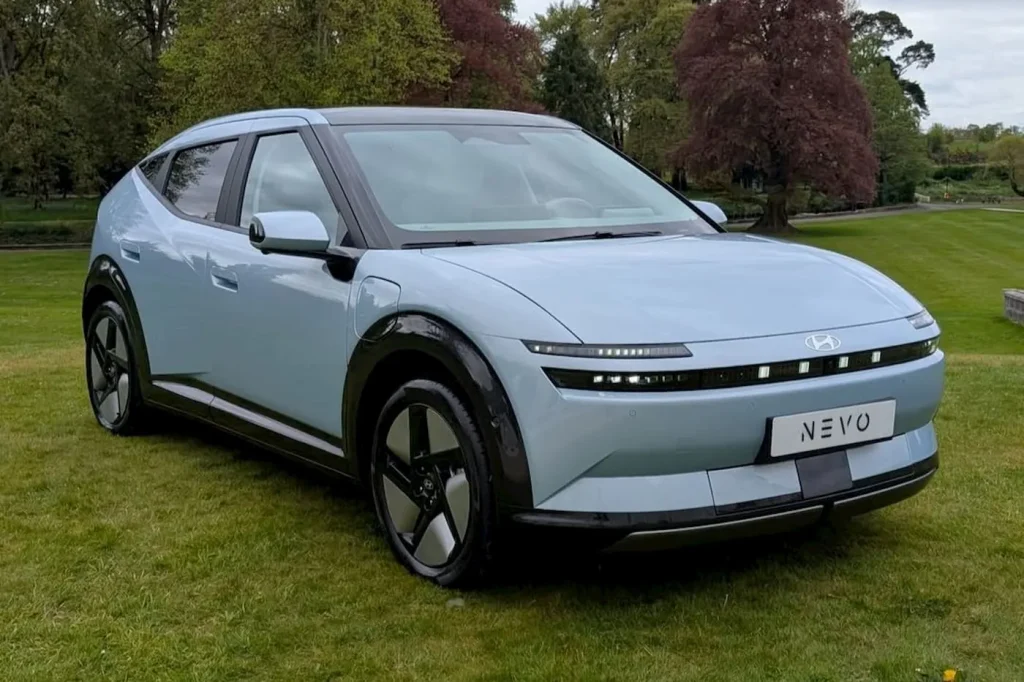
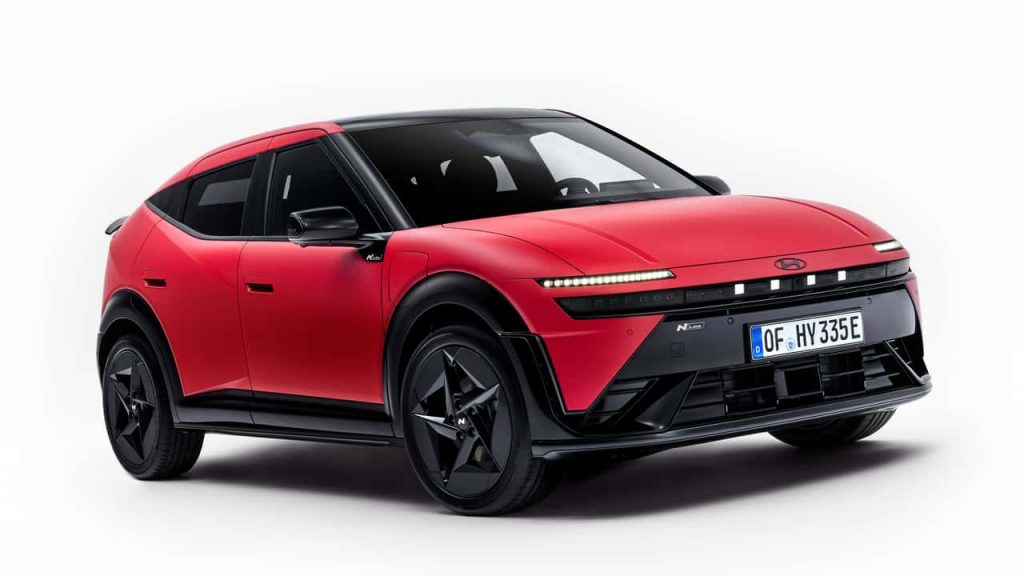
Hyundai has started mass production of the new IONIQ 3 at its İzmit manufacturing plant in Turkey, marking a significant expansion of the automaker’s European electric vehicle manufacturing strategy.
The compact electric hatchback is the first fully electric passenger vehicle produced in Turkey by a foreign automaker, giving Hyundai a new production base for competing in one of the world’s most competitive EV markets.
The production launch took place on August 14, 2026, at Hyundai Motor Türkiye’s facility in Kocaeli province. According to Türkiye Today, the IONIQ 3 will have an annual production capacity of 30,000 units at the plant.
Hyundai’s decision is significant beyond the introduction of another EV. The company is using an existing manufacturing operation that has been producing vehicles for nearly three decades and converting part of that infrastructure for electric vehicle production.
The move also gives Hyundai greater flexibility in supplying European markets from a plant located close to the region’s major automotive markets.
Hyundai itself describes the IONIQ 3 as its first locally produced electric model at the İzmit facility. The company says the vehicle was developed specifically with European urban driving and daily mobility requirements in mind.
IONIQ 3 Brings Hyundai’s EV Strategy to Turkey
The IONIQ 3 is the first compact electric vehicle in Hyundai’s IONIQ family and is built on the company’s Electric-Global Modular Platform, or E-GMP. That platform already underpins several of Hyundai Motor Group’s larger electric vehicles, but the IONIQ 3 brings the architecture into a smaller and more affordable segment.
According to Hyundai Motor Türkiye, the IONIQ 3 offers two battery options. The smaller 42.2-kWh battery is designed to provide approximately 335 kilometers of range, while the larger 61-kWh battery can deliver around 496 kilometers under the relevant European testing cycle.
Hyundai also says the vehicle can charge from 10% to 80% in about 29 minutes under suitable fast-charging conditions.
The car will be available with different power outputs depending on configuration. Hyundai Motor Türkiye lists a motor producing up to 147 PS and 250 Nm of torque, while another version produces 135 PS with the same 250 Nm torque figure.
The company says the IONIQ 3 was engineered around the requirements of European urban driving rather than simply being a smaller version of an existing IONIQ model. Its production location is just as important as its specifications.
Hyundai’s İzmit factory has been operating since 1997 and has produced more than 3.3 million vehicles, according to Hyundai Motor Türkiye.
The facility currently produces models including the i20 and Bayon and has an annual production capacity of approximately 245,000 vehicles. The IONIQ 3 therefore represents a major technological step for an established plant rather than the construction of an entirely new factory.
The production program is also supported by a substantial investment. Hyundai Motor Türkiye announced a total investment package of €715 million associated with the IONIQ 3 program. Of that amount, €55 million is being allocated to a new battery assembly facility at the İzmit plant.
According to Hyundai, the battery facility covers approximately 30,000 square meters and uses 27 robots for automated battery-pack assembly. More than 300 jobs are expected to be created initially through the battery investment.
This is an important development because Hyundai is not simply importing completed battery packs and assembling finished vehicles in Turkey. The company is creating additional battery-pack assembly capability within its existing manufacturing operation, giving the plant a larger role in the EV supply chain.
Hyundai has also said that the IONIQ 3 will be exported to more than 40 countries. Sales in Turkey are scheduled to begin in September alongside the European launch, meaning the vehicle’s production and market introduction are being coordinated around the European market rather than treating Turkey as a separate regional program.
Why Turkey Matters to Hyundai’s European EV Push
The IONIQ 3 arrives at a time when automakers are looking for ways to compete more effectively in Europe’s rapidly changing electric vehicle market.
European consumers now have more EV choices than ever, while manufacturers face pressure to deliver vehicles at prices that can compete with increasingly aggressive Chinese brands. Producing a compact EV in Turkey gives Hyundai another way to control manufacturing costs while maintaining a production base close to Europe.
Turkey also occupies a strategically important position between Europe and Asia. Hyundai’s İzmit operation has already been heavily integrated into the European automotive supply chain, and its long history of exporting vehicles means the company does not have to build an entirely new distribution structure for the IONIQ 3.
The production launch could therefore give Hyundai more flexibility as European EV demand develops. Rather than relying entirely on factories elsewhere in Europe, the automaker can use its Turkish operation to produce a vehicle specifically designed for European customers.
The timing is particularly interesting because Hyundai and Kia have been increasing their electric vehicle sales in Europe.
According to data reported by The Korea Times, Hyundai Motor and Kia sold a combined 131,032 EVs in Europe during the first half of 2026, representing a 41.8% increase compared with the previous half. That growth suggests the companies see an opportunity to expand their European EV presence even as competition intensifies.
The IONIQ 3 gives Hyundai an entry into a segment where price, efficiency, size, and practicality are likely to matter more than outright performance.
Its compact dimensions and hatchback design are particularly relevant to European cities, where smaller vehicles remain popular because of tighter streets, parking limitations and higher urban driving costs.
Hyundai says the IONIQ 3 was developed around European daily mobility needs, combining aerodynamic efficiency with a relatively spacious interior. Technology is another area where Hyundai is trying to differentiate the new model.
The IONIQ 3 will be the first Hyundai model in Europe to use the company’s Pleos Connect infotainment system, which is based on Android Automotive OS. Hyundai says the system provides a smartphone-style interface and can receive software improvements over time.
The car also offers features such as Hyundai Digital Key 2, Plug & Charge functionality, integrated EV route planning, and Vehicle-to-Load capability.
These features show that Hyundai is treating the IONIQ 3 as more than an entry-level electric hatchback. The company is attempting to combine relatively accessible dimensions with technology normally associated with more expensive EVs.
A Bigger Manufacturing Milestone for Turkey
The IONIQ 3 production launch is also important for Turkey’s ambitions to become a larger electric vehicle manufacturing center.
Turkey already has its own domestic EV manufacturer, Togg, which produces the T10X. Hyundai’s achievement is different because it represents the first fully electric passenger vehicle produced in the country by a foreign automaker.
Turkish Industry and Technology Minister Mehmet Fatih Kacır highlighted that distinction during the August 14 production ceremony, according to Daily Sabah and Türkiye Today.
For Hyundai, having the IONIQ 3 produced locally also strengthens a manufacturing relationship that dates back to the 1990s.
The company is effectively using an established factory to support its next phase of electrification instead of abandoning conventional production infrastructure as the industry shifts toward electric powertrains.
The battery investment makes that transition even more significant. Hyundai has said the new assembly facility will initially support the IONIQ 3, but its longer-term purpose is to create infrastructure that could also support future electric and hybrid models.
Battery sourcing will remain an important part of the program. Hyundai Motor Türkiye has stated that NMC battery cells will come from Hungary, while LFP cells for shorter-range versions will be sourced from China. The local facility will then assemble the battery packs.
That arrangement reflects the reality of today’s global EV supply chains. Even when a vehicle is assembled locally, its battery cells and other critical components can still come from multiple countries.
For Hyundai, however, the strategic advantage is clear. The IONIQ 3 gives the company a locally produced electric model that can be exported across Europe while making greater use of its established Turkish manufacturing infrastructure.
The first cars are now coming off the production line, with European sales scheduled to begin in September. If Hyundai can combine competitive pricing with the IONIQ 3’s claimed range, compact dimensions, and fast-charging capability, the model could become an important part of the company’s European EV lineup.
More importantly, the launch signals that Turkey is becoming an increasingly important piece of Hyundai’s European electrification strategy.
As automakers search for efficient ways to manufacture smaller EVs close to their customers, the İzmit plant could become more than simply the home of one new electric hatchback. It could become a broader production base for Hyundai’s next generation of electrified vehicles.
