
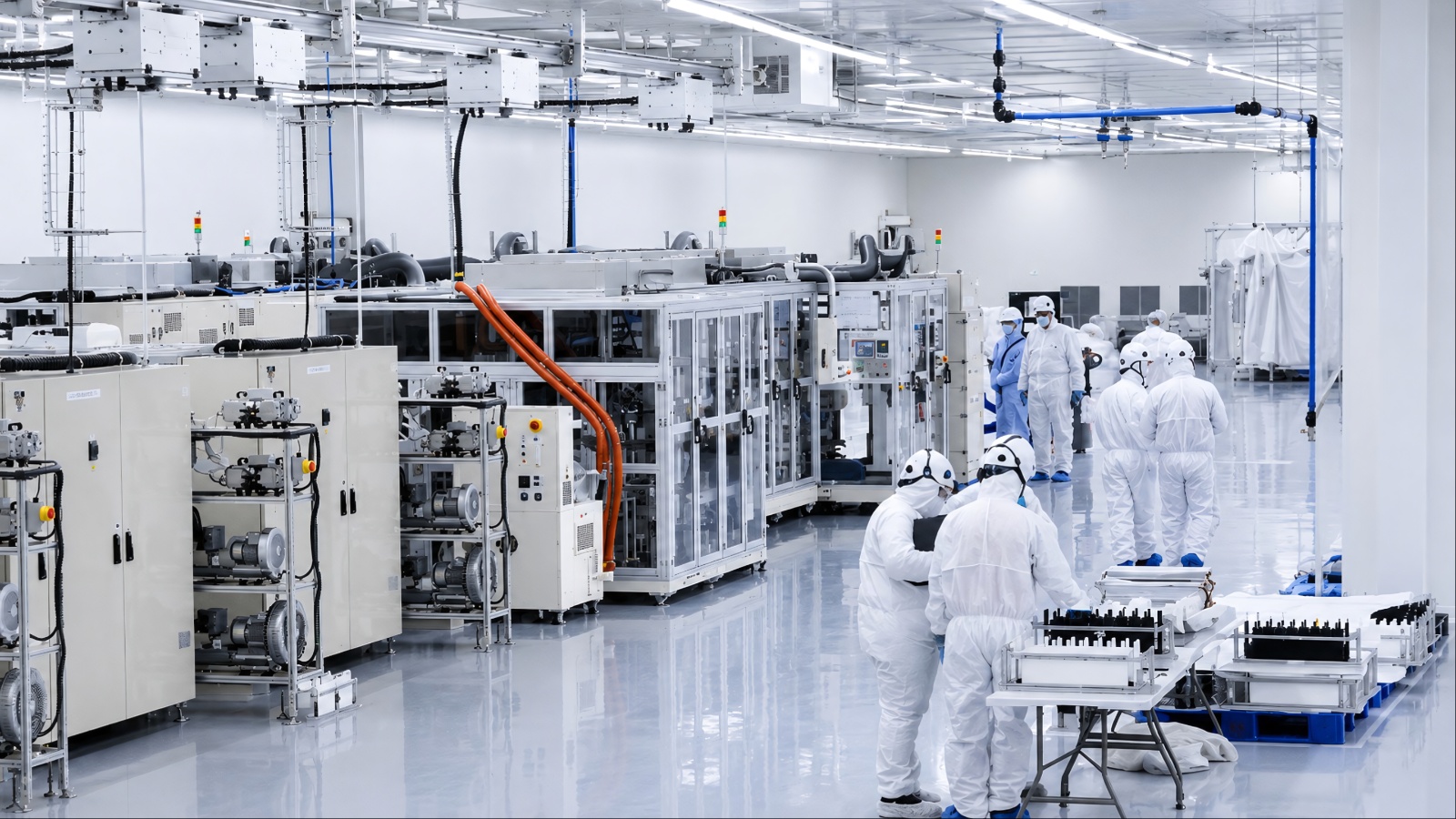
AESC has delayed plans to expand production at its Sunderland electric-vehicle battery factory after negotiations to supply batteries to Jaguar Land Rover failed to secure a deal, adding another setback to Britain’s efforts to establish a competitive domestic EV battery industry.
The development, reported by The Guardian, comes at a difficult moment for Europe’s battery sector. Automakers that once committed aggressively to electrification are now reassessing production schedules, battery requirements, and investment because electric vehicle demand has not grown as quickly as many manufacturers had expected.
For AESC, that has created a particularly difficult situation in Sunderland, where a major expansion was designed around the expectation of substantially higher battery demand from nearby automakers.
According to The Guardian, AESC has put the installation of a third production line at its Sunderland gigafactory on hold after supply negotiations with JLR stalled. The battery maker is already supplying Nissan, but Nissan’s slower EV rollout has also reduced the urgency for additional battery capacity.
The decision does not mean AESC has abandoned Sunderland or its long-term plans. Instead, it shows how battery manufacturers are becoming more cautious about adding expensive capacity without firm commitments from vehicle manufacturers.
JLR Talks Fail to Deliver the Expected Battery Deal
AESC’s Sunderland operation has a long history with Nissan. The company’s original battery plant began production in 2012 and has an annual capacity of 1.8 GWh. It became an important part of Nissan’s strategy for producing electric vehicles in Britain, particularly as the Leaf established Sunderland as one of Europe’s early EV manufacturing hubs.
The much larger second AESC facility was intended to take that relationship to another level. According to the UK’s National Wealth Fund, the new Sunderland gigafactory will eventually be capable of producing up to 15.8 GWh of batteries annually when operating at full capacity.
The organization described the facility as an almost six-fold increase over Britain’s existing gigafactory capacity at the time of the financing announcement.
The project also received substantial financial backing. The National Wealth Fund and UK Export Finance provided guarantees covering £272 million of a £340 million loan, helping AESC secure more than £1 billion in financing from a group of international banks.
The factory was planned to initially provide batteries capable of powering up to 100,000 electric vehicles per year, with the potential to reach much greater output as production expanded.
That expansion was supposed to be supported by demand from multiple automakers, with Jaguar Land Rover emerging as a particularly important potential customer.
The Guardian reported that JLR came close to reaching a supply agreement with AESC last year. The agreement would have provided JLR with batteries while it waited for its own battery manufacturing operation, being developed by its sister company Agratas, to come online. However, negotiations subsequently stalled.
People familiar with the discussions told The Guardian that disagreements involved financial commitments, battery costs, and the timing of supply.
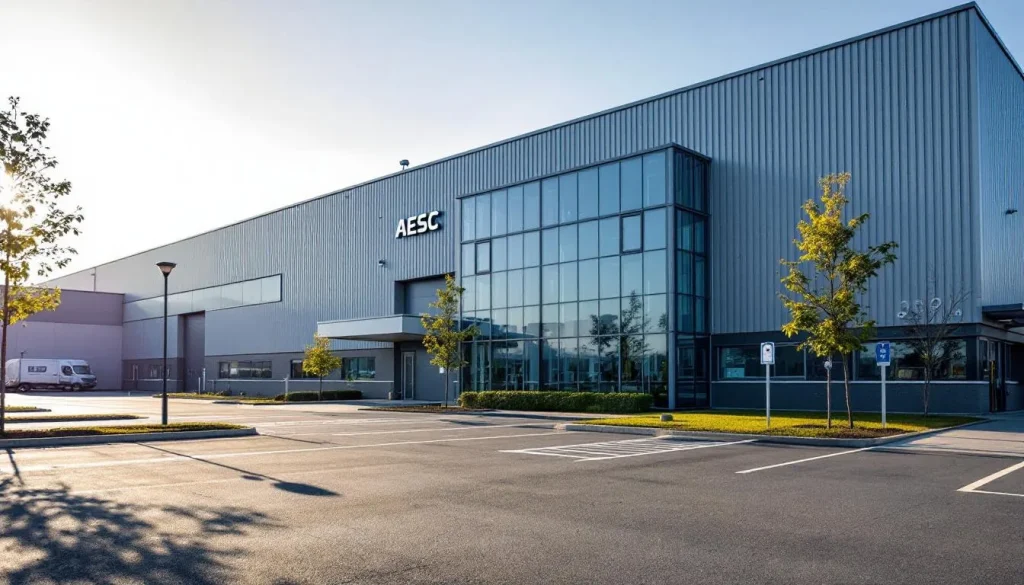
One source said JLR was reluctant to make formal financial commitments, while another pointed to disputes concerning pricing and delivery schedules. JLR and AESC declined to comment to the newspaper.
The failure to secure that contract has directly affected AESC’s expansion strategy. Two production lines are operating at the Sunderland gigafactory, but the company has held back from installing the third line that had been expected to serve JLR.
That is an important distinction. AESC is not shutting the Sunderland factory. Instead, it is delaying additional investment until there is greater certainty that the batteries produced by another production line will have customers.
For a battery manufacturer, that calculation is critical. Gigafactories require enormous upfront investment, while battery production is most economical when factories operate at high utilization rates.
Building capacity ahead of demand can leave manufacturers with expensive equipment, high energy costs, and substantial financing obligations without enough vehicle production to absorb the output.
JLR has, meanwhile, secured battery supplies from other companies while waiting for its own Agratas facility in Somerset. That factory is currently expected to begin production in 2027, although The Guardian has previously reported construction difficulties that could create additional uncertainty around its timetable.
Nissan’s Slower EV Strategy Adds to the Pressure
The JLR situation is only one part of AESC’s problem. Nissan remains the principal customer associated with AESC’s Sunderland operations, but the Japanese automaker has also slowed its electric vehicle transition as it restructures its global business.
The Guardian reported that AESC has long-term plans for two additional production lines intended to supply Nissan. However, concerns have emerged about how much battery capacity Nissan will actually require in the coming years.
Nissan has been cutting costs and restructuring operations, while its Sunderland vehicle manufacturing strategy is also changing. According to The Guardian, Nissan has stopped producing its own cars on one of the two assembly lines at Sunderland as preparations are made for vehicles from China’s Chery.
Chery could potentially become another customer for AESC, although no final battery agreement had been reached at the time of the report.
This leaves AESC in an unusual position. Sunderland has the physical infrastructure and financial backing to become a major European battery manufacturing center, but the company needs enough vehicle production to justify the full expansion. The uncertainty also comes as Britain’s broader EV policy is being reconsidered.
On August 14, the UK government launched a consultation examining changes to the country’s zero-emission vehicle mandate. According to Reuters, the current rules require manufacturers to increase the proportion of electric vehicles they sell, with the target reaching 80% of new car sales by 2030 and 100% by 2035.
Several options under consideration could reduce the 2030 target to as little as 50%, while another option would retain the existing targets but provide manufacturers with greater flexibility.
The timing is significant for companies such as AESC. Battery factories are built years ahead of production, meaning manufacturers need confidence that automakers will continue increasing EV output before committing billions of pounds to additional capacity.
Battery-electric vehicles still accounted for 27.4% of UK new-car registrations in July 2026, according to Reuters, showing that demand has not disappeared. However, the pace of growth and the willingness of automakers to commit to aggressive electrification targets have become less predictable.
Europe’s Battery Industry Faces a Much Tougher Environment
AESC’s decision also reflects a broader European battery manufacturing problem. Europe spent years encouraging the construction of local battery plants so automakers would not remain dependent on Asian suppliers. The strategy was driven by the expected rapid growth of EV sales and concerns over supply-chain security.
But the industry has encountered major financial and operational difficulties. The collapse of Northvolt became one of the most prominent examples.
The Swedish battery manufacturer had been presented as a potential European competitor to established Asian battery producers, but financial problems and difficulties scaling production ultimately pushed the company into bankruptcy.
The European Foundation for the Improvement of Living and Working Conditions has described Northvolt’s bankruptcy as one of the most serious challenges facing Europe’s battery manufacturing sector. It also noted that Chinese manufacturers continue to dominate global battery production.
Britishvolt represents another major UK setback. The company had planned a large battery factory in Northumberland but failed to secure the financing necessary to complete the project, eventually entering administration.
Other European projects have also been delayed, cancelled, or scaled back as automakers reconsider the speed of electrification.
That makes the Sunderland situation particularly important. AESC is one of the companies that has actually managed to establish operating battery production in Britain rather than simply announcing a future project.
The company has also secured significant financial support for the Sunderland operation. In 2025, the new factory received more than £1 billion in project financing, with government-backed guarantees helping unlock private-sector funding.
The facility is ultimately intended to reach 15.8 GWh of annual capacity and employ more than 1,000 people, according to AESC’s UK operation.
AESC has indicated that it remains confident about long-term battery demand. The Guardian reported that the company sees opportunities beyond electric cars, including batteries for energy storage connected to renewable power generation.
That could eventually give battery manufacturers another source of demand if automotive growth remains uneven.
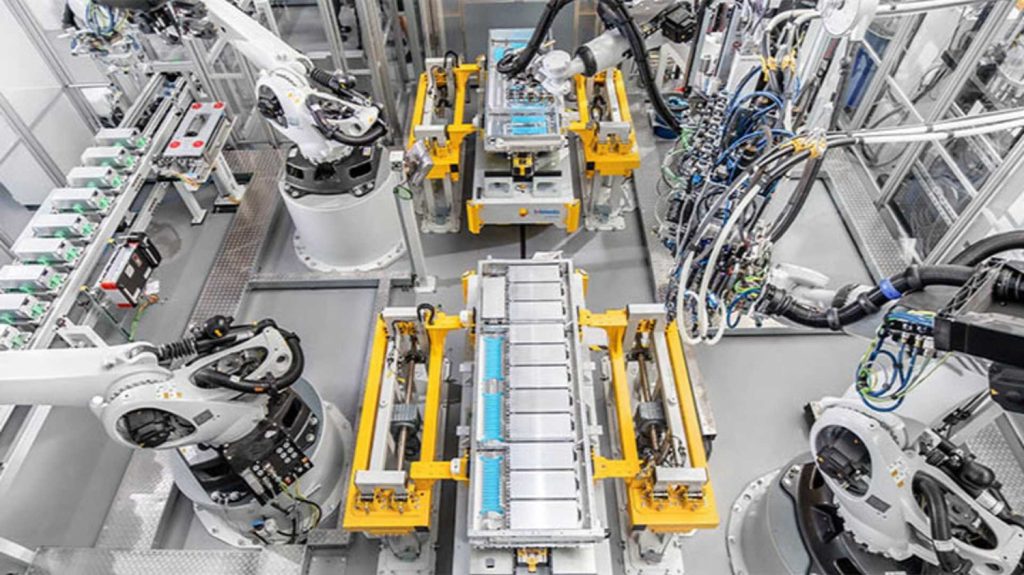
For Sunderland, however, the immediate priority is making the existing factory economically viable before adding more capacity.
The delayed third production line therefore represents more than a disagreement between two companies. It illustrates the difficult transition facing Europe’s EV supply chain.
Automakers need affordable and reliable batteries, while battery manufacturers need firm long-term orders to justify enormous investments. When EV demand becomes harder to predict, both sides have an incentive to delay major commitments.
AESC’s Sunderland expansion could still move forward if Nissan, JLR, or another manufacturer provides enough demand to justify it.
But for now, the company is choosing caution over capacity, a decision that reflects how dramatically the European EV market has changed from the period when gigafactory projects were being announced at an increasingly rapid pace.
