
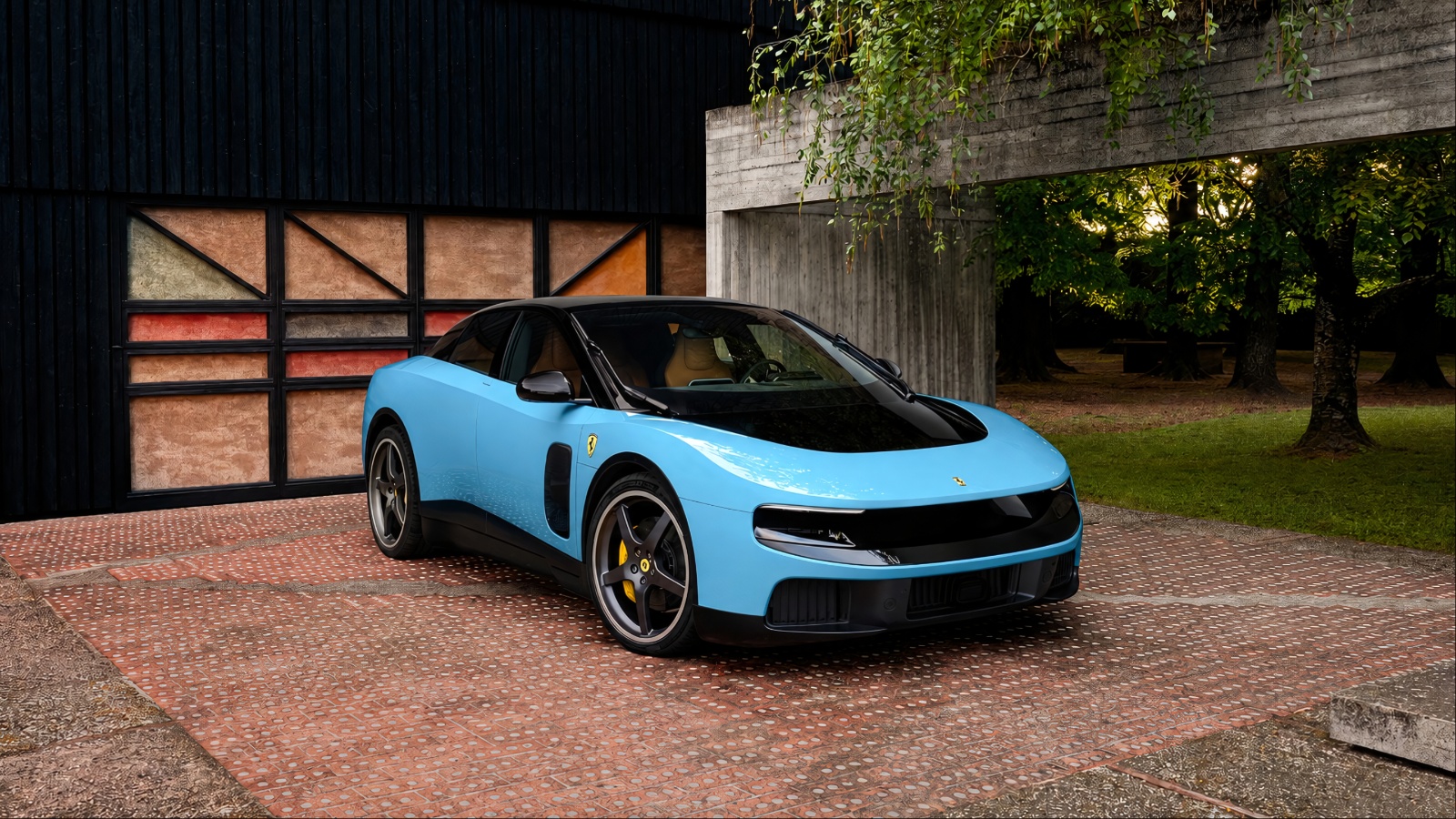
Ferrari’s first fully electric vehicle has made an extraordinary debut in the collector-car world, but not in the way most new cars do. A unique version of the Ferrari Luce sold for $40 million at a charity auction during Monterey Car Week, creating a new record for the highest price paid at auction for a new car.
The vehicle, known as Chassis 0, is the first production chassis from Ferrari’s Luce program and was specially configured through the company’s Tailor Made personalization division.
According to Reuters, the one-off car was purchased by longtime Ferrari collector and U.S. billionaire Herbert A. Wertheim, with the entire auction proceeds going toward educational initiatives through the Ferrari Foundation.
The result was remarkable because the Luce had been estimated at more than $1.1 million before the auction. The final $40 million price was therefore many times higher than its expected value and even surpassed the previous record for a new car sold at auction.
More importantly, the sale places Ferrari’s transition into electric vehicles in an unusual position. The Luce has attracted attention not only because it is Ferrari’s first battery-electric model but also because its design represents a significant departure from the company’s traditional sports-car formula.
Ferrari has faced questions from enthusiasts and investors over its decision to enter the EV market. The $40 million auction result does not prove that every Luce will become a valuable collector car, but it demonstrates the extraordinary level of interest surrounding Ferrari’s move into electric performance.
A $40 Million First Edition
The car sold at Monterey was not an ordinary production Luce. Ferrari designated it Chassis 0, making it the first production chassis associated with the Luce program.
The company used its Tailor Made department to create a configuration specifically for the charity auction, giving the vehicle features that will not simply be replicated across the standard production run.
According to RM Sotheby’s, which conducted the auction, the car features a special Madreperla Semi-Gloss exterior finish developed specifically for this vehicle. The paint produces changing iridescent reflections depending on the angle and intensity of the light.
The interior uses Ferrari’s exclusive Perla Le Mans metallic leather with contrasting Grigio Corvara elements. It also receives dedicated wheels, bespoke brake calipers, and a Ferrari logo set against an optical-white background.
Those details help explain why Chassis 0 commanded such a premium. Buyers at this level are not simply purchasing a vehicle for transportation. They are buying provenance, rarity, and a piece of Ferrari history.
The charitable purpose also added another dimension to the auction. Ferrari committed the entire proceeds to educational projects through The Ferrari Foundation, making the $40 million winning bid a contribution to a philanthropic cause rather than simply a purchase between collector and manufacturer.
The winning bidder will not immediately take the car home. RM Sotheby’s states that the vehicle will return to Maranello after the auction and is scheduled for final delivery during the first quarter of 2027.
The result also established a new benchmark for a new car sold at auction. Reuters reported that the Luce surpassed the previous record of $26 million, which was set by another Ferrari, the Daytona SP3, also purchased by Wertheim.
That makes the sale particularly notable within Ferrari’s already extraordinary collector-car market.
Why the Luce Matters to Ferrari
The auction would be remarkable for almost any Ferrari, but the Luce carries additional significance because it represents a fundamental change for the company.
Ferrari has spent decades building its identity around high-revving gasoline engines, mechanical performance, and the emotional character associated with combustion-powered sports cars.
The Luce introduces a completely different propulsion system while attempting to preserve the exclusivity and performance expected from a Ferrari.
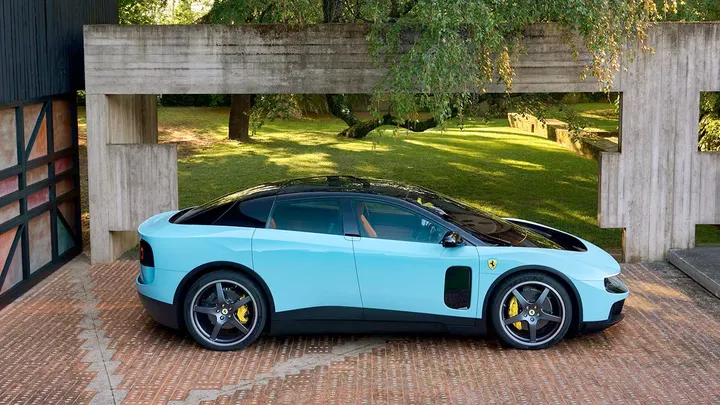
The production Luce is a five-seat, four-door electric vehicle with four electric motors and a combined output of approximately 1,050 metric horsepower, according to reporting surrounding the vehicle and Ferrari’s auction documentation.
That makes the Luce less of a traditional two-seat Ferrari sports car and more of a high-performance electric grand tourer. Its configuration also reflects Ferrari’s attempt to expand its customer base without abandoning the company’s emphasis on performance and personalization.
The car has generated controversy because of that departure from Ferrari tradition. Some enthusiasts have questioned whether an electric, four-door Ferrari can deliver the same emotional experience as the company’s famous V8 and V12 models.
The design has also attracted criticism from some traditional Ferrari supporters who believe the company has moved too far away from its established visual identity.
Ferrari, however, has defended the strategy and appears confident that there is strong demand for the Luce. The Financial Times reported earlier this month that Ferrari had already reached its 2026 sales target for the model within roughly two months of its launch, with strong interest from wealthy buyers, particularly in China.
That is an important development because Ferrari’s EV strategy is not based on selling enormous numbers of cars. The company has consistently emphasized exclusivity and profitability rather than chasing mass-market EV volumes.
The Luce therefore serves as a test of whether Ferrari can successfully apply its established ultra-luxury business model to electric vehicles. The $40 million auction adds another layer to that experiment.
The Sale Shows the Power of Ferrari’s Collector Market
The $40 million result says as much about Ferrari’s collector ecosystem as it does about electric vehicles.
Ferrari has one of the strongest collector-car followings in the world. Historically significant models can command extraordinary prices because buyers value rarity, provenance, design, and their connection to the company’s racing and road-car history.
Chassis 0 immediately possesses provenance that ordinary production cars cannot replicate. It is the first production chassis of Ferrari’s first fully electric model, specially personalized by Ferrari and sold directly through a charity auction.
That combination makes it highly unusual. The car’s value also cannot be used as a straightforward indication of what future Luce models will be worth.
The $40 million bid reflects the unique circumstances surrounding Chassis 0, including its status as the first chassis, its bespoke specification, and the charitable purpose of the auction.
A regular Luce will have a much lower starting price. Ferrari has positioned the production model at approximately €550,000 before options and market-specific considerations. Reuters described it as a €550,000, roughly $638,400, five-seat, four-door EV.
That enormous difference between the normal vehicle price and the $40 million auction result is a reminder that collector value is driven by rarity rather than simply by technical specifications.
The sale also reinforces Ferrari’s broader strategy of personalization. The Tailor Made program allows customers to create highly customized vehicles, and Ferrari has increasingly used one-off and limited-production models to strengthen its relationship with its wealthiest customers.
The Luce Chassis 0 fits directly into that philosophy. It is simultaneously a technological statement, a collector piece, and a charitable project.
For Ferrari, the timing could hardly be more useful. The company is attempting to convince longtime customers that electrification does not have to mean abandoning exclusivity or emotional appeal. A $40 million sale for the first Luce provides a powerful headline, even though the auction result itself is not representative of normal Luce pricing.
It also sends a message to the broader luxury-car industry. Several high-end manufacturers have struggled with the transition to electric vehicles because affluent customers have not always shown the same enthusiasm for EVs as mainstream buyers.
Some performance brands have delayed electric launches or reduced their EV ambitions as market conditions have changed.
Ferrari is taking a different approach. Rather than competing on volume, it is using extreme personalization, limited production, and brand prestige to make its electric vehicles desirable to collectors and wealthy customers.
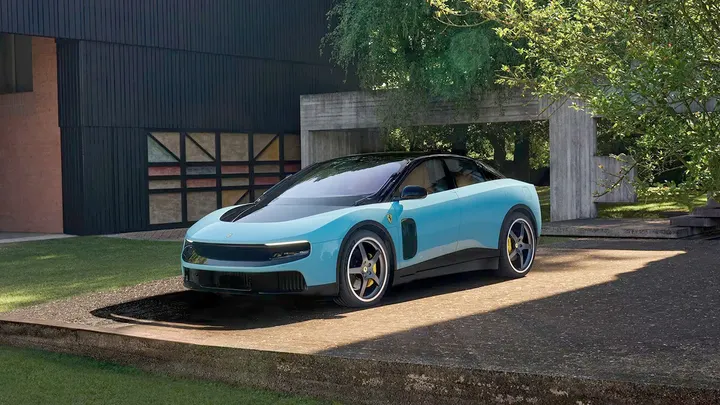
The Luce’s record auction result does not settle the debate over Ferrari’s electric future. It does, however, demonstrate that the company’s first EV can generate extraordinary attention from the collector market.
The significance of the $40 million sale ultimately extends beyond the money involved. Ferrari has created a unique first chapter for its electric era, and Chassis 0 now has a place in the company’s history that no ordinary Luce can duplicate.
The production Luce will eventually have to prove itself through customer demand, driving performance, and long-term desirability. But the first example has already achieved something extraordinary. Before Ferrari’s electric future has fully begun, its first EV has already become a $40 million collector car.
And because the proceeds are going toward educational initiatives through the Ferrari Foundation, the remarkable sale will leave a legacy beyond Ferrari’s transition from combustion engines to electric power.
