
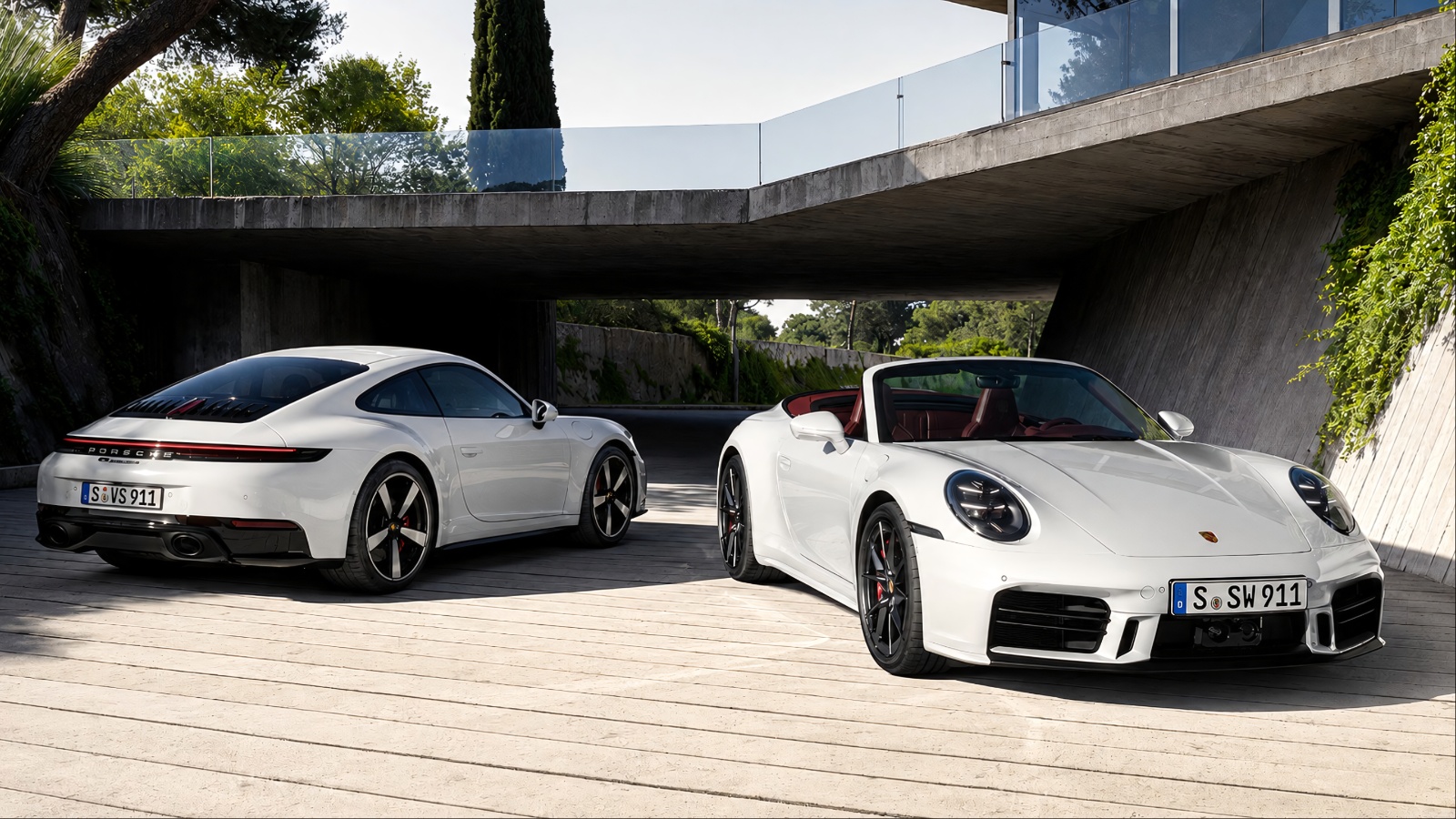
Porsche has reversed course on one of the most important transmission decisions in its current 911 lineup. The automaker will once again offer a manual transmission in the 911 Carrera S, giving driving enthusiasts another opportunity to buy a three-pedal version of one of Porsche’s most popular performance models.
The decision is particularly notable because Porsche had not originally planned to offer the manual gearbox on the latest Carrera S. According to Car and Driver, Porsche North America CEO Timo Resch said customer feedback, dealer input, and discussions with enthusiasts convinced the company to reconsider the decision.
Porsche ultimately received approval from Germany to add the manual option for the 2027 model year. That makes the move more than a simple equipment change. It represents an unusual reversal at a time when automatic transmissions dominate the performance-car market and manufacturers are increasingly turning toward electrification.
For enthusiasts, however, the decision confirms that Porsche still sees value in giving customers control over how they interact with the car.
Porsche Listened to Its Customers
The decision to bring back the manual transmission reportedly came from a surprisingly direct source: customers.
Car and Driver reports that Porsche North America began hearing strong demand for a manual Carrera S through online communities, direct conversations with customers, and feedback from dealers. Those discussions eventually convinced Porsche that there was enough interest to justify changing its original product plan.
Resch reportedly told Car and Driver that manual-transmission demand is particularly strong among American Porsche buyers. In the United States, as many as 80% of GT3 Touring buyers and approximately 50% of standard GT3 buyers choose the manual transmission, according to the publication.
Those figures help explain why Porsche reconsidered the Carrera S. The company already knew that a significant portion of its enthusiast customer base values a manual gearbox. The question was whether Carrera S buyers would be willing to make the same choice.
Porsche appears to have decided that the answer is yes. The reversal also demonstrates an important difference between Porsche and many manufacturers. Rather than treating the disappearance of manual transmissions as inevitable, Porsche is continuing to offer the technology where it believes there is sufficient customer demand.
That does not mean the manual gearbox is becoming standard across the 911 range. Porsche’s latest Carrera S was originally introduced with an eight-speed PDK dual-clutch transmission, and the company has increasingly relied on automated transmissions for performance and efficiency.
The manual option is therefore becoming a deliberate enthusiast choice rather than the default configuration.
For buyers, that makes the decision more meaningful. They can choose the faster, more convenient PDK or accept the additional involvement of a clutch pedal and traditional gear lever.
The Carrera S Still Packs 473 Horsepower
The return of the manual transmission does not fundamentally change the Carrera S’s engine. The current-generation 911 Carrera S uses a twin-turbocharged 3.6-liter flat-six producing 473 horsepower and 390 pound-feet of torque.
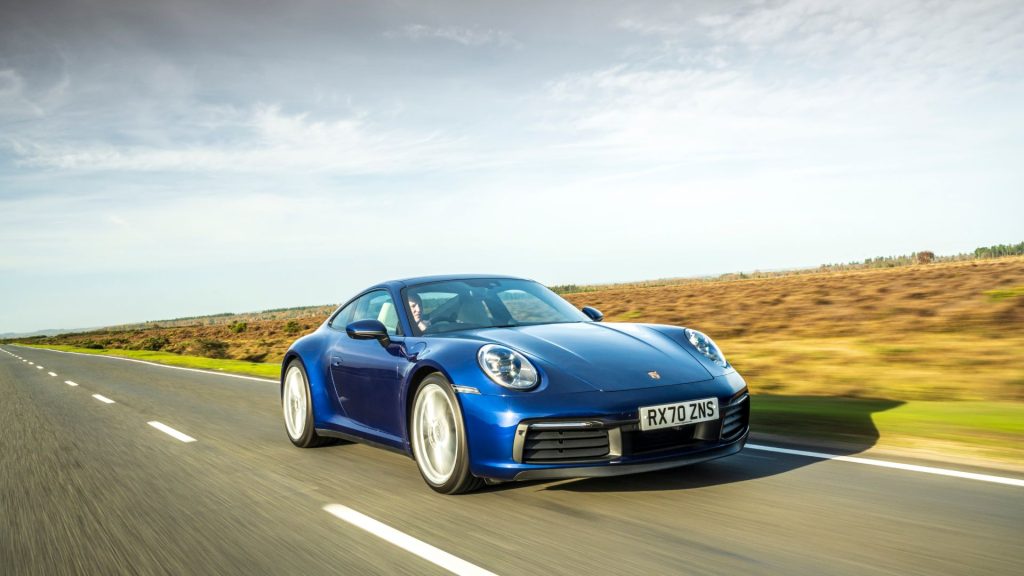
Porsche says the engine delivers 30 more horsepower than the previous Carrera S, while revised turbochargers and optimized charge-air cooling help improve both performance and efficiency.
The standard Carrera S is already a serious performance machine. With the PDK and optional Sport Chrono Package, Porsche quotes a 0-to-60-mph time as quick as 3.1 seconds and a top track speed of 191 mph.
The manual version will inevitably give up some outright acceleration compared with the PDK-equipped car. That is not necessarily a disadvantage for the people Porsche is targeting.
The purpose of the manual gearbox is not to beat the dual-clutch transmission’s shift times. Modern PDK systems can change gears faster and more consistently than almost any human driver. Instead, the manual provides something that a computer-controlled transmission cannot replicate: direct interaction between the driver, clutch, shifter, and engine.
That distinction is becoming increasingly important as performance cars become faster and more technologically sophisticated.
The latest 911 Carrera S is already heavily engineered around electronic controls, turbocharging, and sophisticated chassis systems. Adding a manual transmission gives enthusiasts a way to retain a mechanical element in an otherwise highly advanced sports car.
Porsche’s own product information shows that the current Carrera S was initially paired exclusively with its eight-speed PDK, making the new decision particularly significant.
The manual option therefore represents a conscious decision to prioritize driver involvement even when an automatic transmission would be objectively quicker.
Why the Manual Matters in an Increasingly Automated Era
The Carrera S reversal comes at a time when manual transmissions are becoming increasingly rare. Automakers have several reasons for moving away from traditional gearboxes. Automatic transmissions are easier for most drivers to use, can deliver quicker acceleration, and can be optimized to improve fuel economy and emissions.
Dual-clutch systems also allow high-performance vehicles to change gears extremely quickly without requiring driver intervention. Electrification adds another challenge.
Most electric vehicles do not require traditional multi-speed transmissions at all. Electric motors produce strong torque across a broad operating range, allowing manufacturers to deliver immediate acceleration without a clutch or conventional gear selection.
That makes Porsche’s decision to invest in a manual transmission particularly interesting. The company is not suggesting that every future Porsche should have one. Instead, it is preserving the option for customers who specifically want it.
That strategy fits the 911 particularly well because the model has always maintained a strong connection with driving enthusiasts. Porsche has repeatedly developed versions of the 911 around different interpretations of performance, from comfortable Carrera models to extreme GT3 variants.
The manual Carrera S can occupy an important middle ground. It offers significantly more power than the standard Carrera while avoiding the extreme focus of a GT3.
For an enthusiast who wants a 911 that can be driven regularly but still provides a highly engaging experience, the manual Carrera S could become one of the most appealing configurations in the range.
There is also a collector aspect. As manual transmissions become less common, future enthusiasts may place greater value on performance cars that preserve them. That does not guarantee appreciation or make a manual Carrera S an investment, but scarcity can make certain configurations more desirable over time.
Porsche appears to understand that emotional appeal has value. The company’s decision to reconsider the Carrera S manual also sends a message to enthusiasts who worry that increasingly sophisticated technology is removing the human element from performance cars.
The PDK remains the logical choice for maximum performance. It is faster, more efficient in many situations, and easier to operate in traffic.
But Porsche is effectively saying that the fastest option does not have to be the only option. That philosophy is becoming unusual across the automotive industry.
Other manufacturers are also showing renewed interest in manual transmissions for specialized performance models.
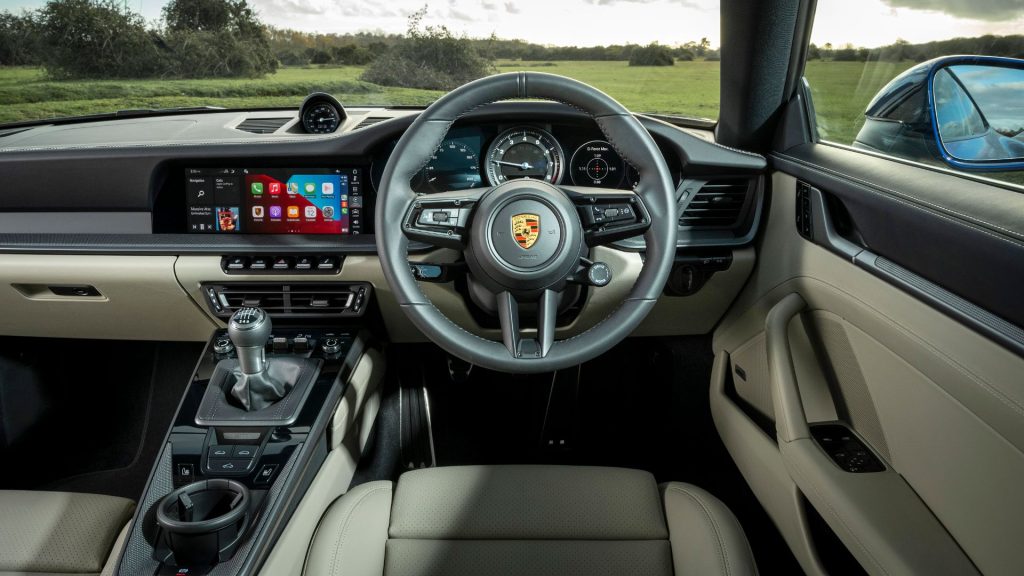
Car and Driver recently reported that McLaren is bringing a manual gearbox back for its upcoming McL 6GT, another indication that some high-performance brands see continued demand for three-pedal cars despite the broader shift toward automated transmissions.
Porsche’s decision is arguably more significant because the Carrera S is not an ultra-limited special edition. It is a core member of the 911 lineup, meaning the manual transmission could be available to a much broader group of customers.
The final availability, pricing, and U.S. allocation details will determine how many buyers actually choose it. Porsche has not positioned the manual as a performance upgrade, so customers will have to decide whether the additional involvement is worth sacrificing some of the PDK’s outright performance advantages.
For Porsche, though, the decision represents something bigger than another transmission option.
The company originally planned to leave the Carrera S with the PDK, then changed course after customers made their preferences clear. That is unusual in today’s automotive industry, where product decisions are typically locked years before a vehicle reaches dealerships.
It also reinforces the idea that there is still a meaningful market for traditional driving experiences.
The 2027 Porsche 911 Carrera S will continue to offer its 473-horsepower twin-turbo flat-six, but buyers will once again have a choice between an advanced dual-clutch transmission and a traditional manual gearbox.
For enthusiasts, the significance goes beyond the number of pedals. The manual Carrera S represents Porsche’s willingness to preserve an experience that cannot be measured simply by acceleration figures or lap times.
The PDK will remain the obvious choice for drivers chasing maximum performance. The manual, meanwhile, will appeal to those who believe the best sports car is not necessarily the one that shifts fastest but the one that makes the driver feel most involved.
At a time when automated transmissions and electric powertrains are rapidly reshaping performance cars, Porsche’s decision to bring the Carrera S manual back is a small but meaningful victory for the traditional enthusiast.
