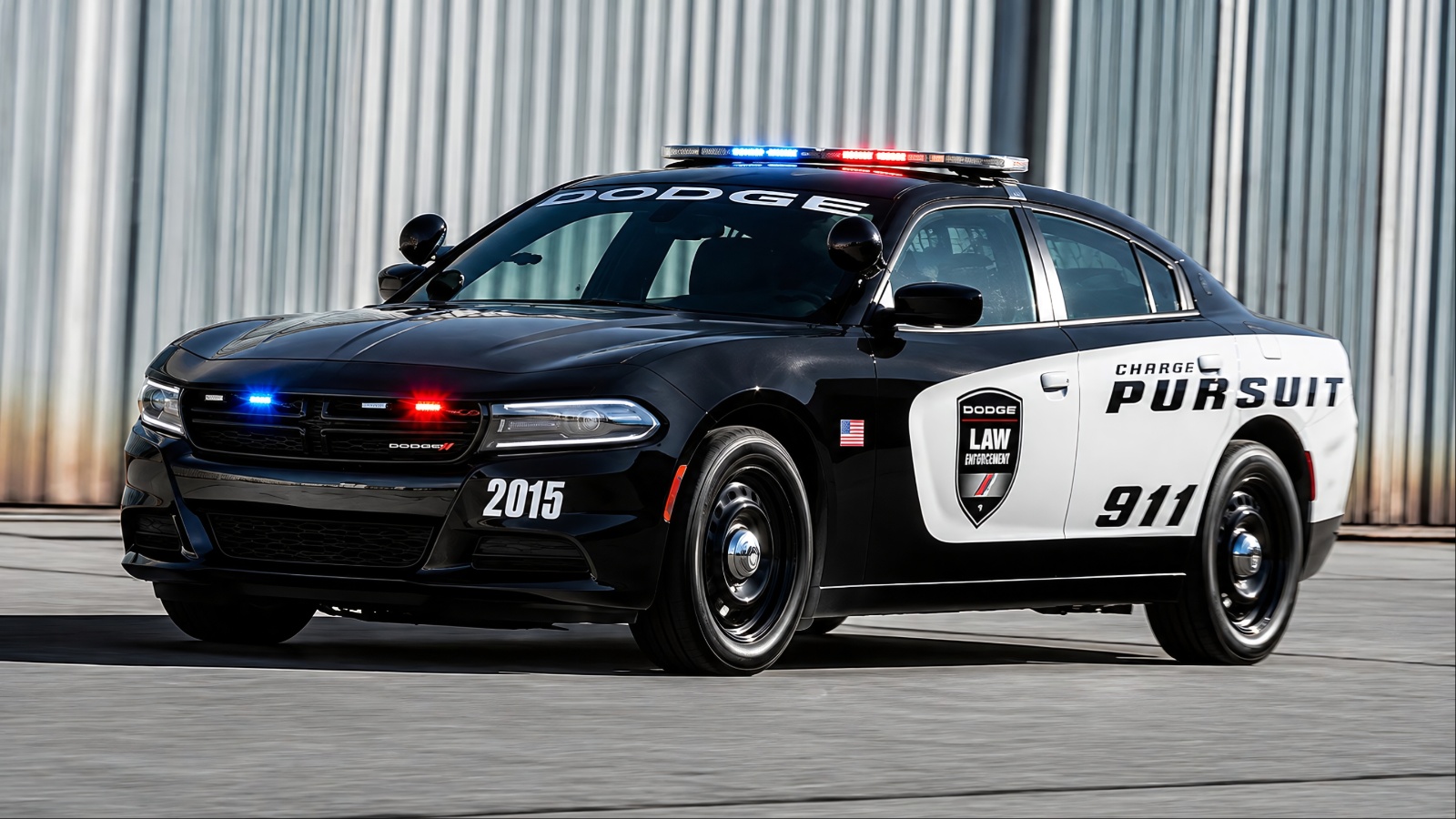
The American police car is getting a familiar nameplate back on patrol. Dodge is preparing to return to the police-vehicle market with a new 2027 Charger Police Pursuit Vehicle (PPV), bringing the modern Charger into a segment increasingly dominated by SUVs and crossovers.
The new pursuit car is being developed specifically for law enforcement fleets and combines Dodge’s performance-oriented identity with the practical requirements of police departments.
According to Car and Driver, Dodge Law recently displayed a prototype of the new Charger PPV to law enforcement fleet professionals in Daytona. The vehicle is expected to become available around 2027 and will feature standard all-wheel drive and a turbocharged six-cylinder engine.
The return is significant because traditional police sedans have become increasingly rare in the United States. Ford’s discontinuation of the Taurus pushed many departments toward the Explorer and other SUVs, while Chevrolet has also developed SUV-based pursuit vehicles.
Dodge’s new Charger is therefore attempting to bring a performance sedan back into a market that has increasingly favored higher-riding vehicles.
The Charger Returns to Police Duty
The new Charger PPV is based on the latest-generation Charger, but it will not simply be a standard street car with police lights and a reinforced interior.
According to Car and Driver, Dodge Law has developed a dedicated prototype intended to meet the specialized needs of police departments. The vehicle will use a 3.0-liter Hurricane turbocharged inline-six and standard all-wheel drive. Dodge has not yet disclosed the exact output of the engine in police specifications.
That is an important distinction because the civilian Charger is available with different power levels from the Hurricane engine family. The police version will have to balance performance with durability, operating costs, and the demands of fleet use.
Police vehicles can spend long periods idling, accelerating repeatedly, and operating in extreme conditions. They also carry additional equipment that ordinary passenger vehicles do not, including radios, computers, emergency equipment, and specialized storage.
That means a police vehicle’s specification cannot simply be based on maximum horsepower. Car and Driver points out that fleet buyers have practical concerns such as fuel economy, equipment storage, and the ability to operate on regular fuel. The publication also notes that the high-output version of the Hurricane inline-six may not be used in the police model.
Instead, Dodge appears to be focusing on creating a package that gives officers the speed and traction expected from a pursuit vehicle without making it unnecessarily expensive or complicated to operate.
The standard all-wheel-drive system should also be useful for departments operating in regions where rain, snow, and other poor-weather conditions are common.
That gives the Charger PPV an advantage over traditional rear-wheel-drive police sedans while preserving the lower center of gravity and road-going character that distinguish a sedan from an SUV.
Why a Sedan Police Car Still Matters
The return of the Charger PPV comes at an interesting time for law enforcement fleets. SUVs have become increasingly popular as police vehicles because they provide more interior space, easier equipment installation, and greater cargo capacity.
A police officer may need to carry medical equipment, traffic-control gear, weapons, computers, and other equipment, making the extra room of an SUV valuable.
Car and Driver says the Charger PPV’s hatchback layout gives it more flexibility than traditional sedans. That could help Dodge address one of the biggest practical disadvantages that conventional police cars have faced against SUVs.
The hatchback also gives the Charger a useful middle ground. It retains a relatively low, performance-oriented profile while offering easier access to the cargo area than a traditional trunk-equipped sedan.
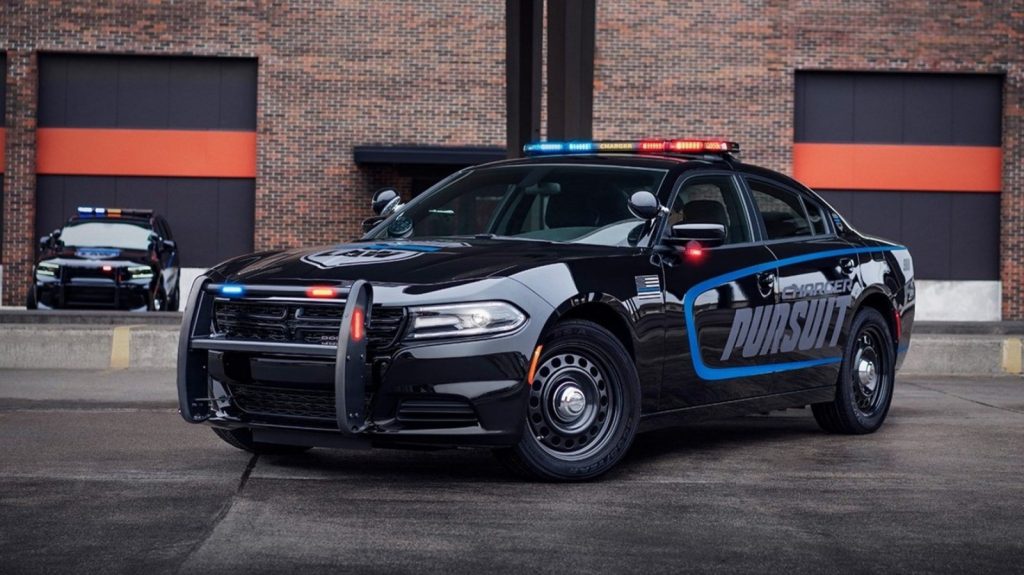
That could make it more appealing to departments that still want the handling characteristics of a car but need additional flexibility. The return also matters from a performance standpoint.
Police pursuit vehicles need to accelerate quickly, maintain stability at higher speeds, and respond predictably during emergency maneuvers. A sedan’s lower ride height and road-focused proportions can provide advantages in those situations compared with taller SUVs.
The Charger has a long history in American law enforcement, so its return also carries a strong recognition factor.
For years, the previous-generation Charger became one of the most recognizable police vehicles in the United States. Seeing a black-and-white Charger in the rearview mirror became almost as familiar as seeing a Ford Explorer equipped for police duty.
The new model could recreate that image, although the modern Charger will have to compete against a market that has changed substantially since the previous generation was widely used.
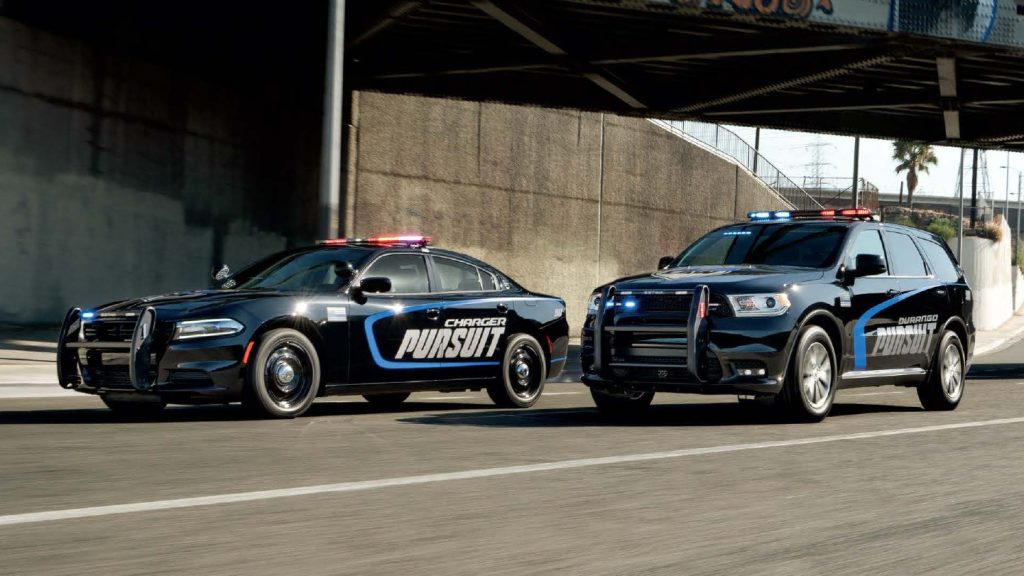
The Dodge Durango currently remains part of Stellantis’ police-vehicle lineup. Stellantis’ 2026 fleet materials list the Dodge Durango Pursuit with available 3.6-liter Pentastar V-6 and 5.7-liter HEMI V-8 powertrains, along with police-specific suspension, heavy-duty brakes, and other fleet equipment.
The Charger PPV, therefore, will not replace the SUV approach entirely. Instead, it gives police departments another option.
That flexibility could be important, as departments have different requirements depending on their size, geography, and type of law enforcement work.
The New Charger Has to Meet Police-Fleet Demands
A pursuit vehicle has to be engineered around requirements that ordinary performance cars never face.
Police departments may operate their vehicles for many hours each day, often with multiple drivers and equipment permanently installed. Officers may also spend extended periods sitting inside the vehicle while wearing duty belts and other equipment.
That creates ergonomic challenges. Car and Driver notes that police vehicles generally use seats with less aggressive side bolstering than civilian performance cars because officers need enough space to accommodate their utility belts and equipment.
The Charger PPV will also need appropriate provisions for communications equipment, computer systems, emergency lighting, and other police hardware.
Cooling is another important consideration. Pursuit vehicles can experience sustained high loads that ordinary vehicles rarely encounter. Police departments need vehicles capable of repeatedly accelerating and braking without overheating or suffering excessive mechanical stress.
The new Charger will therefore have to prove itself not only as a fast car but also as a durable fleet tool. That is where Dodge’s Hurricane engine and modern all-wheel-drive system will be tested.
The Hurricane 3.0-liter inline-six already provides a strong foundation for performance applications, but police service introduces a different set of priorities. Fleet managers need predictable maintenance requirements, reasonable fuel consumption, and long-term reliability alongside performance.
Dodge has not yet released complete specifications for the Charger PPV, including horsepower, torque, acceleration, top speed, pricing, or final police-specific equipment.
That means it is too early to determine exactly how the new vehicle will compare with competing pursuit models.
What is already clear is that Dodge is targeting a market niche that has almost disappeared. Car and Driver describes the Charger PPV as potentially becoming the only police-specification sedan on offer, although it will face competition from SUV-based pursuit vehicles.
That makes the project more significant than simply adding another vehicle to Dodge’s fleet portfolio.
The company is effectively betting that some police departments still want the attributes of a sedan even as SUVs dominate the segment.
The timing also fits Dodge’s broader performance strategy. Stellantis has been rebuilding the Dodge lineup around performance while expanding powertrain choices.
The company’s 2026 strategic plan specifically highlighted the return of performance-focused products and emphasized its intention to restore Dodge’s position as a major American muscle-car brand.
The Charger PPV extends that performance identity into a specialized commercial market. For police departments, however, the appeal will ultimately come down to function rather than nostalgia.
The vehicle must provide enough room for equipment, support the demands of emergency driving, offer reasonable operating costs, and remain durable under continuous fleet use.
If it succeeds, Dodge could give police agencies something they have increasingly lacked: a modern American pursuit sedan with all-wheel drive, a turbocharged engine, and the practicality of a hatchback.
The return of the Charger to police duty is therefore more than a nostalgic comeback. It reflects a deliberate attempt to combine modern performance hardware with the specialized demands of law enforcement.
The first production vehicles are expected around 2027, giving Dodge time to finalize the police-specific package and complete the testing required before fleet deployment.
Whether departments choose the Charger over increasingly popular pursuit SUVs will depend on pricing, durability, equipment compatibility, and real-world performance.
But the fact that Dodge is bringing the Charger back into the police market is already notable. After years in which the traditional police sedan seemed destined to disappear, the Mopar pursuit car is getting another chance.
And this time, it will return with standard all-wheel drive, a turbocharged Hurricane six-cylinder and a hatchback body, giving America’s newest police Charger a very different personality from the V-8-powered pursuit sedans that made its predecessor famous.