
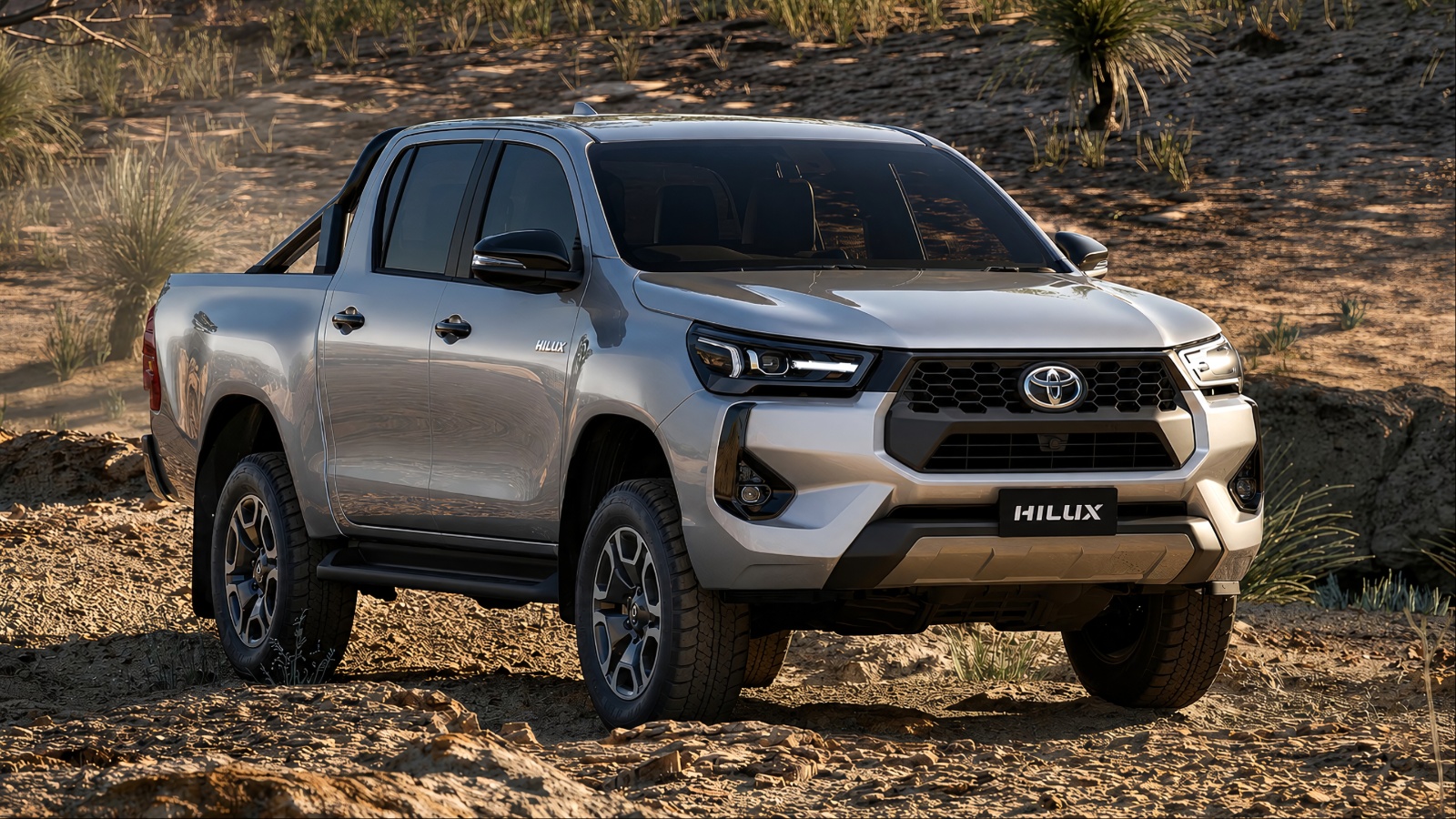
Mahindra is preparing to take a much bigger step into the global pickup market with a new truck designed to challenge established midsize pickups such as the Toyota Hilux.
The Global Pik Up is built around a ladder-frame architecture and is being developed as an international product rather than a pickup designed exclusively for India. Its positioning could give Mahindra a way into markets where rugged, relatively affordable pickups remain popular.
According to Carscoops, the new pickup is expected to significantly undercut established rivals on price, potentially giving it a substantial cost advantage over vehicles such as the Toyota Hilux. Mahindra describes it as an international pickup focused on performance, safety, utility, and off-road capability.
The project is important because Mahindra has spent years trying to expand beyond India. A global pickup could become one of the company’s most significant products for markets where customers want a tough truck without paying the premium commanded by established brands.
Mahindra’s Pickup Is Built for Global Markets
The Global Pik Up is based on Mahindra’s new-generation ladder-frame platform, according to the company’s official product information. That architecture provides the structural strength required for carrying loads and handling rough terrain while allowing Mahindra to develop different body styles from the same foundation.
The connection with the Scorpio-N is also significant. The SUV uses a third-generation body-on-frame platform designed around structural rigidity, off-road capability, and improved road manners.
Mahindra currently offers the Scorpio-N with turbocharged gasoline and diesel engines, six-speed manual and automatic transmissions, and four-wheel drive on selected diesel variants in India.
The Global Pik-Up is not simply a Scorpio-N with the rear body removed. Mahindra has developed it as a dedicated international pickup with different proportions, suspension requirements, and cargo-carrying capabilities.
A midsize pickup needs to handle work duties, towing, off-road driving, and daily transportation. It also has to provide enough comfort and technology to compete with increasingly sophisticated rivals.
Mahindra says the Global Pik Up has been designed for both professional and recreational use.
That broad positioning could help Mahindra target markets ranging from Australia and Africa to parts of Asia and Latin America.
The company has already demonstrated its intention to make the Scorpio-N a global product, highlighting markets such as South Africa and Nepal when the SUV was launched.
The Global Pik Up follows that philosophy but applies it to a vehicle category with much stronger international demand.
Toyota Hilux Is the Benchmark
Mahindra’s choice of the Toyota Hilux as a target is significant because the Hilux has become one of the world’s best-known midsize pickups.
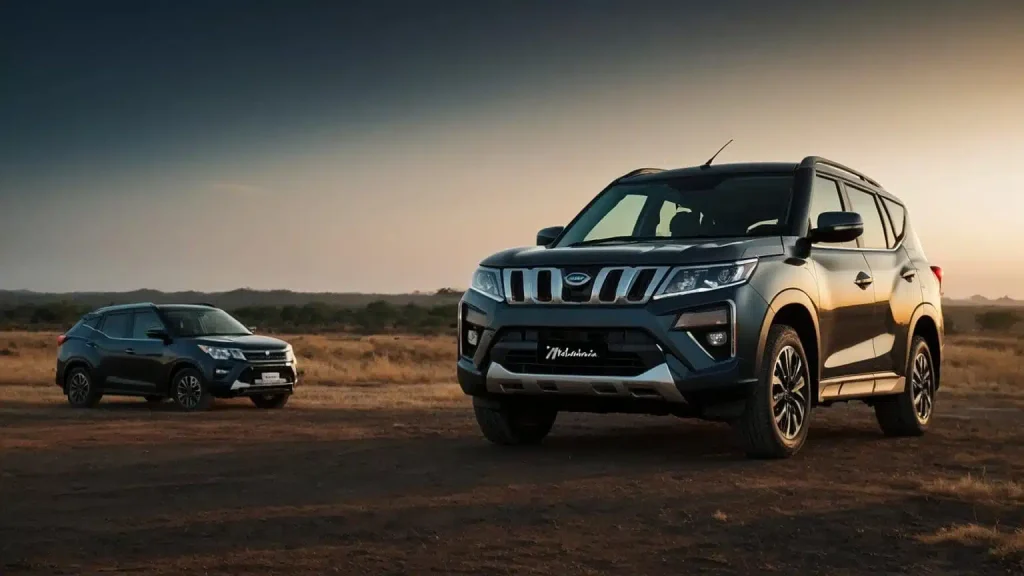
Toyota has spent decades establishing the truck’s reputation for durability, off-road capability, and commercial usefulness. In many international markets, the Hilux is an essential working tool for businesses, farmers, construction companies, and government organizations.
Challenging that reputation requires more than an attractive design and low price. Mahindra’s potential advantage is cost.
Carscoops reports that the new pickup could be priced approximately $13,000 below the Hilux, giving it a substantial price advantage in markets where both are sold.
If Mahindra can maintain that gap while delivering competitive reliability and capability, the truck could appeal to customers who want a midsize pickup without paying the price associated with established Japanese brands. Price alone, however, will not be enough.
Pickup customers often keep their vehicles for many years, making reliability and after-sales support important. A new international entrant must convince buyers that its lower price does not mean compromises in durability or parts availability.
Mahindra’s experience with body-on-frame SUVs gives it a useful starting point. The Scorpio-N already uses a ladder-frame structure and offers four-wheel drive, while Mahindra says the SUV was designed to provide strong off-road capability alongside improved on-road behavior.
Those characteristics translate naturally into a pickup. The company has also been developing the Global Pik Up with international requirements in mind. That could help Mahindra avoid the problem of designing a vehicle primarily for its home market and adapting it afterward.
The truck instead is intended to be a global product from the beginning. That does not guarantee success, but it gives Mahindra a stronger foundation.
The Pickup Could Become a Major Part of Mahindra’s Global Expansion
The Global Pik Up is about more than competing with one Toyota model. Mahindra is attempting to strengthen its position as a global automaker, and a pickup could provide access to markets where its current SUV lineup has limited reach.
Australia is one example. The country has a strong pickup culture, with midsize trucks serving commercial and personal roles. The Hilux, Ford Ranger, Mitsubishi Triton, and Isuzu D-Max are already established names.
Breaking into such a market would be difficult, but Mahindra could differentiate itself through pricing and equipment.
The same principle applies to other international markets where buyers value rugged vehicles capable of handling difficult terrain and heavy use.
Mahindra’s existing engineering experience could help establish credibility. The Scorpio-N’s diesel engine produces up to 175 horsepower and 400 Nm of torque, while its gasoline version produces up to 200 PS and 380 Nm, with six-speed manual and automatic transmissions available. Four-wheel drive is offered on selected variants.
The Global Pik Up’s final powertrain specifications and market-specific configurations will determine how directly it can compete with the Hilux and other international pickups.
Mahindra will also have to address safety requirements in every market where it intends to sell the truck.
Modern pickup buyers increasingly expect advanced driver-assistance systems, strong crash protection, and comprehensive safety equipment. The truck will therefore need to meet regulations that can be considerably more demanding than those in its home market.
After-sales support could be equally important. A global pickup cannot succeed if customers struggle to obtain replacement parts or find trained technicians. Mahindra will need reliable dealer and service networks in each target market before it can realistically challenge established manufacturers.
The opportunity, however, is substantial. Mahindra has already demonstrated that it can develop a modern body-on-frame SUV with international ambitions. The Global Pik Up takes that foundation into one of the world’s most competitive vehicle segments.
If the truck delivers strong off-road performance, a useful payload and towing capability, modern safety technology, and competitive refinement while maintaining a significant price advantage, Mahindra could attract buyers who have traditionally defaulted to Toyota, Ford, Isuzu, and Mitsubishi.
The Hilux comparison gives the truck a clear target. Mahindra does not need to immediately become the world’s best-selling pickup. It needs to establish itself as a credible alternative for buyers who value capability but are increasingly facing higher vehicle prices.
That could be the truck’s biggest opportunity. Pickup buyers still want durability and utility, but many now also expect touchscreen technology, advanced safety systems, comfortable interiors, and strong everyday drivability.
A lower-cost truck that delivers those features could find customers in markets where established pickups have become increasingly expensive.
Mahindra’s challenge will be proving that the value equation holds after years of ownership, not simply at the dealership.
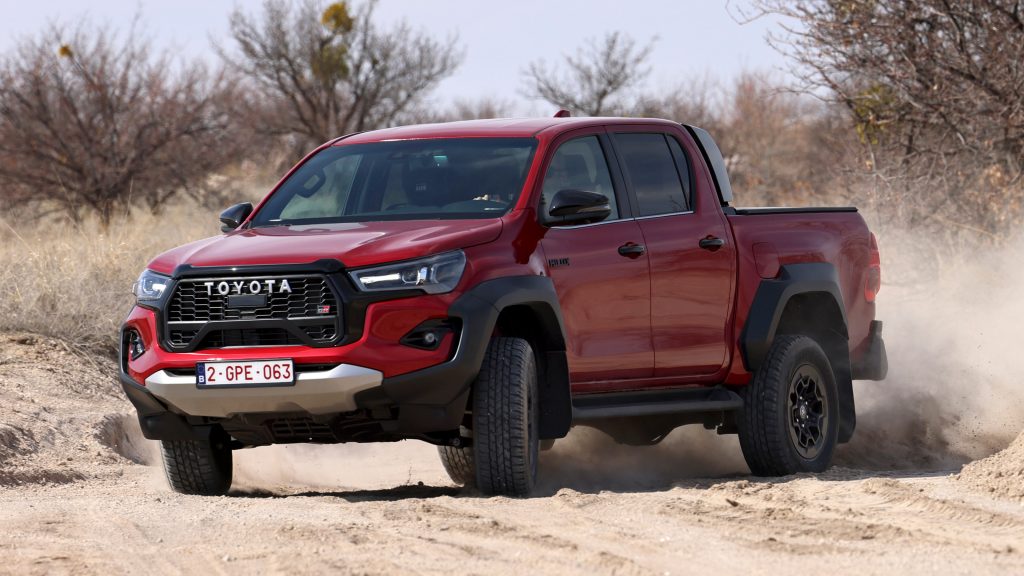
The Global Pik Up is therefore an important product for the company’s international ambitions. It gives Mahindra a vehicle capable of competing in a segment where its brand is not yet established but where its experience with rugged SUVs gives it a credible foundation.
The company describes the Global Pik Up as a global lifestyle pickup built around its new ladder-frame platform, emphasizing versatility, utility, and capability.
If Mahindra can combine those characteristics with the price advantage reported by Carscoops, the new truck could become one of the most interesting alternatives to the Toyota Hilux and other established midsize pickups.
The bigger story is what happens next. Mahindra is no longer positioning itself simply as an Indian SUV manufacturer. With the Global Pik Up, it is attempting to enter a genuinely international vehicle segment and compete against manufacturers with decades of experience.
A successful launch would give the company another important tool for global expansion and could establish Mahindra as a serious player in the international pickup market.
For Toyota and other established truck manufacturers, that makes the new Mahindra more than a low-cost curiosity. If it delivers the capability and durability buyers expect while keeping its price substantially lower, it could become a genuine challenger in markets where value matters just as much as brand reputation.
