

Stellantis is facing renewed questions about vehicle quality and software reliability after recalling nearly 955,000 vehicles worldwide because a software problem can prevent the rearview camera image from appearing when drivers shift into reverse.
The recall affects approximately 848,511 vehicles in the United States, along with vehicles in Canada, Mexico, and other international markets. The affected models include 2026 and 2027 vehicles from Chrysler, Dodge, Jeep, and Ram, making the campaign one of the largest recent recalls tied specifically to an electronic software problem.
According to Reuters, Stellantis said the issue is caused by radio software that can interfere with the rearview-camera display. The automaker is not aware of any accidents or injuries associated with the defect and plans to fix the problem through an over-the-air software update.
The immediate repair may be relatively simple, but the timing creates a larger concern for Stellantis. The company has already faced a series of major recalls and has publicly acknowledged the financial and reputational consequences associated with vehicle-quality problems.
That makes the latest campaign significant not only because of the number of vehicles involved but also because it raises questions about whether software-related quality problems are becoming a recurring weakness across Stellantis’ increasingly complex vehicle lineup.
Why the Backup Camera Problem Is a Safety Concern
The defect does not appear to involve a physically damaged camera. Instead, the problem occurs within the vehicle’s radio software, which can prevent the rearview-camera image from being displayed on the media screen.
According to Euronews, the affected system may fail to display the camera image when the vehicle is shifted into reverse.
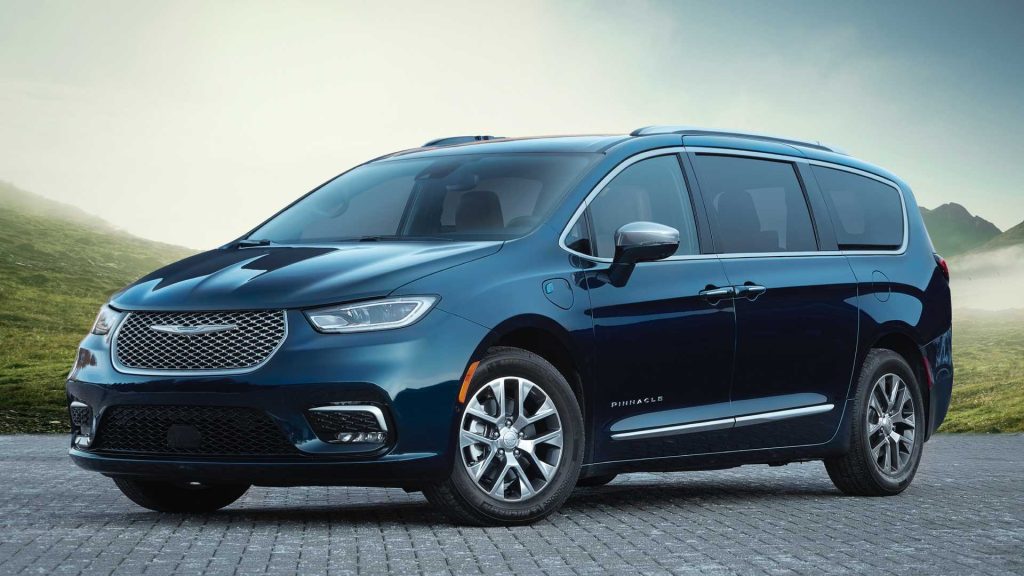
The recall covers a wide range of vehicles, including the Chrysler Pacifica, Pacifica Plug-in Hybrid and Voyager, Dodge Charger, Jeep Cherokee, Compass, Gladiator, Grand Cherokee, Grand Wagoneer and Wrangler, as well as Ram 1500, 2500 and ProMaster models.
That creates a safety problem because the rearview camera is intended to provide drivers with a direct view of the area immediately behind the vehicle.
Modern vehicles can have substantial blind zones, particularly large SUVs, pickups, and vans. A driver reversing from a driveway or parking space may not be able to see a small child, pedestrian, bicycle, or low obstacle through the rear window or mirrors alone.
The importance of rear visibility is one reason the United States began requiring rearview cameras in new light-duty vehicles.
Reuters noted that NHTSA’s 2014 rule required the technology in new light-duty vehicles by 2018, citing an estimated average of about 210 deaths and 15,000 injuries annually from backover crashes before the requirement took effect.
The Stellantis defect does not mean the vehicles suddenly become impossible to drive. Drivers can still use their mirrors and physically look behind the vehicle.
Stellantis specifically advises owners to use their rearview and side mirrors if the camera image fails to appear.
The problem is that drivers have become accustomed to using the camera as part of the normal reversing process. Losing that additional field of view can increase risk, particularly in situations where the driver assumes the camera is functioning. There is also an important distinction between this recall and a conventional hardware failure.
The cameras themselves are not necessarily defective. The issue is that the software controlling the vehicle’s display may fail to deliver the image when required.
That makes the campaign another example of how modern vehicles have become increasingly dependent on software. A problem that would once have involved a physical component can now originate in the code controlling multiple vehicle functions.
And because the same software architecture can be used across multiple models, a single defect can potentially affect hundreds of thousands of vehicles.
The Bigger Quality Problem for Stellantis
The latest recall would be significant for any automaker, but it is more uncomfortable for Stellantis because the company has already faced substantial criticism over vehicle quality.
Euronews reported that Stellantis recalled approximately 13.4 million vehicles in 2025, compared with 7.3 million in 2024. The publication also highlighted that Stellantis itself has acknowledged the potential reputational consequences of recalls in its corporate reporting.
The company’s own financial disclosures have also drawn attention to warranty costs. According to Euronews, Stellantis recorded a charge of roughly €5.3 billion in the second half of 2025 after revising its estimates for warranty provisions.
The company attributed the adjustment partly to higher costs and a deterioration in quality associated with previous operational decisions. That history changes how the latest recall is viewed.
A single software defect affecting nearly one million vehicles can be treated as an isolated engineering mistake. But when it arrives after several other major recalls, customers and investors may begin asking whether there is a broader problem with the company’s product development and quality control processes.
The latest issue is also not completely unfamiliar. Euronews reported that Stellantis previously recalled approximately 1.16 million vehicles in North America in 2024 because radio software could similarly prevent rearview-camera images from appearing.
That earlier campaign involved more than one million vehicles in the United States and approximately 126,000 in Canada. The recurrence is particularly important.
The latest recall does not necessarily mean that Stellantis has repeated the same software mistake. The affected vehicles and software systems are not identical across every campaign.
But the fact that rearview-camera functionality has again become the subject of a large Stellantis recall naturally raises questions about how software is being validated before vehicles reach customers.
Modern vehicles are effectively computers on wheels. Their infotainment systems are increasingly connected to safety-related functions, driver assistance systems, cameras, and displays.
That creates enormous benefits, including the ability to fix certain problems remotely. But it also creates new quality-control challenges.
A software problem can spread much faster than a mechanical defect when the same software architecture is installed across multiple models. The latest campaign demonstrates both sides of that equation.
Stellantis has almost one million vehicles involved, but it does not need to replace nearly one million cameras. Instead, the company expects to distribute an OTA update.
An OTA Fix Limits the Immediate Cost, but Not the Reputation Risk
The good news for Stellantis is that the repair itself should be relatively straightforward. According to Reuters, affected owners will receive an over-the-air radio software update through a prompt on the vehicle’s media screen when the remedy becomes available.
Because the vehicles are equipped to receive OTA updates, most owners should not need to schedule a traditional dealership repair.
That can substantially reduce the logistical burden of a recall involving hundreds of thousands of vehicles.
A mechanical recall might require replacement parts, dealership appointments, technician labor, and extended repair times. Software can potentially be corrected remotely across an enormous number of vehicles in a relatively short period.
The technology also allows Stellantis to respond quickly. But an OTA repair does not eliminate the underlying concern.
For customers, the fact that a problem can be fixed remotely does not necessarily make the original defect less frustrating. Owners purchased vehicles with the expectation that essential safety-related systems would function correctly.
The recall also demonstrates why software validation is becoming just as important as traditional mechanical testing.
A vehicle manufacturer can spend years developing a new model and testing its engine, transmission, suspension, and crash performance, yet a software error can still create a safety defect after the vehicle reaches customers.
That puts pressure on automakers to test software under an enormous range of conditions and to consider interactions between different electronic systems.
Stellantis has not reported any accidents or injuries connected to the latest camera problem, which is an important distinction.
Still, the scale of the recall means the company cannot treat the issue as insignificant. The campaign covers 954,885 vehicles globally, including 848,511 in the United States, according to recall information reported by automotive publications.
The U.S. vehicles span multiple brands and vehicle categories, demonstrating how widely Stellantis shares electronic architecture across its portfolio.
For owners, the immediate priority is checking whether their vehicle is included and installing the software update once it becomes available. Until the repair is completed, drivers should not assume the rearview camera will always appear when reversing.
For Stellantis, however, the challenge is larger. The company needs to demonstrate that this recall is an isolated software problem rather than another indication of broader quality-control weaknesses.
That will be particularly important as it attempts to rebuild customer confidence and manage the financial consequences of previous warranty and recall problems.
The latest campaign also illustrates a larger transformation taking place throughout the automotive industry.
Software is becoming an increasingly important part of vehicle safety, but that means software development, testing, and quality assurance now carry consequences once associated mainly with mechanical engineering.

A rearview camera may seem like a simple feature, yet its operation depends on cameras, wiring, electronic control units, displays, and software all working together correctly.
When one part of that chain fails, hundreds of thousands of vehicles can suddenly require corrective action.
Stellantis now has an opportunity to demonstrate that its software-based remedy can be delivered quickly and reliably. If the update works as intended, owners may experience little more than a temporary inconvenience.
But the reputational issue will be harder to fix. After years of recalls and rising warranty concerns, another nearly million-vehicle campaign gives consumers another reason to question whether Stellantis has fully solved its quality problems.
The company has the advantage of being able to address this particular defect digitally. The more difficult task will be proving that its increasingly software-driven vehicles are being engineered and tested with the level of consistency expected from one of the world’s largest automakers.
