
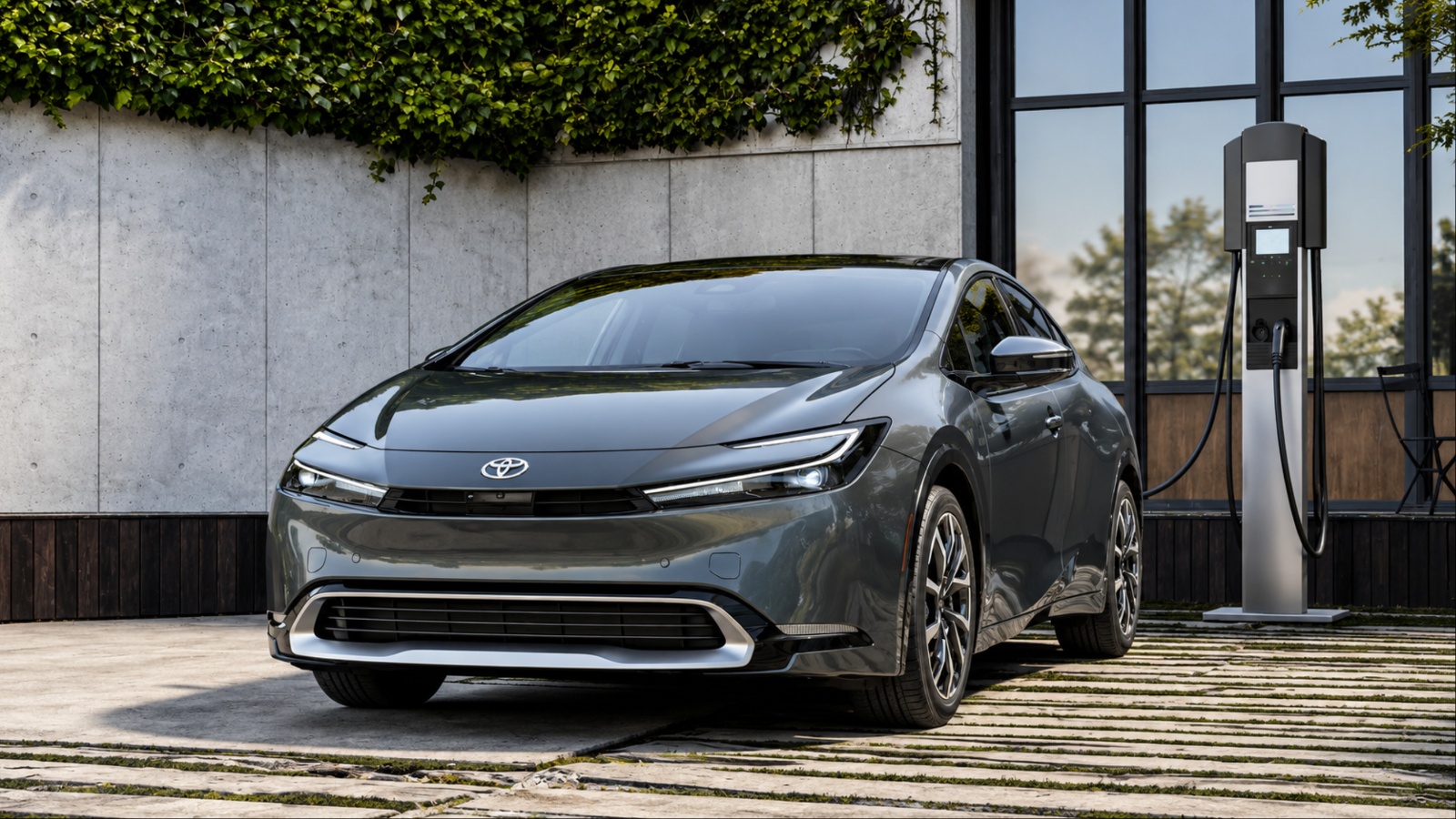
Europe’s electric-vehicle market delivered another strong performance in July, with battery-electric vehicle registrations rising sharply as consumers continued moving toward fully electric models.
According to the latest data from the European Alternative Fuels Observatory (EAFO), preliminary figures show 202,597 battery-electric vehicles were registered in July 2026, representing a 41.8% increase from July 2025. Battery-electric vehicles accounted for 26.3% of new passenger-car registrations in the reporting markets.
At the same time, Europe’s public charging network continued to expand. EAFO reported 1,157,551 publicly accessible recharging points across the EU27 in July, up 15.2% from a year earlier.
The figures provide another indication that Europe’s electric transition is gaining momentum after several periods of uncertainty surrounding consumer demand, vehicle prices, charging availability, and government incentives.
However, the latest data needs some context. The 202,597 BEV registrations and 41.8% growth figure come from 12 EU member states reporting July data, rather than a complete July registration count for all 27 EU countries. EAFO says the remaining member states were still updated only through June, when the August 21 data release was published.
Even with that qualification, the results are significant. Every one of the 12 reporting markets recorded year-over-year BEV growth, suggesting that the improvement is not being driven by just one or two countries.
Germany and France Lead a Broad European Recovery
The July numbers show that Europe’s electric-car growth is becoming more widespread. According to EAFO, France recorded the strongest year-over-year increase at 127.1%, while Ireland followed with growth of 96.2%.
Germany, Luxembourg, and Finland also recorded increases of more than 50%. The weakest growth among the reporting markets was still positive, with Belgium recording a 23.3% increase.
Germany remained the largest market by absolute BEV registrations among the countries included in the latest update, recording 78,609 battery-electric registrations in July. France followed with 44,378.
Those two markets are particularly important for Europe’s automotive industry because of their size and their influence on manufacturers’ production strategies.
Germany is home to Volkswagen, BMW, Mercedes-Benz, and several major suppliers, while France has a large domestic automotive industry and has been pushing electrification through industrial and consumer policies.
The strong German result is especially notable because the country has experienced periods of weaker EV demand after changes to consumer incentives. A sustained recovery could encourage manufacturers to increase electric production and broaden the number of EVs offered to European customers.
France’s more than doubling of BEV registrations also points toward changing consumer behavior. A 127.1% annual increase is too large to dismiss as a marginal improvement, although monthly registration figures can be influenced by fleet deliveries, incentives, manufacturer promotions, and changes in supply.
The broader pattern is more important than any single monthly number. EAFO said all 12 reporting countries recorded growth in July. That suggests the European EV market is not simply experiencing an isolated improvement in one major market but is showing stronger demand across several countries.
The 26.3% BEV share of new registrations is another important milestone. Roughly one out of every four new passenger vehicles in the reporting data was fully electric. That changes the competitive environment for automakers because EVs are no longer a small niche within the European market.
Manufacturers now need to compete for a much larger group of customers who are actively choosing battery-electric vehicles. This could influence everything from pricing and product development to battery sourcing and manufacturing capacity.
Charging Infrastructure Is Expanding Alongside EV Sales
The growth in vehicle registrations is being accompanied by continued investment in charging infrastructure. EAFO reported 1,157,551 publicly accessible charging points across the EU27 in July 2026, representing a 15.2% increase compared with July 2025.
That figure includes publicly accessible charging points rather than private chargers installed exclusively for individual households or restricted groups of users. EAFO’s methodology covers charging infrastructure that is available to the general public, including chargers located on private property when the public can access them.
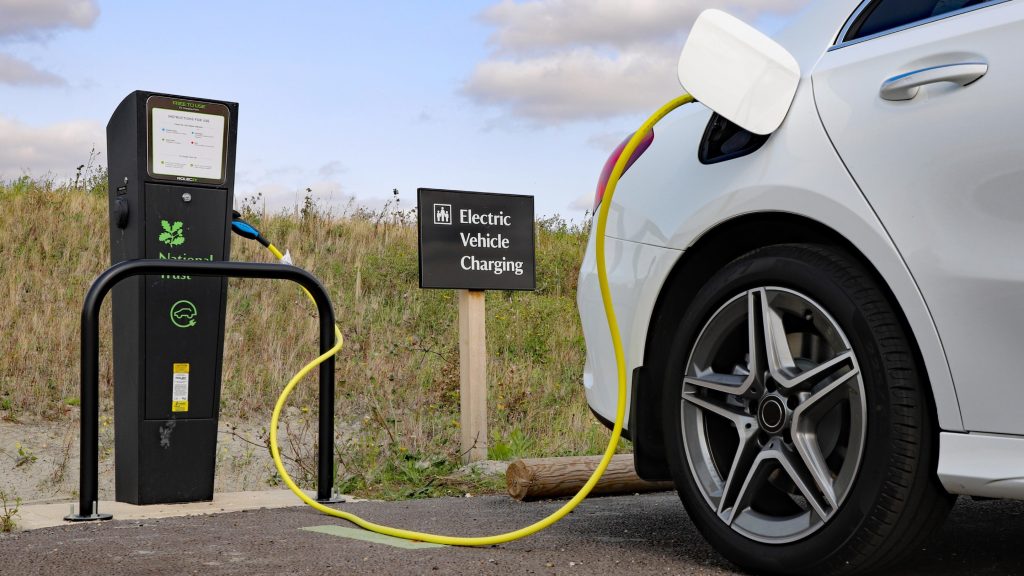
The expansion matters because charging availability remains one of the most important practical considerations for people considering an EV.
A growing vehicle fleet requires a charging network capable of supporting drivers who cannot rely entirely on home charging.
This is particularly important in urban areas, apartment buildings, and for drivers who regularly travel long distances.
The European Union has already established a regulatory framework intended to accelerate the rollout of alternative-fuel infrastructure. The Alternative Fuels Infrastructure Regulation, which has applied since April 2024, establishes requirements for charging infrastructure deployment and aims to improve interoperability and consumer access across member states.
The latest infrastructure numbers suggest that the network continues to expand as EV adoption increases. There is, however, an important distinction between the number of charging points and the quality of the charging experience.
More charging points do not automatically mean every driver has convenient access to a fast charger. Location, charging speed, reliability, payment options, and network coverage all matter.
A driver living in an apartment without private charging may value a nearby reliable fast charger far more than several slower chargers located many miles away.
Europe’s charging expansion will therefore need to keep pace not only in quantity but also in geographic distribution and charging performance.
The relationship between charging infrastructure and EV sales is becoming increasingly important.
As more people purchase electric vehicles, demand for public charging rises. As the charging network becomes more convenient, another barrier to EV ownership is reduced.
That can create a reinforcing cycle in which stronger EV sales encourage additional infrastructure investment, while better infrastructure makes EVs more attractive to consumers.
What the July Numbers Mean for Europe’s Automotive Industry
The latest figures arrive at an important moment for European automakers. Manufacturers are under pressure to reduce emissions while also dealing with competition from rapidly expanding Chinese EV brands, changing consumer preferences, and the high cost of developing new electric models.
The stronger July registration figures could provide some relief. Automakers have invested billions of euros in EV platforms, battery factories, and production facilities. Stronger demand gives manufacturers a better opportunity to use that capacity and spread development costs across larger production volumes.
It could also encourage companies to accelerate the introduction of new electric models. European consumers now have more EV choices than they did only a few years ago, ranging from small city cars to premium sedans and large SUVs.
As competition increases, manufacturers are likely to focus more heavily on range, charging speed, pricing, and software.
The market-share figure is particularly important because it shows how quickly EVs are moving into the mainstream.
A 26.3% share means battery-electric vehicles are already competing directly with gasoline, diesel, hybrid, and plug-in hybrid models for a substantial portion of new-car buyers.
That could eventually affect the economics of traditional combustion-engine production. If EV demand continues to increase, manufacturers may need to shift more factory capacity toward electric vehicles while reducing investment in conventional powertrains.
At the same time, the European market is not moving at the same speed everywhere. EAFO’s data shows significant differences in growth rates between individual countries. Policy incentives, charging infrastructure, electricity prices, taxation, fleet purchasing, and the availability of affordable EVs can all influence registration figures.
That means automakers cannot assume that the same product strategy will work equally well in every European market. Affordable electric vehicles could become particularly important.
Much of Europe’s early EV growth came from premium vehicles and company fleets, but sustained mass-market adoption will require more choices at lower price points.
Consumers still face relatively high upfront prices for many EVs, even when operating costs can be lower over time.
Manufacturers that can reduce battery costs and produce competitively priced compact EVs could therefore benefit from the next stage of Europe’s transition. The charging network will also remain a major part of that equation.
The European Commission has identified transport electrification as an important component of its broader energy strategy. In its July 2026 electrification action plan, the Commission emphasized the importance of connecting transport and electricity systems as Europe increases its use of electric vehicles.
The latest registration data suggests that the transition is continuing despite the challenges. There is also a reason to be cautious about interpreting one month as a permanent trend.
Registration figures can move sharply from month to month because of manufacturer deliveries, fleet purchases, regulatory deadlines, and supply changes. The July data is therefore best viewed as another strong signal rather than proof that Europe’s EV market will grow at exactly the same rate throughout the year.
The fact that only 12 EU countries had July registration data available also means the final EU-wide picture could change when the remaining countries are updated.
Nevertheless, the direction is difficult to ignore. Battery-electric registrations increased 41.8% year over year, BEVs represented 26.3% of new registrations in the reporting markets, and public charging infrastructure across the EU27 increased 15.2%.
Those three numbers tell an important story. Electric vehicles are gaining market share; more consumers are choosing them, and the infrastructure supporting them continues to expand.
For European automakers, that creates both an opportunity and a challenge. Stronger demand can help justify the enormous investments already made in electrification, but it also raises the stakes in an increasingly competitive market.
Companies will need to deliver EVs that are affordable, practical, and compelling enough to attract customers beyond early adopters.
The July results suggest that European consumers are becoming more receptive to those products.
If the trend continues through the remainder of 2026, Europe’s automotive market could be entering a new phase in which battery-electric vehicles are no longer simply a rapidly growing alternative but one of the central forces shaping the industry’s future.
