
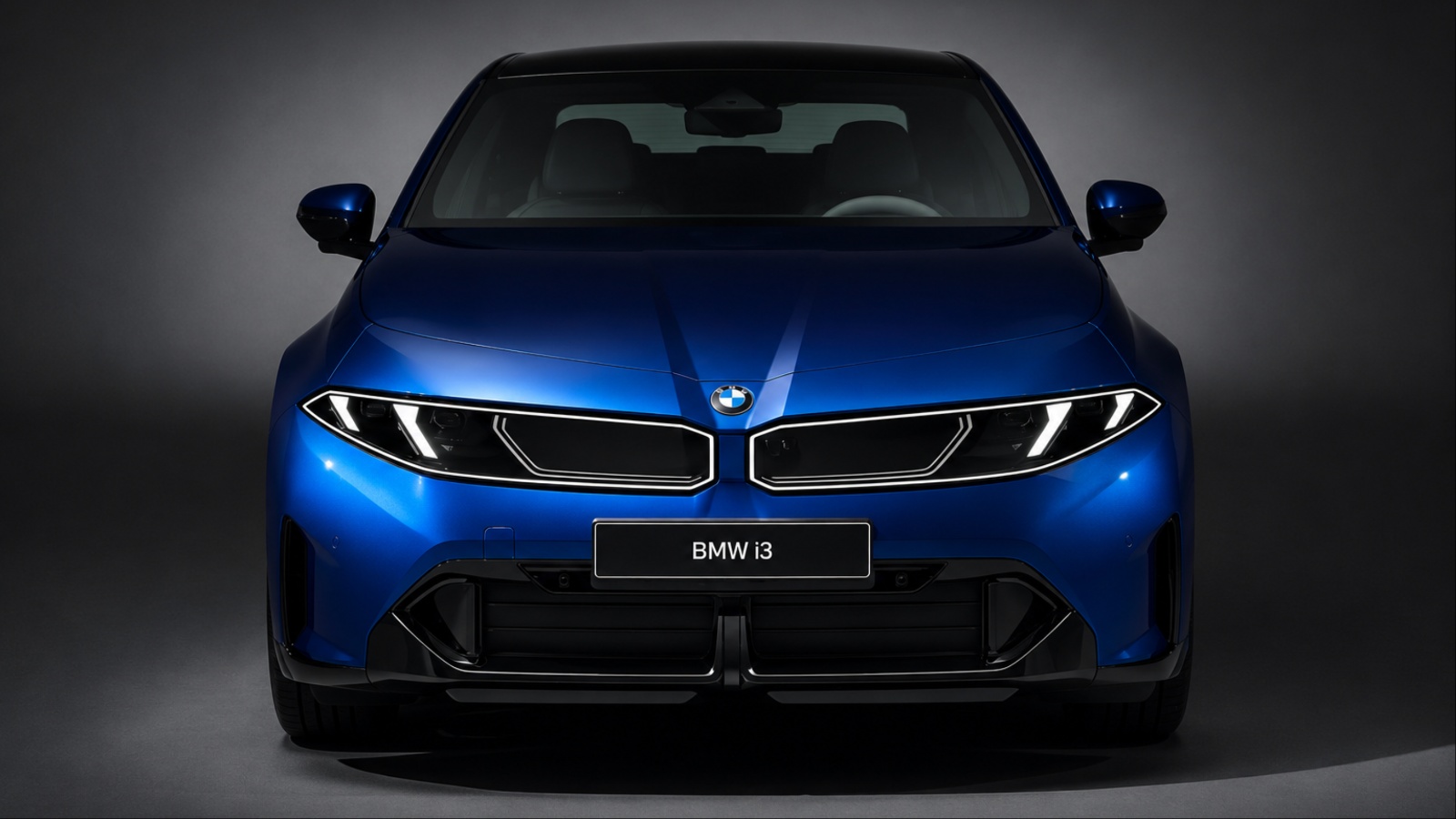
BMW is preparing to bring something increasingly unusual to the European electric-car market: a battery-powered station wagon. The new BMW i3 Touring is emerging as a key part of the automaker’s next-generation Neue Klasse family, combining a large battery, long-distance capability and the practicality of a traditional estate body.
The model is particularly interesting because BMW is not simply converting an existing gasoline-powered wagon into an electric vehicle. The i3 Touring is being developed as part of BMW’s next-generation electric architecture, allowing the company to design the vehicle around its electric powertrain from the beginning.
According to Carscoops, the i3 Touring is expected to use a 108.7-kWh battery pack and deliver a substantial driving range. BMW has not yet published every final specification for the production Touring, so some figures remain subject to official confirmation.
However, the vehicle’s development is clearly aimed at customers who want the efficiency and refinement of an EV without switching to an SUV.
That makes the i3 Touring an important product for BMW and for a European market where station wagons remain popular despite the rapid growth of crossovers.
The vehicle also represents a broader change in BMW’s electric strategy. Instead of treating EVs as separate derivatives of combustion-powered models, the company is increasingly building dedicated electric vehicles around its Neue Klasse technology.
The i3 Touring will be one of the clearest examples of how that strategy can be adapted to a practical family car.
A Large Battery in a Practical Wagon
The most significant detail surrounding the i3 Touring is its battery. Carscoops reports that BMW’s upcoming electric wagon will receive a 108.7-kWh usable battery, giving the model enough energy storage to compete with long-range electric sedans and SUVs.
BMW has previously said the Neue Klasse platform can deliver up to 30% more range and 30% faster charging than the company’s previous-generation EV technology.
The large battery is important because the Touring’s mission is different from that of a small urban EV.
A wagon is frequently used as a long-distance family vehicle. Owners may carry passengers, luggage, sports equipment, or other cargo while covering hundreds of miles in a single trip. Range consistency and charging speed therefore become major considerations.
BMW’s Neue Klasse architecture is designed around an 800-volt electrical system and the company’s sixth-generation eDrive technology. BMW says its new charging technology can add up to 186 miles of range in approximately 10 minutes under suitable fast-charging conditions.
That combination of battery capacity and charging performance could make the i3 Touring considerably more useful on long journeys than many earlier electric wagons.
The technology also benefits from BMW’s next-generation electric motors and electronics. BMW has said its sixth-generation eDrive system can improve energy efficiency by as much as 30% compared with its previous-generation technology.
The company is also using silicon-carbide inverters and more compact electric-drive components to reduce losses and packaging requirements.
These improvements matter because simply installing a larger battery is not always the best way to increase range. A more efficient drivetrain allows an automaker to extract more miles from every kilowatt-hour while potentially keeping battery size and weight under control.
BMW is therefore trying to combine a substantial battery with improved efficiency rather than relying solely on battery capacity.
The final EPA or European WLTP range for the i3 Touring will depend on the production configuration, wheel size, drivetrain, and testing cycle. BMW has not yet published a definitive U.S. range rating for the wagon, and the model’s availability is expected to be focused heavily on European markets.
The Wagon BMW’s EV Lineup Has Been Missing
The i3 Touring is also important because it addresses a gap created by the industry’s overwhelming shift toward SUVs.
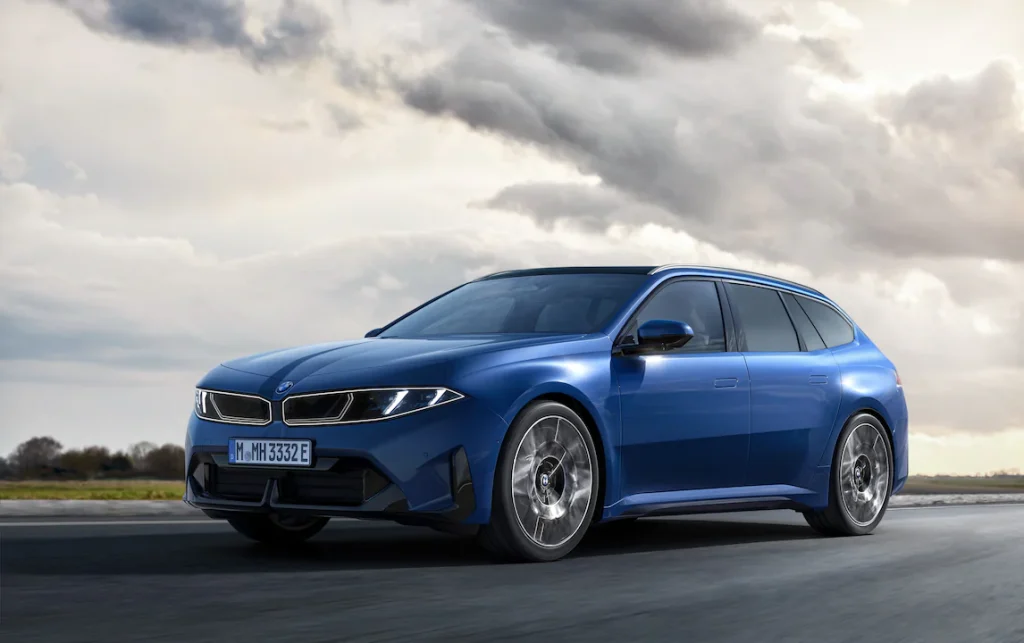
Electric crossovers have become increasingly common because their tall bodies provide packaging advantages for batteries, passengers, and cargo. But station wagons remain more efficient in certain situations because their lower roofline and body shape can reduce aerodynamic drag.
BMW already has decades of experience building estate versions of its core models. The traditional 3 Series Touring and 5 Series Touring have established the idea that a practical family car can still deliver the driving characteristics expected from a BMW.
The i3 Touring carries that philosophy into the electric era. Unlike a conventional SUV, the wagon’s lower stance should provide a different driving position and handling balance. Its longer roof also creates a useful cargo area without requiring the high body of an SUV.
BMW has already shown the importance of this formula with its electric i5 Touring, but the Neue Klasse i3 Touring is expected to take the concept much further. It will be based on the same technological generation as the upcoming i3 sedan, giving BMW a dedicated electric wagon rather than an adaptation of an existing combustion platform.
Spy photographs and prototype sightings have shown that the Touring will retain the long-roof proportions associated with BMW estate cars while incorporating the styling language of the Neue Klasse generation.
Carscoops has reported that the wagon will follow the i3 sedan mechanically while providing the additional cargo flexibility buyers expect from a Touring.
The timing is particularly interesting because BMW is launching the wagon at a moment when several European manufacturers are reconsidering how much space they should give to traditional body styles.
The i3 Touring could therefore serve a customer who does not want an SUV but still needs the advantages of a large electric vehicle.
There is another benefit to the wagon format: aerodynamics. A lower vehicle with a relatively streamlined roof can potentially require less energy at highway speeds than a taller SUV.
That does not automatically make every wagon more efficient, since factors such as frontal area, tires, and powertrain calibration also matter, but the body style gives BMW another tool for maximizing range. For long-distance European driving, that could be particularly valuable.
Why the i3 Touring Could Matter Beyond BMW
The i3 Touring is arriving at a time when the European EV market is becoming more diverse. Early electric vehicles were dominated by hatchbacks, sedans, and increasingly compact SUVs. Large electric wagons remain comparatively rare.
That makes BMW’s decision to invest in the body style notable. The company is not simply pursuing an enthusiast niche. It is using the Neue Klasse platform to establish a broad family of vehicles that can share batteries, motors, electronics, and software while serving different customer requirements.
BMW has said its Neue Klasse architecture will underpin at least six new models and derivatives by 2027. The i3 Touring fits directly into that expansion strategy. (bmwgroup.com)
The underlying technology could also help BMW compete more effectively with rapidly improving Chinese EV manufacturers.
European automakers are under pressure to offer greater range, faster charging, and sophisticated software while keeping vehicle prices competitive. BMW’s response has been to redesign the core technology rather than simply adding larger batteries to existing models.
The i3 Touring will provide a practical demonstration of whether that approach works. A 108.7-kWh battery would give the wagon substantial energy reserves, while the 800-volt system should allow shorter charging stops when connected to compatible infrastructure.
The combination could make it a particularly attractive choice for drivers who regularly travel long distances but do not want an SUV. However, price will be crucial.
Large battery packs are expensive, and BMW is positioned as a premium manufacturer. If the i3 Touring arrives with a high price, its appeal could remain limited even if its technical specifications are impressive.
European buyers will ultimately have to decide whether the advantages of long range, fast charging, and wagon practicality justify the premium.
BMW also faces competition from electric wagons already available or under development from other European manufacturers. The market is small compared with SUVs, but a successful i3 Touring could encourage other manufacturers to continue offering long-roof EVs instead of abandoning the segment.
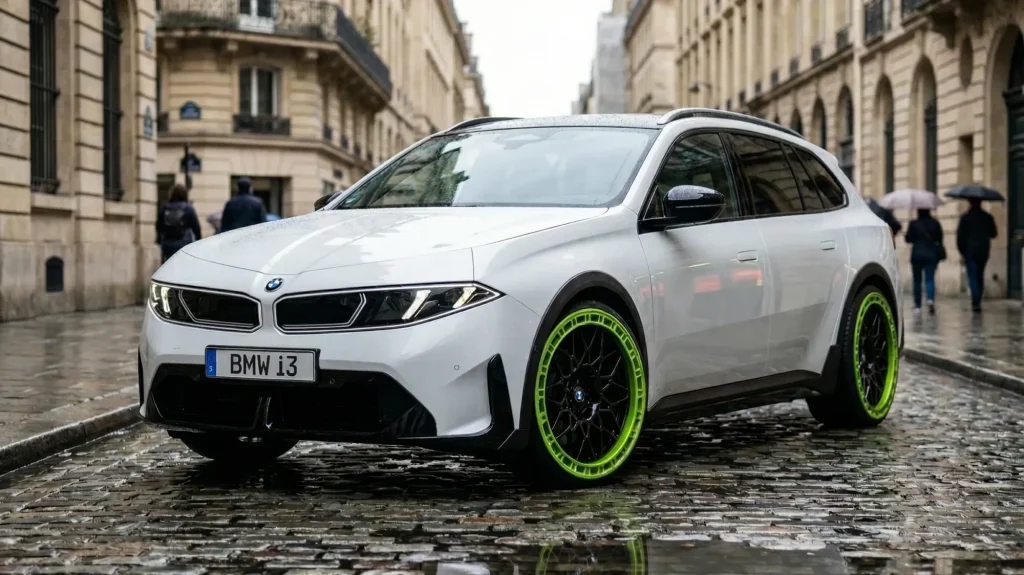
For BMW, the model represents more than another variant. The i3 Touring will demonstrate how far the company’s Neue Klasse technology can be stretched while preserving the practicality that has made its Touring models popular.
A large battery, fast charging, and improved efficiency could give it the ability to cover long distances without forcing customers into a crossover.
The final specifications will determine how convincing that proposition becomes. BMW still needs to disclose definitive range, pricing, and market availability, while real-world efficiency will ultimately matter more than laboratory figures.
Nevertheless, the direction is clear. The i3 Touring is bringing a traditional European body style into BMW’s next generation of electric vehicles at a time when the industry is increasingly focused on SUVs.
If BMW can deliver the expected range without making the wagon excessively heavy or expensive, the i3 Touring could become one of the most compelling alternatives to electric SUVs. More importantly, it could demonstrate that the future of electric family transportation does not necessarily have to be tall, bulky, or crossover-shaped.
