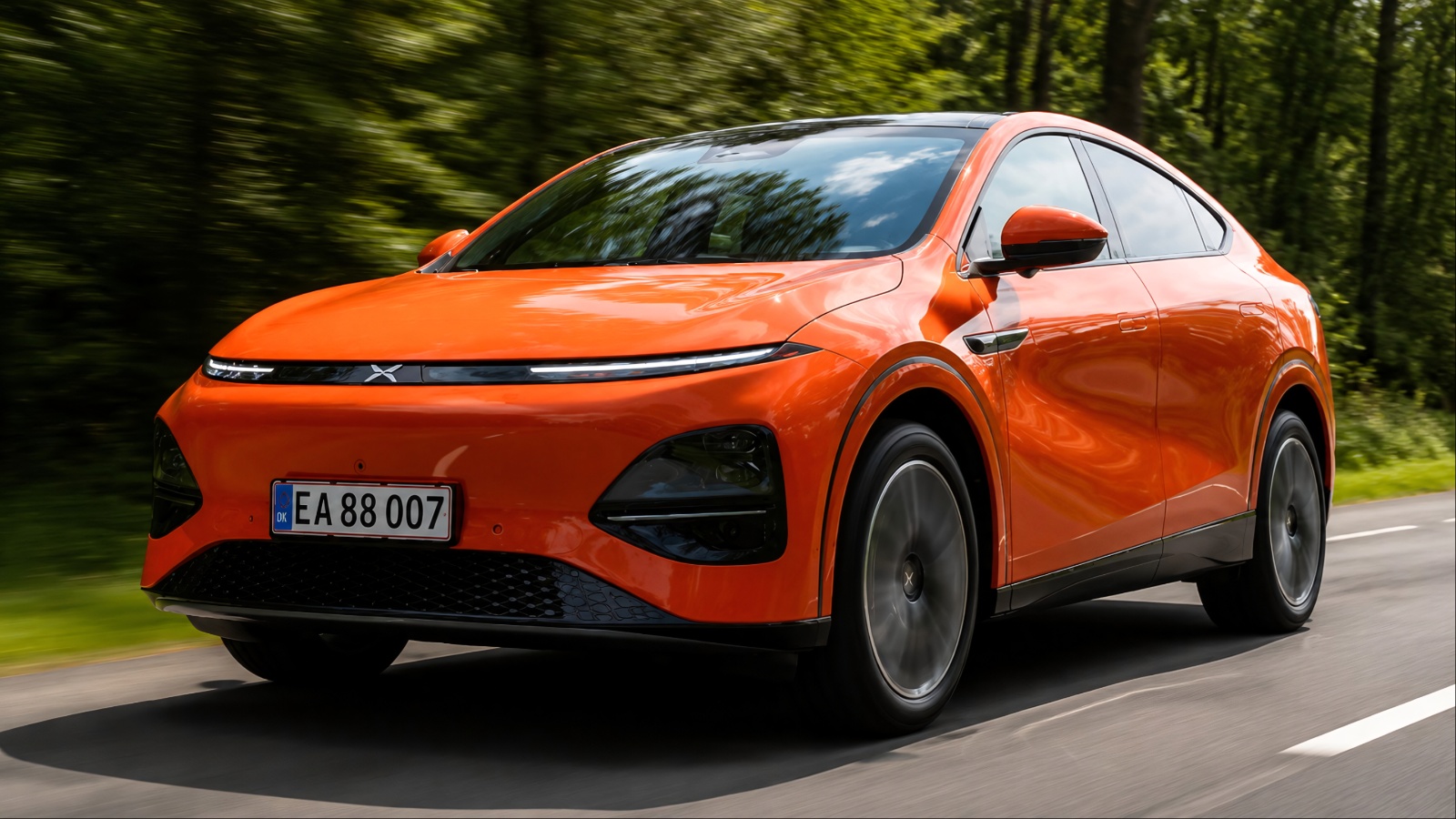
XPeng shares fell on Monday after the Chinese electric vehicle manufacturer issued a weaker-than-expected revenue forecast for the third quarter, highlighting the growing pressure facing EV makers in China’s increasingly crowded automotive market.
The warning came despite XPeng reporting stronger revenue and gross margins in the second quarter.
Investors instead focused on the company’s outlook, which indicated that intensifying competition, aggressive pricing and weak consumer demand continue to make it difficult for automakers to translate higher vehicle volumes into stronger financial performance.
According to Reuters, XPeng forecast third-quarter revenue of between 21.7 billion yuan and 23.4 billion yuan, equivalent to roughly $3.23 billion to $3.48 billion. That range was well below the 26.61 billion yuan average analyst estimate compiled by LSEG.
XPeng’s U.S.-listed shares fell 3.1% in premarket trading after the forecast was released, adding to a decline of about 40% for the stock during 2026 through the previous Friday.
The disappointing outlook illustrates a broader problem for China’s EV industry. Automakers are competing aggressively for customers in a market where demand has weakened, production capacity remains high, and price competition has become increasingly intense.
Stronger Revenue Still Fails to Ease Competitive Pressure
XPeng’s second-quarter results initially provided several reasons for optimism. The company delivered 103,295 vehicles during the three months ending June 30, broadly in line with its forecast of between 100,000 and 106,000 units.
Deliveries were almost unchanged from the 103,181 vehicles delivered during the same quarter of 2025, but they represented a substantial improvement from the 62,682 vehicles delivered in the first quarter of 2026. Revenue performed considerably better.
XPeng reported second-quarter revenue of 19.74 billion yuan, or approximately $2.91 billion, an 8% increase from a year earlier and a 51.5% increase from the first quarter.
Revenue from vehicle sales reached 17.05 billion yuan, up 1% year over year and 55% from the previous quarter. Revenue from services and other activities increased even more sharply, reaching 2.70 billion yuan, up 93.9% from a year earlier.
The company’s gross margin also improved. XPeng reported a second-quarter gross margin of 20.7%, compared with 17.3% a year earlier. Vehicle margin, however, was 12.1%, down from 14.3% in the second quarter of 2025.
That decline in vehicle margin is important because it shows how difficult China’s pricing environment remains. Even when an automaker sells more vehicles and improves its broader gross margin, aggressive discounts and the cost of introducing new products can continue to limit the profitability of the core automotive business.
The pressure became more visible in XPeng’s bottom line. The company reported a second-quarter net loss attributable to ordinary shareholders of 1.34 billion yuan, substantially larger than the 511.8 million yuan loss analysts had expected, according to Reuters.
XPeng’s July deliveries provided another mixed signal. The company delivered 38,027 vehicles during the month, up 4% from July 2025. It also said cumulative global deliveries had surpassed 1.2 million vehicles by July 31.
The numbers show that XPeng is still growing in several areas, but the pace is not strong enough to satisfy investors when the company is simultaneously spending heavily on new products, artificial intelligence, and international expansion. The third-quarter forecast therefore became the central issue for the market.
XPeng expects to deliver between 115,000 and 121,000 vehicles during the third quarter, according to its financial results. That would represent a meaningful increase from the second quarter, suggesting that the company expects sales volumes to improve.
Yet the revenue guidance indicates that higher deliveries alone may not translate into the kind of financial growth investors had anticipated.
China’s EV Price War Is Becoming a Bigger Problem
XPeng’s outlook needs to be viewed against the condition of China’s broader automotive market.
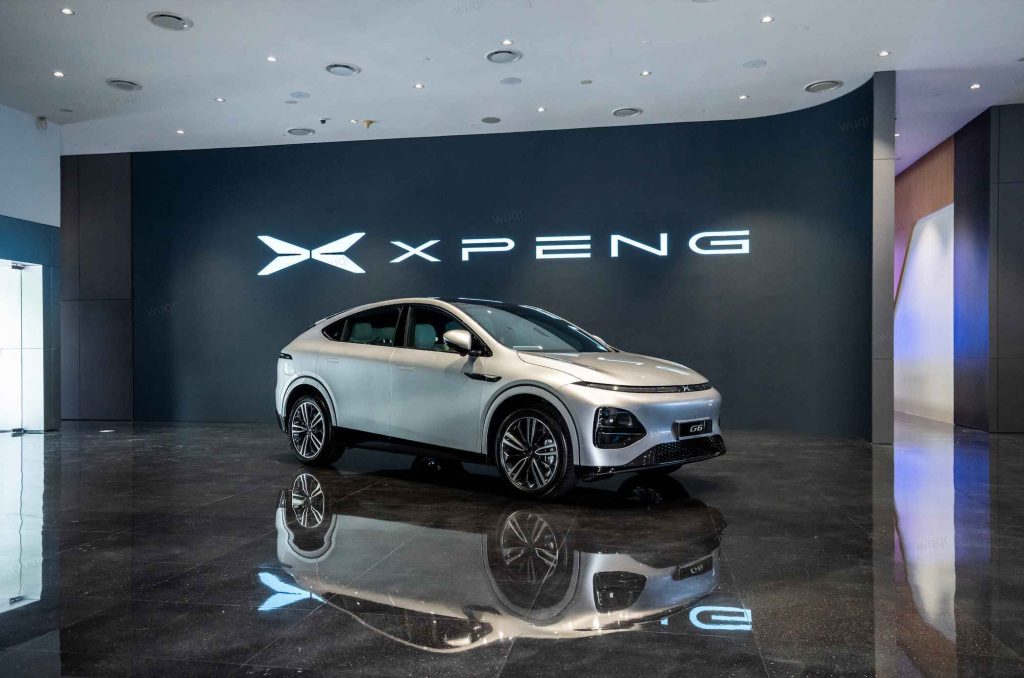
Reuters reported that domestic Chinese vehicle sales have been declining steadily since late 2025 as weak consumer demand combines with years of aggressive price competition. The result has been excess manufacturing capacity and increasing pressure on automakers to seek customers outside China.
China is already the world’s largest EV market, but its size has attracted an enormous number of manufacturers and models. Companies are competing not only on vehicle prices but also on battery technology, charging speeds, autonomous-driving functions, infotainment systems, and artificial intelligence.
That environment makes it difficult for manufacturers to maintain pricing power. For XPeng, technology has been one of its principal competitive advantages. The company has invested heavily in intelligent driving and AI-powered vehicle systems while expanding its lineup with newer models.
In July, XPeng launched the MONA L03, an AI-focused SUV coupe that forms part of its effort to broaden its product range. The company is also developing what it calls a physical AI ecosystem, extending beyond conventional vehicles into robotics and other technologies.
Those investments could provide long-term opportunities, but they also require substantial capital at a time when the core vehicle business remains under pressure.
XPeng’s second-quarter results showed that reality clearly. Although revenue increased, the company continued to report a substantial loss.
Its investment in research and development, new models, and intelligent technologies is intended to strengthen its competitive position, but investors are increasingly demanding evidence that those investments can produce sustainable profits.
The company is also attempting to reduce its dependence on China’s domestic market through international expansion.
XPeng said in August that its vehicles were available across more than 60 countries and regions, while its 2025 overseas deliveries reached more than 45,000 vehicles, an increase of 95.6% from the previous year.
Its new MONA L03 is expected to launch in 65 countries and regions during 2026, giving XPeng another opportunity to increase sales outside China.
International expansion could become increasingly important if China’s domestic market remains saturated. However, selling overseas brings its own challenges, including tariffs, local regulations, distribution costs, and competition from established automakers. The pressure is not limited to XPeng.
Chinese EV manufacturers across the industry are dealing with similar conditions. BYD, Geely, Xiaomi, Leapmotor, and other companies are competing for market share, while Tesla and foreign manufacturers continue to fight for customers in China.
The intensity of that competition has also attracted greater regulatory attention. Reuters reported last week that XPeng was among nine automakers involved in China’s largest-ever vehicle recall, covering approximately 4.3 million vehicles over concerns involving emergency door-release mechanisms. XPeng’s portion involved 264,842 vehicles.
The recall is separate from the company’s financial difficulties, but it demonstrates the increasingly complex environment Chinese automakers face as they expand rapidly.
XPeng’s Next Challenge Is Turning Growth Into Profit
XPeng’s immediate priority is likely to be improving the financial quality of its growth. The company has demonstrated that it can increase quarterly deliveries significantly. Its second-quarter revenue also rose sharply from the previous three months, and its gross margin remained above 20%.
The problem is that competition can absorb much of that progress. If manufacturers continue cutting prices to defend market share, higher sales volumes may not produce proportional increases in revenue or profit.
That makes XPeng’s new products particularly important because newer, higher-margin models could help improve its product mix.
The company has already pointed to premiumization and globalization as important elements of its strategy. XPeng Vice Chairman and Co-President Hongdi Brian Gu said the company remained resilient despite industry-wide cost pressures and expected commercialization of its physical AI technologies to contribute to future gross-profit growth.
The company is also trying to build additional businesses around its vehicle technology. On August 24, XPeng’s robotics subsidiary raised more than $900 million in its first funding round, giving the business a valuation of more than $6.3 billion. Reuters reported that the funding represents the largest single private financing round in China’s embodied-AI sector.
That development gives XPeng another potential growth avenue, but it also highlights how broadly the company is investing while its core automotive operation remains unprofitable.
For investors, the third-quarter revenue forecast has therefore become an important warning. XPeng expects vehicle deliveries to rise, but its projected revenue is considerably below Wall Street’s expectations.
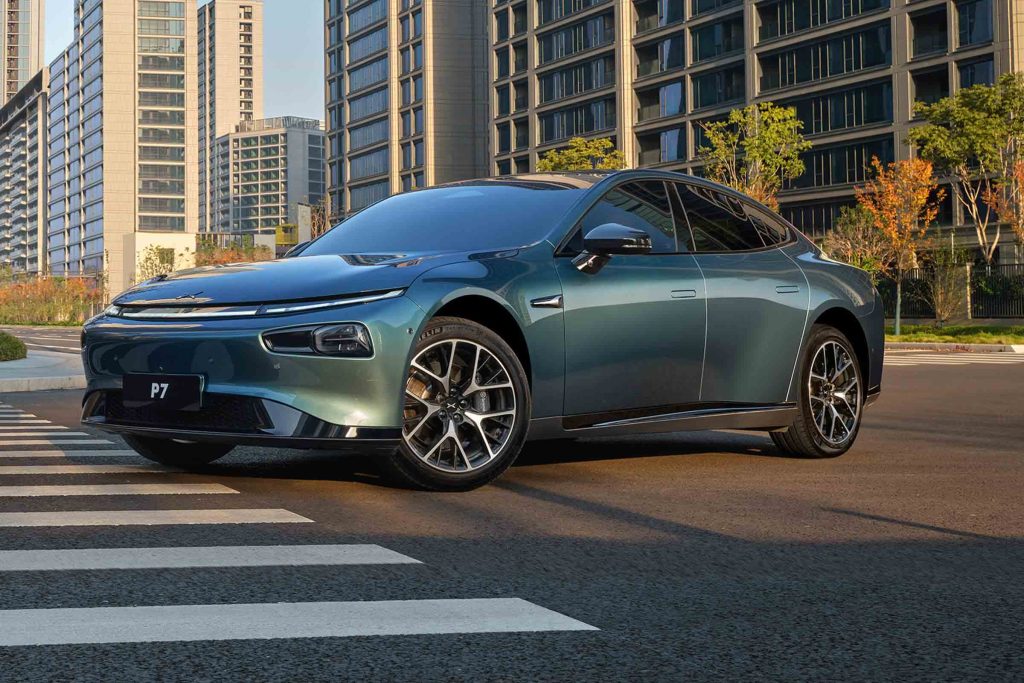
The company’s challenge is no longer simply selling more electric vehicles. It needs to sell them at prices and margins that can support continued investment in technology, new models, and international expansion.
China’s EV market remains enormous, and XPeng has demonstrated considerable technological capability and growing international reach. But the competitive environment is becoming less forgiving.
As Reuters reported, China’s combination of weak consumer demand, excess capacity, and years of aggressive pricing has created a difficult environment for automakers.
XPeng’s falling share price reflects investors’ concern that even strong delivery growth may not be enough under those conditions.
The company’s next several quarters will show whether its expanding lineup, overseas ambitions, and investments in AI can create a more profitable business. Until then, the weaker third-quarter forecast is a clear reminder that China’s EV race is increasingly about financial endurance as much as technology and sales.