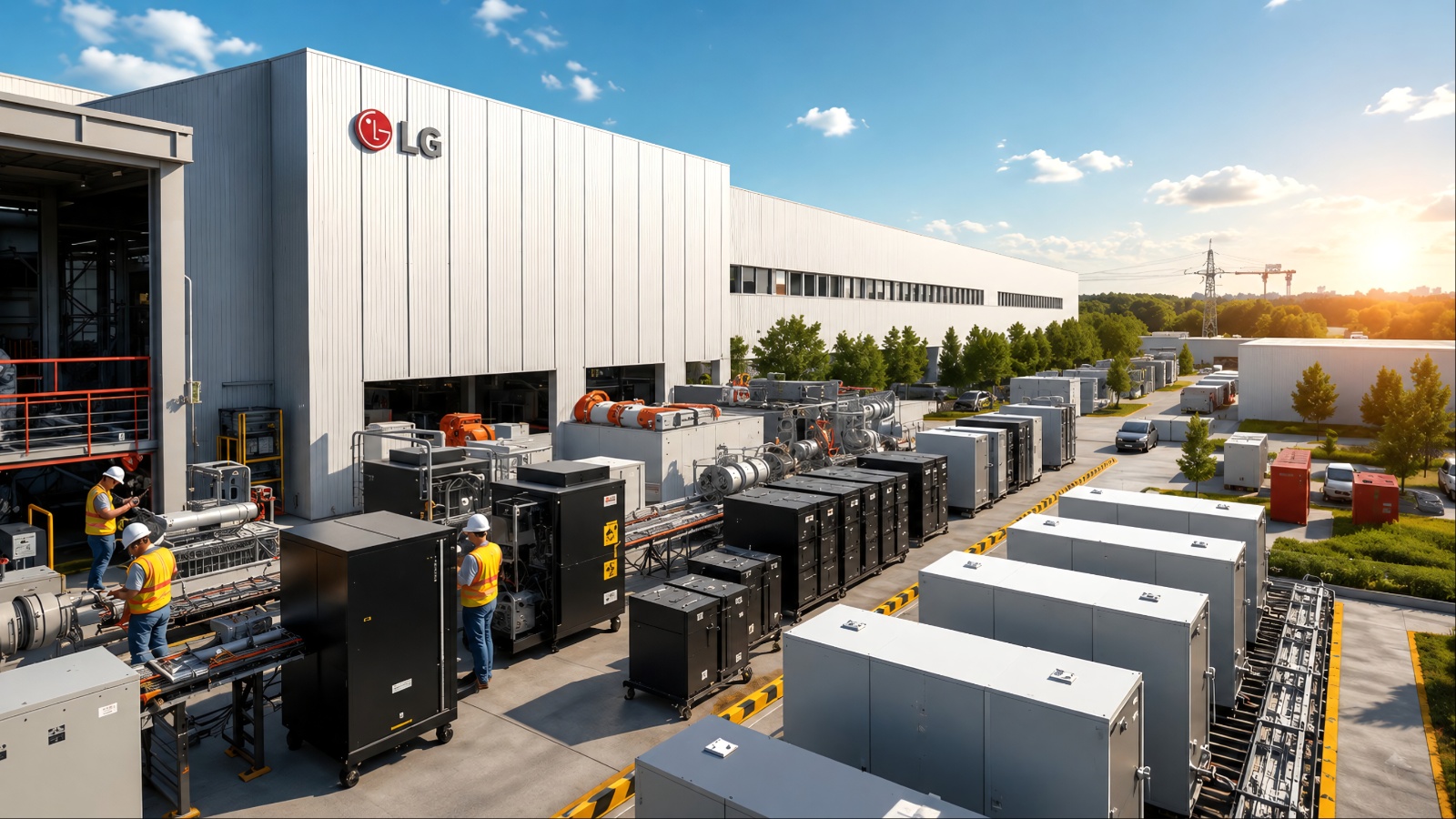
LG Energy Solution has begun production at its new battery manufacturing facility in Lansing, Michigan, adding another major source of domestically produced battery cells to the U.S. automotive and energy-storage supply chain.
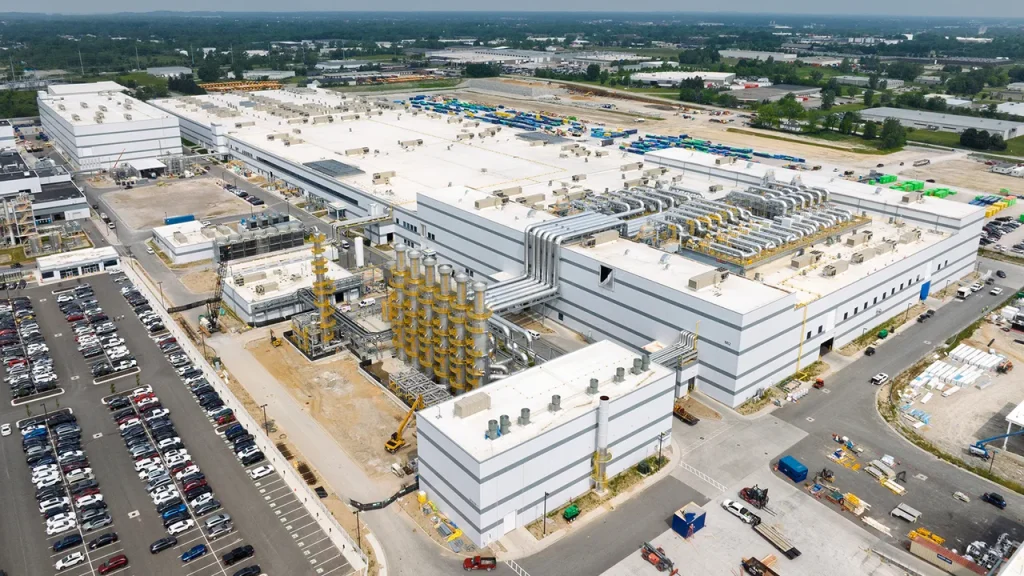
The 226-acre facility is designed to manufacture batteries for both electric vehicles and large-scale energy storage systems, giving LG Energy Solution an important degree of flexibility at a time when the U.S. EV market is developing more slowly than many automakers and battery manufacturers originally anticipated.
According to WardsAuto, the Lansing plant is targeting more than 35 gigawatt-hours of annual production capacity once fully operational and is expected to employ approximately 1,700 people. LG Energy Solution officially announced the start of production on August 18.
The factory is particularly significant because its production is not limited to electric vehicles. It will manufacture lithium-iron-phosphate, or LFP, battery cells for energy storage while also producing higher-energy-density nickel-manganese-cobalt, or NMC, cells for Toyota’s electric vehicles.
That dual-purpose strategy reflects a major change taking place across the U.S. battery industry. As automakers adjust EV production plans, battery manufacturers are increasingly looking toward the rapidly expanding energy-storage market to make better use of factories originally designed around electric vehicle demand.
A Michigan Factory Built for EVs and Energy Storage
LG Energy Solution’s Lansing facility has a complicated history. The factory was originally planned as one of three U.S. battery plants under Ultium Cells, the joint venture established by General Motors and LG Energy Solution. GM later decided to exit its investment in the Lansing facility as it reassessed its battery manufacturing requirements.
In December 2024, GM reached a non-binding agreement to sell its interest in the plant to LG Energy Solution. The battery manufacturer subsequently took full ownership and reshaped the facility’s production strategy.
WardsAuto reported that the change allowed LG Energy Solution to adapt the factory to both EV and energy-storage applications rather than relying exclusively on automotive battery demand.
The scale of the facility remains substantial. LG Energy Solution says the plant has received more than $2 billion in investment since 2022. It currently employs around 900 people, with the workforce expected to reach approximately 1,700 when the factory reaches full production.
At full capacity, annual output is expected to exceed 35 GWh. That figure gives the Lansing operation enough potential capacity to become one of the more important battery manufacturing sites in the United States. More importantly, the plant is designed to manufacture two different battery chemistries for two rapidly developing markets.
For energy storage, Lansing will produce LFP cells. LG Energy Solution’s U.S. energy-storage division, LG Energy Solution Vertech, will integrate those cells into complete systems for utility-scale storage, grid applications, and commercial and industrial customers.
LFP technology has become increasingly important in stationary storage because it offers a combination of long cycle life, durability, and safety. LG Energy Solution says its ESS products are designed around long lifespan, high energy efficiency, and scalability for grid and commercial applications.
For electric vehicles, the plant will manufacture NMC cells for Toyota. Those cells will supply Toyota’s next generation of U.S.-built electric vehicles, including the upcoming 2027 Toyota Highlander EV.
Toyota will assemble the vehicle at Toyota Motor Manufacturing Kentucky in Georgetown, creating a domestic battery-to-vehicle supply chain between Michigan and Kentucky.
That arrangement is strategically important because automakers are under increasing pressure to localize critical battery components.
Producing cells in the United States gives Toyota a domestic source for a key component rather than relying entirely on imported battery cells. It also allows LG Energy Solution to position the Lansing facility as part of a broader U.S. manufacturing network serving multiple industries.
LG Energy Solution Changes Strategy as EV Demand Evolves
The Lansing factory is opening at an unusual moment for the U.S. battery industry. A few years ago, manufacturers were building enormous battery plants based on expectations that EV adoption would accelerate rapidly. Automakers announced billions of dollars in new battery capacity to support ambitious electric vehicle production targets.
Those assumptions have changed. GM, Ford, and other major manufacturers have scaled back or delayed portions of their EV strategies as consumers have shown stronger interest in hybrids, plug-in hybrids, and gasoline-powered vehicles than many forecasts anticipated.
Battery companies have consequently faced the risk of having too much manufacturing capacity chasing too few EV orders. LG Energy Solution has responded by expanding into energy storage.
Reuters reported on August 19 that five of LG Energy Solution’s eight North American factories were expected to produce energy-storage batteries by the end of 2026.
The company is shifting part of its manufacturing capacity toward stationary storage because demand is being driven by the expansion of renewable energy and the enormous electricity requirements associated with data centers. The Lansing plant is an important part of that strategy.
Its ability to manufacture LFP cells for energy storage means LG Energy Solution can keep the facility productive even if EV battery demand remains below earlier expectations.
That flexibility could become increasingly valuable as the U.S. electricity system requires more large-scale storage to balance renewable generation and accommodate rising electricity consumption.
The growth of artificial intelligence and data centers has added another source of demand. Large data centers require significant amounts of reliable electricity, increasing interest in battery storage systems that can provide backup power and help stabilize electricity networks.
LG Energy Solution is therefore no longer treating EV batteries as the only growth opportunity for its North American manufacturing network.
At the same time, the Lansing facility demonstrates that the company has not abandoned the automotive market.
The NMC cells being produced for Toyota are designed for electric vehicles where energy density remains particularly important. Toyota’s 2027 Highlander EV will be assembled in Kentucky, meaning the Michigan plant will directly support a new U.S.-built electric vehicle program.
That is particularly notable because Toyota has taken a more cautious approach to full battery-electric adoption than some competitors. The automaker continues to emphasize a multi-pathway strategy involving hybrids, plug-in hybrids, battery-electric vehicles, and other powertrain technologies.
The Lansing plant gives Toyota additional domestic battery capacity without requiring the automaker to build and operate its own cell manufacturing facility.
For Michigan, the development is also another major investment in the state’s automotive manufacturing base.
LG Energy Solution says it has invested more than $5 billion in Michigan since 2010 and already operates another battery manufacturing facility in Holland, along with a research and development center in Troy.
The Lansing factory therefore expands an existing presence rather than establishing an entirely new industrial relationship.
A New Chapter for America’s Battery Supply Chain
The start of production at Lansing is significant because it shows how the U.S. battery industry is adapting rather than simply expanding.
The original plan for the facility was closely tied to GM’s EV ambitions. Once those plans changed, LG Energy Solution had to find another way to justify the factory’s enormous manufacturing footprint. The solution is diversification.
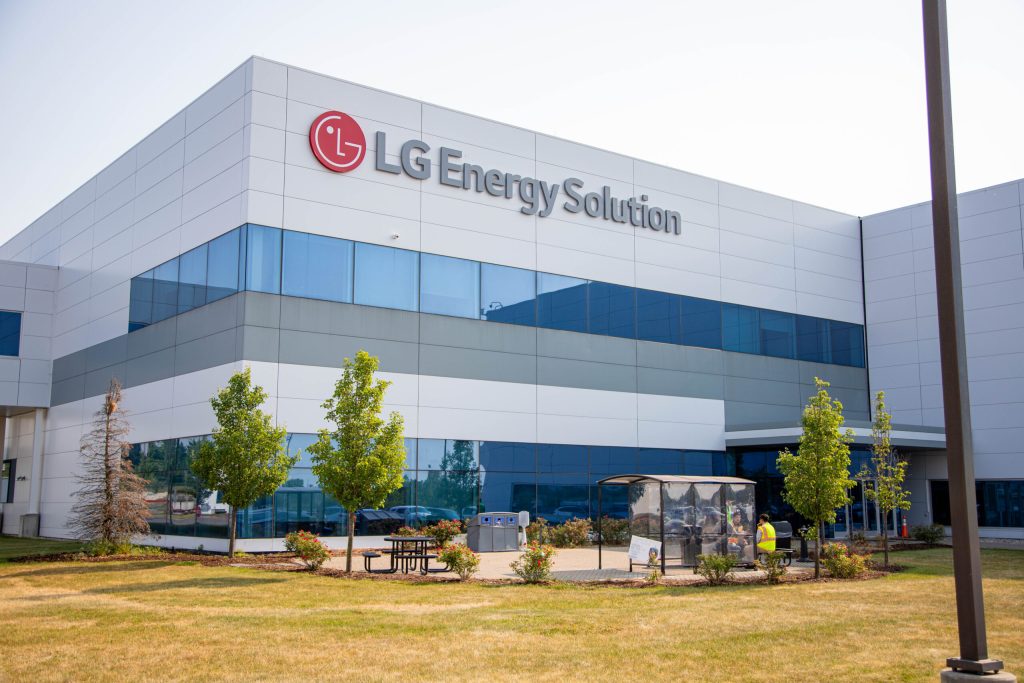
Instead of dedicating the entire plant to EV batteries, LG Energy Solution is using Lansing to manufacture both automotive and stationary-storage cells. That approach spreads the factory’s exposure across two markets and gives the company more options as demand changes.
The strategy is already producing tangible automotive benefits. Toyota will receive U.S.-made NMC cells for the Highlander EV, while LFP production will support energy-storage systems assembled for American customers.
The plant also strengthens Michigan’s position in the domestic battery supply chain. The state already has a deep automotive manufacturing workforce and established supplier network, making it a natural location for large-scale battery production.
For LG Energy Solution, the challenge now is reaching the factory’s planned production levels while balancing two very different markets.
EV demand could strengthen again as automakers introduce more affordable models, charging infrastructure improves, and consumers become more comfortable with electric vehicles. At the same time, energy-storage demand could continue expanding as utilities, businesses, and data center operators seek additional electricity-management capacity.
The Lansing plant has been designed to benefit from both trends. Its opening therefore represents more than another EV battery factory coming online. It is an example of how America’s battery industry is changing its strategy after several years of aggressive EV investment.
Rather than betting entirely on how quickly consumers adopt electric cars, LG Energy Solution is building a manufacturing operation capable of serving both transportation and America’s growing electricity-storage needs.
With more than 35 GWh of planned annual capacity, up to 1,700 potential jobs, and battery production already underway, Lansing is positioned to become an important part of that strategy.
For Michigan, it reinforces the state’s role in the next generation of automotive manufacturing. For LG Energy Solution, it provides a way to keep a major U.S. battery investment moving forward even as the company’s EV business adjusts to a more uncertain market.