
Mazda is ending sales of the 2.0-liter engine in the UK-market MX-5, leaving the iconic lightweight sports car with only its smaller 1.5-liter naturally aspirated engine once existing 2.0-liter inventory has been sold.
The 181-hp 2.0-liter engine has been one of the defining choices in the current-generation MX-5, giving buyers considerably more performance while preserving the car’s traditional naturally aspirated character and six-speed manual transmission.
According to Autocar, Mazda UK confirmed that the 2.0-liter engine was removed from European markets in 2024 because of changing emissions regulations.
Different regulatory derogation timings allowed Mazda to continue selling the engine in Britain for longer, but that extended period has now ended. Mazda expects existing UK stock of 2.0-liter cars to last until around January 2027, after which only the 1.5-liter model will remain available.
The change is more significant than simply losing one engine option. It highlights the growing difficulty of keeping relatively large, naturally aspirated gasoline engines in European sports cars as emissions regulations become increasingly demanding.
For MX-5 enthusiasts, the more powerful version of Mazda’s roadster is effectively entering its final chapter in Britain.
Why Mazda Is Dropping the 2.0-Liter Engine
The decision is primarily regulatory rather than a sudden move by Mazda to abandon the larger engine.
Mazda UK told Autocar that the 2.0-liter MX-5 was dropped from European markets in 2024 because of changing emissions regulations. The UK was able to retain the model temporarily because of different regulatory derogation timings, allowing Mazda to continue selling cars approved under the previous framework. That period has now ended.
Autocar reports that the 2.0-liter engine emits 153 grams of CO₂ per kilometer, compared with 140g/km for the 1.5-liter. The smaller engine therefore gives Mazda a lower-emissions version that is easier to maintain within Britain’s increasingly demanding regulatory environment.
The UK’s Zero Emission Vehicle mandate is focused on increasing the proportion of zero-emission vehicles sold by manufacturers, but lower-emission combustion vehicles remain relevant as automakers manage their fleet emissions.
That is especially important for Mazda because the MX-5 is a niche vehicle rather than a high-volume model. The company has less opportunity to spread the cost of additional emissions engineering across thousands of vehicles. Keeping the existing 1.5-liter engine therefore provides a simpler path forward.
The decision is also notable because the MX-5’s basic formula has remained remarkably consistent for more than three decades. Since its introduction in 1989, Mazda has emphasized low weight, rear-wheel drive, a manual transmission, and naturally aspirated engines rather than chasing enormous horsepower figures.
The fourth-generation ND MX-5 continued that philosophy when it arrived in 2015. The 2.0-liter subsequently became the performance choice in the range.
Mazda’s technical information shows that the latest version uses extensive revisions to the pistons, connecting rods, camshafts, exhaust valves, fuel injectors, throttle system, and intake. Its redline was raised to 7,500 rpm, while output reached 184 PS, equivalent to about 181 hp.
That engine transformed the character of the MX-5 without abandoning its lightweight philosophy.
The 1.5-liter, by comparison, produces 130 bhp in the UK and lacks the limited-slip differential available with the 2.0-liter. The difference between the two versions is therefore more than simply engine size. For enthusiasts, that makes the disappearance of the larger engine particularly meaningful.
What Enthusiasts Are Losing
The MX-5 has never been about winning horsepower contests. Its appeal comes from the relationship between weight, balance, steering, engine response, and driver involvement. The car’s modest power allows drivers to use a greater portion of its performance on ordinary roads without reaching extreme speeds.
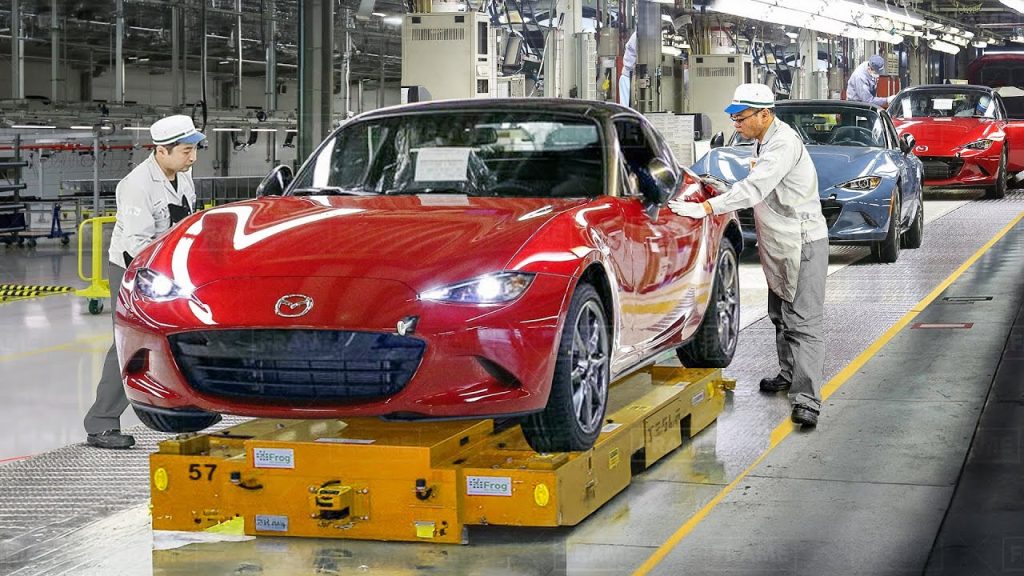
The 2.0-liter version nevertheless offered an important advantage. According to Autocar’s assessment, the 2.0-liter can reach 62 mph in around 6.5 seconds, compared with roughly 8.3 seconds for the 1.5-liter. It also provides stronger acceleration when climbing hills or overtaking.
The difference is not simply about acceleration figures. The 2.0-liter gives the MX-5 more flexibility at higher speeds and requires fewer downshifts when the driver wants to accelerate. Its additional torque makes the car feel more effortless during everyday driving, while its higher output makes it more capable on a track.
The engine is also paired with hardware that appeals strongly to enthusiasts. The 2.0-liter can be equipped with a limited-slip differential, while higher-performance versions receive upgraded suspension hardware.
Mazda’s technical material describes the engine as a higher-revving unit designed specifically to complement the MX-5’s lightweight chassis.
Removing it therefore leaves the UK range with a version that remains true to the MX-5 philosophy but is less capable from a performance standpoint.
The remaining 1.5-liter is not simply a downsized engine added to meet emissions targets. It was central to the development of the current MX-5. Mazda has repeatedly emphasized that its low weight and responsive character are fundamental to the car’s handling philosophy.
Autocar notes that the 1.5-liter is the engine around which the current MX-5 was originally developed. Mazda argues that its lower weight and accessible performance fit the company’s “Jinba Ittai” philosophy, describing the connection between driver and vehicle.
That means the MX-5 is not becoming a fundamentally different sports car. Instead, the range is becoming narrower.
Mazda says existing UK stock should satisfy expected demand for the 2.0-liter until around January 2027. Once those cars are gone, the 1.5-liter will become the only new-engine choice. There is also a possibility that the remaining 1.5-liter could receive an update.
Autocar reports that the Japanese-market version has recently been upgraded to 134 bhp and 114 lb-ft of torque, representing modest increases over the existing engine while improving fuel consumption. The UK is expected to receive that updated version in due course, although Mazda has not provided a definitive launch date.
The MX-5 Becomes a Symbol of a Changing Sports-Car Market
The disappearance of the 2.0-liter MX-5 reflects a broader change in Europe’s sports-car market.
Naturally aspirated gasoline engines have become increasingly difficult to maintain as manufacturers face stricter emissions requirements. Many performance cars have moved toward turbocharging, hybrid assistance, downsized engines, or full electrification.
The MX-5 has resisted that trend. Its naturally aspirated engines deliver power progressively, encourage drivers to use the manual gearbox, and preserve the lightweight character that has defined the model since 1989.
The loss of the 2.0-liter therefore feels significant because there are fewer affordable sports cars left that follow this formula.
The MX-5 is also becoming an increasingly unusual car because it remains relatively light. The current 1.5-liter roadster weighs just over 1,000 kg in some specifications, according to Evo, while the 2.0-liter remains considerably lighter than most modern performance vehicles.
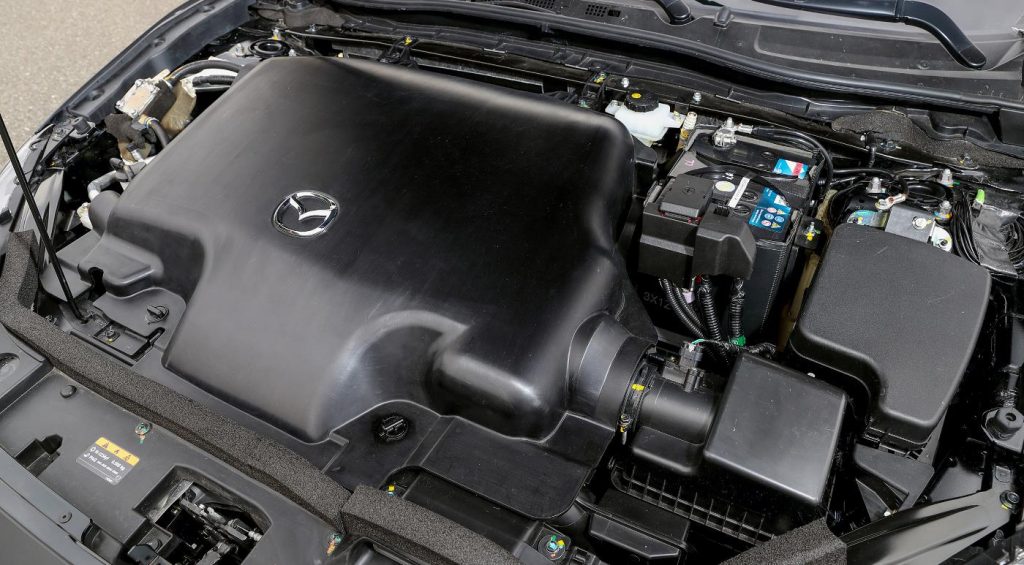
That low mass allows Mazda to produce an engaging sports car without relying on huge amounts of power. But even a lightweight sports car cannot escape emissions rules.
The challenge for Mazda is that the MX-5 is also an aging product. The current ND generation was introduced more than a decade ago, and Autocar reports that UK sales have declined from around 4,000 units in 2019 to roughly 1,500 in subsequent years.
That makes expensive engineering work harder to justify. Mazda therefore has to balance the MX-5’s importance as a brand icon against its relatively small sales volume and the regulatory costs associated with keeping older powertrain technology compliant.
For enthusiasts, the result is bittersweet. The MX-5 itself is not disappearing from Britain, and Mazda insists that the 1.5-liter continues to embody the model’s lightweight, accessible character.
But the more powerful naturally aspirated engine that made the current MX-5 especially appealing to performance-focused buyers is approaching the end of its availability.
The 2.0-liter’s departure is another reminder that affordable performance cars are changing rapidly. A 181-hp naturally aspirated engine in a lightweight rear-wheel-drive roadster may not sound extreme by modern standards, but that combination is becoming increasingly rare.
For UK buyers who specifically want the 2.0-liter MX-5, remaining stock represents the final opportunity to buy one new from Mazda. After that, the 1.5-liter will carry the MX-5 forward, preserving the essential formula while giving up some of the performance that made the larger engine such an attractive choice.
The change may ultimately be unavoidable, but it still marks the end of an important chapter for one of Europe’s most distinctive affordable sports cars.