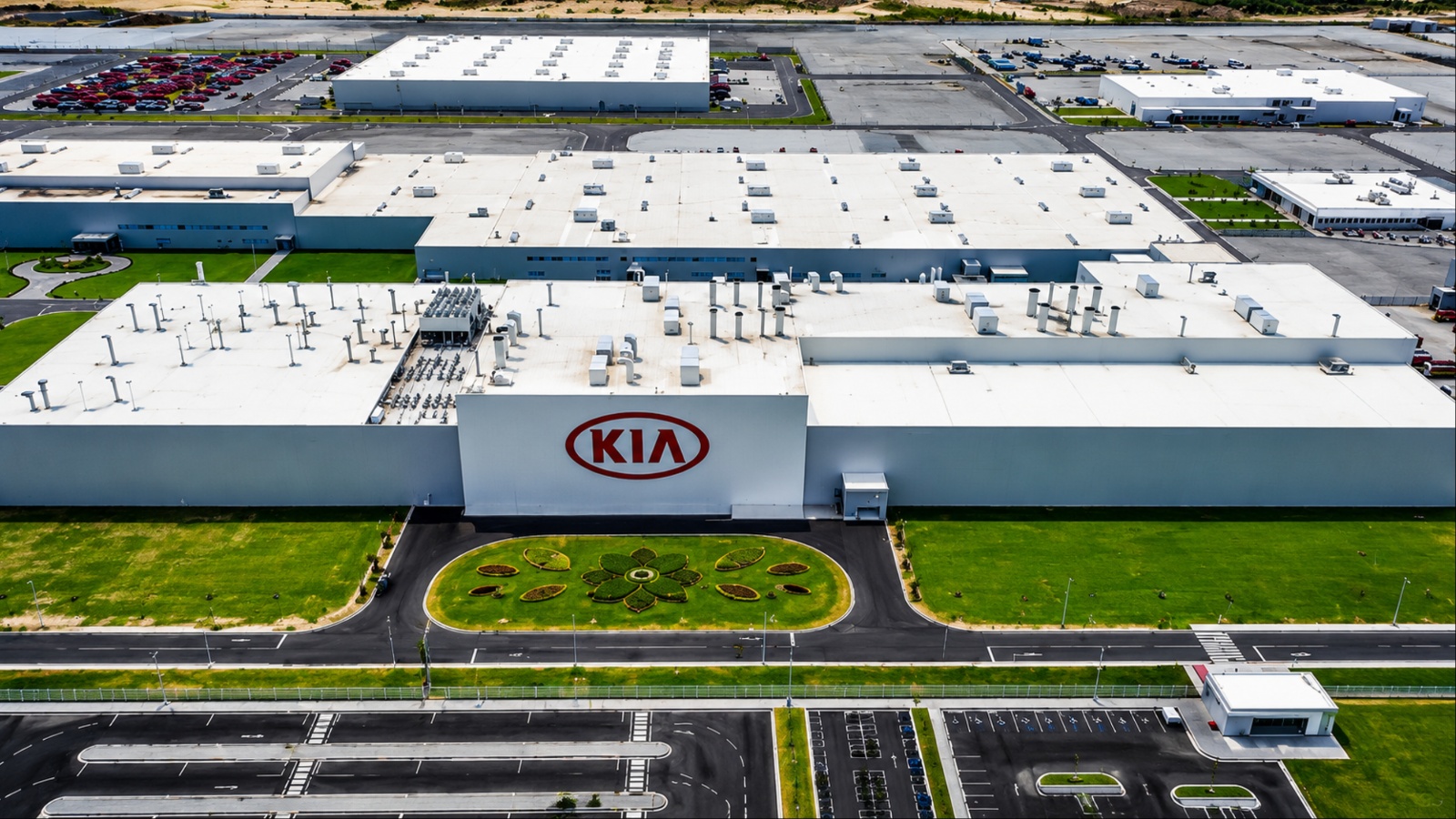
Kia has reached a tentative wage agreement with its South Korean labor union, preventing a planned partial strike scheduled to begin on August 26 and removing the immediate threat of production disruptions at the automaker’s domestic factories.
The agreement was reached on August 25, just one day before workers were expected to begin industrial action.
According to Reuters, the deal includes a 100,000-won increase in monthly base pay, a performance-related incentive equivalent to 400% of monthly wages, and an additional payment of 12.7 million won. The agreement still requires approval from union members in a vote scheduled for August 28.
The settlement is significant because Kia had been moving toward its first potential strike in six years. The union approved a strike plan on August 21 after negotiations failed to produce an agreement, with partial stoppages scheduled for August 26 through August 28.
Reaching a deal at the last moment means Kia can continue normal production while the agreement goes through the approval process. The timing is particularly important because Kia and its South Korean workforce are coming off a year of record production and sales.
Employees argued that workers should receive greater compensation for those results, while management had an equally strong incentive to protect its manufacturing momentum.
Kia Workers Secure Major Compensation Package
The central issue in the negotiations was compensation. Under the tentative agreement, Kia workers will receive a 100,000-won increase in monthly base pay.
They will also receive performance-related compensation equivalent to 400% of monthly wages, along with an additional 12.7 million won payment. Yonhap confirmed that the package was agreed upon as part of the company’s 2026 wage negotiations.
For workers, the agreement provides a direct financial benefit from Kia’s strong performance. For the company, the settlement represents higher labor costs but avoids the potentially greater financial and operational consequences of a strike.
Automotive manufacturing depends on tightly coordinated production schedules. Even a partial stoppage can interrupt the flow of components, leave assembly lines without necessary parts, and delay vehicle deliveries.
The effects can extend beyond workers participating in the action because suppliers and logistics companies also depend on predictable factory operations.
Kia avoided that disruption by reaching an agreement before the planned walkouts began. The outcome also differs from the situation at Hyundai Motor. Hyundai’s South Korean union staged the company’s first full strike in a decade on August 21 after partial stoppages had already affected production.
Reuters reported that Hyundai’s industrial action disrupted production of more than 55,200 vehicles, with the value of lost output estimated at approximately $1.67 billion by Yonhap.
Hyundai subsequently reached its own tentative wage agreement on August 25, preventing further strikes. Kia’s settlement means both major Hyundai Motor Group automakers have now moved away from the immediate threat of prolonged labor disruption.
For Kia, avoiding a strike also preserves a notable labor-relations record. Korean media reported that the company has now reached wage agreements without a strike for six consecutive years if union members approve the latest proposal.
That consistency is valuable for an automaker operating large manufacturing facilities and managing a complex global supply chain.
Record Performance Raises the Stakes
The negotiations were taking place against a strong production and sales backdrop. Kia has expanded its global sales while building a broader lineup that includes gasoline vehicles, hybrids, and battery-electric models.
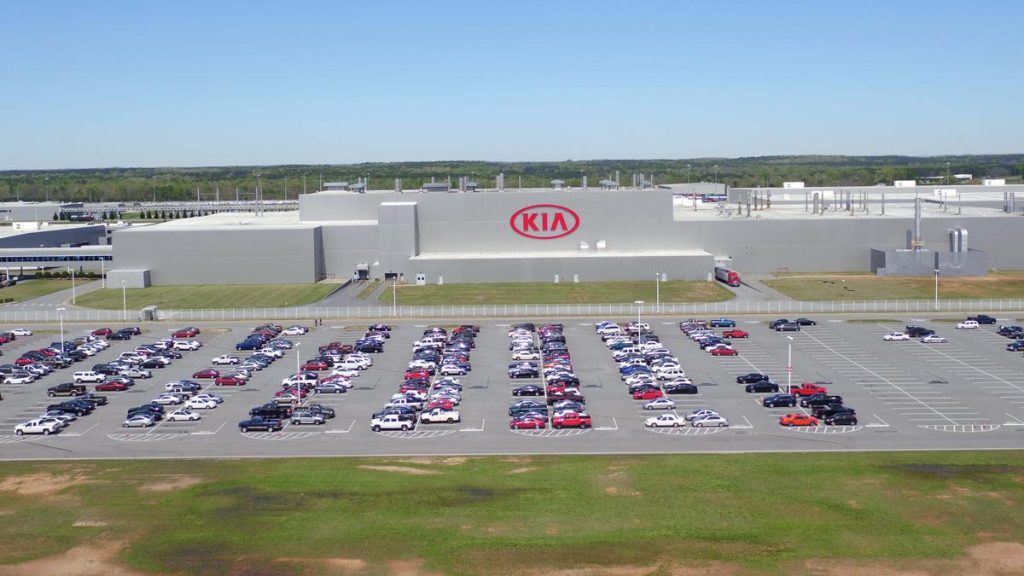
That diversified approach has become increasingly important as the global automotive market moves at different speeds toward electrification.
Some markets have seen rapid EV adoption, while others continue to favor gasoline and hybrid vehicles. Kia’s ability to offer different powertrains allows it to respond to changing consumer preferences rather than depending entirely on one technology.
The company’s South Korean workforce has played a central role in producing the vehicles behind that growth. The union’s argument for higher compensation was therefore based partly on the idea that employees should share in the benefits created by record production and sales.
The tentative agreement reflects that principle through its combination of higher base wages and performance-based compensation.
However, Kia’s higher labor costs come as automakers face pressure to keep manufacturing expenses competitive.
Chinese manufacturers are becoming increasingly aggressive in international markets, particularly in electric vehicles. Established automakers such as Kia must invest heavily in new technologies while keeping vehicle prices competitive.
The company also faces major expenses related to batteries, software, research and development, factory modernization, and new vehicle platforms.
Kia therefore needs to balance rewarding employees with maintaining the cost structure required to compete globally.
The negotiations also took place during a major technological transformation. Automotive factories are becoming increasingly automated, with robots and advanced software taking on tasks that previously required larger numbers of human workers.
Automation can improve productivity, but it also creates concerns about employment security and future job requirements.
Kia and its union therefore have an interest in maintaining cooperation as manufacturing changes.
A prolonged labor conflict would make that transition more difficult. The company needs workers to adapt to new technologies, while employees need confidence that modernization will not simply eliminate jobs. The latest agreement helps preserve that relationship.
It also allows Kia to concentrate on its electrification strategy. The company has introduced several battery-electric vehicles and continues developing additional models aimed at different price points and market segments.
At the same time, strong demand for hybrids provides an important bridge as consumers gradually shift toward fully electric vehicles.
This mixed strategy means Kia’s factories must remain flexible. Production systems need to accommodate changing demand while maintaining efficiency across different powertrains.
Labor stability is therefore particularly valuable because disruptions can interfere with the company’s ability to adjust production quickly.
Avoiding the Strike Gives Kia More Certainty
The immediate question is whether Kia’s union members will approve the agreement on August 28.
Until that vote takes place, the settlement remains tentative. A rejection could reopen negotiations and potentially restore the threat of industrial action. Approval would formally conclude the wage negotiations and allow Kia to move forward without the production interruptions planned for August 26-28.
The timing demonstrates how close Kia came to a confrontation. The union had already authorized a strike, meaning management faced a defined production risk. Settling one day before the planned stoppages avoided that scenario and gives the company greater certainty for the remainder of 2026.
Factories can continue operating according to schedule, suppliers can maintain normal deliveries, and vehicles can move through distribution networks without an interruption caused by industrial action.
The company can also focus on its longer-term challenges, including growing Chinese competition, changing EV demand, higher technology costs, and the need to maintain a diverse product lineup.
Kia must continue investing in new vehicles while controlling expenses and ensuring its manufacturing operations remain productive. The wage agreement will increase compensation costs, but a prolonged strike could have created far greater financial losses through lost production and delayed deliveries.
For employees, the agreement offers substantial compensation after a year in which Kia achieved record results.
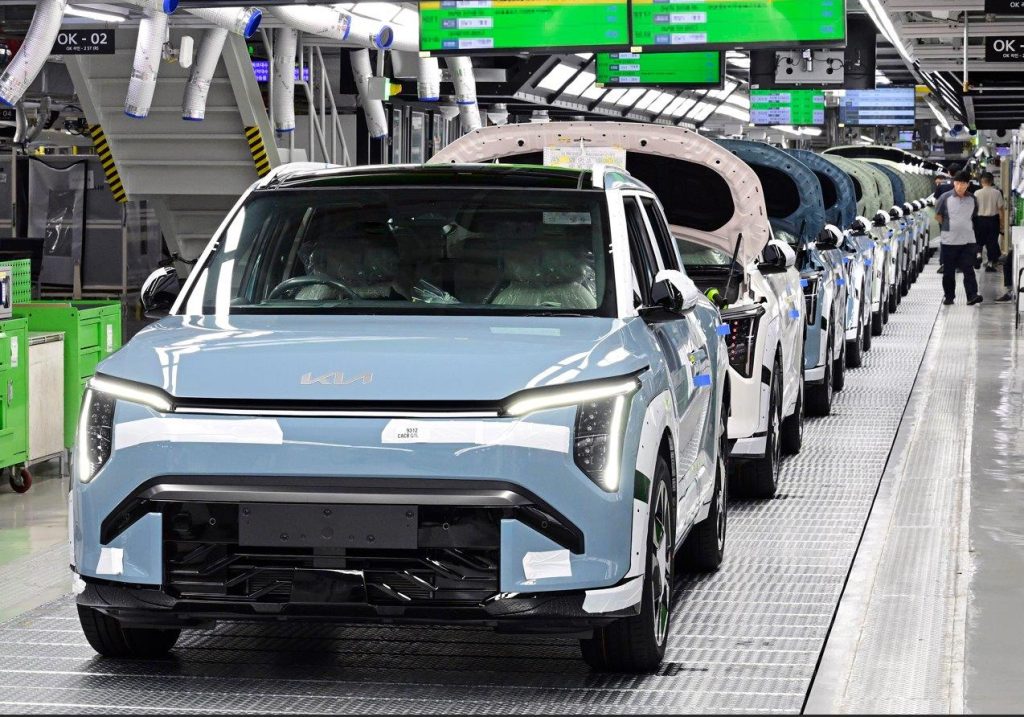
The 100,000-won monthly base-pay increase provides a permanent improvement in regular compensation, while the performance incentive and additional 12.7 million-won payment connect worker compensation directly to company performance.
The agreement also provides a framework for future labor relations. As Kia expands electric vehicles and automation, future negotiations will likely involve questions about workforce skills, job security, and changing manufacturing requirements in addition to wages.
For now, however, the immediate dispute has been contained. Kia has avoided the planned strike, workers have secured higher compensation, and the automaker can maintain production while preparing for the union vote.
If members approve the agreement, Kia will have completed its 2026 wage negotiations without a strike for the sixth consecutive year. That continuity could prove valuable as the company enters another period of rapid change.
Kia’s strong production and sales performance gave workers a reason to demand meaningful rewards, while the company had a strong incentive to protect the manufacturing momentum behind those results. The tentative agreement appears to have found a middle ground.
The bigger test will come as Kia’s business continues evolving. Electrification, automation, and competition from Chinese manufacturers will put pressure on the company to remain efficient while maintaining positive relations with its workforce.
For now, though, Kia has avoided a costly confrontation. The factories can continue operating, workers have secured a significant compensation package, and management can concentrate on vehicle production and global growth rather than managing a strike.