
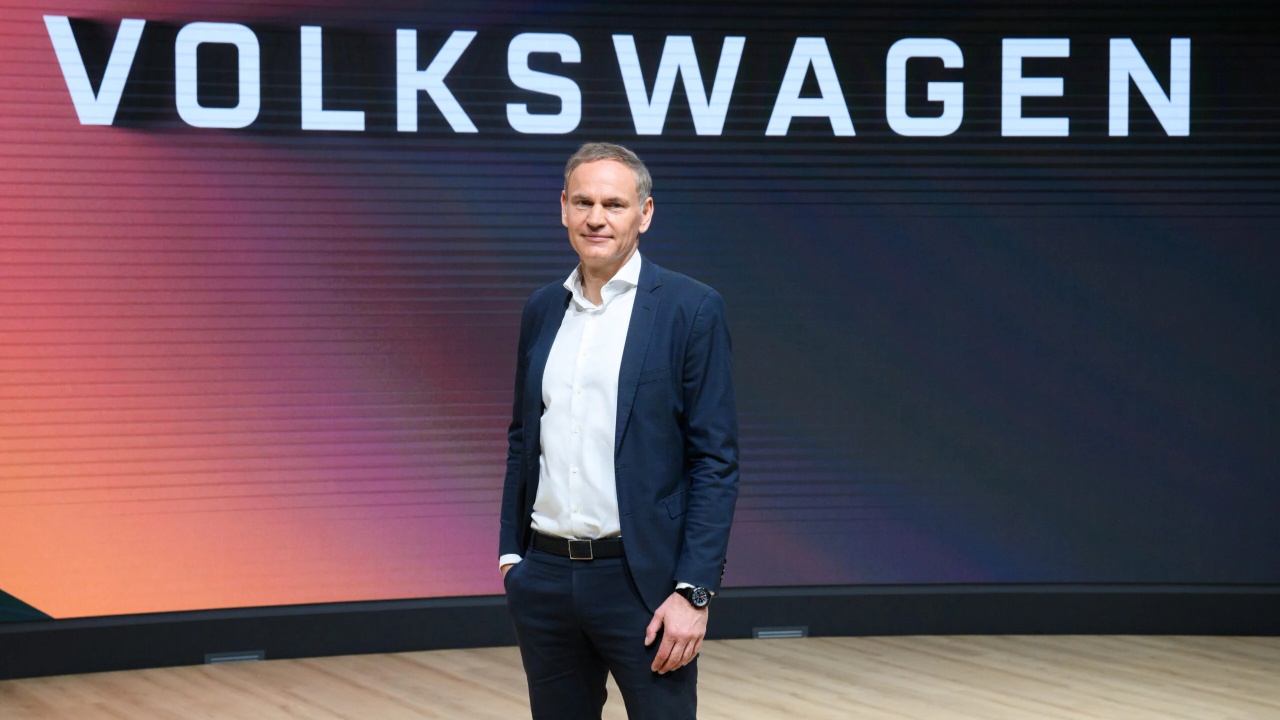
Volkswagen is heading toward a decisive confrontation over the future of its German operations as CEO Oliver Blume pushes for deeper cost reductions while the automaker’s powerful labor representatives resist layoffs and factory closures.
The dispute is becoming one of the most consequential internal battles in Volkswagen’s recent history, with the company’s supervisory board preparing to consider competing restructuring proposals.
According to Reuters, Volkswagen management and labor leaders hardened their positions on August 26 ahead of a crucial supervisory board meeting scheduled for September 4.
Blume is seeking further savings to make Volkswagen more competitive, while the works council and the state of Lower Saxony are opposing measures they believe could undermine employment and Germany’s industrial base.
The conflict comes as Volkswagen faces intense competition from Chinese automakers, weaker demand in important markets, and high operating costs in Germany. The company has already implemented significant restructuring measures, but Blume argues that those efforts have not gone far enough.
Blume Pushes for Deeper Cuts
The scale of the proposed restructuring has made the dispute particularly serious. Reuters reported in July that Volkswagen could seek as many as 50,000 additional job reductions, potentially taking the number of positions affected by restructuring programs to around 100,000 when previous measures are included.
Volkswagen has stressed that the 50,000 figure is not a fixed target but an indication of the scale of savings potentially required.
Blume has repeatedly argued that Volkswagen’s cost structure remains too high compared with competitors. During a visit to the company’s Emden plant on August 26, he told workers that the cost-cutting process was not finished.
According to Reuters, Blume said labor costs at the site were more than twice those at comparable European locations, while factory costs were also significantly higher. He described those differences not as criticism of employees but as a reality against which Volkswagen must measure itself.
Emden is particularly important because it is one of Volkswagen’s electric-vehicle production sites and one of several German factories whose future beyond 2030 remains uncertain. The company is also examining the long-term prospects of facilities, including Zwickau, Hanover, Neckarsulm, and Osnabrück.
Volkswagen says factory closures would be a last resort. Blume has instead suggested that partnerships, investors, and alternative industrial uses could potentially preserve jobs at sites that cannot secure sufficient vehicle production.
At the same time, the CEO is trying to persuade employees that additional sacrifices are necessary to protect Volkswagen’s competitiveness. The company’s broader objective is not simply to reduce headcount but to lower structural costs and create enough financial capacity for future investment.
That point is reflected in Volkswagen’s own long-term strategy. In its 2025 annual report, the company said it was targeting an operating return on sales of 8% to 10% by 2030 and emphasized cost and investment discipline as essential to achieving that goal.
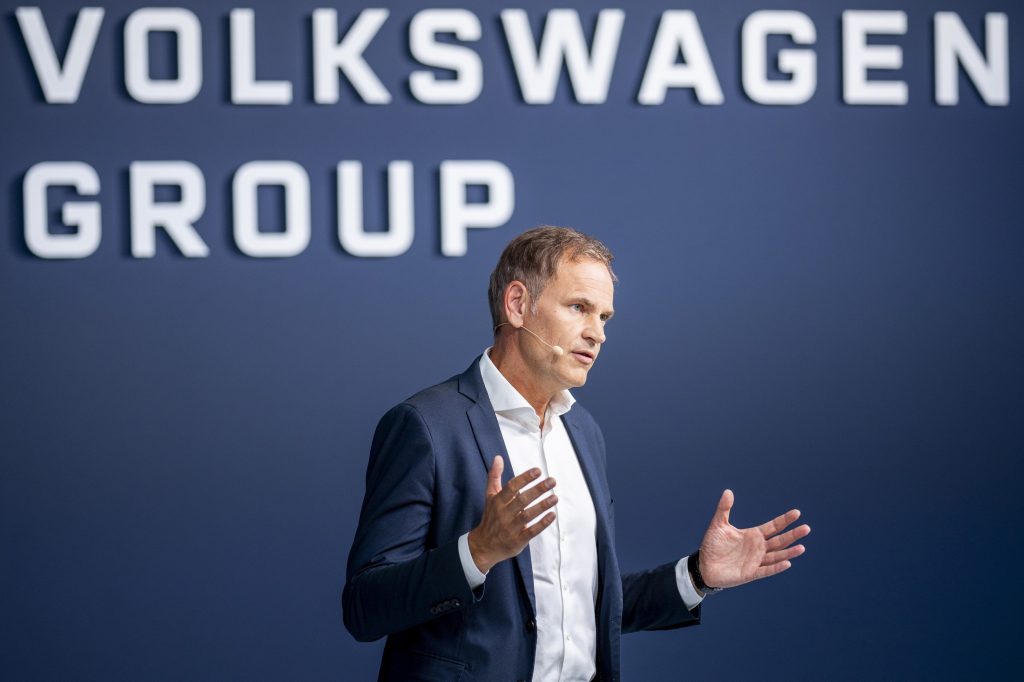
Volkswagen also acknowledged that its traditional business model has become increasingly difficult to sustain because of market changes, trade policy, regulatory requirements, and its high European cost base.
Labor Leaders Are Fighting Back
The management position is facing strong resistance from Volkswagen’s works council and trade unions, which hold substantial influence over major decisions through Germany’s system of employee representation.
The opposition became highly visible on August 25, when more than 10,000 Volkswagen employees gathered at the company’s Wolfsburg headquarters.
Reuters reported that some workers booed Blume during his address as he urged employees to support the restructuring effort. Labor leaders simultaneously warned that confidence in management had been damaged.
Works council chief Daniela Cavallo has argued that Volkswagen’s problems cannot be solved through cost reductions alone. Labor representatives have been developing an alternative approach that seeks to protect German factories and employment while addressing the company’s competitive weaknesses.
Lower Saxony is also an important opponent of aggressive plant closures. The German state owns a 20% voting stake in Volkswagen and has significant influence over supervisory board decisions. Reuters has reported that Lower Saxony and labor representatives have prepared alternatives to Blume’s restructuring proposal ahead of the September meeting.
That makes the September 4 board meeting especially important. Blume’s restructuring proposal has already struggled to secure approval, and the management plan will now face alternatives from both labor representatives and Lower Saxony.
The disagreement is therefore about more than the number of jobs Volkswagen should eliminate. It is also becoming a debate over who controls the company’s transformation and how much of its traditional German manufacturing footprint should be preserved.
Volkswagen’s management wants greater flexibility to restructure operations according to changing market conditions. Labor representatives want guarantees that Germany’s factories will continue to have a meaningful role in the company’s future.
Volkswagen’s Competitive Problem Is Bigger Than Labor Costs
The internal dispute is occurring against a difficult global backdrop. Volkswagen is under pressure from Chinese manufacturers that have become increasingly competitive in electric vehicles, while its position in China has weakened. At the same time, tariffs and other changes in international trade have increased costs and complicated production decisions.
Volkswagen itself has acknowledged that the automotive industry has entered a fundamentally different competitive environment. In an August 21 interview, Blume said the group’s overhead costs were still around 30% above those of comparable companies.
He also said the frequently discussed figure of roughly 50,000 positions was not a predetermined target but a reference point based on the company’s cost disadvantage.
This distinction could become important in the negotiations. Volkswagen is not necessarily preparing to dismiss 50,000 employees immediately. Instead, management is examining a combination of simpler structures, more efficient processes, and lower labor costs across brands, subsidiaries, and regions.
The company has also indicated that it wants to preserve as many jobs as possible over the long term. Voluntary departures, early retirement, and other measures are likely to remain important tools if additional workforce reductions are approved.
Nevertheless, some production decisions are becoming increasingly urgent. Reuters reported that Osnabrück could lose vehicle production as early as next year unless Volkswagen finds an alternative partnership or industrial use for the facility. Several other German plants lack clear business plans beyond 2030.
That leaves Volkswagen facing a difficult balancing act. It needs to lower costs quickly enough to compete with more efficient rivals, but aggressive cuts could deepen tensions with employees and potentially damage the production network needed for future models.
The September 4 supervisory board meeting could therefore determine the next phase of Volkswagen’s restructuring. Blume is seeking approval for a deeper transformation, while labor leaders and Lower Saxony are pushing alternative solutions designed to protect German employment.
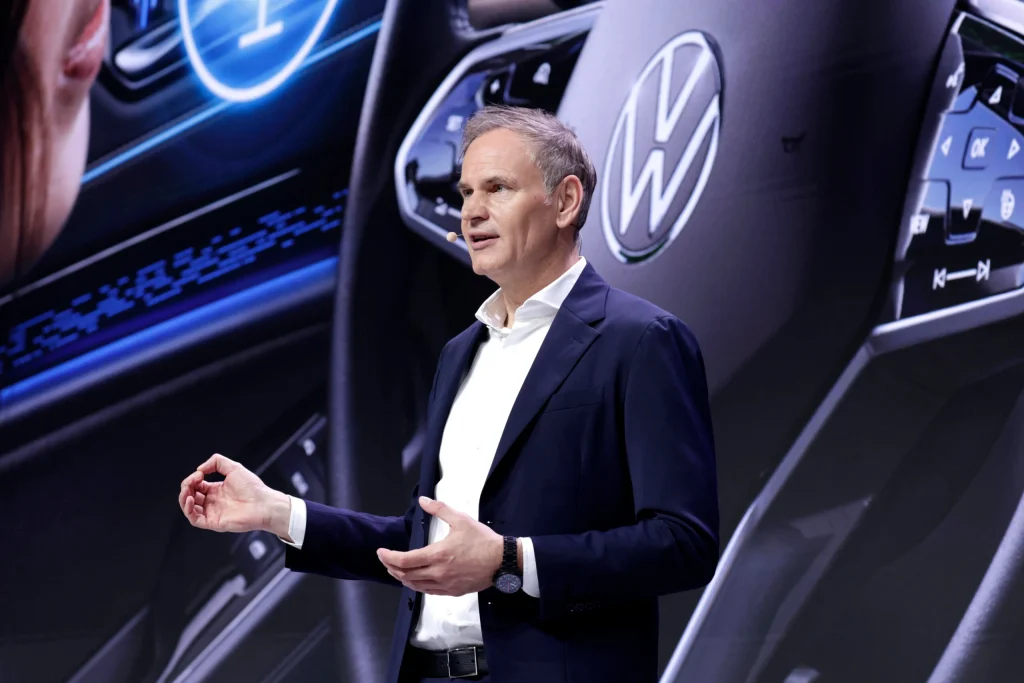
Whatever the board decides, Volkswagen’s challenge extends beyond reducing expenses. The automaker must determine which factories, technologies, and markets deserve investment while rebuilding competitiveness in an industry changing faster than its traditional corporate structure can easily accommodate.
The Stakes for Volkswagen’s Future
The outcome will also have consequences for Volkswagen’s broader electrification strategy. The company needs substantial capital to develop new electric vehicles, software, batteries, and manufacturing technologies, but every euro committed to maintaining inefficient operations is money that cannot be directed toward future products.
That creates a difficult trade-off for management. Volkswagen is simultaneously trying to protect its position in Europe while rebuilding competitiveness in China and responding to growing pressure from Chinese EV manufacturers.
Lower costs could give the group more flexibility to compete on vehicle pricing and invest in new technology. However, a prolonged dispute with labor representatives could delay important decisions at a time when rivals are moving quickly.
The conflict is therefore unlikely to be resolved simply by agreeing on a particular number of job cuts. Volkswagen must find a restructuring formula that improves profitability while maintaining enough industrial capacity to support its future model lineup.
The September board meeting will provide an important indication of whether management and labor can find that compromise or whether the disagreement will become even more entrenched.
