Hyundai is preparing one of the most aggressive product expansions in its history, with 41 vehicle launches or major model updates planned for Europe through 2030.
The strategy will bring new body styles and additional electrified models and vehicles developed specifically around European customer needs, while Genesis is simultaneously expanding its luxury portfolio and market presence across the continent.
The scale of the plan was revealed as part of Hyundai Motor Company’s 2026 CEO Investor Day and reported by Autocar. Hyundai’s global strategy calls for more than 100 vehicle launches and refreshes by 2030, with Europe accounting for 41 of those products.
The company is targeting several areas where its current lineup has limited representation, including smaller SUVs and other segments with strong demand.
The European offensive comes at a significant point for Hyundai. The market is becoming increasingly competitive as established manufacturers expand their electric and hybrid ranges while Chinese automakers continue entering additional European markets.
Hyundai therefore appears determined to use a much broader product portfolio rather than relying on a small number of established nameplates.
A Major Expansion Built Around European Demand
According to Hyundai’s official 2026 CEO Investor Day announcement, the company plans to launch or refresh more than 100 vehicles globally by 2030.
The regional breakdown includes 58 products for North America, 49 for Korea, 41 for Europe, 26 for India, and 22 for China. Hyundai says many of these vehicles will either be completely new products or entries into market segments where it is currently underrepresented.
Among the most important European additions will be a new B-segment SUV developed specifically for the region. Hyundai has not yet revealed its production name or detailed specifications, but the company’s confirmation indicates that the model is intended to occupy a smaller SUV space that has become increasingly important in Europe.
The company is also preparing a new-generation i20. The small hatchback remains an important part of Hyundai’s European offering, particularly in markets where compact dimensions, efficiency, and relatively affordable pricing remain major purchasing considerations.
A renewed i20 would give Hyundai another opportunity to compete against established European small cars while incorporating newer technology and electrified powertrain options.
The European expansion will not be limited to conventional combustion-powered vehicles. Hyundai says it intends to cover 85 percent of the European market with a fully electrified portfolio by 2030.
That strategy will include five all-new SUVs and light commercial vehicles, demonstrating that electrification will be combined with broader expansion across vehicle categories rather than treated as a standalone EV program.
Hyundai is also targeting a substantial increase in European EV sales. The company expects annual European EV sales to exceed 420,000 units by 2030, compared with 116,000 in 2025. Reaching that target would require both more models and stronger coverage of price and vehicle-size segments than Hyundai currently offers.
The recently introduced IONIQ 3 illustrates the direction Hyundai is taking. Designed specifically around European requirements, the compact electric hatchback combines an aerodynamic body with a practical interior.
Hyundai says it offers up to 497 kilometers of range and introduces the company’s Pleos Connect infotainment system to a European Hyundai model.
That approach is significant because Europe’s EV market is not dominated exclusively by large crossovers. Compact hatchbacks and smaller SUVs remain important, creating opportunities for manufacturers capable of delivering efficient electric vehicles without moving into premium pricing.
Hyundai Is Expanding Beyond EVs
Although electric vehicles are central to the European strategy, Hyundai’s wider 2030 plan demonstrates that the company is not abandoning other powertrain technologies.
The automaker is developing extended-range electric vehicles, or EREVs, which combine electric propulsion with a combustion engine that can generate electricity. Hyundai says its first EREV models will launch in the first half of 2027 and target more than 600 miles of total range.
The first Santa Fe EREV is expected to be built in the United States, but the technology demonstrates Hyundai’s broader effort to give customers alternatives as charging infrastructure and EV adoption rates vary between markets.
For Europe, Hyundai’s strategy will continue to involve battery-electric vehicles, hybrids, and other electrified powertrains. Hyundai Motor Europe’s current portfolio already includes battery EVs, hybrids, plug-in hybrids, and hydrogen fuel-cell vehicles, giving the company a relatively broad electrification base from which to expand.
The upcoming product wave will also include refreshed versions of established models. Hyundai has confirmed an all-new Tucson and Tucson Hybrid among the products arriving during the initial phase of the offensive.
The Tucson is particularly important because Hyundai says the nameplate has surpassed 10 million cumulative sales globally, making it the company’s most successful global model.
That mixture of established nameplates and new products could help Hyundai manage the transition taking place in Europe. Rather than depending entirely on EV demand, the company can use hybrids and other electrified configurations to appeal to customers who are not yet ready to switch completely to battery power.
This flexibility is increasingly important as European markets move at different speeds. Government incentives, charging infrastructure, taxation, and consumer preferences vary considerably between countries.
A broad portfolio gives Hyundai more ways to respond without forcing every customer toward one powertrain.
Genesis Adds a Premium Dimension
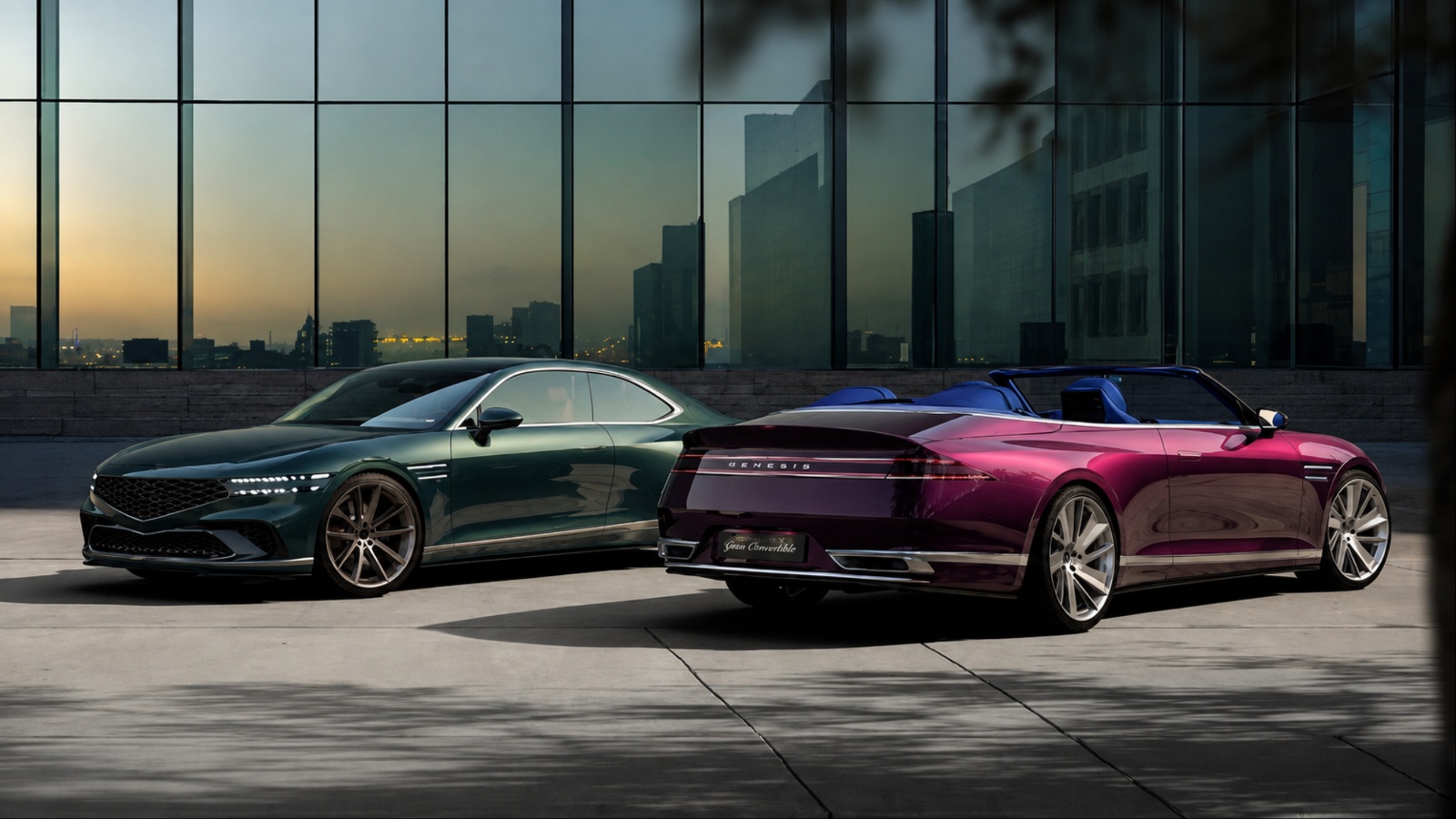
The expansion also coincides with a major development program for Genesis, Hyundai Motor’s luxury brand. Genesis is entering its second decade with plans to broaden its lineup, introduce new powertrains, and expand into additional markets.
Hyundai says Genesis will introduce its first hybrid, the GV80 Hybrid, as well as its first extended-range electric vehicle. The luxury brand is also moving forward with the GV90 flagship SUV, giving Genesis a larger presence in the premium SUV market.
The company says the GV90 will incorporate advanced technologies, including new battery and thermal-management systems.
Genesis is targeting more than 350,000 annual vehicle sales by 2030 across more than 40 markets. It also plans to increase its global retail footprint to more than 270 locations, representing a 50 percent increase. Spain is among the markets being added to the Genesis network during 2026, following launches in several other countries.
The luxury brand’s expansion matters to the European strategy because Genesis is competing in a segment dominated by established German manufacturers.
A larger SUV lineup, hybrid technology, and extended-range electric vehicles could allow Genesis to attract customers who want electrification but remain concerned about charging time or long-distance usability.
For Hyundai itself, the 41-product European program represents more than simply adding vehicles to showrooms. It is an attempt to close gaps across multiple segments while responding to rapidly changing consumer demand.
The company is entering a period in which compact EVs, hybrids, SUVs, and premium vehicles will all play important roles. With the IONIQ 3 already arriving, a Europe-specific B-segment SUV in development and further electrified models scheduled through the end of the decade, Hyundai’s European range could look substantially different by 2030.
The scale of the plan also reflects the wider ambition of Hyundai Motor. More than 100 global launches and refreshes in four years represent a significant investment, but Europe is clearly one of the company’s priority markets.
If Hyundai can execute the 41-product rollout while maintaining competitive pricing, technology, and quality, it could substantially strengthen its position in a European market undergoing one of its biggest transformations in decades.