
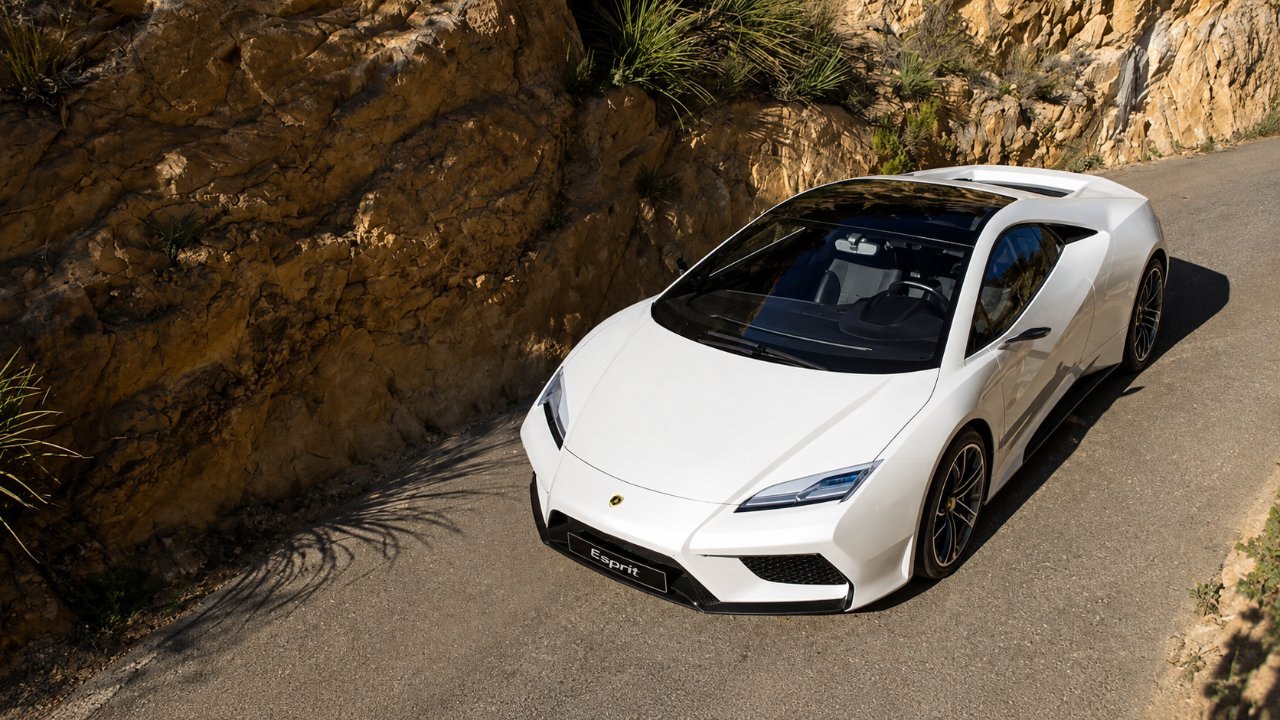
Lotus is bringing the Esprit name back into serious consideration as it reshapes its future around high-performance combustion engines and hybrid technology.
The upcoming 2028 flagship, currently known internally as Type 135, was previously confirmed with a hybrid V8 producing more than 1,000 bhp.
Now, Lotus has confirmed that a V6-powered version will also be offered, giving buyers a choice of engines while allowing the company to preserve the lightweight philosophy that has defined the British sports-car maker.
According to Autocar, Lotus CEO Feng Qingfeng confirmed the V6 version during the company’s second-quarter earnings call on August 27.
The new Esprit will be built alongside the Emira at Lotus’s historic Hethel facility in Norfolk, creating an important new role for the British factory. The V8 version is targeted at a weight of around 1,500 kg, despite its complex electrified powertrain.
The announcement represents a major change from Lotus’s earlier plans. The company had once intended to move toward an all-electric lineup by 2028, including an electric sports car intended to replace the Emira.
That strategy has since been abandoned as demand for expensive performance EVs proved weaker than expected. Lotus is now pursuing a mixed powertrain strategy in which combustion engines, hybrids, and electric vehicles can coexist.
The return of the Esprit name would give that strategy a highly recognizable flagship. The original Esprit ended production in 2004 after becoming one of Lotus’s most famous models, and its final years included a twin-turbo V8.
More than two decades later, Lotus is preparing to bring the name back with an entirely different interpretation of performance.
V6 Gives the Esprit a Lighter and More Accessible Option
The most significant new development is the confirmation of a V6 alongside the previously announced hybrid V8. Lotus had already indicated that the next-generation Emira would eventually receive a new hybrid V6, but the company’s latest announcement confirms that the same basic engine family will also be used for the new flagship.
Both the V6 and V8 are being developed by Horse Powertrain, the powertrain company jointly owned by Renault and Geely. According to Autocar, the V6 is intended to give the Esprit a less expensive and lighter alternative to the complicated V8 hybrid system.
This approach fits Lotus’s traditional engineering philosophy. Rather than chasing maximum output at any cost, the company has historically emphasized low weight, responsive handling, and driver involvement.
A V6 version could therefore be important because it allows Lotus to offer the new car’s chassis and driving characteristics without carrying all the hardware required for the more powerful V8 system.
That weight challenge is particularly important because the V8 version will use an 800-volt electrical architecture, a hybrid system, an electric motor, and a turbocharged V8. Lotus has set a target of approximately 1.5 tonnes for that configuration, which CEO Feng acknowledged would be difficult to achieve.
One of the company’s solutions is an extremely lightweight electric motor developed using Formula 1 technology. Feng told Autocar that a typical 150kW electric motor can weigh between 75kg and 95kg, whereas Lotus has worked on a unit weighing only about 20kg.
That could make a significant difference to the car’s power-to-weight ratio and handling characteristics.
The V8 version is expected to exceed 1,000 bhp, with Lotus previously confirming output above 986bhp. It will use an eight-speed dual-clutch transmission designed to handle high torque while minimizing weight.
The V6 is expected to offer a different balance. Instead of being defined primarily by outright power, it should appeal to buyers who place greater importance on agility and the traditional Lotus driving experience.
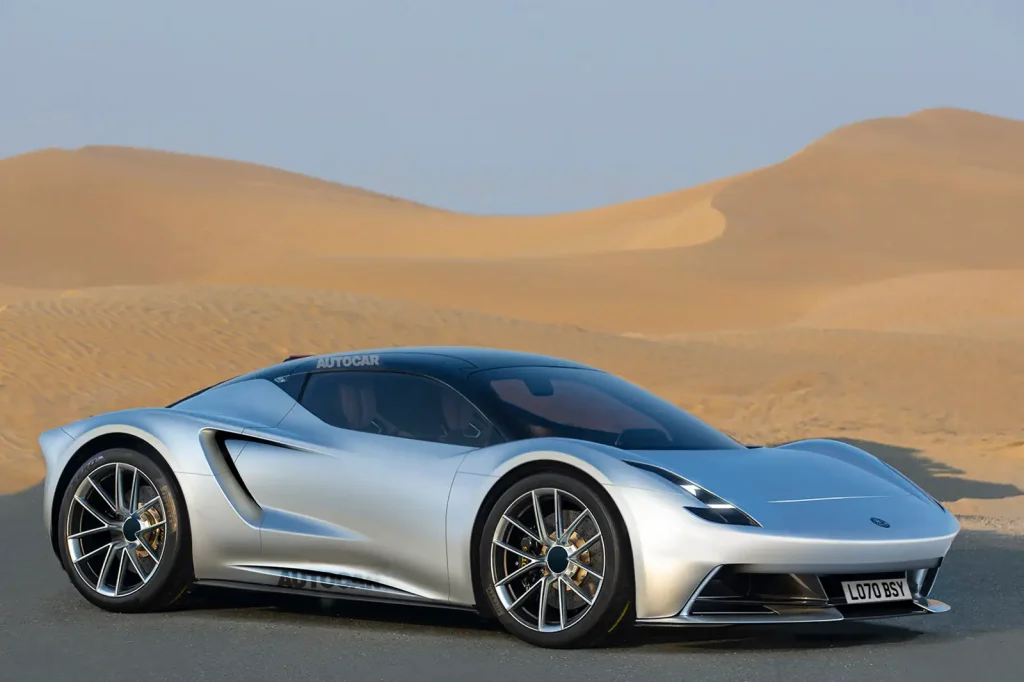
That makes the two-engine strategy particularly logical. The V8 can serve as the technological and performance flagship, while the V6 can provide a more accessible route into Lotus’s new supercar range.
Esprit Will Strengthen Lotus’s British Production Strategy
The new car will also play an important role in keeping Lotus’s historic manufacturing base relevant. The Esprit will be produced at Hethel alongside the Emira, giving the Norfolk facility responsibility for two important combustion-engined sports cars.
That is a significant development because Lotus has faced considerable uncertainty surrounding its UK operations as the company transitioned toward electric vehicles.
Autocar reported earlier this year that Lotus sees Hethel as the best location for production of its upcoming sports cars, with the company planning to keep the British factory running and potentially increase output.
The decision to build the Esprit in Britain also strengthens its connection with Lotus’s history. Hethel has been associated with Lotus production and engineering for decades, and returning a flagship sports car to the facility allows the company to reinforce that heritage.
The Esprit will sit above the Emira in the lineup, effectively becoming Lotus’s new internal-combustion halo model. The Evija remains the company’s electric hypercar, but its extremely low production volume means the Esprit will have a much broader role in representing Lotus’s performance direction.
Autocar reports that Lotus is targeting around 30,000 annual sales across the company, with sports cars expected to account for approximately one-third of that figure. That represents a substantial shift from the company’s previous emphasis on luxury electric SUVs and sedans.
The Emira itself will continue to evolve rather than being immediately replaced. Lotus has already introduced the lightweight Emira 420 Sport, and future versions will eventually move away from the current Toyota-sourced V6 and Mercedes-AMG four-cylinder engines. A new hybrid V6 from Horse is planned for the updated Emira later in the decade.
This means the Esprit and Emira will form the foundation of a renewed Lotus sports-car strategy. The company will retain the Emira as its more accessible sports car while positioning the Esprit as a considerably more powerful and sophisticated flagship.
A Different Direction for Lotus
The Esprit’s revival is ultimately about more than bringing back a famous name. It demonstrates how dramatically Lotus has changed its product strategy in response to the evolving performance-car market.
The company had previously expected electric vehicles to dominate its future, but Lotus now believes there is still strong demand for combustion-powered performance cars, particularly among luxury customers.
Feng has argued that buyers in this segment continue to value the character and emotional appeal of powerful engines, while the company also recognizes the need for electrification to meet emissions requirements.
That is why the new Esprit will use hybrid technology rather than simply returning to a conventional petrol engine. The hybrid system allows Lotus to improve performance and reduce emissions while retaining the mechanical character that customers associate with a sports car.
Interestingly, Lotus is also choosing a conventional hybrid rather than a plug-in hybrid for the Esprit. According to Autocar, avoiding the larger battery and additional charging hardware associated with a plug-in system helps reduce weight.
That decision is consistent with Lotus’s priorities and separates the Esprit from several modern hybrid supercars that rely on much larger battery systems.
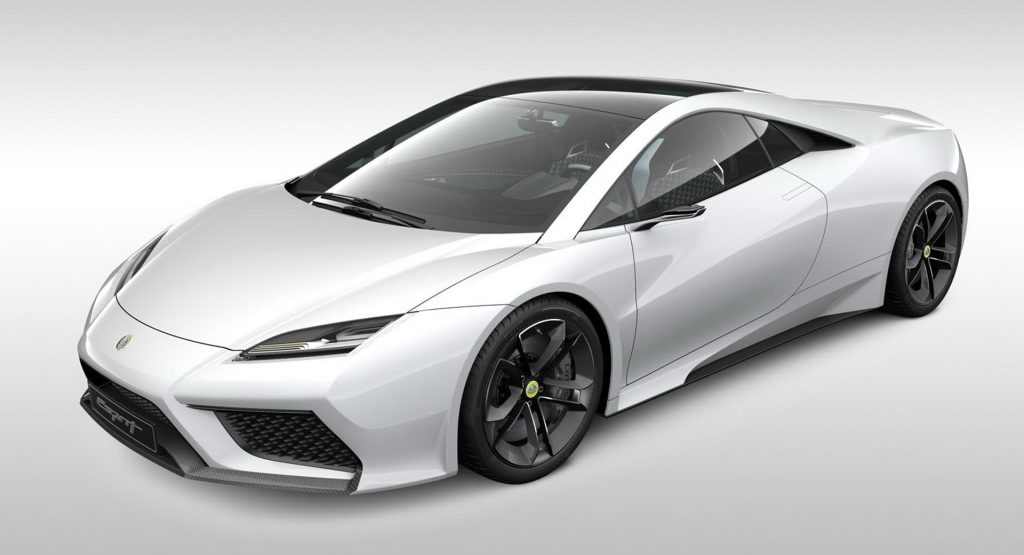
The car will also draw design inspiration from the Theory 1 concept shown by Lotus in 2024. The production car’s rear teaser already shows similarities to the concept, although it adds large exhaust outlets that clearly signal the return of combustion power.
A three-seat, McLaren F1-style layout has also been discussed as a possibility, although Lotus has not confirmed that feature for production.
Pricing has not yet been announced, but Lotus has identified the Ferrari 849 Testarossa as a key rival, suggesting that the Esprit will occupy a serious supercar price bracket.
For Lotus, the most important question will be whether it can deliver the lightweight handling and driver involvement associated with its heritage while integrating the complexity of hybrid power.
If successful, the new Esprit could best represent the company’s evolving approach. The goal is to preserve the thrill of a combustion engine, add electrification where it offers real benefits, and keep the vehicle as light as possible.
With the V6 now confirmed alongside the 1,000bhp-plus hybrid V8, the 2028 Esprit is shaping up to be more than a nostalgic revival. It could become the centerpiece of Lotus’s return to the high-performance sports-car market and a defining model for the company’s new mixed-powertrain era.
