
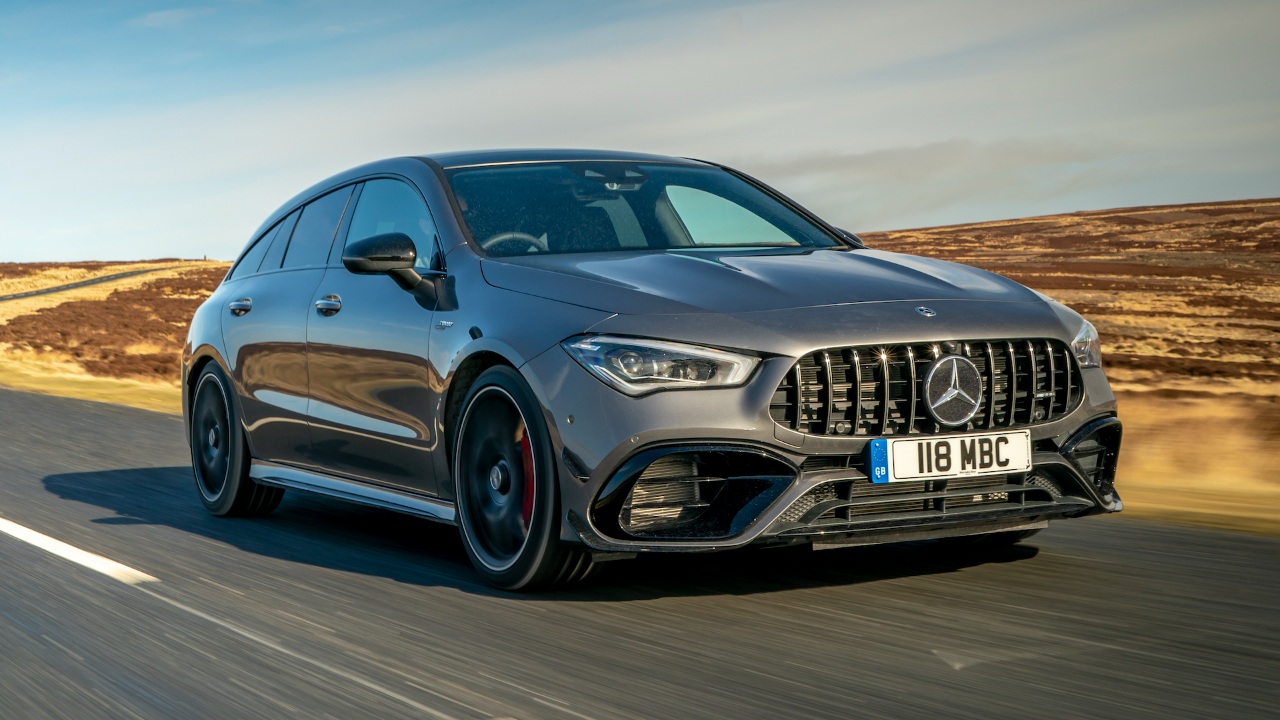
Mercedes-AMG has expanded its electric performance lineup with the new CLA 45 4MATIC+, turning the latest CLA into a serious high-performance EV without abandoning the compact dimensions that have traditionally defined the model.
With up to 680 hp, three electric motors, and a claimed WLTP range of up to 416 miles, the new AMG sits at the intersection of sports-car performance and long-distance electric usability.
According to Mercedes-AMG, the CLA 45 uses three axial-flux electric motors, including one motor at the front and two mounted at the rear. The system produces up to 500 kW, equivalent to approximately 680 hp, when its temporary race start function is activated.
The motors are supplied by an 85-kWh usable battery and a two-speed transmission at the rear axle.
The figures make the CLA 45 considerably more ambitious than a conventional electric performance sedan. Mercedes-AMG says the car can accelerate from 0 to 100 km/h in 3.2 seconds, while top speed is electronically limited to 280 km/h.
It can also operate with a rear-wheel-drive bias under appropriate conditions, giving AMG engineers more flexibility in balancing traction, efficiency, and driver involvement.
The launch is important for AMG because the CLA 45 is based on the company’s new electric architecture rather than simply being a more powerful version of an existing Mercedes-Benz EV.
Mercedes-AMG is using the car to demonstrate how advanced electric motors, a high-voltage battery, and sophisticated torque control can be combined in a relatively compact performance model.
Three Axial-Flux Motors Deliver Up to 680 HP
The most technically interesting part of the CLA 45 is its motor configuration. Mercedes-AMG has equipped the car with three axial-flux motors supplied by YASA, the British electric-motor specialist owned by Mercedes-Benz.
Axial-flux motors differ from the radial-flux motors commonly used in electric vehicles. Their design allows engineers to achieve high power and torque while keeping the motor relatively compact and light.
That characteristic is particularly valuable in a performance car, where reducing mass and maintaining a low center of gravity can have a major influence on handling.
Mercedes-AMG says each motor weighs only about 24 kg, yet the combined system can deliver an enormous amount of power. Two motors are mounted at the rear axle, while the third operates at the front.
This arrangement gives the CLA 45 genuine all-wheel-drive capability while allowing the software to control torque at each axle with considerable precision.
The standard output is already substantial, while the Race Start system temporarily raises total output to 500 kW. Mercedes-AMG quotes 580 kW of maximum system output under race start conditions, corresponding to the headline 680 hp figure.
The rear motors are connected to a two-speed transmission. The first gear is designed to provide strong acceleration from a standstill, while the second is optimized for higher-speed performance and efficiency. That approach differs from most EVs, which generally use a single-speed reduction gear.
AMG has also engineered the drivetrain around variable torque distribution. The CLA 45 can send power between the front and rear axles depending on driving conditions, while the rear motors can individually influence how torque is delivered.
This allows the vehicle to produce the kind of directional control that AMG wants from a performance car rather than simply relying on brute acceleration.
The result is a claimed 3.2-second 0-100 km/h time. That puts the CLA 45 firmly into sports-car territory, despite its positioning as a compact four-door model.
Mercedes-AMG has also incorporated specific chassis hardware to manage the additional performance. The car receives AMG-tuned suspension, four-wheel steering, and high-performance braking systems, while its electronic controls are designed to work with the torque-vectoring capabilities of the three-motor setup.
This technology is particularly important because high electric power can easily make a vehicle fast in a straight line. The challenge for AMG is making sure the car remains engaging and predictable when the road becomes more demanding.
416 Miles of Range and Rapid Charging
Performance is only half of the CLA 45’s story. Mercedes-AMG is also emphasizing efficiency and long-distance usability, with a maximum claimed WLTP range of 670 km, or approximately 416 miles.
That figure is possible because the CLA 45 uses an 85-kWh battery alongside an aerodynamic body and an electric powertrain designed to minimize energy losses. The range figure is a maximum laboratory rating, however, and real-world range will vary depending on speed, temperature, driving style, road conditions, and wheel configuration.
According to Mercedes-AMG, the car can also recover a substantial amount of range during a short charging stop. Under suitable conditions, it can add approximately 270 km, or 168 miles, of WLTP range in 10 minutes using a sufficiently powerful DC fast charger.
The charging system operates at up to 320 kW, giving the CLA 45 access to some of the fastest charging infrastructure currently available for passenger EVs. Mercedes-AMG says the battery can charge from 10 to 80 percent in around 22 minutes under ideal conditions.
The charging performance is important because the CLA 45’s combination of high power and long range would otherwise create a familiar compromise. Performance EVs can consume energy rapidly when driven aggressively, while large batteries add weight. AMG is attempting to address both sides of that equation through improved motor efficiency and fast charging.
The battery itself also incorporates advanced thermal management. Maintaining an appropriate battery temperature is essential when the vehicle is repeatedly exposed to high power demands, such as hard acceleration or track driving.
Effective cooling allows the system to maintain performance more consistently while also protecting long-term battery durability.
Mercedes-AMG has therefore designed the CLA 45 as more than a short-distance performance EV. Its range and charging capabilities are intended to make it suitable for everyday driving as well as high-performance use.
A New Direction for AMG’s Electric Cars
The CLA 45 represents an important step in Mercedes-AMG’s transition toward electric performance vehicles. Rather than simply adding more battery capacity or increasing motor output, AMG is attempting to make its EVs mechanically and electronically distinctive.
The three-motor layout is a good example. Most performance EVs use two motors, with one at each axle. AMG’s decision to use two separate motors at the rear gives its engineers more control over torque delivery and vehicle behavior.
That system also supports different driving modes. The driver can prioritize efficiency during everyday driving or access more aggressive settings when maximum performance is desired. The rear-biased character can make the car feel less like a conventional all-wheel-drive EV and more like a performance car engineered around controllable power.
Mercedes-AMG has also worked on the car’s sound and driving feedback. Because an electric vehicle does not naturally produce the mechanical noises associated with a combustion engine, manufacturers increasingly use synthesized sound to provide drivers with additional feedback.
AMG has developed its own sound strategy to make the CLA 45 feel connected to the company’s performance heritage.
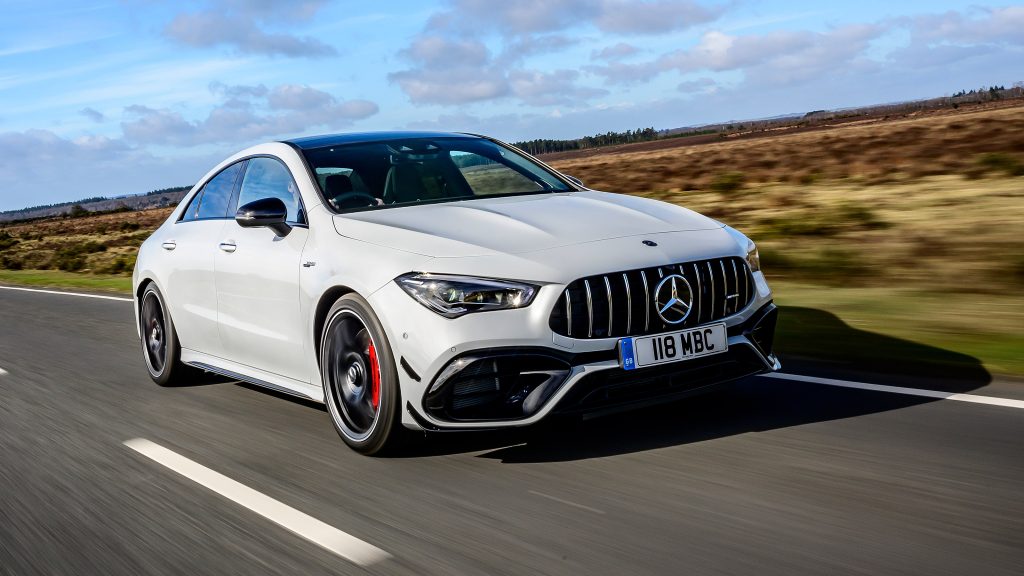
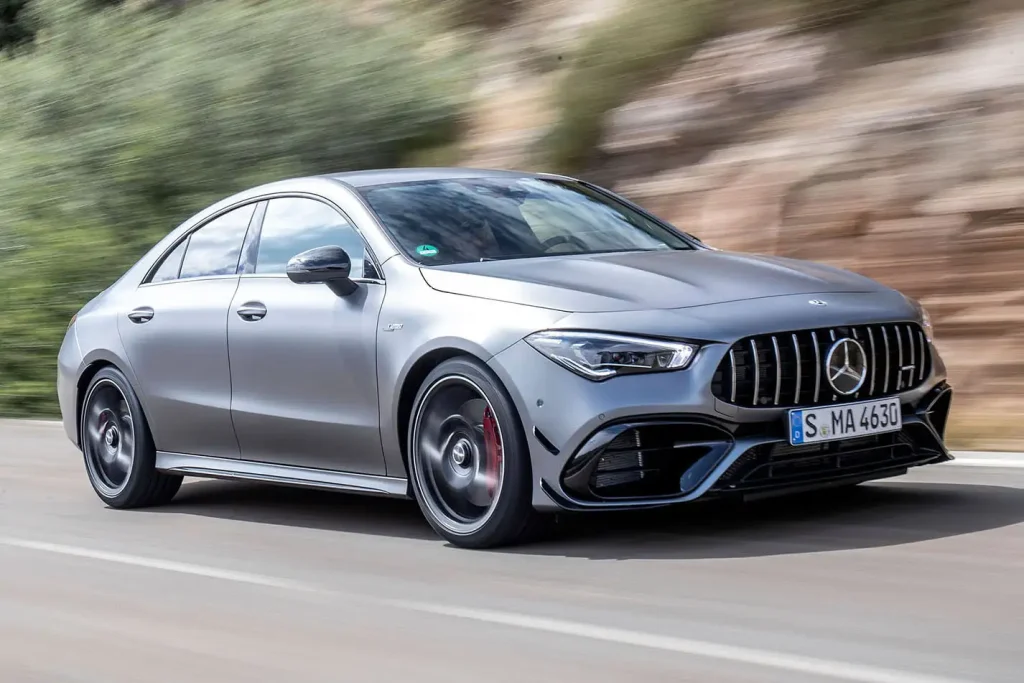
The exterior design also receives the expected AMG treatment. The car gets a more aggressive front fascia, distinctive AMG grille treatment, larger wheels, and performance-oriented aerodynamic details. These changes are intended to distinguish the CLA 45 from the standard electric CLA without compromising the vehicle’s aerodynamic efficiency.
Inside, the cabin receives AMG-specific displays and performance information, allowing the driver to monitor power output, battery temperature, and other drivetrain parameters. The emphasis is on making the technology visible rather than hiding it behind conventional EV controls.
Pricing and exact market availability will vary by country, and Mercedes-AMG is expected to position the CLA 45 significantly above the standard CLA EV. Its competition will include high-performance electric models from BMW, Porsche, and other premium manufacturers.
What makes the CLA 45 particularly interesting is the combination of its numbers. A 680-hp peak output, 3.2-second 0-100 km/h acceleration, 416-mile maximum WLTP range, and 320-kW charging capability would have been difficult to associate with a compact performance sedan only a few years ago.
The real test, however, will be how these figures translate into everyday driving. Range claims are achieved under controlled WLTP conditions, while maximum power is available under specific circumstances. Customers will ultimately judge the car on its ability to balance performance, comfort, efficiency, and usability in the real world.
For Mercedes-AMG, the CLA 45 is nevertheless a clear statement of intent. The company is not treating electrification simply as a regulatory necessity.
By using three lightweight axial-flux motors, a two-speed rear transmission, and sophisticated torque management, AMG is attempting to develop a distinct technical identity for its electric performance cars.
If the CLA 45 can deliver its headline performance while retaining the long-distance usability promised by its 416-mile range, it could become one of the most technically ambitious compact performance EVs on the market.
More importantly, it provides an early indication of how Mercedes-AMG intends to translate its traditional performance philosophy into an electric era.
