
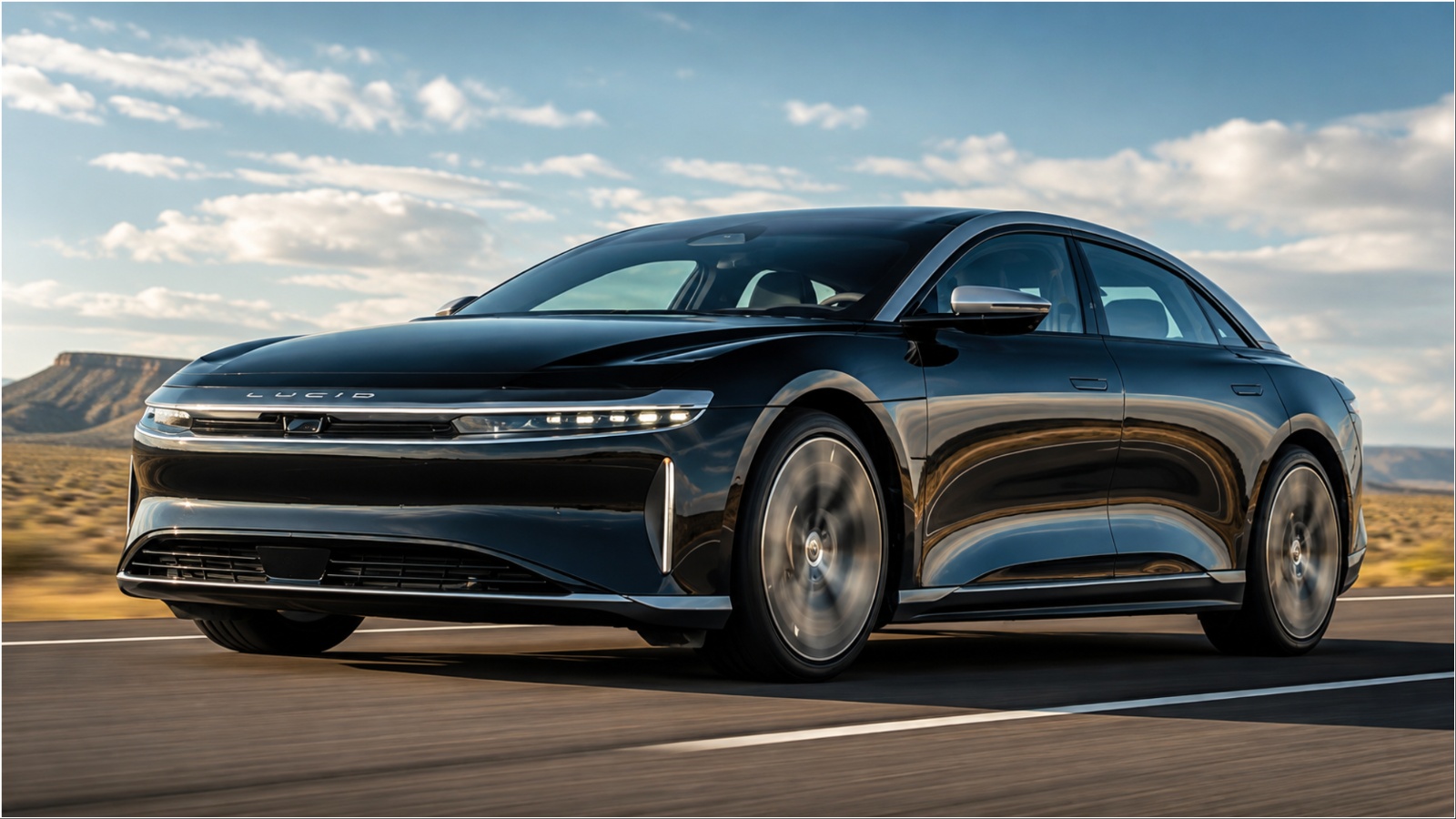
Lucid is recalling 27,185 Air electric sedans in the United States after discovering a software-related problem in the vehicle’s exterior lighting system that can cause an electrical circuit to overheat and potentially start a fire. The recall covers Air models from the 2022 through 2026 model years and represents the largest recall in Lucid’s history.
According to Reuters, the National Highway Traffic Safety Administration (NHTSA) announced the recall on August 28 after determining that an exterior-lighting circuit could overheat, increasing the risk of a fire. The same defect can also cause exterior lights to stop working, potentially reducing visibility and increasing the risk of a crash.
The recall is unusual because the underlying problem is not simply a defective physical component. Instead, it involves software controlling an electronic fuse, demonstrating how increasingly software-defined vehicles can develop safety issues that require software-based remedies.
NHTSA’s campaign covers vehicles manufactured from October 11, 2021, through July 27, 2026. The agency has instructed affected owners to park their vehicles outside and away from structures until the recall remedy has been completed.
Lucid has already developed an over-the-air software update that addresses the problem, meaning most owners will not need to take their vehicles to a dealership for the repair.
Software-Controlled Fuse Creates Fire Risk
The defect involves the low-voltage circuits powering parts of the Air’s exterior lighting system. According to the recall information, the circuits may not have sufficient overcurrent protection, allowing them to remain energized at excessive amperage and potentially overheat.
The affected circuits include the front combination lamps and the center high-mounted stop lamp. If the circuit overheats sufficiently, wiring can be damaged and smoke or fire can result.
A failure affecting the vehicle’s exterior lighting can also create a secondary safety problem because other road users may have difficulty seeing the vehicle or recognizing its braking and lighting signals.
Car and Driver reports that Lucid uses a software-controlled electronic fuse, or eFuse, rather than a conventional physical fuse for these circuits. The software was intended to protect the circuits from excessive current, but the system’s logic could allow the circuit to remain energized under conditions where it should have been shut down.
The problem has not been identified solely through theoretical testing. Lucid’s investigation has identified three fires and four smoke incidents potentially connected to the issue, along with 33 warranty reports involving related problems. No injuries have been reported in connection with the recall, according to information surrounding the NHTSA filing.
The incidents span several years. The first known case involved a Lucid-owned 2023 Air that caught fire in June 2023. Subsequent incidents helped the company investigate the potential relationship between exterior lighting circuits and overheating.
The existence of several incidents does not mean every recalled vehicle will experience a failure. A recall identifies vehicles that may contain the relevant defect, and NHTSA’s recall database emphasizes that owners should use their vehicle identification number to determine whether a specific car is covered.
Nevertheless, the potential consequences are serious enough that NHTSA has issued a precautionary instruction to park affected vehicles outside and away from buildings until the remedy is completed.
That recommendation is particularly important because an electrical fire can potentially develop while a vehicle is parked. Keeping an affected vehicle away from a home, garage, or other structure reduces the potential for a vehicle fire to spread to surrounding property.
Lucid Already Has a Software Fix
The most straightforward part of the recall is the remedy. Lucid has developed an over-the-air software update that changes how the eFuse system manages current.
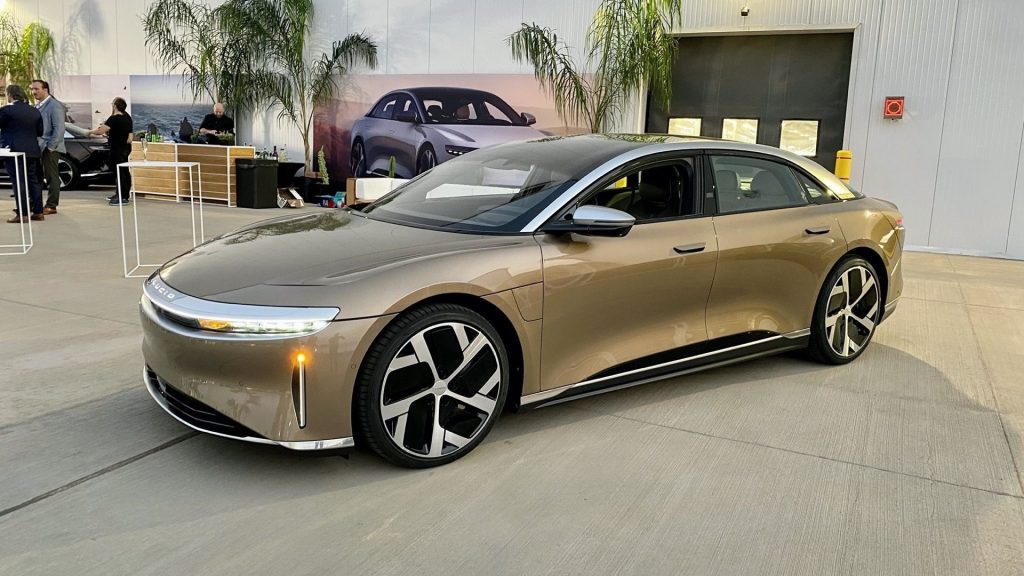
According to Car and Driver, the remedy is software version 2.10.0 or later. The update reduces the eFuse’s allowable amperage and disables a function that could re-energize a circuit after a fault.
That approach means owners do not necessarily need to schedule a physical repair. Because the defective behavior is controlled by software, Lucid can modify the protection strategy remotely.
The scale of the update is also significant. NHTSA information reported by Reuters indicates that 20,719 of the 27,185 affected vehicles had already received the update by the time of the recall announcement. That leaves roughly 6,466 vehicles that still require the corrective software.
Lucid, therefore, had already addressed a large proportion of the affected fleet before the formal recall became public.
However, the recall remains important because receiving a software update and formally completing a safety recall are not necessarily the same thing from a regulatory standpoint. Owners still need to confirm that their particular vehicle has received the appropriate remedy and that the recall has been properly completed.
Lucid plans to notify owners who still need the repair, with notification letters expected to be mailed beginning October 16, 2026. The recall is identified as Lucid campaign SR-26-06-0 and NHTSA campaign 26V540000.
The incident also highlights a broader change in automotive safety. Traditional recalls often involve replacing physical components such as airbags, fuel pumps, wiring harnesses, or suspension parts. Modern vehicles increasingly allow manufacturers to correct certain safety-related problems through software.
That can make the repair substantially faster and easier for customers, but it also means software development and validation have become directly connected to vehicle safety.
Largest Recall in Lucid’s History
For Lucid, the size of this campaign is particularly notable. The company remains a relatively low-volume automaker compared with established manufacturers, making a recall involving more than 27,000 vehicles substantial relative to its overall fleet.
Reuters reported that the campaign covers more vehicles than Lucid delivered during the entire 2025 calendar year. The company delivered 15,841 vehicles in 2025, meaning the recall affects about 1.7 times that annual delivery volume.
This does not mean 27,185 vehicles have experienced the defect. Rather, it represents the population potentially affected by the design or software issue. Still, the scale makes the recall an important quality and safety event for the young EV manufacturer.
It is also not Lucid’s only recall this year. In January, the company recalled more than 10,000 Air vehicles because of a rearview-camera software issue that could cause the rearview image not to display when the vehicle was shifted into reverse. In May, Lucid recalled another 2,039 vehicles over a potential loss of drive power.
Those campaigns involve different technical problems and should not be treated as evidence of a single underlying defect. However, they demonstrate the growing importance of software reliability as Lucid’s vehicles become increasingly dependent on electronic systems.
The latest recall is particularly significant because it involves the possibility of fire. Even though the remedy can be delivered remotely, Lucid and regulators are treating the issue as a serious safety concern because of the potential consequences of an overheated electrical circuit.
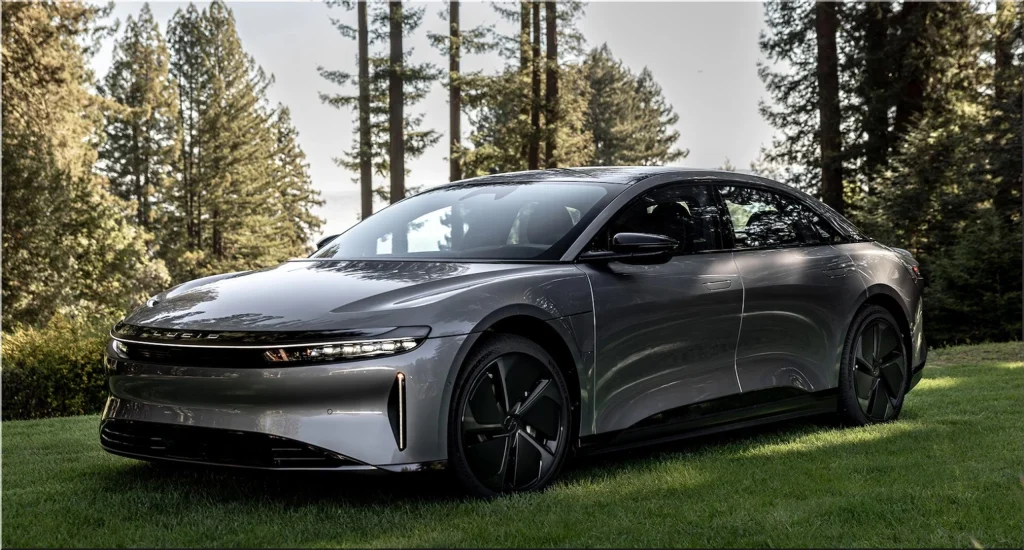
The recall also illustrates one of the challenges facing manufacturers of software-defined EVs. Adding electronic controls can eliminate mechanical components and enable rapid updates, but the software controlling those systems must perform correctly under a wide range of conditions. A mistake in software logic can potentially affect thousands of vehicles simultaneously.
For Lucid, the immediate priority is ensuring that every affected Air receives the updated software and that owners follow NHTSA’s parking guidance until the repair is complete. Owners can check their vehicle’s recall status through NHTSA’s recall system using the VIN, while Lucid can provide information about the available software remedy.
The recall is therefore both a specific safety issue and an example of how vehicle recalls are changing. The Air’s problem does not require a new engine component, battery pack, or lighting assembly. Instead, a software-controlled protection system needs to be recalibrated.
If the OTA remedy performs as intended, the issue can be resolved without conventional workshop repairs. But the three reported fires and four smoke incidents show why the recall cannot be treated as a minor software update.
For Lucid, completing the campaign quickly and ensuring that every affected Air is protected will be essential to maintaining customer confidence in a brand whose vehicles rely heavily on advanced electrical and software systems.
