
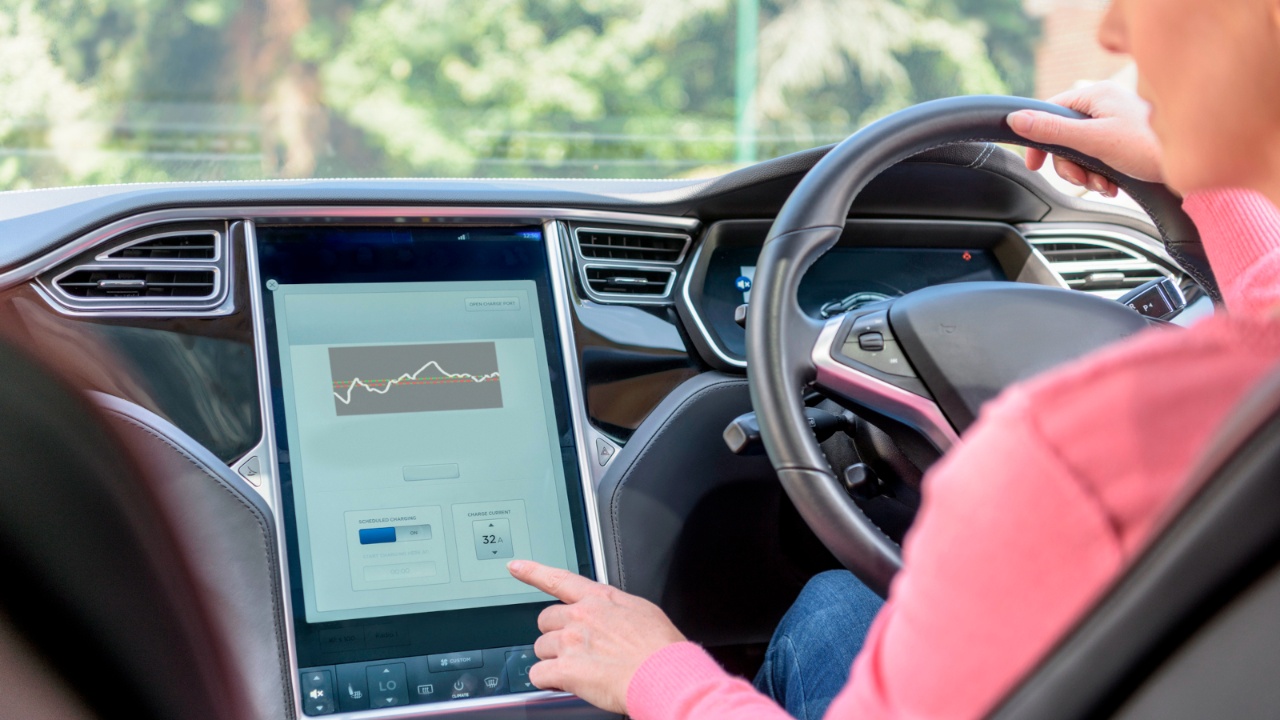
For much of the past decade, automakers treated the touchscreen as a symbol of automotive progress. Physical buttons and knobs steadily disappeared as manufacturers replaced them with large displays capable of controlling climate settings, audio, navigation, lighting, and functions that once required a simple switch.
That approach is now facing a significant rethink. Automakers are increasingly being pushed to make vehicle interfaces easier and safer to use as drivers complain about complicated menus, excessive touchscreen dependence, and controls that require too much visual attention.
Safety organizations are also putting greater emphasis on physical controls for important functions.
The change does not mean touchscreens are disappearing. Instead, the industry appears to be moving toward a hybrid approach, where large digital displays remain important, but essential functions return to physical buttons, switches, and knobs.
The shift is already visible. Volkswagen has said future vehicles will bring back physical controls for functions including volume, climate settings, fan controls, seat heating, and hazard lights. Tata Motors has also confirmed plans to reintroduce more physical interfaces following customer feedback on touchscreen-heavy interiors.
As Autocar India reported, Tata design chief Martin Uhlarik acknowledged that the company had moved toward fewer buttons with several products but said customers still wanted some physical interaction. The company now plans to combine touchscreens with selected physical controls. (autocarindia.com)
This reflects a broader realization that automotive technology cannot simply be judged by how futuristic it looks. It must also work intuitively when a driver is traveling at highway speeds, dealing with traffic, weather, or an emergency.
Why Touchscreen-Heavy Interiors Are Being Reconsidered
Touchscreens offer obvious advantages to automakers. A single display can replace numerous switches, reduce dashboard clutter, and allow manufacturers to change functions through software updates.
Electrek notes that touchscreen systems can also simplify parts inventory and provide cleaner interior designs while supporting over-the-air updates. For drivers, however, the experience has not always been positive.
A physical button provides tactile feedback. A driver can reach for a climate knob or hazard switch without necessarily looking at it. After repeated use, its location becomes part of muscle memory. A touchscreen does not provide the same physical reference point, particularly when controls are buried within menus.
That becomes especially important when operating functions while driving. The Irish Times recently highlighted how functions once immediately accessible can now require drivers to navigate through touchscreen menus.
It also reported that Euro NCAP’s 2026 assessment approach encourages manufacturers to provide separate physical controls for essential functions such as the horn, indicators, hazard lights, windscreen wipers, and headlights.
Euro NCAP’s position is significant because its safety ratings influence purchasing decisions across Europe. Its 2026 guidelines ask manufacturers either to provide physical buttons for key driver controls or dedicate a fixed section of the display to those functions.
The organization has said excessive touchscreen use can create distraction because drivers may need to take their eyes away from the road to operate basic functions. Consumer preferences are also influencing the change.
Research summarized by MOTOR found that 48% of global respondents prefer a combination of touchscreens with physical buttons or knobs. While 74% considered touchscreens desirable, the findings suggest consumers are not necessarily demanding an all-screen interior.
Drivers may appreciate a large screen for navigation, media, and vehicle information while still wanting physical controls for functions they use frequently.
The industry’s challenge is therefore not choosing between technology and buttons. It is determining which functions belong on a screen and which should remain tactile.
Automakers Are Moving Toward a Hybrid Approach
The most likely future is not a return to the dashboards of the 1990s. Large displays are now too useful and deeply integrated into modern vehicles to disappear.
Instead, manufacturers are beginning to separate information and convenience functions from critical driving controls.
Navigation, media, vehicle settings, and personalized features can work effectively through touchscreens because they are generally used when the vehicle is stationary or when the driver can interact with them safely.
Functions such as hazard lights, wipers, indicators, and climate controls are different because drivers may need to operate them quickly without looking away from traffic.
Volkswagen has become one of the clearest examples of this change. The company has indicated that upcoming vehicles will restore physical controls for several functions after criticism of its touchscreen-heavy approach. Other manufacturers are taking similar steps.
According to Forbes, brands including Volkswagen, Hyundai, Kia, Mercedes-Benz, Porsche, Audi, Subaru, and Ferrari have been moving toward greater use of physical controls for selected functions.
The change is not uniform across every model. Automakers are experimenting with different combinations of displays, rotary controllers, buttons, touch-sensitive surfaces, and voice commands.
Voice control is another attempt to reduce physical interaction without forcing drivers through menus. Modern systems increasingly allow drivers to request navigation destinations, adjust settings, or control entertainment through natural language.
But voice control has limitations. It depends on microphones, software interpretation, and sometimes connectivity, and it may not always understand a request correctly. Physical controls remain valuable because their operation is predictable.
There is also evidence that automakers are reconsidering the idea that minimalism automatically produces a better interior.
A screen can make a dashboard appear clean and modern, but reducing controls does not necessarily make a vehicle easier to operate. The best interface is the one that allows drivers to complete common tasks quickly with minimal distraction.
That is why the industry’s next phase is likely to focus more heavily on intuitive design rather than maximum digitization.
The debate is particularly interesting because automakers do not all agree that physical controls are always superior. Mazda, for example, spent years emphasizing physical controls and rotary interfaces but has moved toward a larger touchscreen in the 2026 CX-5.
Its product team has argued that the new interface can improve usability in certain circumstances. That demonstrates that the future will not be a simple reversal of the touchscreen trend.
Instead, manufacturers will have to determine which interface works best for each function.
Simpler Technology Could Define Future Cars
The growing backlash against complicated vehicle interfaces represents a broader change in how automakers think about technology.
For years, the industry competed to offer larger displays, more screens, and increasingly sophisticated digital features. The emphasis was often on demonstrating what a vehicle could do rather than asking whether those functions were easy to use.
Now, safety organizations and customers are pushing manufacturers to consider a different question: Does the technology make driving easier, or does it make the driver work harder?
That distinction could significantly influence future interiors. Physical controls are unlikely to return everywhere. It would make little sense to replace every digital function with a dedicated switch, particularly when software allows manufacturers to update and customize vehicle systems.
Instead, future dashboards are likely to combine both approaches. A driver could use a large touchscreen for navigation and entertainment while adjusting temperature through a physical knob and activating the hazard lights with a dedicated button.
Rotary controllers or shortcut switches could provide additional tactile interaction, while voice assistants handle more complex requests.
This would allow manufacturers to maintain the clean appearance that originally made touchscreen-heavy interiors attractive without sacrificing usability.
Regulatory pressure could accelerate the change. Euro NCAP’s approach means manufacturers increasingly have a safety incentive to ensure critical controls can be operated without excessive visual distraction.
China is also moving toward greater use of physical controls for essential vehicle functions, showing that the issue is becoming relevant across major automotive markets.
The lesson for automakers is not that technology itself is the problem. Technology needs sensible physical and operational solutions.
The next generation of vehicles will still be highly digital, but they may be less focused on eliminating every button.
Drivers increasingly want technology that works with them rather than technology that forces them through menus for basic tasks. Automakers appear to be listening, and the return of buttons and knobs could become one of the defining interior-design changes of the late 2020s.
The future car will remain a rolling computer. But manufacturers are increasingly realizing that the best interface is not necessarily the one with the fewest buttons. It is the one that lets drivers complete important tasks quickly, naturally, and safely.
