
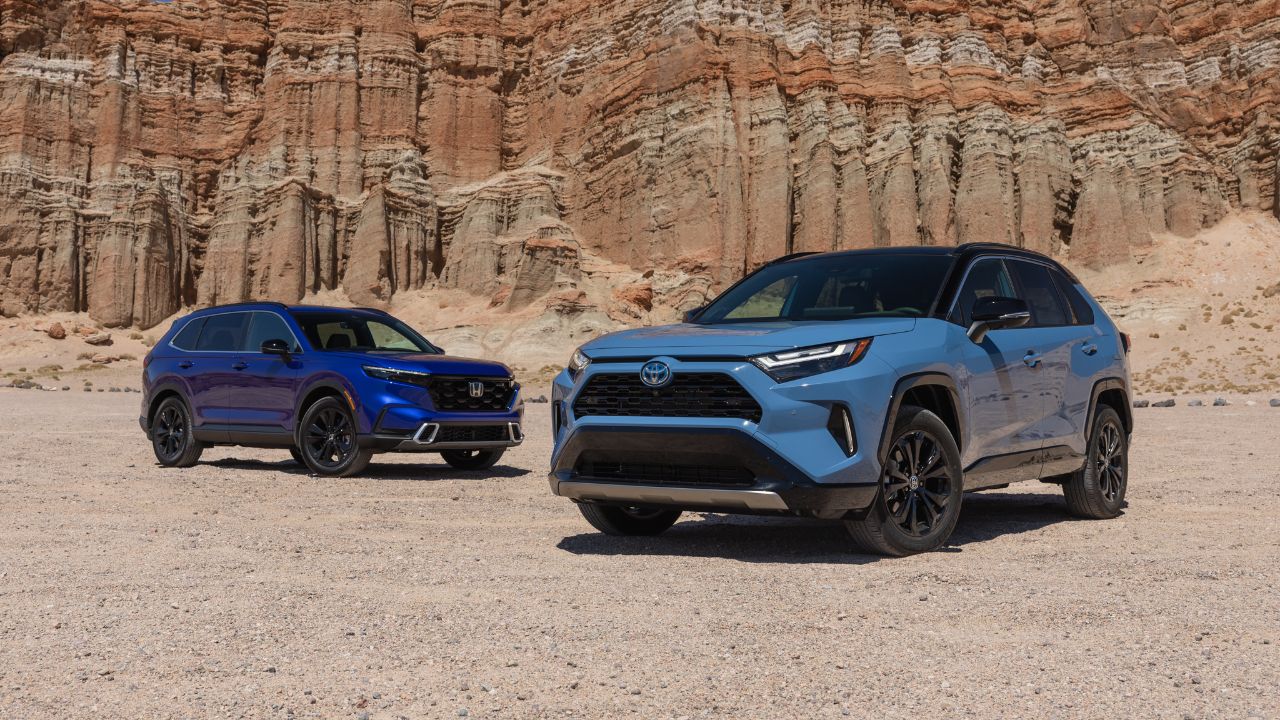
Toyota and Honda are facing potentially severe disruption to their North American manufacturing operations as the United States threatens to impose a 50% tariff on vehicles and automotive parts imported from Canada.
The proposed tariff, scheduled to take effect on January 1, 2027, could put significant pressure on the two Japanese automakers because they account for more than three-quarters of vehicles produced in Canada.
Much of that production is destined for the U.S. market, making the companies unusually exposed to any increase in the cost of moving Canadian-built vehicles across the border.
According to Reuters, Canadian-built vehicles represented almost a quarter of Honda’s U.S. sales and 17% of Toyota’s U.S. sales last year, according to Barclays analysts. That makes the proposed duties particularly important for models produced at the companies’ Canadian facilities, including popular SUVs.
The issue is bigger than a simple tariff increase. Toyota and Honda have built their North American manufacturing strategies around an integrated supply chain in which vehicles and components move between Canada, the United States, and Mexico.
A 50% duty could therefore affect production decisions, vehicle pricing, investment plans, and employment on both sides of the border.
Why Toyota and Honda Are So Exposed
Canada produced about 1.2 million vehicles in 2025, and Toyota and Honda together accounted for more than 75% of that production, according to Reuters. Their concentration in Canadian manufacturing means they have more at stake than many other automakers if the proposed tariff takes effect.
Honda operates its Canadian manufacturing operations in Alliston, Ontario, while Toyota has Canadian plants in Ontario producing vehicles and components for the wider regional market.
The problem is that the U.S. is the largest market for both companies. Canadian production is not primarily intended for Canadian consumers, so a large share of those vehicles is shipped into the United States. A 50% tariff could dramatically increase the cost of supplying American dealerships from Canadian plants.
Reuters reported that analysts believe the companies could be forced to shut some Canadian production lines if the tariff remains in place. Moving that production elsewhere would not be simple. Assembly plants require major investments, trained workers, supplier networks, and established logistics systems.
Toyota and Honda could potentially increase production at U.S. facilities, but that would require time and additional investment. They could also redirect some Canadian production toward other markets, although analysts have pointed out that replacing U.S. demand with alternative destinations would create significant logistical challenges.
The companies could instead absorb some of the tariff cost, raise vehicle prices, or combine the two approaches. None is attractive. Absorbing the tariff would reduce margins, while passing the entire cost to consumers could make vehicles less competitive.
Popular SUVs make the situation particularly important. Toyota’s RAV4 and Honda’s CR-V are among their best-known models, and strong demand for SUVs means production disruptions could quickly affect dealerships and customers.
A Broader Threat to North American Auto Production
The Toyota and Honda exposure is part of a much larger problem for the Canadian automotive industry.

Reuters reported that Canadian-made vehicles represented about 6% of U.S. auto sales in 2025. The proposed tariff could therefore affect a meaningful share of vehicles sold in the American market while also raising costs for companies that depend on Canadian parts and manufacturing.
The United States already imposes a 25% tariff on Canadian vehicles, and President Donald Trump has threatened to double that rate to 50% beginning January 1.
The escalation followed the collapse of U.S.-Canada trade negotiations. According to Reuters, the deal under discussion would have reduced the tariff on Canadian cars and light trucks from 25% to 15%.
That agreement failed after the two sides remained divided over several issues, including whether tariff relief should extend to medium- and heavy-duty trucks.
The uncertainty has left automakers planning around trade policy that could still change before the January deadline.
Other automakers would also be affected. General Motors produces Chevrolet Silverado pickups in Canada, while Stellantis manufactures the Chrysler Pacifica there. Ford is preparing to import Super Duty trucks from its Oakville, Ontario, plant.
Toyota and Honda nevertheless face an especially difficult position because of the size of their Canadian production and the importance of those vehicles to their U.S. businesses.
The dispute is already affecting investment decisions. Reuters reported in August that a senior Honda executive said the company might not build an eighth assembly plant in North America unless the USMCA trade agreement is extended.
That warning shows how tariffs can influence decisions years before a vehicle reaches a showroom. Automakers invest billions in factories based on assumptions about future trade rules, labor costs, demand, and supply chains. If those assumptions become uncertain, companies may delay or cancel projects.
Toyota has already announced significant investment in the United States, including a battery plant in North Carolina. Greater U.S. production could eventually reduce its dependence on Canadian imports, but expanding American capacity cannot immediately replace existing Canadian output.
For Canada, the stakes are equally serious. The automotive industry supports hundreds of thousands of jobs across vehicle assembly, parts manufacturing, transportation, and related services. A prolonged reduction in production could therefore affect communities beyond the factories themselves.
The pressure is especially significant because North American plants are not isolated operations. Parts suppliers, logistics providers, and dealerships depend on predictable production schedules. A prolonged disruption could therefore spread beyond the assembly plants and affect the wider automotive supply chain.
For consumers, the consequences would depend on how automakers respond. If companies redirect production successfully, vehicle availability may remain stable, but costs could rise. If production cannot be shifted quickly enough, certain models could become harder to find in the U.S. market.
For workers, the outcome would depend heavily on whether Canadian plants receive new products. Losing a current vehicle program does not automatically mean a factory closes, but the absence of a successor model can make future employment much less certain.
What the Tariffs Could Mean for Consumers
If the 50% tariff becomes effective, automakers would have to decide how much of the additional cost to absorb and how much to pass on to buyers.
If Toyota and Honda raise prices, their Canadian-built vehicles could become less attractive compared with models produced in the United States or imported from countries facing lower tariff rates. If they absorb the cost instead, profitability would suffer.
Production changes could also create shortages. Shifting vehicles from Canadian plants to U.S. factories would require available capacity, compatible production lines, and sufficient parts. Automakers cannot simply transfer an assembly program from one country to another overnight.
The supply chain makes the problem even more complicated. A vehicle assembled in Canada may contain parts manufactured in the United States or Mexico.
Those components can cross borders multiple times before the finished vehicle reaches a customer, meaning higher tariffs could increase costs throughout the manufacturing process rather than affecting only the final vehicle.
At the same time, Chinese automakers are expanding internationally with competitively priced electric and hybrid vehicles. Reuters has noted that Japanese automakers are already facing pressure from lower-cost Chinese competitors in Southeast Asia, Europe, and Latin America.
For now, the 50% tariff remains a proposal scheduled for January 1, 2027, and negotiations between Washington and Ottawa could still change the outcome. Reuters has reported that both sides have continued to signal that a deal is possible, although major disagreements remain.
That uncertainty is itself a problem for automakers. Companies need to make production and investment decisions months and years in advance, while trade policy can change much faster.
The proposed tariff therefore represents more than another increase in vehicle import costs. It challenges the North American production model that Toyota, Honda, and other automakers have spent decades building.
If the 50% duty takes effect unchanged, Toyota and Honda could be among the manufacturers hit hardest because of their dominant position in Canadian production and their reliance on the U.S. market. If negotiations produce a compromise, some immediate pressure could ease.
Until then, the uncertainty surrounding Canada’s auto industry is likely to remain a major concern for automakers, workers, and consumers on both sides of the border.
