
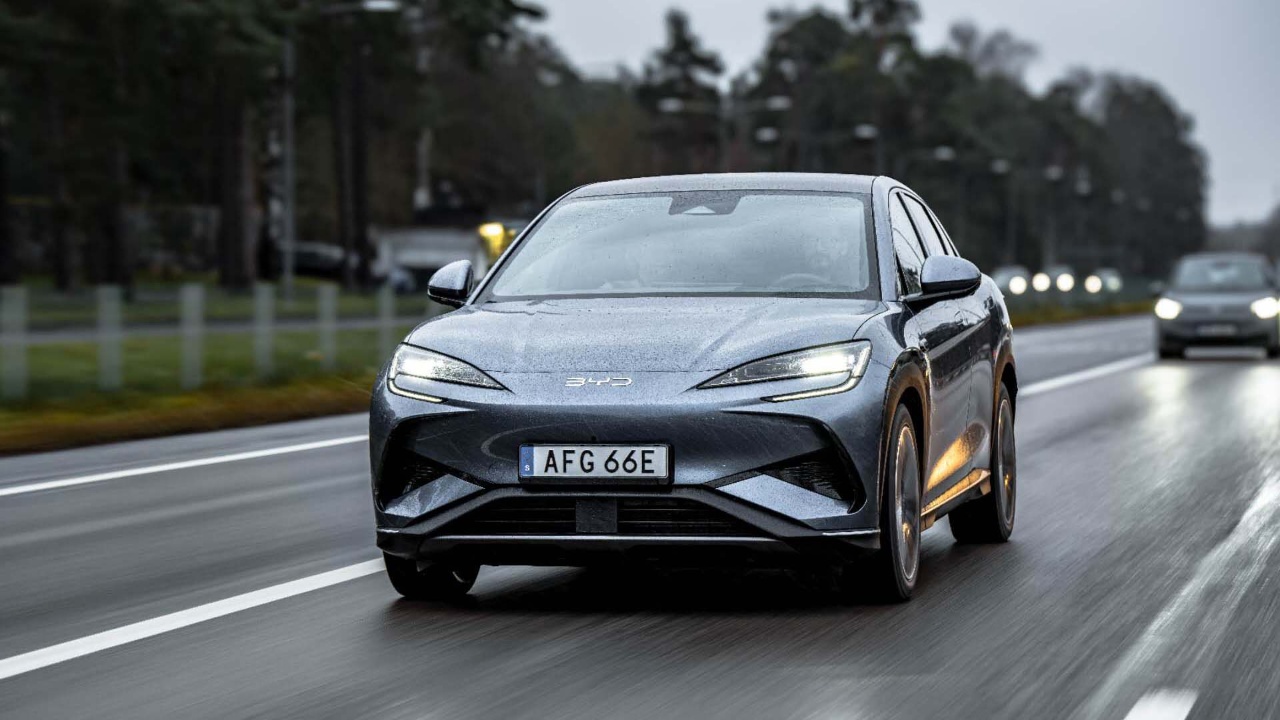
BYD is accelerating its international expansion as weaker demand and intense competition in China make overseas markets increasingly important to the Chinese automaker’s growth. The company reported strong August sales, with global deliveries rising for the fourth consecutive month and overseas shipments reaching a new record.
According to Reuters, BYD sold 440,293 new-energy vehicles globally in August, an increase of 17.8% from the same month last year.
Overseas shipments jumped 134.5% to 189,466 vehicles, meaning international markets accounted for roughly 43% of the company’s total August volume. Reuters said the export performance helped offset weaker demand in BYD’s home market.
The figures underline a significant shift in BYD’s business. The company remains one of China’s dominant electric-vehicle manufacturers, but the domestic market has become increasingly difficult because of intense competition, price pressure, and softer consumer demand.
International markets are consequently becoming more important not only for sales growth but also for profitability.
BYD’s August performance also shows how quickly the company is building a global presence. Europe, Southeast Asia, and Latin America are becoming increasingly important destinations for its vehicles, giving BYD additional opportunities as growth in China becomes harder to maintain.
Overseas Expansion Becomes BYD’s Growth Engine
The most striking figure in BYD’s August results is the 134.5% increase in overseas shipments. The company exported 189,466 vehicles during the month, compared with a much smaller figure a year earlier. Reuters reported that the increase helped BYD extend its global sales growth streak to four consecutive months.
The scale of the international contribution is becoming difficult to ignore. Overseas shipments represented about 43% of BYD’s total August sales, meaning almost one out of every two vehicles sold by the company was delivered outside China.
That is a major change for an automaker whose enormous domestic market historically provided the foundation for its growth. BYD is now using its manufacturing scale, broad product range, and expanding dealer networks to establish itself in markets where Chinese brands have traditionally had a smaller presence.
Europe is particularly important. Chinese electric-vehicle manufacturers have faced trade barriers and political scrutiny in Europe, but BYD has continued expanding its presence through passenger cars, plug-in hybrids, and newer brands.
Its European strategy is increasingly focused on offering technology and pricing that can compete with established manufacturers.
Southeast Asia is another major opportunity because electric-vehicle adoption is increasing in several countries and Chinese automakers already have established commercial relationships in the region.
Brazil has also emerged as a key market. Reuters identified Brazil as BYD’s largest market outside China and reported that the company is preparing to launch its first locally produced plug-in hybrid flex-fuel vehicle there. Local production could help BYD respond more effectively to regional demand while reducing its dependence on imported vehicles.
This international strategy is becoming more important because BYD is not simply exporting finished vehicles. The company is building a broader overseas manufacturing and distribution network designed to support long-term growth.
Local factories can reduce logistics costs, improve delivery times, and make manufacturers less vulnerable to sudden changes in trade policy. BYD’s international expansion therefore represents a structural shift rather than a short-term effort to move excess vehicles out of China.
Domestic Weakness Highlights the Challenge
While BYD’s global figures look strong, its domestic performance tells a different story. According to company data reported by CnEVPost, BYD sold approximately 250,827 vehicles in China in August, down 14.3% from a year earlier.
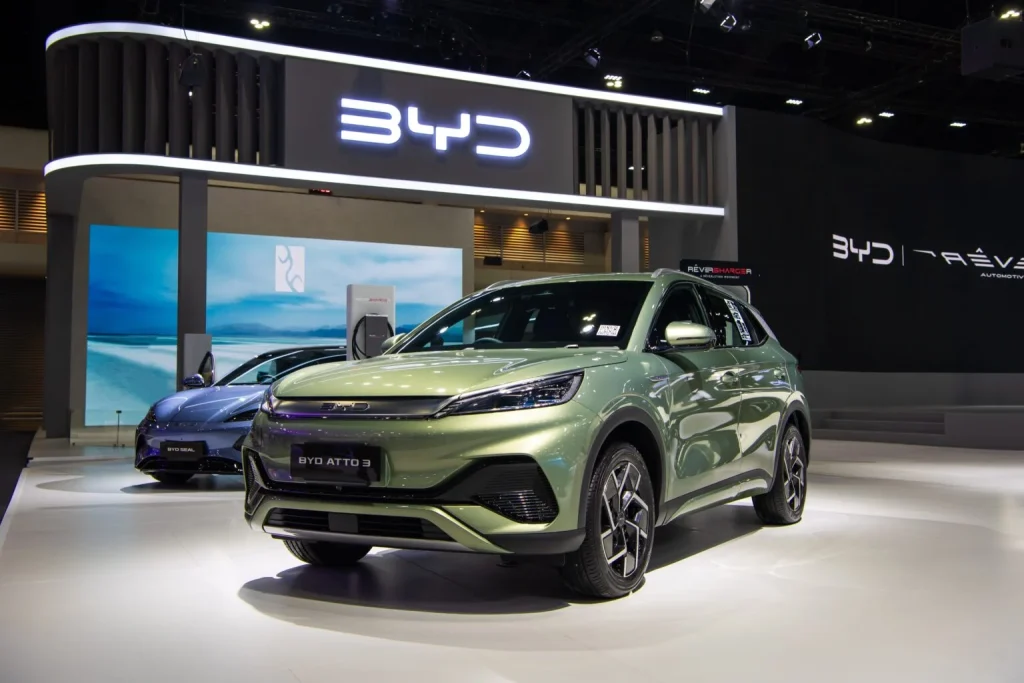
The decline highlights the pressure facing Chinese automakers as competition intensifies and consumers have more electric and plug-in hybrid models to choose from.
BYD’s total sales increased despite the domestic decline because overseas shipments more than compensated for the shortfall.
The contrast also shows why international expansion has become strategically important. BYD cannot rely indefinitely on the rapid growth that characterized China’s electric-vehicle market in earlier years.
The country has one of the world’s most competitive automotive industries, with established manufacturers and newer technology-focused companies competing aggressively on price, software, batteries, and features.
Price competition can increase sales volumes while reducing profitability. BYD has enormous manufacturing scale, but it still faces pressure to protect margins while offering vehicles at competitive prices.
Reuters reported that BYD generated more revenue from international markets than from China for the first time during the first half of 2026. The shift is significant because it shows that the overseas business is becoming financially important rather than simply representing an additional sales channel.
BYD’s second-quarter results also showed why international growth matters. The company recorded its first quarterly profit increase in more than a year, although the rebound fell short of expectations. Strong overseas sales provided a buffer against the difficult domestic environment.
The company is trying to defend its position in China while rapidly building a larger international business.
BYD faces competition from other Chinese manufacturers abroad, many of which are pursuing similar expansion strategies. Companies such as Geely, SAIC, Chery, and several newer EV brands are also seeking opportunities outside China.
Established automakers are also becoming more aggressive in electric vehicles and hybrids. BYD may have cost and technology advantages in some areas, but it must establish brand recognition, after-sales support, and customer confidence in unfamiliar markets.
The company also faces regulatory obstacles. Tariffs and local-content requirements can make overseas expansion more expensive and complicated.
Why BYD’s Global Push Matters
BYD’s August results suggest that international expansion is becoming one of the central pillars of the company’s future.
The 440,293 global vehicles sold during the month represent a substantial volume, but the more important figure may be the 189,466 overseas shipments. Their rapid growth shows that BYD is increasingly capable of generating demand beyond China.
The company’s product strategy is helping that effort. BYD offers battery-electric vehicles and plug-in hybrids across multiple price segments, while its wider group includes brands aimed at different types of customers. That gives the company more flexibility when entering markets with different levels of EV adoption.
Plug-in hybrids could be useful in countries where charging infrastructure is still developing, while fully electric models appeal to customers seeking zero-emission driving. This flexibility could help BYD expand across markets at different stages of electrification.
Its growing international manufacturing footprint could also become an important competitive advantage. Local production gives BYD a way to establish deeper relationships with governments and suppliers while reducing some of the risks associated with shipping every vehicle from China.
However, the company’s rapid expansion also creates challenges. BYD must maintain quality and customer service as its global fleet grows, with enough technicians, parts distribution, and dealership capacity to support vehicles. Those factors can be as important to customers as price and technology.
Brand perception will also matter. BYD has built a strong reputation in China, but its name is still relatively new to many buyers in Europe and other developed markets. Convincing customers to move away from established brands will require consistent products and reliable service.
For now, BYD’s strategy appears to be working. Global sales increased 17.8% in August even as domestic sales fell, while overseas shipments more than doubled. The company is demonstrating that it can offset weakness in China by finding customers elsewhere.
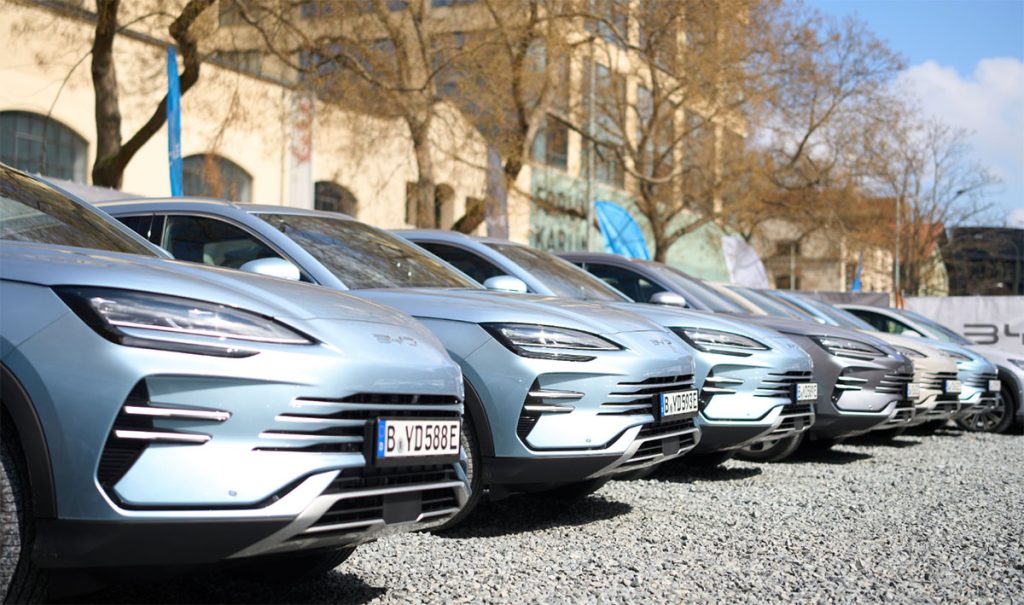
That is important for BYD and for the wider automotive industry. Chinese automakers are no longer treating overseas markets as secondary destinations. They are increasingly building global businesses capable of competing directly with established manufacturers.
BYD’s expansion could intensify that competition, particularly in Europe and emerging markets where consumers are looking for affordable electrified vehicles.
The company still faces tariffs, regulatory scrutiny, strong competitors, and the challenge of building long-term customer trust. But its August results show that those obstacles have not stopped its international momentum.
If the trend continues, BYD could become increasingly dependent on overseas markets for both growth and profitability. That would mark a major transformation for an automaker whose success was originally built around China.
The latest figures make one thing clear. BYD’s global ambitions are no longer just a long-term plan. They are becoming an increasingly important part of the company’s business today.
