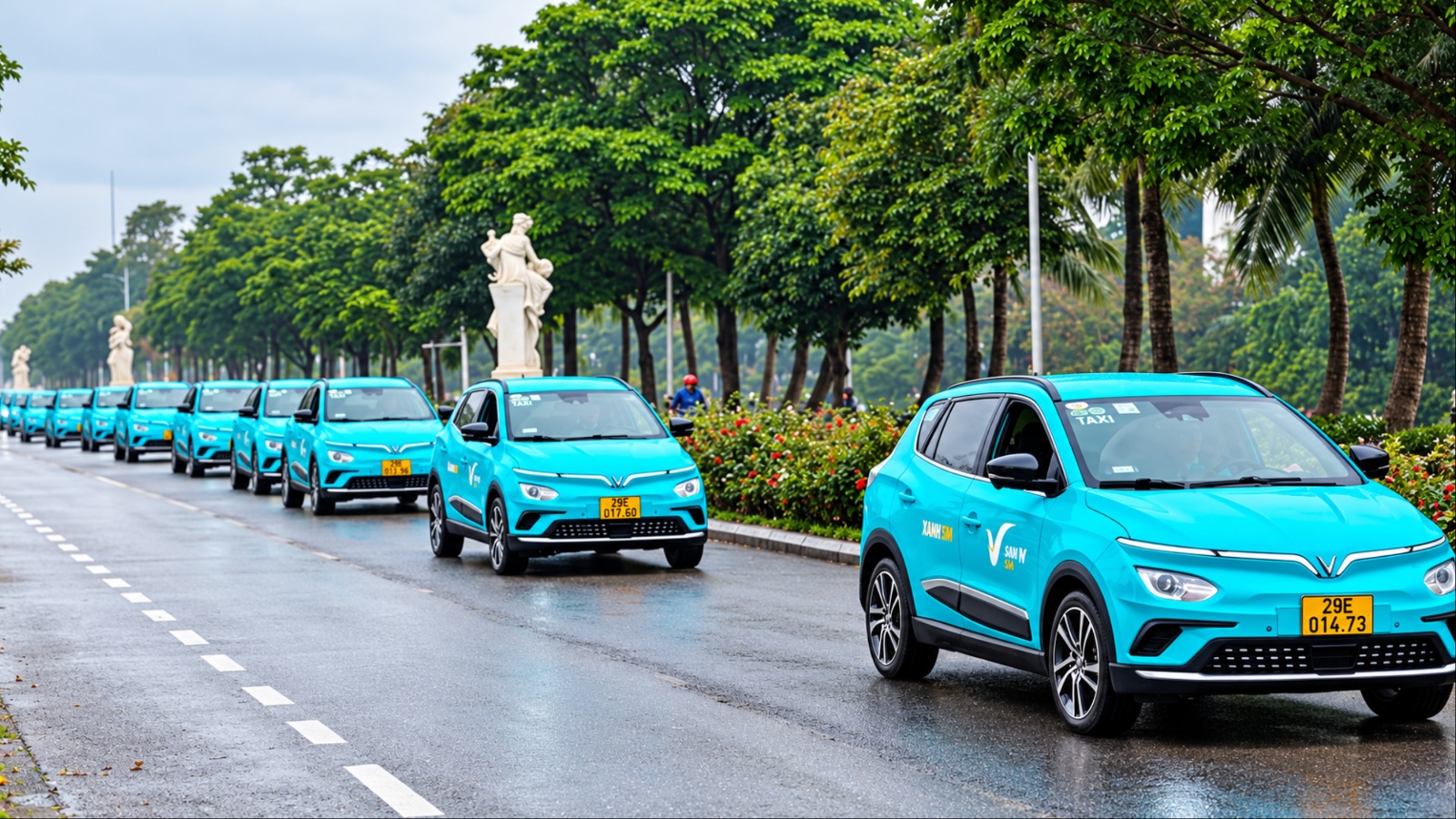
Vietnamese electric taxi operator Green and Smart Mobility, better known as GSM, is preparing to take its business beyond its home market, with plans to enter the United States and Europe as it targets a Hong Kong stock-market listing in 2028.
According to Reuters, GSM plans to deploy fleets in the United States, Sweden, and the Netherlands by the end of 2026, followed by expansion into additional European markets in 2027. The company’s international push is closely connected to VinFast, Vietnam’s largest automaker, because GSM uses only VinFast electric vehicles.
The expansion is significant for both companies. GSM has rapidly established itself in Vietnam since launching in 2023, while VinFast has struggled to build momentum in overseas passenger-car markets. A successful international rollout by GSM could therefore create another channel through which VinFast vehicles reach foreign customers.
GSM is majority-owned by VinFast CEO Pham Nhat Vuong and his family. The relationship means the taxi company is more than an independent customer for VinFast. It has become an important part of the automaker’s broader strategy for creating demand for its electric vehicles.
The planned overseas expansion also comes at an important financial moment. GSM is targeting an initial public offering in Hong Kong in 2028, meaning it will need to demonstrate that its business model can scale beyond Vietnam while building a credible international operation.
A Taxi Business Built Around VinFast EVs
GSM has expanded quickly since beginning operations in Vietnam in 2023. Its fleet uses VinFast electric vehicles exclusively, creating a direct link between the mobility company’s growth and the automaker’s production.
Reuters reported that GSM plans to purchase one million VinFast vehicles between 2026 and 2030. That would make the company an important source of demand for VinFast as the automaker attempts to increase production and expand beyond Vietnam.
The relationship has already been substantial. GSM accounted for 72% of VinFast’s vehicle sales in 2023, according to Reuters, although that share is expected to stabilize above 20% as VinFast’s wider customer base grows.
That dependence has advantages and risks. For VinFast, GSM provides a large and predictable customer capable of taking substantial numbers of vehicles. For GSM, access to a dedicated electric-vehicle manufacturer gives it a consistent fleet strategy and allows the company to build its services around a single vehicle ecosystem.
The international expansion will test whether that model can work outside Vietnam. GSM plans to use company-owned vehicles and employed drivers when it enters new markets. That approach differs from lighter-asset ride-hailing businesses such as Uber and Grab, where independent drivers generally provide the vehicles.
Owning the vehicles gives GSM greater control over fleet standards, maintenance, and customer experience. It also means the company carries much more of the financial burden. Purchasing large fleets requires substantial capital, while employing drivers adds recurring operating costs.
Reuters reported that GSM has already begun shifting toward a hybrid driver model in Vietnam to reduce costs. That experience could influence how it structures operations in the United States and Europe.
Why the U.S. and Europe Matter
The choice of the United States and Europe is ambitious because both markets have established transportation platforms, strict regulatory requirements, and strong competition.
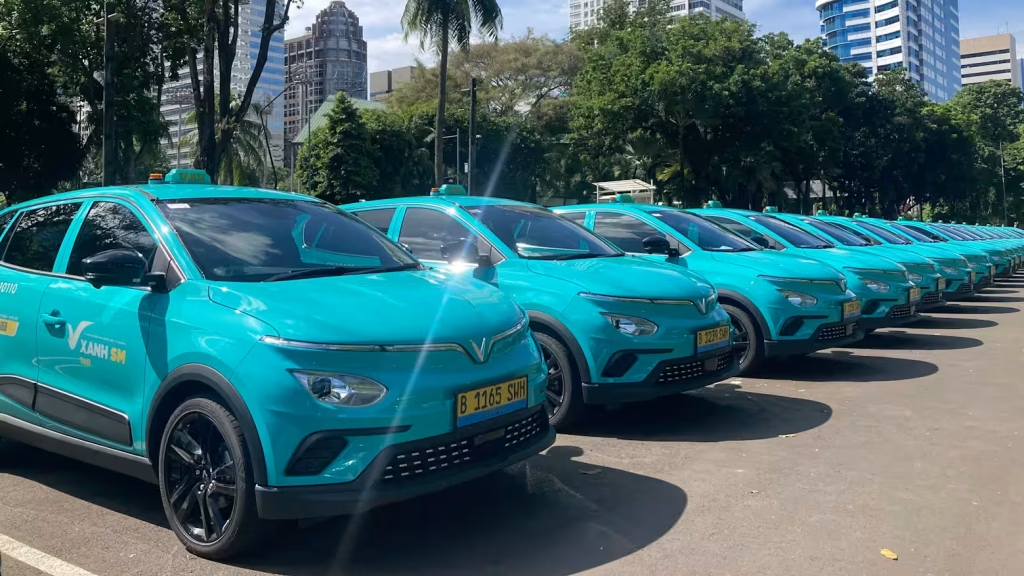
In the United States, GSM will have to compete with companies that already have extensive driver networks and established customer bases. Operating a fleet of company-owned electric taxis could provide greater control, but it may also require more capital than platform-based competitors need.
Europe presents a different set of challenges. Regulations and transportation rules can vary between countries and cities, while electric-vehicle adoption differs considerably from one market to another. GSM’s initial focus on Sweden and the Netherlands is notable because both countries have relatively mature EV markets.
Entering these markets could also give VinFast another way to build visibility. Instead of relying only on individual consumers to choose a relatively new Vietnamese brand, GSM would put VinFast vehicles into highly visible commercial fleets. Passengers could experience the vehicles directly, potentially increasing brand awareness.
The expansion also comes as VinFast itself continues to face challenges abroad. Reuters reported that VinFast sold nearly 200,000 vehicles in 2025, but only 11% were sold outside Vietnam. That illustrates the size of the company’s international challenge.
VinFast has invested heavily in overseas growth, including manufacturing and sales operations, but it has not yet achieved the global scale of established automakers or leading Chinese EV manufacturers.
GSM could help address part of that problem by creating guaranteed demand for VinFast vehicles.
The company’s international strategy is particularly notable because VinFast has been attempting to establish itself in multiple overseas markets at the same time. GSM gives the automaker an additional route to international exposure without relying entirely on conventional retail sales.
That could be valuable in markets where building consumer recognition for a new automotive brand takes years. A commercial fleet can put thousands of vehicles into regular public use, giving passengers direct exposure to the brand and potentially increasing familiarity.
However, operating taxis also creates demanding conditions for the vehicles. Commercial cars typically accumulate substantially more mileage than privately owned vehicles and may spend much of the day in traffic. Charging, maintenance, and vehicle availability will therefore be important to GSM’s economics.
The company will also need to prove that customers in the United States and Europe are willing to choose its service over established alternatives.
The Road to a 2028 IPO
GSM’s planned Hong Kong IPO gives its international expansion another dimension. A public listing would put greater scrutiny on the company’s revenue growth, profitability, debt, and capital requirements.
Investors will want to know whether GSM can generate sustainable returns from a fleet-heavy business model rather than relying on continued capital injections. That makes its overseas expansion a test of the company’s ability to scale efficiently.
The company’s decision to use its own vehicles could help it maintain consistent service standards, but the model requires significant upfront spending. Every new city potentially means buying more vehicles, hiring drivers, arranging charging access, and establishing maintenance operations.
GSM will need to balance expansion with financial discipline, particularly if it wants to approach the 2028 IPO with a strong balance sheet.
Its connection with VinFast could provide an advantage that independent mobility companies do not have. GSM can potentially secure large volumes of electric vehicles from an affiliated manufacturer while VinFast gains a committed buyer for those vehicles.
Reuters reported that GSM’s plan to purchase one million VinFast vehicles between 2026 and 2030 could support VinFast’s revenue growth. The relationship could therefore become increasingly important as VinFast attempts to raise its international sales.
If the company successfully establishes fleets in the United States and Europe, it could provide VinFast with valuable operating experience in developed markets while giving GSM an international platform ahead of its planned listing. But execution will determine whether the strategy works.
GSM will have to prove that customers are willing to use its service, that its vehicles can operate profitably at high utilization rates, and that its fleet ownership model can compete against companies relying on independent drivers.
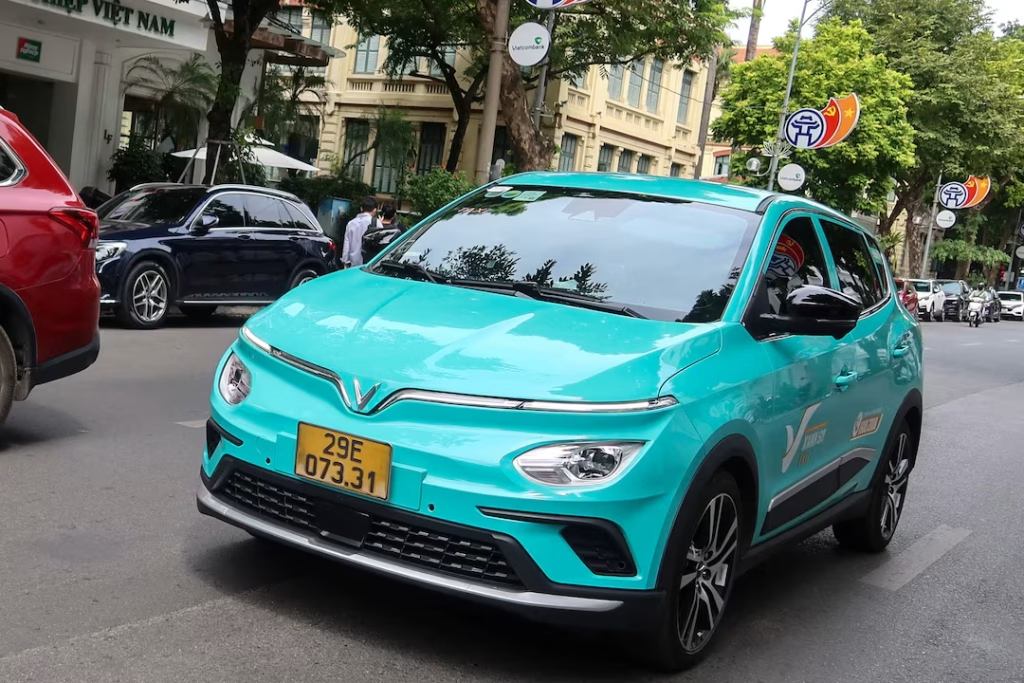
It will also have to navigate local regulations, charging infrastructure, and labor requirements, all of which can significantly influence the economics of electric taxi operations.
For VinFast, the benefits could extend beyond direct vehicle sales. A growing GSM fleet would put more VinFast vehicles on the road, potentially strengthening brand visibility and supporting the automaker’s broader international ambitions.
For GSM, meanwhile, success would transform the company from a fast-growing Vietnamese taxi operator into a genuine international mobility business.
Its planned 2028 Hong Kong IPO gives the company a clear deadline by which it will need to demonstrate that its international ambitions are producing measurable results.
For now, GSM’s strategy represents an unusual but potentially powerful partnership between an electric-vehicle manufacturer and a mobility operator. By using VinFast vehicles exclusively and expanding its own taxi fleets overseas, GSM could become an important part of VinFast’s attempt to establish a lasting international presence.
The opportunity is substantial, but so are the risks. Success will depend not simply on putting more electric taxis on foreign roads, but on proving that the business can operate efficiently, attract customers, and generate sustainable growth in some of the world’s most competitive mobility markets.