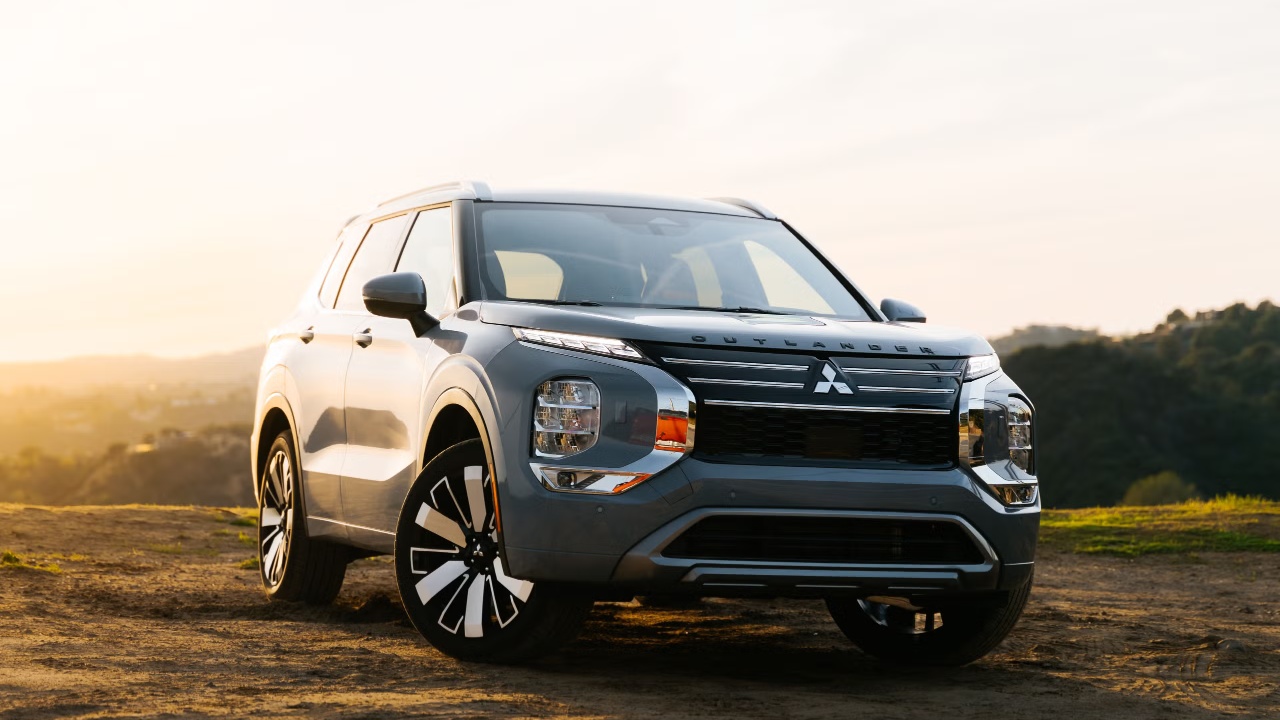
Mitsubishi is recalling more than 67,000 Outlander and Outlander PHEV SUVs in the United States after discovering that an infotainment software problem can prevent the rearview camera image from appearing when the vehicle is shifted into reverse.
The recall affects 67,116 vehicles from the 2025 and 2026 model years, according to Cars.com, which reported the campaign on September 1. The affected SUVs use Mitsubishi’s Alliance In-Vehicle Infotainment system, or A-IVI, and a software programming error can prevent the rear camera image from being displayed properly.
Although the defect does not involve a mechanical failure of the camera itself, it creates a legitimate safety concern. When a driver shifts into reverse, the rearview display may fail to provide the expected image, reducing visibility behind the vehicle and potentially increasing the risk of a collision.
Mitsubishi plans to correct the problem through a free software update at dealerships. The company expects to begin notifying affected owners on September 24.
The latest campaign is also significant because it expands on an earlier Mitsubishi recall involving rearview-camera software. That history demonstrates how increasingly complex vehicle infotainment systems can become directly connected to safety-critical functions.
What Is Wrong With the Outlander Camera System?
The issue is linked to software within the A-IVI infotainment system rather than a physical defect with the rear-facing camera.
According to Cars.com, the software may have been improperly programmed, causing the rearview camera image not to appear when the vehicle is shifted into reverse. When functioning correctly, the system should automatically display the camera view on the infotainment screen to give the driver a clear view behind the SUV.
If the image fails to appear, the driver loses an important source of information while backing up.
This is particularly relevant with modern SUVs because their size and design can create substantial blind spots immediately behind the vehicle. Although drivers are expected to check their surroundings and use mirrors when reversing, the rearview camera is an important part of the vehicle’s safety equipment.
NHTSA identifies rear visibility as a regulated safety area under Federal Motor Vehicle Safety Standard 111. The federal agency explains that manufacturers are required to address safety defects when vehicles create an unreasonable risk or fail to meet applicable safety standards.
The Mitsubishi problem therefore goes beyond an inconvenience with the infotainment system.
A blank or missing camera image can directly affect a driver’s ability to identify pedestrians, vehicles, bicycles, or other objects behind the SUV. The potential consequence is particularly serious in parking lots, driveways, and other areas where children or pedestrians may unexpectedly move behind a vehicle.
Cars.com reports that the new recall expands recall 25V507, indicating that Mitsubishi has previously addressed a related issue. The new campaign brings additional 2025 and 2026 vehicles into the recall population.
The remedy is comparatively straightforward. Owners will not need a replacement camera or other major hardware. Dealers will update the A-IVI software at no cost.
Mitsubishi has assigned the recall the manufacturer campaign number SR-26-002. Owners with questions can contact Mitsubishi at 888-648-7820, according to Cars.com.
Why Software Recalls Are Becoming More Important
The Outlander recall illustrates a broader change in the automotive industry. Modern vehicles increasingly depend on software for functions that once operated through separate mechanical or electronic systems.
Infotainment screens now frequently control or display information from cameras, driver-assistance systems, navigation equipment, and other vehicle functions.
That creates new possibilities for manufacturers, but it also introduces new failure points.
A software error that might once have affected only entertainment or navigation can now interfere with something directly connected to vehicle safety. The rearview-camera system is a clear example because its operation depends not only on the camera hardware but also on software that processes and displays the image.
Mitsubishi has experienced this issue before. In June 2025, NHTSA acknowledged an earlier Mitsubishi recall involving 198,940 Outlander and Outlander PHEV vehicles from the 2022-2024 and 2023-2025 model years.
That campaign involved the same general rearview-camera function, with software potentially causing the image to freeze or fail to appear. NHTSA identified the issue as a failure to comply with FMVSS 111 and said the remedy was an A-IVI software update.
The earlier recall demonstrates how a software-related defect can affect a large number of vehicles without requiring a component to physically break.
NHTSA’s recall records also show why these problems receive regulatory attention. The agency states that an unavailable or inaccurate rearview image can reduce the driver’s view of what is behind the vehicle and increase the risk of a crash.
For manufacturers, software recalls can be easier to remedy than mechanical defects because an update may correct the problem without replacing hardware. Modern vehicles can increasingly receive software changes through dealerships or, in some cases, over the air.
For owners, however, the simplicity of the repair does not make the safety issue insignificant. A driver who shifts into reverse and sees a blank screen may not immediately understand that the camera system has failed.
Some vehicles provide warnings when the camera is unavailable, but drivers can still be caught off guard if the system does not behave as expected.
Mitsubishi’s decision to issue a formal recall means owners should not assume that the problem is merely a temporary infotainment glitch.
What Outlander Owners Need to Know
The affected vehicles include 2025-2026 Mitsubishi Outlander and Outlander PHEV SUVs covered by the latest campaign.
Owners do not have to pay for the repair. Mitsubishi dealers will install the necessary software update without charge, and the company plans to send owner notification letters beginning September 24.
Until the update is completed, drivers should pay particular attention to the rearview display whenever reversing. If the camera image does not appear, drivers should not rely on the screen and should instead use the vehicle’s mirrors, check over their shoulder, and inspect the area around the SUV before backing up.
NHTSA recommends that drivers facing a rearview-camera problem use extra caution, perform a walk-around when necessary, and use available mirrors and direct visibility when reversing.
Owners can also check their vehicle’s recall status through NHTSA’s recall system using the vehicle identification number. NHTSA explains that a VIN search can identify unrepaired recalls associated with a specific vehicle.
The latest campaign is not expected to require a lengthy mechanical repair. A software update should resolve the defect, allowing affected owners to return to normal operation once the repair has been completed.
Still, the size of the recall makes it an important safety development for Mitsubishi. More than 67,000 vehicles are included, and the affected models represent relatively recent Outlander and Outlander PHEV SUVs.
For Mitsubishi, the campaign also highlights the growing responsibility that comes with integrating software into everyday vehicle functions.
The Outlander is no longer dependent solely on traditional mechanical systems. Its cameras, infotainment hardware, and software work together to provide information that drivers have come to expect every time they get behind the wheel. When that digital infrastructure fails, even temporarily, the consequences can extend beyond convenience.
The company opted for a relatively straightforward fix by updating the A-IVI software. However, the recall highlights an important reality for modern vehicle owners. Software issues can have real safety consequences.
The good news is that Mitsubishi has identified the issue and is providing a free remedy. Owners of affected 2025 and 2026 Outlander and Outlander PHEV models should take advantage of the update rather than waiting for the camera problem to become more serious.
For consumers, the recall is another reminder that purchasing a newer vehicle does not eliminate the possibility of safety defects. In an increasingly software-dependent automotive industry, keeping a vehicle’s systems updated can be just as important as maintaining its brakes, tires, and other traditional components.
For Mitsubishi, completing the campaign will be important to ensuring that one of the Outlander’s most visible safety technologies works as intended every time the vehicle is placed in reverse.