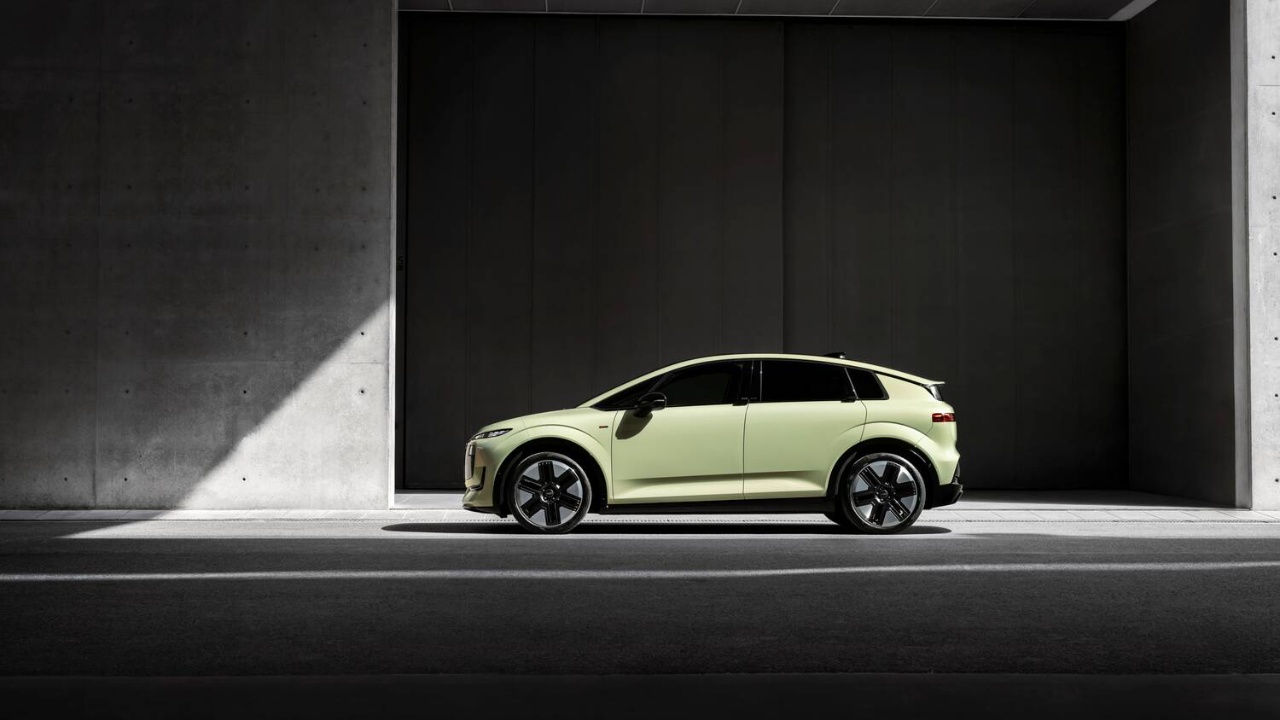
Audi has officially brought back the A2 name with a new electric compact car designed to strengthen its position in Europe’s increasingly competitive small-EV market.
The A2 e-tron made its debut in Paris on September 7, with efficiency playing a central role in its design. Audi claims the model can achieve energy consumption as low as 12.8 kWh per 100 kilometers, while its maximum WLTP range reaches 646 kilometers, or roughly 401 miles.
According to Reuters, the launch comes as Audi tries to reverse two consecutive years of falling global sales. Deliveries dropped 7% in the first half of 2026, with intense competition in China and U.S. tariffs adding pressure.
The A2 e-tron is therefore more than a nostalgic revival of a nameplate that disappeared after 2005. Audi sees the compact EV as an important part of its effort to make premium electric mobility more accessible and efficient.
The new model will be built at Audi’s main plant in Ingolstadt, Germany, with customer deliveries scheduled to begin in December 2026. Audi says orders open September 10 in Germany, while the UK market will begin taking orders in October.
The A2 Returns With Efficiency as Its Main Selling Point
The original Audi A2 was launched in 1999 and became known for its lightweight construction, compact dimensions, and unusually low fuel consumption. Its successor follows a similar philosophy but replaces the combustion engine with an all-electric powertrain.
Audi says the new A2 e-tron is its most efficient production model ever, with a best-case consumption figure of 12.8 kWh/100 km. That figure applies to the 140-kW version with the optional efficiency package. The vehicle also has a drag coefficient of 0.24, which Audi says is the best aerodynamic figure in its compact lineup.
The focus on efficiency is significant because Audi is deliberately avoiding the approach of simply installing a larger battery to increase range. Instead, the company has worked on aerodynamics, drivetrain efficiency, packaging, and energy management.
The A2 e-tron is powered by permanent-magnet synchronous motors and comes with rear-wheel drive. Buyers can choose from four power outputs of 125 kW, 140 kW, 170 kW, and 240 kW. The first three versions produce 350 Nm of torque, while the range-topping model delivers 545 Nm.
Three battery sizes are available, with gross capacities of 52, 61, and 84 kWh. Depending on the configuration, the WLTP range reaches between 423 km to 646 km. The 170-kW version with the 84-kWh battery is rated for a maximum 646-km range, while the 240-kW model reaches up to 630 km.
Charging capability also varies by version. The largest battery can accept up to 183 kW of DC power and requires about 29 minutes to charge from 10% to 80%, according to Audi. The smaller batteries support up to 100 kW and 105 kW, respectively.
Audi is also offering bidirectional charging. Vehicle-to-load can supply electricity to external devices, while vehicle-to-home can allow the car to function as a home energy storage system in supported markets with compatible hardware.
Compact Dimensions, Premium Technology
Although the A2 e-tron is Audi’s entry point into its electric range, the company has not treated it as a stripped-down model.
Audi says the car brings several driver-assistance features normally associated with larger vehicles into the compact segment as standard equipment. These include emergency brake assist, swerve assist, attention assist, adaptive cruise control, a parking system plus, and a reversing camera.
The cabin is also built around digital technology. Standard equipment includes Audi’s AI-enabled assistant, the e-tron route planner, and a panoramic MMI display combining an 11.9-inch digital instrument display with a 12.8-inch curved touchscreen.
Audi has tried to preserve the practical character associated with the original A2 as well. The new model has a 2.77-meter wheelbase and a compact footprint, while the interior is designed to provide usable passenger space without requiring a larger vehicle. A panoramic glass roof measuring about 1.6 square meters is also available.
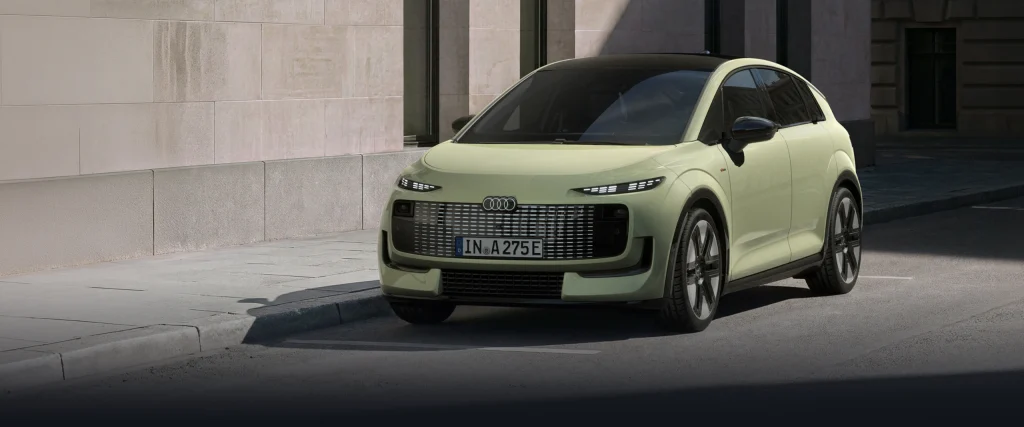
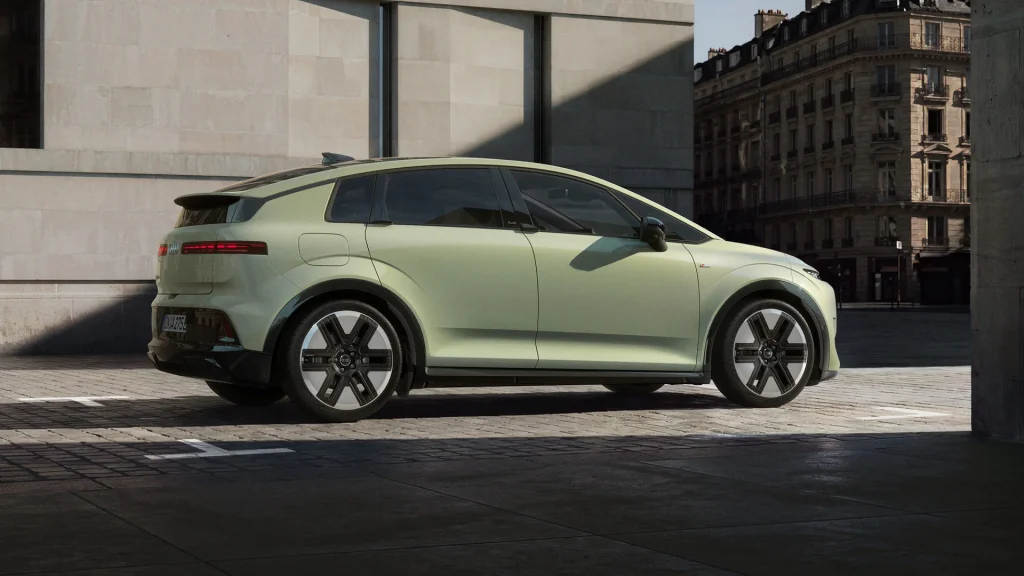
The design deliberately references the original A2 without becoming a retro replica. Audi says aerodynamic requirements shaped details such as the controllable cooling-air intake, enclosed underbody, aerodynamic wheels, and gap reducers around the wheel arches. The result is the brand’s best compact-segment drag coefficient of 0.24.
The rear design also echoes the original car, including a split rear window treatment beneath a sweeping lip spoiler, while slim rear lights give it a more modern appearance.
Audi Needs the A2 to Succeed in a Tougher European Market
The timing of the A2 e-tron is important for Audi. Reuters reports that the company’s global sales have declined for two consecutive years, while competition from Chinese automakers has become particularly intense.
European customers are being offered an expanding selection of smaller electric vehicles, including models from Chinese manufacturers that compete aggressively on price and technology. Audi therefore needs its compact EV to deliver something beyond the four-ring badge.
Efficiency could become one of the A2 e-tron’s strongest advantages. A WLTP consumption figure of 12.8 kWh/100 km is exceptionally low for a premium electric vehicle, while the 84-kWh battery provides a range of nearly 400 miles.
Audi is also trying to keep the model below the price levels of larger premium EVs. In Germany, prices start at €38,200 for the 125-kW model with the 52-kWh battery. The 61-kWh version starts at €41,900, while the 170-kW model with the 84-kWh battery costs €48,900. The 240-kW flagship starts at €51,200.
Those prices place the A2 e-tron above many mainstream compact EVs, but Audi is positioning it as a premium product with extensive technology rather than a low-cost electric hatchback.
Reuters notes that Audi’s broader business remains under pressure from tariffs, weak demand, and competition in China. Its first-half 2026 deliveries fell 7%, although business outside China was more resilient. The company is therefore using a wider product renewal, with the A2 e-tron filling the entry point and the Q9 at the top of the lineup.
Production in Ingolstadt also has strategic importance. Audi has been transforming its German factories for electric vehicles, and the A2 e-tron will use existing production structures and equipment at the company’s home plant.
Audi says this allows it to develop the model faster while making more efficient use of manufacturing resources.
The A2 name gives Audi another useful connection to its past. The original model prioritized efficiency and intelligent packaging over size and power. The new electric version applies a similar philosophy to a market where energy efficiency is becoming increasingly important.
Instead of competing primarily through maximum horsepower or an enormous battery, Audi is emphasizing low energy consumption, aerodynamic efficiency, practical space, and technology.
The first vehicles will reach customers in December 2026, allowing Audi to establish a stronger presence in Europe’s compact EV segment before competition becomes even more crowded. With its nearly 400-mile maximum range, low energy consumption, and German production, the A2 e-tron has the technical credentials to stand out.
The bigger challenge will be turning those specifications into strong sales. Audi needs the A2 e-tron to appeal not only to customers who remember the original model but also to younger buyers entering the premium EV market.
If it succeeds, the revived A2 could become one of Audi’s most important models in its effort to rebuild European momentum.