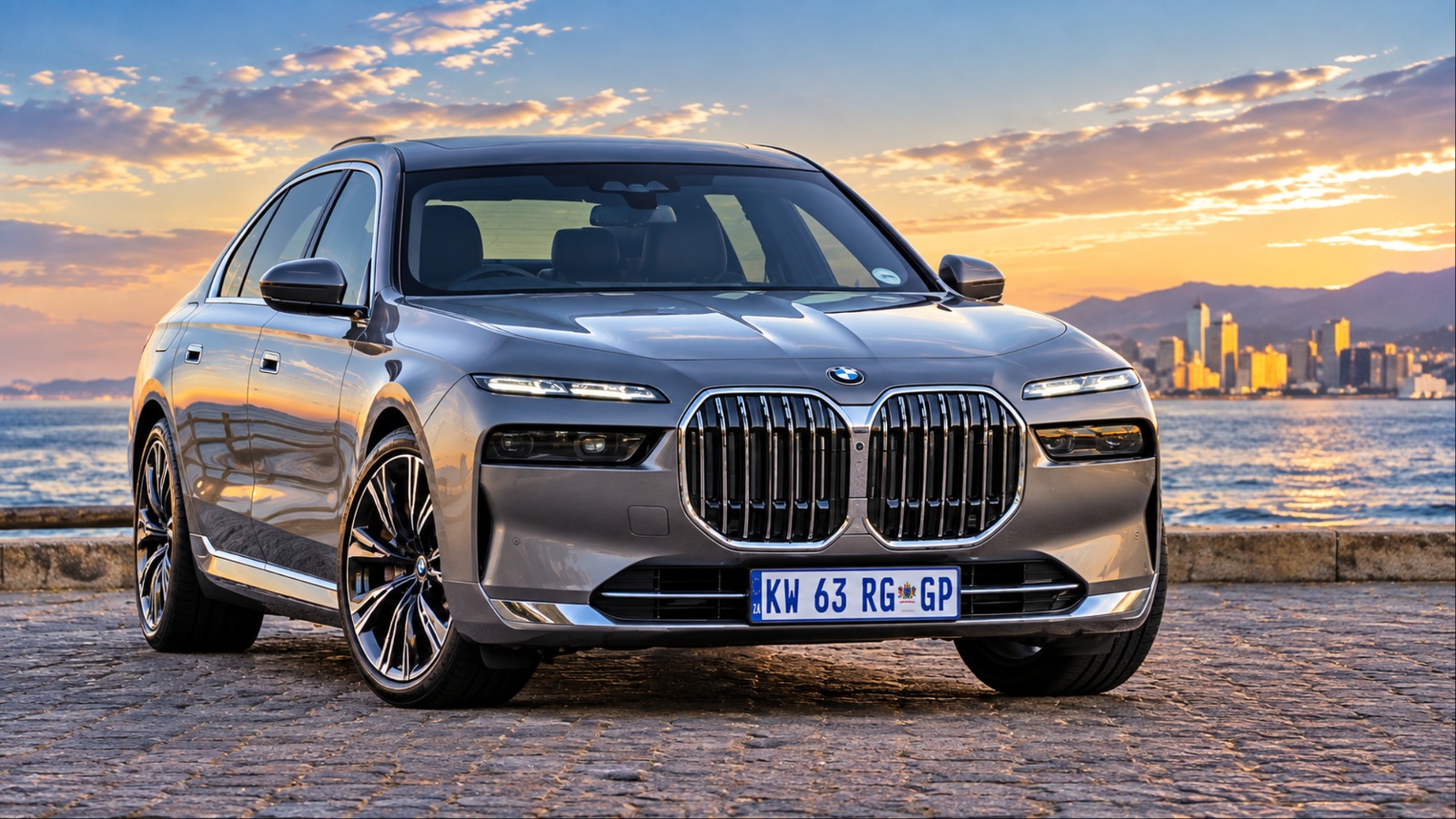
BMW has introduced the updated i7 in India, giving its flagship electric sedan a substantial technology and design refresh as competition in the luxury EV segment continues to intensify.
The facelift brings revised exterior styling, a dramatically updated cabin, a new digital interface, more powerful electric variants, and a larger battery on international versions.
The updated i7 was launched in India on September 11 alongside the facelifted BMW 7 Series. BMW has also started local production of the i7 at its Chennai facility, making India the only country outside Germany where the electric flagship sedan is manufactured.
The move gives BMW a stronger manufacturing base for its luxury EV strategy in one of the world’s fastest-growing premium automotive markets.
BMW’s Indian lineup includes the i7 eDrive50 xDrive M Sport and the high-performance i7 M70 xDrive. BMW India’s current configurator lists the i7 from ₹2.10 crore and the M70 from ₹2.58 crore, ex-showroom, although prices and equipment can vary with the specific model and options.
Sharper Exterior, Completely Reworked Cabin
The facelift does not abandon the large, imposing proportions that define the current-generation 7 Series and i7, but BMW has made several changes to give the sedan a fresher appearance.
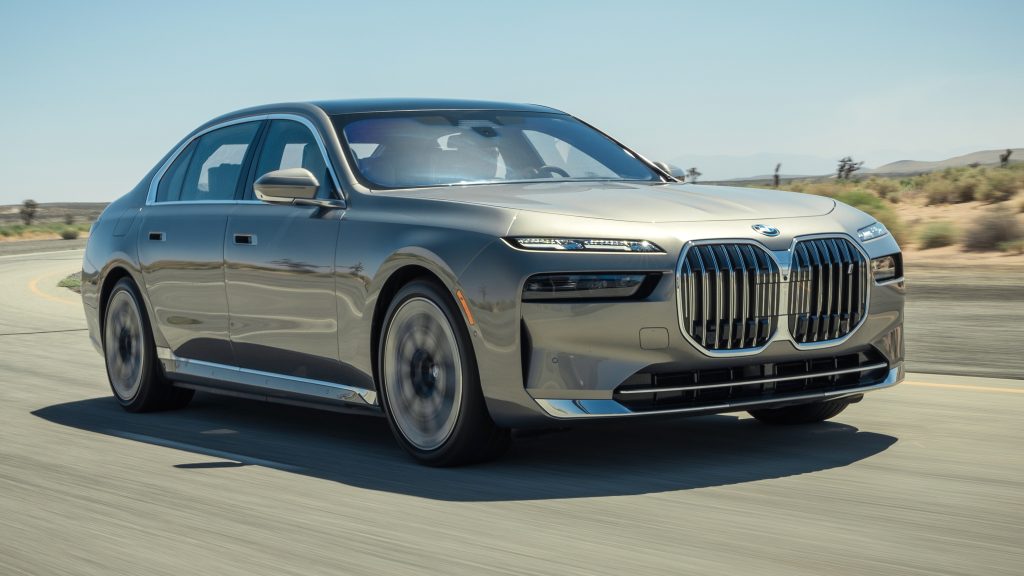
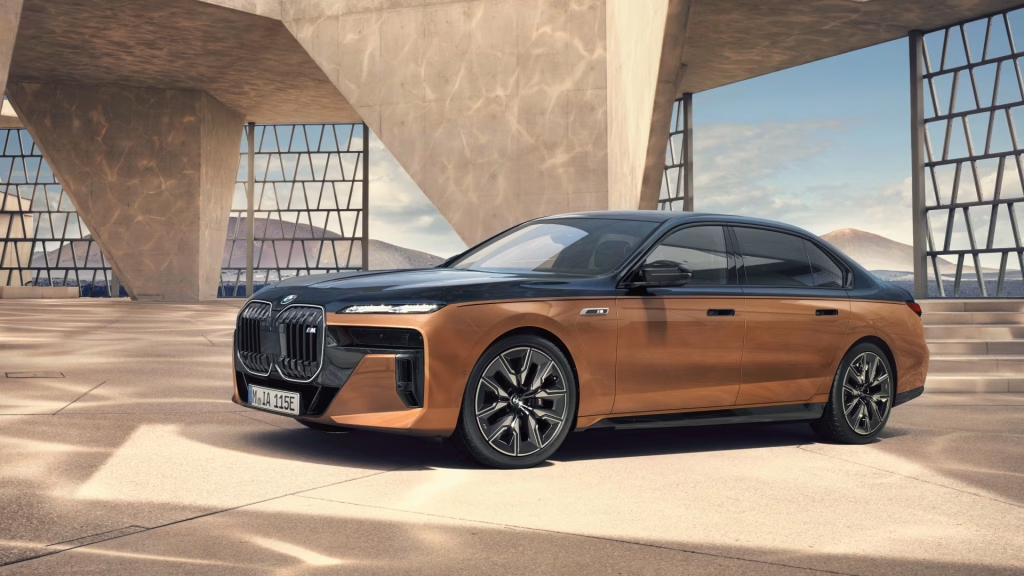
At the front, the illuminated kidney grille has been redesigned and is paired with slimmer split LED headlights. The upper lighting elements incorporate the daytime running lights, while the lower sections accommodate the primary headlamp functions. A revised front bumper completes the updated nose.
The side profile remains familiar, although BMW has introduced new wheel designs. At the rear, slimmer tail lamps with smoked detailing accompany revisions to the tailgate and bumper. The changes are relatively restrained compared with a completely new generation, but they give the flagship a more contemporary appearance.
The interior is where the facelift becomes considerably more significant. BMW has introduced its new Panoramic iDrive layout, bringing technology developed for the company’s newer-generation vehicles into the 7 Series family.
Instead of relying on the conventional driver display arrangement, the new system uses a full-width projection display positioned along the lower section of the windscreen. It works alongside a 17.9-inch central touchscreen and a 14.6-inch passenger display.
The system runs BMW Operating System X and supports over-the-air software updates, wireless Apple CarPlay and Android Auto, as well as improved voice interaction. BMW has also redesigned the dashboard and introduced a four-spoke steering wheel influenced by the company’s Neue Klasse design language.
This gives the i7 a more modern digital environment without compromising its traditional luxury-car priorities.
The rear cabin remains one of the model’s biggest selling points. The i7 continues to offer electrically adjustable front seats with heating, ventilation, massage, and lumbar functions, while rear passengers benefit from BMW’s large theater screen.
The 31.3-inch 8K display can transform the rear compartment into a private entertainment space, reinforcing the i7’s role as both a driver’s car and a chauffeur-oriented luxury sedan. BMW also revised the rear door controls and automatic-door switches as part of the cabin update.
The combination of the Panoramic iDrive system, large passenger display, and rear-seat entertainment makes the facelift feel more like a technology upgrade than a conventional mid-cycle styling exercise.
More Power and a Larger Battery
BMW has also used the facelift to improve the electric powertrain lineup. Internationally, the previous i7 eDrive50 has been replaced by the i7 xDrive50, adding all-wheel drive.
The updated xDrive50 uses a larger 112.4kWh battery and produces 455hp and 660Nm. The move to a larger battery is intended to improve the car’s long-distance capability, while the additional driven axle provides greater traction.
The performance flagship, the i7 M70 xDrive, also receives the larger 112.4 kWh battery. Output rises to 680hp, while torque increases to as much as 1,100 Nm. That represents a significant increase over the previous M70, which produced 650hp and 1,015Nm.
The M70 remains capable of extremely rapid acceleration for a car of its size. The existing M70 specification reaches 100kph in 3.7 seconds, while BMW lists a maximum speed of 250kph for the model.
For comparison, BMW India’s current i7 xDrive60 specification uses a 101.7 kWh battery, produces 335 kW, or 449 hp, and generates 650 Nm. BMW quotes a WLTP range of up to 624km depending on configuration and operating conditions.
The company’s current technical data also lists DC charging at up to 200kW, with a 10-to-80 percent charging time of about 34 minutes.
The refreshed international versions therefore bring meaningful changes beneath the body rather than simply adding cosmetic equipment.
That matters in a segment where luxury EV buyers increasingly expect both performance and long-distance usability. Large batteries add weight and cost, but they can also reduce the frequency of charging stops on long journeys.
BMW’s approach with the facelift is to combine that additional capacity with stronger motors and the latest software architecture.
Local Production Gives BMW an Advantage in India
Perhaps the biggest development for the Indian market is happening under the hood. BMW is now producing the i7 locally, marking an important step in the company’s strategy for India.
The Chennai plant’s ability to build the electric flagship gives BMW an important advantage as premium EV competition increases. Local production can reduce the cost burden associated with importing a large electric sedan and gives the company greater control over its supply and pricing strategy.
BMW is entering an increasingly competitive luxury EV environment in India, where Mercedes-Benz, Audi, Porsche, and other premium manufacturers are expanding their electric offerings. The i7 therefore has to compete on much more than electric performance.
Its strongest differentiator is arguably the combination of electric power and traditional flagship-car luxury. The large rear cabin, executive lounge-style seating, theater screen, and extensive comfort equipment allow BMW to target buyers who may otherwise consider a Mercedes-Benz EQS or other high-end electric sedan.
The updated digital architecture is equally important. BMW is gradually bringing the software and interface philosophy of its newer vehicles into established models. By introducing Panoramic iDrive and Operating System X into the flagship 7 Series family, the company can make the i7 feel technologically current without waiting for an entirely new generation.
BMW’s wider ConnectedDrive ecosystem also supports remote software updates and digital services, allowing certain vehicle functions and features to be updated after the car has been delivered.
That software emphasis could become increasingly important as luxury vehicles become defined as much by their digital interfaces as by engines, batteries, and materials.
For BMW, the refreshed i7 is therefore an important bridge between the current 7 Series generation and the company’s next wave of vehicles. Its exterior changes are relatively subtle, but the cabin, software, and powertrain upgrades are considerably more significant.
The local production decision makes the Indian launch even more notable. BMW is not treating the i7 simply as a niche imported flagship; it is manufacturing the electric sedan in India while expanding its technology offering.
With the facelifted i7 now available alongside the updated 7 Series, BMW is giving Indian luxury buyers a broader choice between conventional and electric flagship powertrains without abandoning the comfort, performance, and rear-seat experience expected from a 7 Series.
The challenge will be whether those improvements can keep the i7 competitive as luxury EV technology advances rapidly.
For now, BMW’s answer is a sharper design, a far more sophisticated cabin, stronger electric performance, and local manufacturing- four changes that make the refreshed i7 considerably more relevant in India’s premium EV market.