
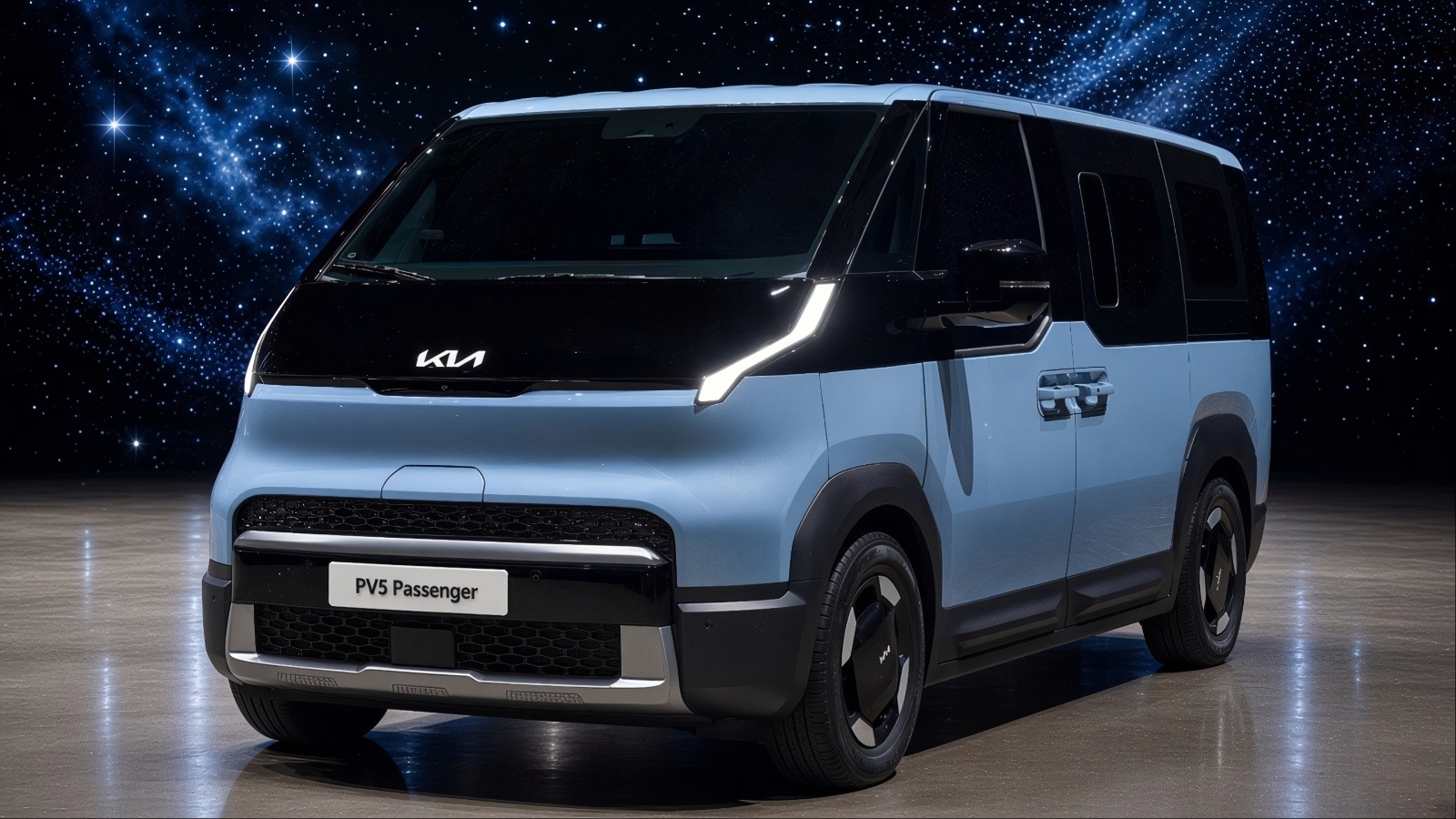
Kia’s first dedicated purpose-built vehicle is gaining momentum faster than expected, with the PV5 electric van surpassing 50,000 cumulative global sales just 13 months after its launch. The milestone gives Kia an early indication that its new Platform Beyond Vehicle strategy can establish a meaningful position in the growing electric commercial-vehicle market.
According to Yonhap News Agency, Kia had sold 53,530 PV5s worldwide by the end of July 2026, with overseas markets accounting for approximately 60% of total sales. That performance is notable because the PV5 is not simply an electric version of an existing Kia van.
It was developed from the beginning as a dedicated purpose-built vehicle, with a modular architecture intended to support passenger transportation, cargo delivery, and specialized commercial applications.
The sales milestone arrives as Kia prepares to expand its PBV lineup. The larger PV7 is scheduled to premiere at IAA Transportation 2026 in Germany, while the PV9 is planned for 2029. Kia has set an ambitious target of selling 232,000 PBVs annually by 2030, with Europe and South Korea identified as key markets. For Kia, the PV5’s early success could therefore be much more important than its sales volume alone suggests.
PV5 Gives Kia a New Position in the Van Market
The PV5 is built on E-GMP.S, a platform developed specifically for purpose-built vehicles, unlike a conventional van architecture designed around one fixed body, E-GMP. S uses a skateboard-style layout that allows different upper bodies to be developed around the same basic vehicle structure. That flexibility is central to Kia’s PBV strategy.
The PV5 is available in passenger, cargo, and chassis cab configurations, allowing the same underlying vehicle to serve very different customers. Kia is also developing additional versions and conversions for applications ranging from leisure and camping to logistics and specialized commercial operations.
The approach gives Kia a potential advantage over traditional commercial vehicles, where a manufacturer may build a basic van and then rely on outside companies to modify it for specialized uses.
Kia has instead designed the PV5 around customization from the beginning. Its flexible body system allows components such as the roof, sliding doors, and tailgate to be configured for different applications. The company says this approach can reduce development time and costs while allowing multiple vehicle types to be produced from the same platform.
That matters in the commercial-vehicle market because customers rarely have identical requirements. A last-mile delivery company may prioritize cargo volume and loading access, while a shuttle operator needs seating capacity. A wheelchair-accessible vehicle requires a different interior configuration, while a recreational customer may want a camper-style layout.
The PV5 is designed to accommodate those different demands without requiring Kia to develop an entirely separate vehicle for each use.
The concept has already received industry recognition. The PV5 was unanimously selected as the 2026 International Van of the Year, becoming the first Korean vehicle and first electric van from Asia to receive the award. Kia also highlights recognition from other design and automotive organizations as evidence that the model is gaining attention beyond its core commercial-vehicle role.
Production Strategy Is Just as Important as Sales
Kia’s sales milestone is supported by a dedicated manufacturing strategy that is designed around the unusual requirements of PBVs.
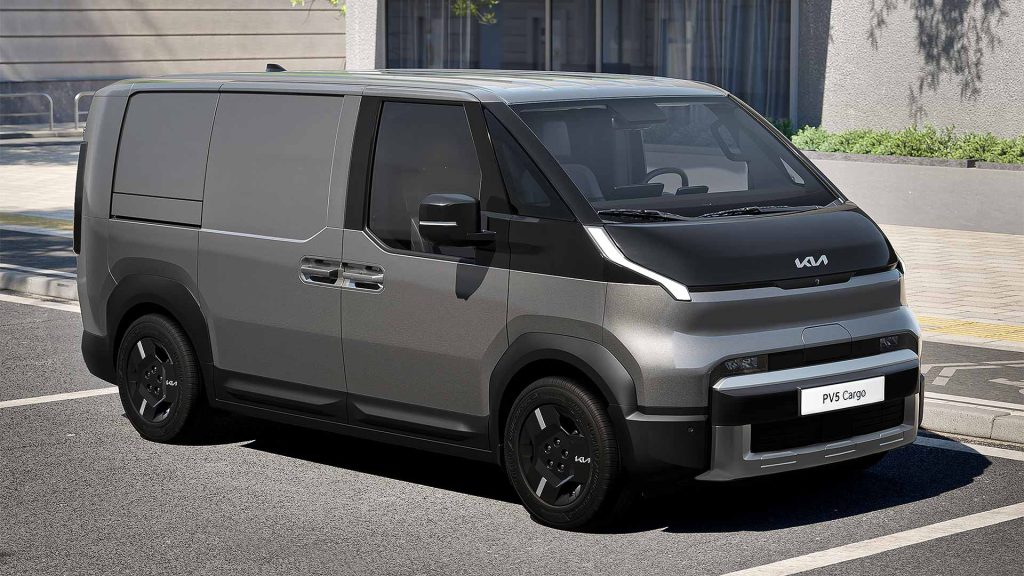
The PV5 is produced at Kia’s AutoLand Hwaseong facility in South Korea, where the company established a dedicated PBV production hub. Mass production began at the EVO Plant East in August 2025. The approximately 100,000-square-meter facility has an annual capacity of 100,000 vehicles and can manufacture multiple PV5 variants on the same production line.
The plant uses a flexible production system intended to accommodate different vehicle configurations without requiring completely separate production lines.
That capability becomes increasingly important as Kia expands the number of PV5 derivatives. Instead of maximizing production of one standardized van, Kia wants the factory to handle vehicles with different bodies and intended applications.
Kia is also building EVO Plant West next to the existing facility. The second plant is scheduled to produce the larger PV7 after completion in June 2027 and will have another 100,000-unit annual capacity. Combined, the two plants are planned to provide base-vehicle capacity of approximately 200,000 units per year.
The investment shows that Kia is not treating the PV5 as an isolated experiment. The company is building the production infrastructure required for an entire PBV business.
That distinction is important because the commercial-vehicle market has traditionally been dominated by established manufacturers such as Ford, Mercedes-Benz, Stellantis, Renault, and Volkswagen. Kia is attempting to enter the sector by using electrification and modular manufacturing as differentiators rather than simply copying conventional van designs.
The strategy also allows Kia to target businesses that increasingly want vehicles tailored to specific operating requirements.
For example, delivery companies can configure vehicles around loading efficiency, while passenger operators can prioritize seating and accessibility. Kia’s approach could also support refrigerated vehicles, mobile retail applications, and other specialized conversions.
The company believes that combining vehicle production and conversion capabilities at the same manufacturing hub can reduce the time and cost required to create those specialized versions.
PV5 Sales Strengthen Kia’s Bigger PBV Ambition
The 53,530-unit sales figure is particularly meaningful because it has been achieved relatively early in the PV5’s lifecycle.
Yonhap reported that overseas markets accounted for about 60% of cumulative sales through July. That suggests the PV5 is not dependent solely on Kia’s domestic Korean market and is already finding customers internationally. International demand will be essential if Kia wants to reach its long-term PBV target.
At its 2026 CEO Investor Day, Kia outlined plans to expand its PBV portfolio with the PV5, PV7, and PV9 while creating more than 40 body and conversion types. The company wants the range to cover different commercial and personal mobility applications rather than remain focused exclusively on conventional delivery vans.
The PV7 will be the next major test. As a larger PBV, it will allow Kia to move into commercial applications requiring greater cargo capacity and passenger space. Its planned 2027 launch will also provide a clearer indication of whether the sales momentum created by the PV5 can be transferred to larger vehicles.
The PV9 is expected to follow in 2029, giving Kia a three-model PBV family. That progression is important because commercial customers often operate fleets containing vehicles of different sizes. A company that can offer multiple electric vans on a common philosophy and potentially related technology has a stronger opportunity to become a fleet supplier rather than simply a niche vehicle manufacturer.
Kia is also positioning PBVs as more than transportation products. Its strategy includes fleet-management software, connectivity, vehicle conversions, and other services that can create recurring relationships with commercial customers.
The PV5 already incorporates technology aimed at those users. Kia offers a dedicated 12.9-inch 16:9 PBV display, while its Pleos Fleet solution is designed to help operators monitor vehicle status and manage multiple vehicles. The van also supports Vehicle-to-Load functionality, allowing it to provide electrical power for equipment and other devices.
That broader ecosystem could eventually become as important as the vehicle itself. For fleet operators, the value of an electric commercial vehicle depends on more than purchase price. Uptime, charging, maintenance, routing, fleet monitoring, and the ability to adapt vehicles to specific jobs can all affect operating costs.
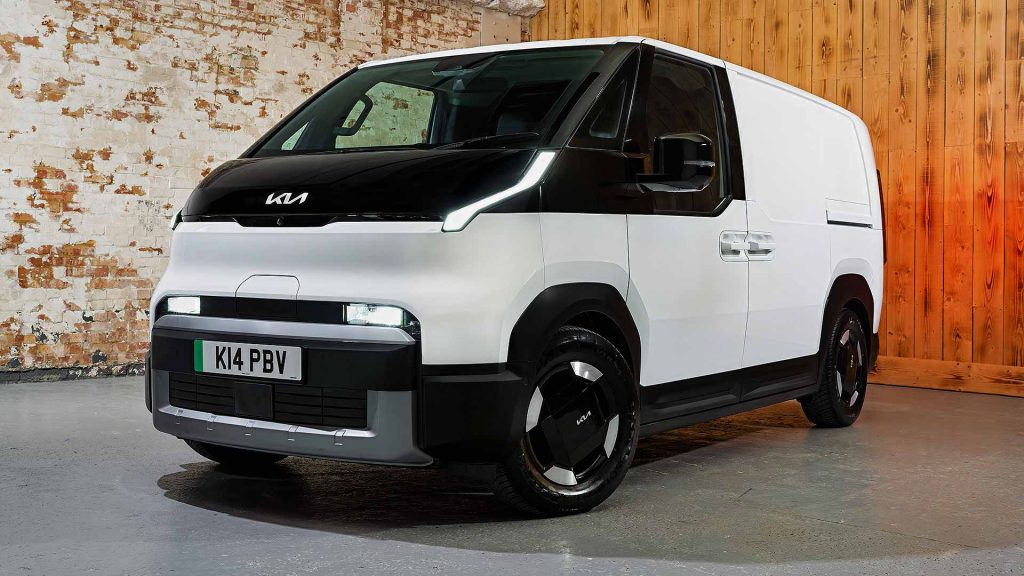
Kia is attempting to address those requirements through the PBV concept. The early sales performance suggests that the strategy has gained a foothold, but 53,530 vehicles are still only the beginning of Kia’s ambitions. The company’s 2030 target of 232,000 PBV sales annually requires substantially greater volume and a much broader product range.
The next challenge will be scaling internationally while maintaining the flexibility that makes the PV5 different from conventional vans.
For now, however, the first milestone is significant. Selling 53,530 PV5s in just 13 months gives Kia evidence that there is demand for an electric van designed around modularity, customization, and commercial use rather than simply electrifying an existing vehicle.
With the PV7 approaching and the PV9 planned for later in the decade, Kia is using the PV5 as the foundation of an entirely new business.
If the company can reproduce the PV5’s early success with larger models and expand its conversion and fleet ecosystem, the PBV strategy could become a meaningful new pillar of Kia’s global business rather than a side project built around a single electric van.
