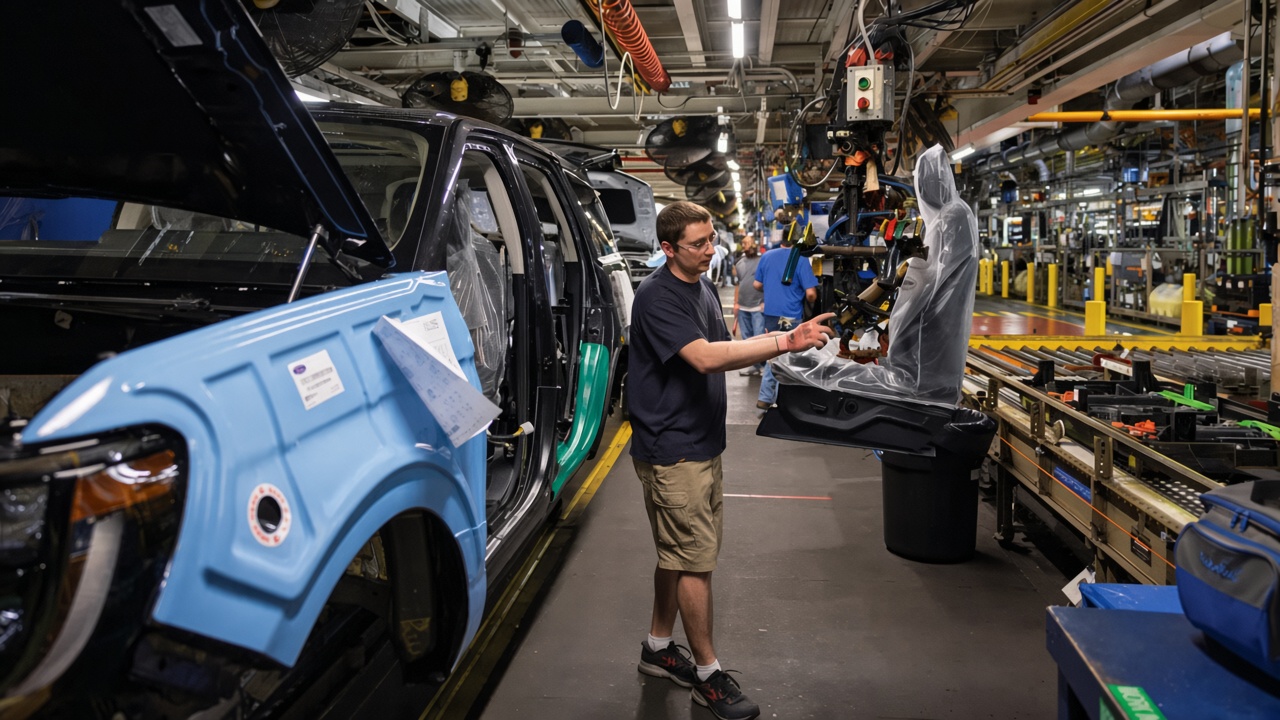
Ford is preparing to invest approximately $1 billion in its Kentucky Truck Plant in Louisville, Kentucky, as the automaker moves ahead with plans for a new state-of-the-art paint shop. The project represents one of Ford’s larger recent investments in traditional U.S. manufacturing and is intended to strengthen the facility’s long-term production capabilities.
According to RTTNews, the investment will modernize the plant’s paint operations and support Ford’s ability to continue producing large trucks and utility vehicles at the facility. The announcement comes as Ford continues reshaping its manufacturing footprint to accommodate changing vehicle demand while keeping major truck production in the United States.
The Kentucky Truck Plant is one of Ford’s most important manufacturing facilities. The site produces the Ford Super Duty pickup, along with other large commercial and utility vehicles, making its continued competitiveness particularly important to Ford’s North American strategy.
A $1 billion investment in a paint shop may sound less significant than a new vehicle assembly plant, but paint facilities are among the most technically demanding areas of an automotive factory. Modern systems require extensive automation, environmental controls, and energy management, while also determining the consistency and durability of a vehicle’s exterior finish.
New Paint Shop Will Modernize a Major Ford Facility
Ford’s planned investment will replace aging paint infrastructure with a modern system designed to improve manufacturing efficiency and environmental performance.
The Kentucky Truck Plant has been operating for decades, and updating major production systems allows Ford to keep the facility competitive without replacing the entire factory. A new paint shop can also be integrated with modern vehicle-production processes, allowing the company to adapt the facility to future products and production requirements.
Paint operations involve considerably more than simply applying color to a vehicle. A modern automotive paint process includes surface preparation, corrosion protection, primer application, basecoat and clearcoat layers, curing, and quality inspection. Each stage must be tightly controlled to ensure that vehicles meet durability and appearance standards.
Automation plays a major role in the process. Robotic paint systems can apply coatings with greater consistency while reducing material waste. Advanced curing systems can also improve energy efficiency compared with older equipment.
These improvements are particularly important for large trucks because their body structures and dimensions require substantial quantities of coating materials.
Ford has increasingly emphasized modernizing its existing manufacturing facilities rather than relying exclusively on new plants. The Kentucky investment follows that broader strategy by putting significant capital into an established factory and its workforce. The project should also provide the plant with greater flexibility as Ford’s truck portfolio evolves.
Kentucky Truck Plant Remains Critical to Ford’s Truck Strategy
The Kentucky Truck Plant is located on a massive manufacturing campus in Louisville and has long been associated with Ford’s full-size truck and commercial-vehicle operations.
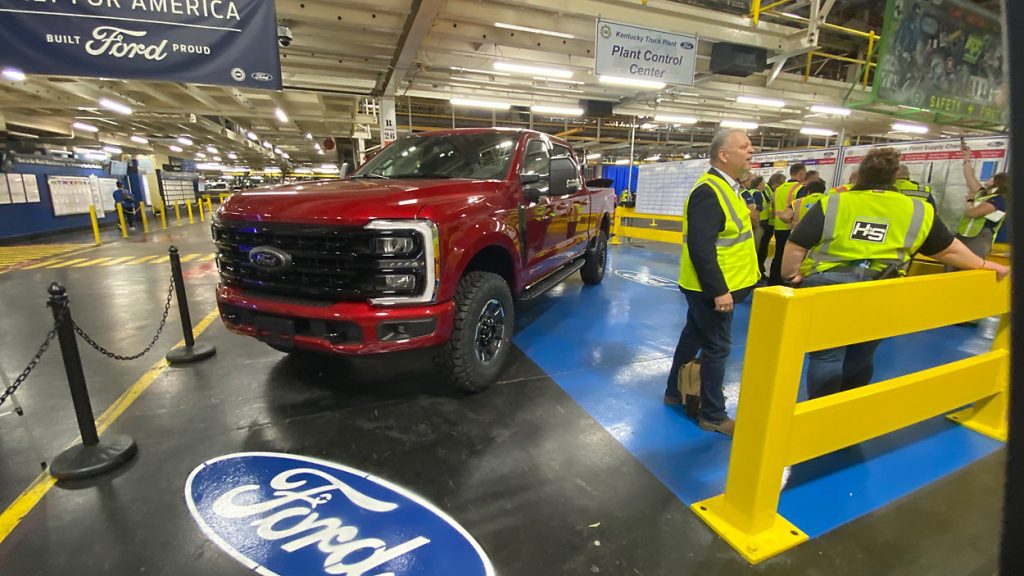
Its most important product is the Super Duty range, which includes the F-250, F-350, F-450, and related heavy-duty models. These trucks serve customers ranging from individual owners to construction companies, contractors, and commercial fleets.
The Super Duty is strategically important because Ford’s truck business remains one of the company’s strongest sources of revenue and profit.
Unlike many passenger-car segments, heavy-duty pickups continue to attract customers who prioritize towing capacity, payload capability, and durability over fuel economy alone. That makes continued investment in the manufacturing infrastructure behind these vehicles commercially important.
The Kentucky plant also supports Ford’s broader strategy of maintaining domestic production for vehicles that are central to the American market.
The company has invested heavily in U.S. manufacturing in recent years, including billions of dollars in electric-vehicle and battery facilities. However, the Kentucky investment demonstrates that Ford is not abandoning conventional truck manufacturing as it expands its electrification efforts.
Instead, Ford is pursuing multiple powertrain strategies simultaneously. That approach has become increasingly important as the U.S. EV market has grown more slowly than many automakers originally anticipated. Ford has continued investing in electric vehicles while also maintaining strong production of gasoline-powered trucks and hybrids.
The Kentucky Truck Plant is therefore likely to remain an important part of Ford’s North American manufacturing network for years to come.
Investment Could Extend the Plant’s Long-Term Future
The most significant aspect of the $1 billion project may be what it says about Ford’s intentions for the Kentucky facility.
Large capital investments in manufacturing infrastructure are rarely made without considering the factory’s expected production life. A new paint shop represents a long-term commitment because the equipment, building systems, and associated infrastructure are designed to operate for many years.
That does not guarantee which specific models will eventually be produced at the plant, but it demonstrates that Ford sees continued value in maintaining a major manufacturing presence at the site.
The investment could also help Ford respond to stricter environmental requirements. Modern paint shops can use more efficient ovens, improved filtration, and advanced application technology to reduce energy consumption and emissions compared with older systems.
For a large manufacturing facility operating continuously, even relatively small efficiency improvements can produce meaningful savings over time. The project is also important for the local economy.
The Kentucky Truck Plant employs thousands of workers and supports a wider network of suppliers and service businesses in the Louisville area. Maintaining production at the facility therefore has economic consequences extending well beyond Ford itself.
Ford’s investment also comes at a time when the company is evaluating how best to allocate manufacturing capital between gasoline, hybrid, and electric vehicles. Rather than making a complete shift toward EV production, Ford has increasingly emphasized flexibility. That flexibility is particularly relevant to trucks.
The company has introduced electric versions such as the F-150 Lightning and continues to develop electrified commercial vehicles, but gasoline-powered pickups remain critical to Ford’s business. Heavy-duty trucks in particular face technical challenges when electrified because towing and payload demands can significantly increase energy consumption.
Maintaining efficient manufacturing capacity for conventional and electrified products gives Ford more options as customer preferences evolve.
The new paint shop could therefore become part of a broader modernization effort that keeps the Kentucky Truck Plant competitive regardless of how Ford’s powertrain mix changes.
For Ford, the $1 billion investment is not simply an upgrade to an aging production facility. It represents a commitment to one of the company’s most important truck manufacturing locations at a time when the industry is undergoing major technological and regulatory changes.
The project should modernize a critical stage of production, improve efficiency, and provide the Kentucky plant with infrastructure capable of supporting future vehicle programs.
Most importantly, the investment reinforces the continuing importance of Ford’s U.S. truck business. While the company is spending heavily to develop electric vehicles and batteries, it is also willing to commit substantial capital to the factories producing the trucks that currently underpin its business.
The new paint shop should help ensure that the Kentucky Truck Plant remains capable of meeting those demands for many years while giving Ford another modernized facility from which to adapt its product lineup as the North American market continues to change.
Why the Paint Shop Investment Matters
The new paint shop could also improve Ford’s ability to maintain consistent production quality as vehicle designs become more complicated. Modern trucks increasingly use different materials, complex body panels, and larger surface areas, making accurate coating application more important than it was when the Kentucky facility was originally developed.
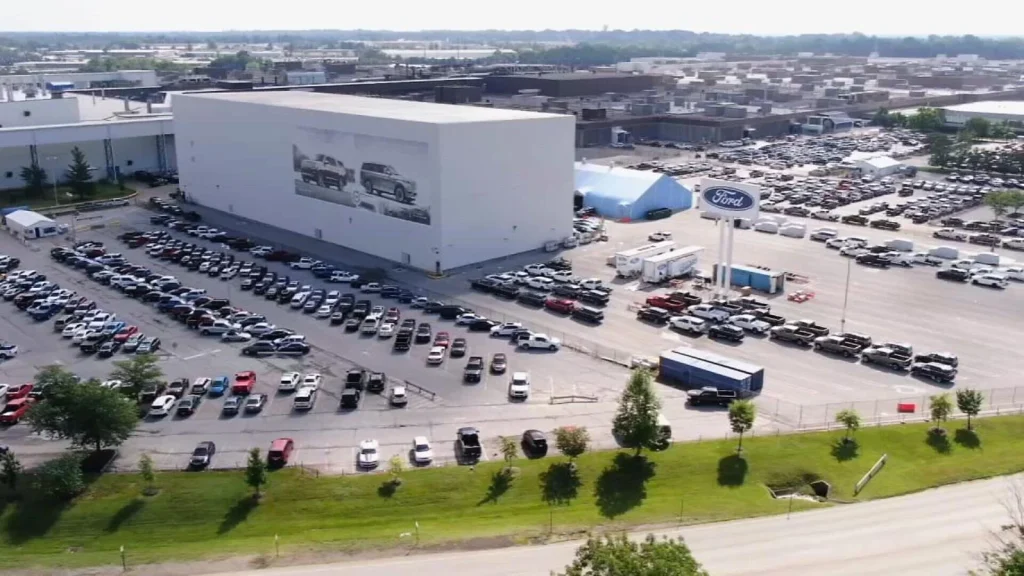
A modern paint operation can also reduce production bottlenecks. Paint shops are often among the most difficult areas of an automotive factory to modify because vehicles must pass through several controlled processes before reaching final assembly. Updating the facility allows Ford to improve throughput while reducing the likelihood that aging equipment will restrict production.
The investment could prove particularly useful for the Super Duty family. These trucks are sold in several configurations and are frequently used in demanding commercial environments where durability is a major purchasing consideration. A consistent paint and corrosion-protection process is therefore important not only for appearance but also for long-term vehicle durability.
The project also demonstrates why existing manufacturing plants remain valuable even as automakers build new EV facilities. Constructing an entirely new factory requires enormous capital, while strategically replacing aging infrastructure can extend the useful life of an established site at a lower cost.
For Louisville, the investment provides another indication that Ford expects the Kentucky Truck Plant to remain a significant employer and production center. For Ford, it provides modern manufacturing capacity without sacrificing the truck business that continues to generate substantial demand.