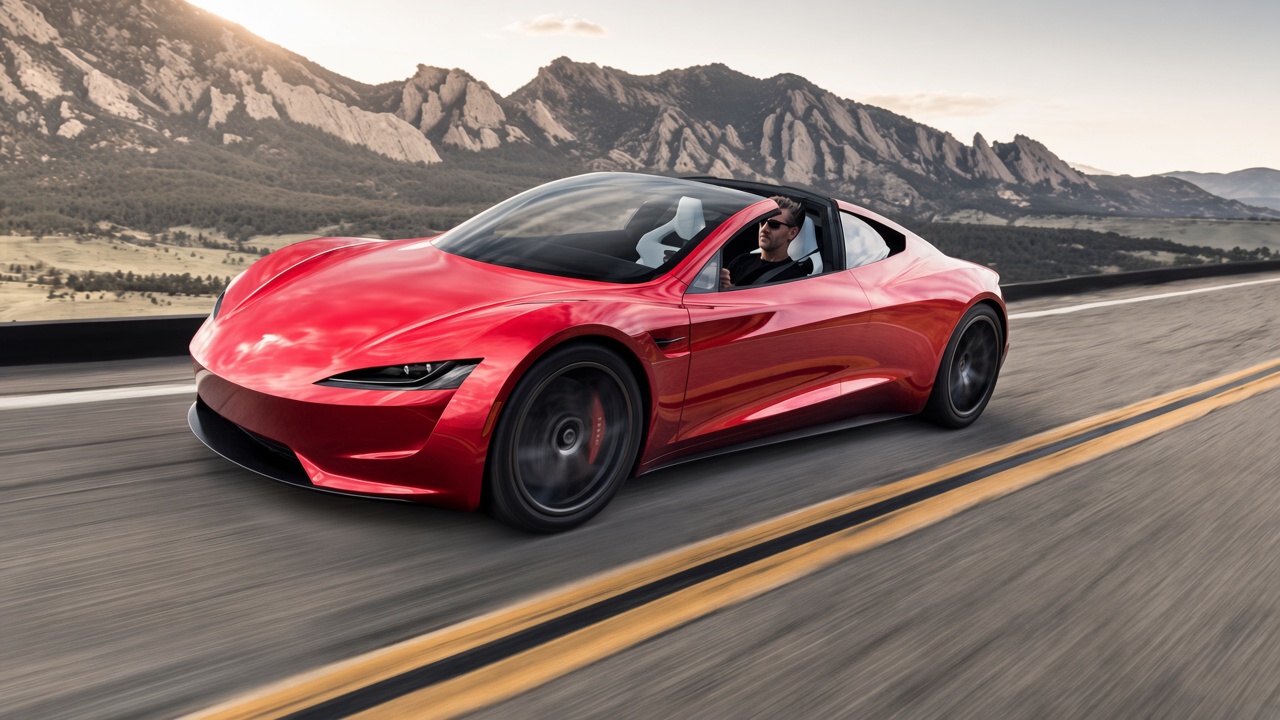
Tesla is once again putting its long-delayed Roadster in the spotlight, with CEO Elon Musk announcing that the next-generation electric sports car will be unveiled on October 1, 2026. The date revives one of Tesla’s longest-running product promises, nearly nine years after the company first revealed the second-generation Roadster.
Reuters reported that Musk confirmed the October 1 event on September 12, although Tesla has not yet provided a detailed production schedule or confirmed when customer deliveries will begin. The latest announcement comes as Tesla continues to expand beyond its established Model 3, Model Y, and larger vehicle lineup while facing increasing competition in the global EV market.
The Roadster was originally presented in November 2017 as a demonstration of what Tesla believed an electric sports car could achieve. Almost a decade later, the car has still not entered production, making the upcoming unveiling particularly important.
A Sports Car That Has Waited Nearly a Decade
When Tesla first showed the Roadster in 2017, the company promised performance figures that were extraordinary even by modern supercar standards.
Tesla originally claimed a 0-60 mph time of 1.9 seconds, a top speed above 250 mph, and a 620-mile claimed range. The company also said the Roadster would use a 200-kWh battery pack and three electric motors, with one motor at the front and two at the rear.
Those figures helped establish the Roadster as more than simply another electric sports car. Tesla was attempting to use it as a technology showcase, demonstrating that battery power could deliver performance that exceeded many high-end internal-combustion sports cars. But the car repeatedly slipped behind other Tesla priorities.
Tesla shifted its attention toward higher-volume vehicles, battery production, and other projects, while the Roadster remained in development. Musk subsequently made several new promises regarding the vehicle, including claims that its acceleration could become even more extreme with the company’s proposed SpaceX package.
Tesla later suggested that the Roadster could accelerate from zero to 60 mph in less than one second when equipped with a package incorporating small rocket thrusters. Those claims have never been validated by a production vehicle, and it remains unclear which of the previously announced specifications will survive into the final version.
That makes the October reveal particularly significant. After years of announcements, Tesla now has an opportunity to show what the production-intent Roadster actually looks like and explain which technologies will make it into the car.
What Tesla Could Reveal on October 1
The October event is expected to provide substantially more information about the Roadster, although Tesla has not yet disclosed a complete specification sheet. The most important questions concern performance, battery capacity, range, and production.
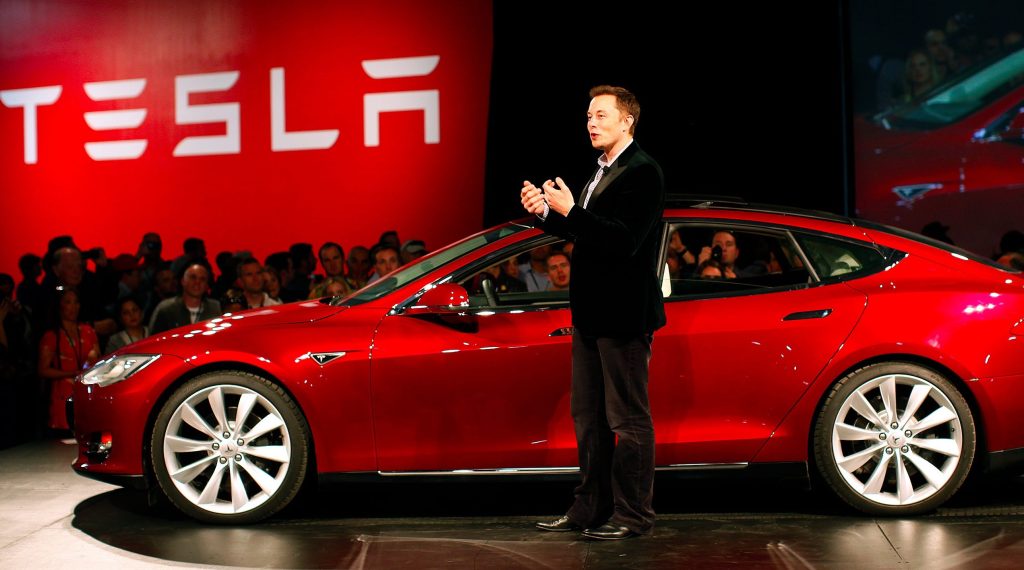
Tesla will need to demonstrate that the Roadster’s performance claims can be translated into a production vehicle rather than remaining engineering targets. A sub-two-second 0-60 mph time would still place it among the quickest production cars in the world, while the previously promised 250-mph-plus top speed would make it a serious high-performance machine.
Range is another important question. Tesla’s original 620-mile claim was based on its earlier test methodology and a large battery pack. Battery technology has improved since the Roadster was first announced, but the company has also faced the fundamental engineering challenge of combining low weight, enormous performance, and long range in a relatively small sports car.
The car’s architecture will therefore be crucial. A large battery can provide the energy needed for high performance and long-distance driving, but battery mass works against the handling characteristics expected from a sports car. Tesla will have to balance those competing requirements while maintaining thermal performance during repeated high-power acceleration.
Charging capability will also matter. An ultra-high-performance EV cannot rely solely on a large battery to provide useful range. Rapid charging can make long-distance use considerably more practical, particularly if Tesla incorporates the latest charging technology into the Roadster.
The interior and vehicle software could also reveal how much Tesla’s product philosophy has changed since 2017.
The original Roadster prototype featured a minimalist cabin and removable glass roof panels. The production model is likely to incorporate newer Tesla software and driver-assistance technology, although the company has not yet detailed the final equipment.
One of the biggest unanswered questions is whether the Roadster will remain a technology demonstrator or become a genuinely scalable production model.
Tesla Needs the Roadster to Become More Than a Promise
The significance of the October announcement extends beyond the sports-car market. Tesla has spent years building its identity around technological disruption, but the company has also faced criticism over delayed products and shifting timelines. The Roadster has become the clearest example of that problem.
The second-generation car was announced in 2017, with production originally expected much earlier. Its repeated delays have transformed the Roadster from a future product into something of a symbol of Tesla’s tendency to announce ambitious projects long before they are ready for customers.
That makes the 2026 reveal different from previous Roadster announcements. Tesla will need to answer not just what the car can do, but when customers can actually buy it.
Production timing is particularly important because Tesla’s vehicle lineup has changed substantially since the Roadster was first announced. The company now operates a much larger global manufacturing network, while electric performance technology has advanced rapidly across the industry.
Rivals have also moved into territory Tesla once dominated. Electric hypercars and high-performance EVs from companies such as Rimac have demonstrated acceleration figures that were once considered almost impossible for road cars. Porsche, Mercedes-AMG, and other premium manufacturers have also continued developing powerful electric performance models.
Tesla therefore cannot rely solely on the novelty of an extremely quick electric car. The Roadster will need to offer a compelling combination of performance, range, charging capability, technology, and design to justify its position at the top of Tesla’s lineup.
Pricing will be another major question. Tesla originally indicated a starting price of $200,000 for the Roadster, with a limited Founders Series planned at $250,000. Those figures were announced many years ago and are unlikely to provide a reliable indication of final 2026 pricing. Inflation, battery costs, development expenses, and changes to the vehicle itself could all affect the eventual price.
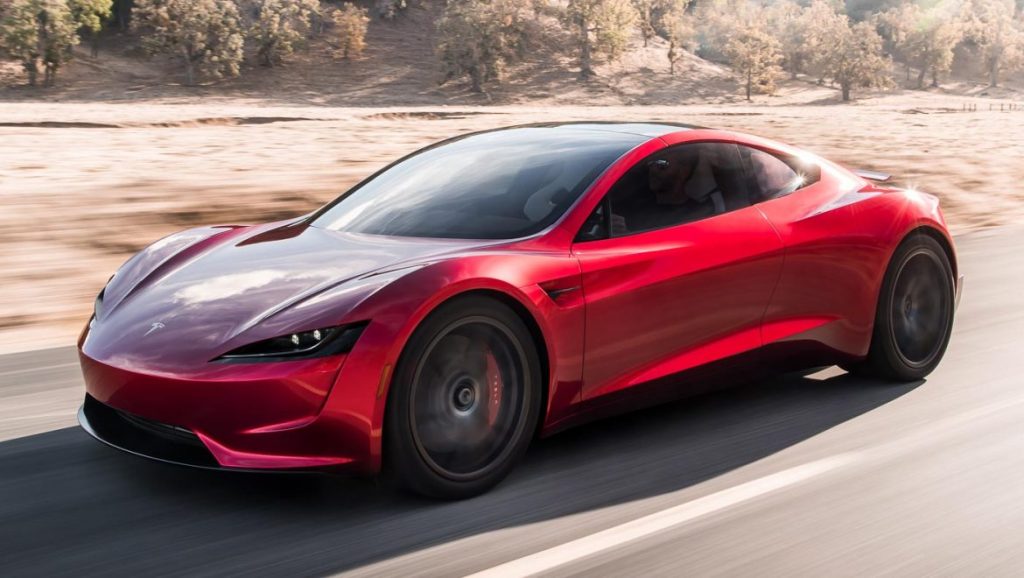
The Roadster is also expected to be produced in relatively small numbers compared with Tesla’s mass-market models. That could allow Tesla to position it as a halo product designed primarily to demonstrate what its technology can accomplish. For Tesla, that role could be valuable even if the Roadster never becomes a major source of sales.
The original Roadster helped establish Tesla as a serious automaker by proving that an electric car could be desirable and genuinely exciting. The second-generation model now has the opportunity to perform a similar role for a much more mature company.
But expectations are considerably higher this time. Tesla has already spent years talking about the car’s potential. On October 1, the company will finally have to show how much of that potential has become reality.
If Tesla delivers the acceleration, range, and advanced technology it has previously promised, the Roadster could become one of the most technologically ambitious electric sports cars on the market. If production timing remains uncertain, however, the latest reveal could simply become another chapter in the vehicle’s unusually long development story.
After nearly a decade of waiting, the biggest question surrounding the Roadster is no longer whether Tesla can build an exceptionally fast electric sports car. It is whether this time, the company can finally put one into customers’ hands.