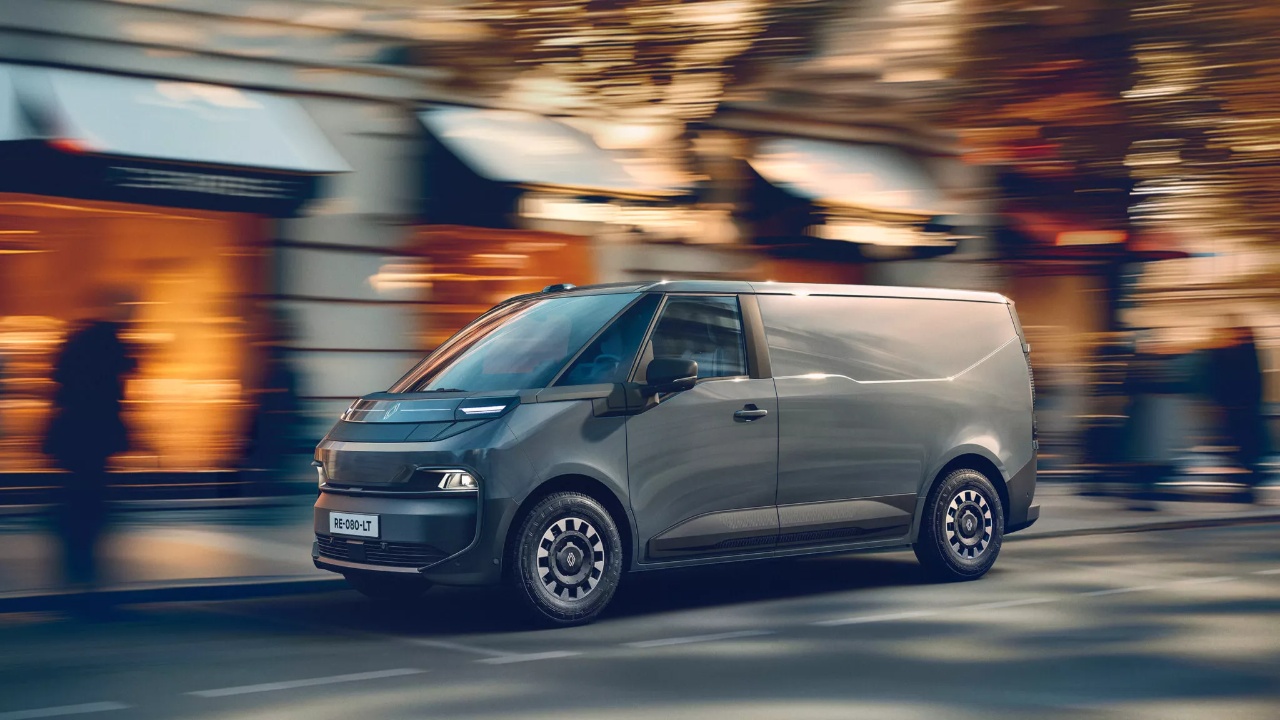
Renault has entered a new phase in its commercial vehicle strategy with the introduction of the new Trafic Van E Tech electric at IAA Transportation 2026 in Hanover, Germany.
The medium-sized electric van is the first Renault Group vehicle to use a dedicated software-defined architecture, turning a traditionally hardware-focused work vehicle into a connected platform that can receive new functions and updates throughout its life.
The new Trafic is also the first of five new light-commercial vehicles Renault plans to launch between now and 2028 under its future strategy. Renault says the offensive is designed to strengthen its position as Europe’s No. 2 light-commercial-vehicle brand while responding to growing demand for more efficient, connected, and customizable vans.
The Trafic name dates back to 1980, and Renault says more than 2.8 million examples have been sold since its introduction. The new electric generation is designed and built at Renault’s Sandouville plant in France, keeping production in Europe as the company pushes deeper into electric commercial vehicles.
470-Km Range and 800-Volt Charging
The new Trafic Van E-Tech electric is built on Renault Group’s RGEV medium-van platform and uses an 800-volt electrical architecture. Renault is targeting more than 470 km of WLTP range, although final homologation figures are still pending.
For urban operators, the company says the van can travel nearly 690 km in city driving. That figure is particularly important for commercial fleets because delivery vehicles can spend most of their working day in stop-and-go traffic, where regenerative braking and lower average speeds can improve electric efficiency.
Charging is one of the van’s biggest advantages. Renault says the 800-volt system can add up to 280 km of range in just 20 minutes, or as much as 380 km in city use. The company claims this charging performance is among the strongest in Europe’s light-commercial-vehicle segment.
Renault is also targeting a total cost of ownership up to 10% lower than an equivalent internal-combustion van. For professional customers, that calculation can be more important than the purchase price because energy, maintenance, and vehicle downtime directly affect operating costs.
Practicality has not been sacrificed for electrification. The Trafic offers up to 5.8 cubic meters of cargo capacity, a payload of up to 1.3 tonnes, and a towing capacity of 2 tonnes. Renault says the load area can accommodate three Euro pallets, while the load height is 53 cm.
The van has a 10.3-meter turning circle and stands just 1.89 meters tall. That combination is intended to make it easier to maneuver in city streets and enter standard underground car parks, an important consideration for urban delivery fleets.
Renault has also focused on driver comfort. The new Trafic uses a multi-link rear suspension and a passenger-car-like driving environment, while the quietness of the electric drivetrain should reduce fatigue during long working days.
The model will initially be offered as a panel van by the end of 2026. Chassis-cab and crew-cab versions are scheduled to join the range in 2027, expanding its usefulness for trades, conversions, and specialized commercial applications.
Software Becomes the Core of the Van
The most important change is not visible from outside. Renault describes the Trafic as its first software-defined van, using an architecture developed by Ampere.
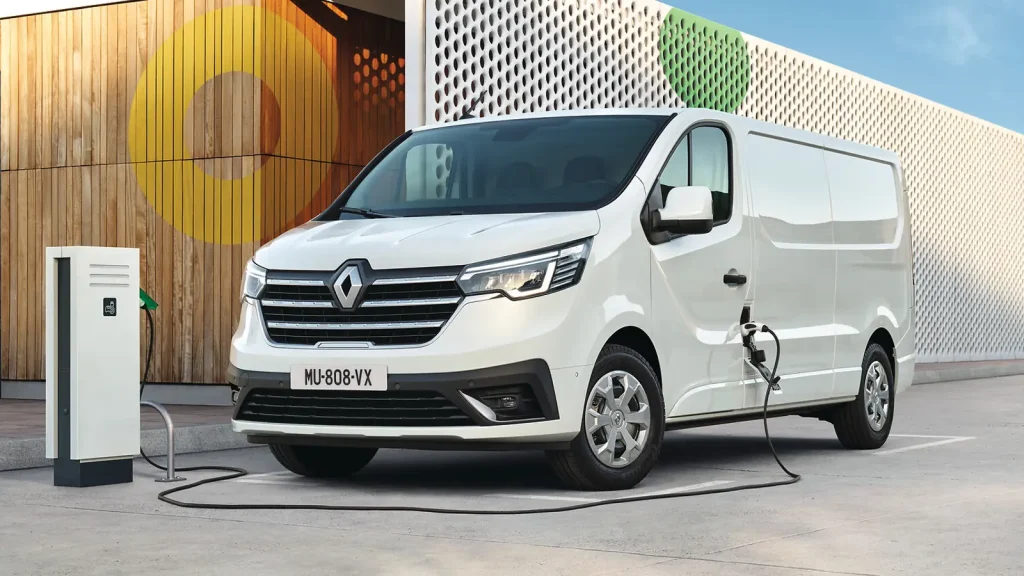
Traditional vehicles can contain dozens of separate electronic control units, each responsible for individual functions. Renault says the new Trafic replaces as many as 80 ECUs with two high-performance supercomputers. These run CAR OS, Renault’s Android-based operating system developed with Google.
This centralized architecture allows the vehicle’s software to control, analyze, and update functions more efficiently. Instead of treating a van as a finished product at the time of purchase, Renault can continue improving it through software updates.
That could have major implications for commercial operators. New functions can potentially be added during the vehicle’s service life, while predictive maintenance can use vehicle data to identify problems before they cause an unexpected breakdown.
Renault plans to build on this capability through Renault UPTIMIZE, a business-focused program scheduled to launch in 2027. The system will use connected-vehicle data and artificial intelligence to help reduce downtime, with Renault targeting a reduction of up to half in vehicle downtime following an incident.
Fleet managers will also be able to use an in-vehicle “energy & safety control” application to apply selected operating parameters. Depending on the fleet’s requirements, settings for energy use, driving modes, and maximum speeds can be managed to improve efficiency, range, and safety.
Renault says customers will also be able to create applications tailored to specific business operations. That could be particularly useful for last-mile delivery companies and other fleets that need software to reflect their own workflows rather than relying solely on generic vehicle functions.
The software-defined architecture also supports remote updates and personalization. Renault has previously explained that its SDV strategy is designed to allow features to evolve throughout a vehicle’s service life, similar to how smartphones and computers gain capabilities through software updates.
For fleet operators, the potential benefit goes beyond convenience. A vehicle that can receive software improvements without major hardware changes could remain useful for longer, potentially supporting stronger residual values and reducing the need for early replacement.
Designed for Conversions and Commercial Work
Renault has retained the fundamentals expected from a working van while adding the technology of a modern electric vehicle.
The flat floor and 1.30-meter space between the wheel arches are designed to simplify conversions. Renault says the van can be adapted for a broad range of professional applications, supported by its own conversion operations and a network of around 300 certified body converters.
Vehicle-to-load functionality is included, allowing operators to power electrical equipment directly from the van. That can be useful on construction sites, during maintenance work, or anywhere tools and equipment need electricity away from a fixed power supply.
Renault also plans an electric power take-off system for future applications. The company says the technology will help support heavier conversions such as refrigeration systems and ambulance equipment, with charging power of up to 3.6 kW and 10 kW, respectively.
This emphasis on conversion flexibility is significant because commercial vans are rarely used in their standard factory configuration. A delivery company, electrician, construction business, and emergency-service operator can all need very different equipment despite starting with the same basic vehicle.
Renault’s wider strategy recognizes that reality. The five-model LCV offensive is intended to cover different professional requirements rather than simply add more electric versions of existing products.
The new Trafic is therefore more than an electric replacement for a diesel van. It combines a familiar commercial-vehicle format with an architecture that Renault hopes will allow the vehicle to become more capable after it reaches customers.
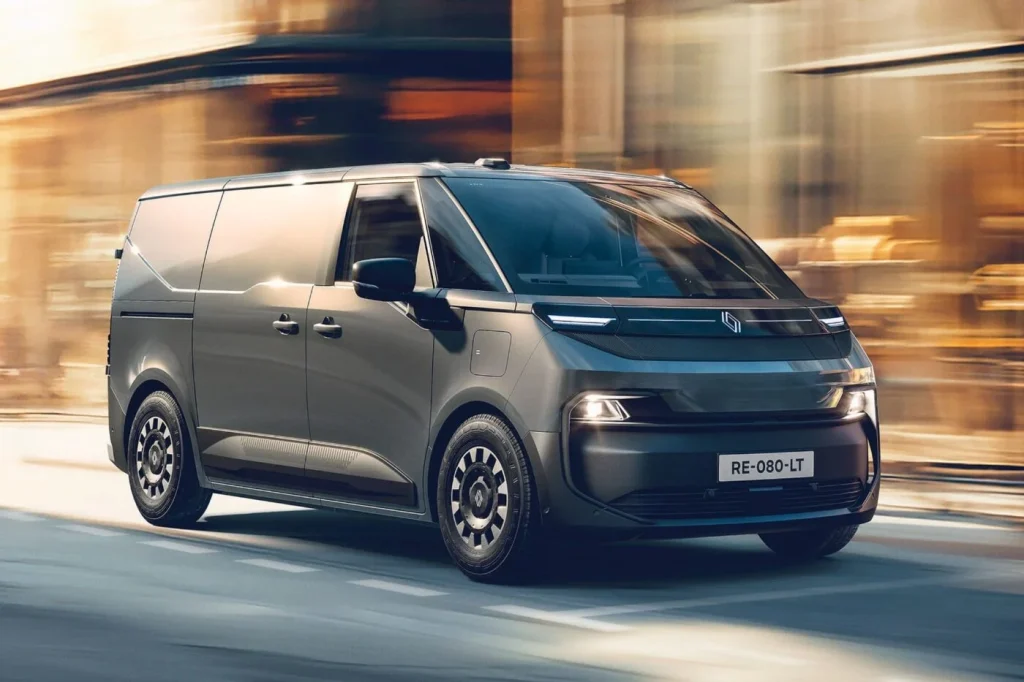
The European electric-van market remains closely tied to practical concerns such as charging access, payload, range, and operating costs. Renault’s approach attempts to address those issues while adding software as another tool for improving fleet productivity.
With more than 470 km of projected WLTP range, 800-volt charging, a 1.3-tonne payload, and 5.8 cubic meters of cargo capacity, the Trafic E-Tech is designed to remain a genuine working vehicle rather than an electric van optimized primarily around efficiency figures.
Its software architecture could ultimately prove even more important. By replacing a complex network of electronic control units with centralized computing, Renault is positioning the Trafic as a platform that can be updated, customized, and integrated more deeply into fleet operations.
The first panel vans are due before the end of 2026, followed by additional body configurations in 2027. As Renault begins its five-model LCV rollout, the Trafic will serve as an early demonstration of whether software-defined technology can deliver tangible benefits in one of the automotive industry’s most demanding working environments.