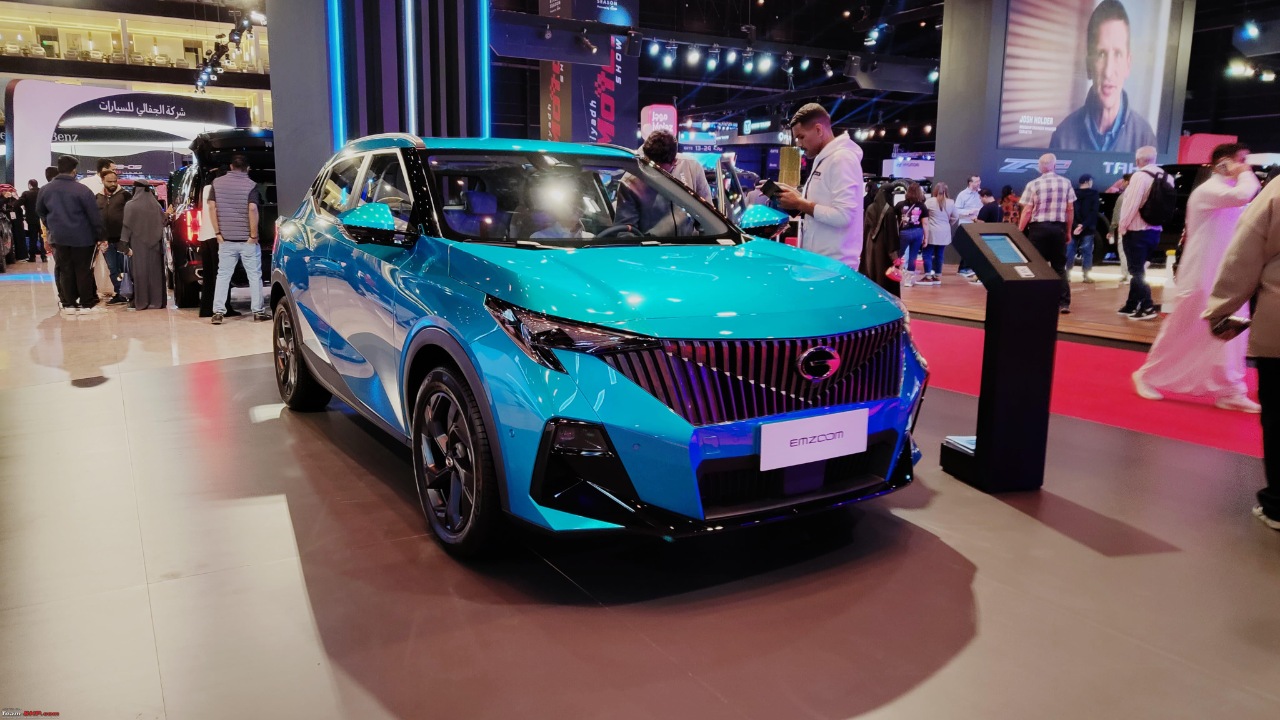
Toyota’s long-established business structure in China could be heading for a major transformation after Guangzhou Automobile Group, or GAC, signed a letter of intent to acquire part of FAW Group’s stake in a vehicle-manufacturing joint venture.
The target joint venture has not been officially named by GAC, but Chinese state media identified it as FAW Toyota, one of Toyota’s two major manufacturing partnerships in China. If completed, the transaction could become a step toward combining Toyota’s separate FAW Toyota and GAC Toyota operations, including their sales and dealer networks.
GAC said on September 14 that it plans to acquire part of FAW’s stake through a share issuance and proposed capital increase. The transaction remains subject to internal and regulatory approvals. If completed, FAW would become GAC’s second-largest shareholder, giving the restructuring implications beyond Toyota’s operations.
For Toyota, the potential restructuring comes as its position in China faces increasing pressure from domestic manufacturers, particularly BYD, Geely, and Chery.
China’s rapid shift toward electric and hybrid vehicles has also exposed weaknesses in the traditional joint-venture model that helped global automakers dominate the market for decades.
A More Unified Toyota Operation
Toyota has two major vehicle manufacturing joint ventures in China. FAW Toyota Motor operates with FAW Group, while GAC Toyota Motor partners with GAC.
FAW Toyota produces models including the Corolla, Corolla Cross, Crown Kluger, Granvia, and bZ3 and bZ5, while GAC Toyota builds vehicles including the Camry, Highlander, Levin, Wildlander, Sienna, Frontlander, and several battery-electric models.
The two partnerships were created when China’s vehicle market was expanding rapidly. Maintaining separate operations gave Toyota access to different regions and helped increase manufacturing capacity and dealer coverage.
That strategy has become harder to sustain as competition intensifies. Reuters reports that the two Toyota ventures accounted for about 7% of China’s passenger-vehicle sales during the first eight months of 2026, putting Toyota behind BYD, Geely Auto, and Volkswagen. In 2021, the two Toyota operations together ranked second in the market, behind only Volkswagen.
The decline illustrates how quickly China’s competitive landscape has changed. Local manufacturers have become much stronger in electric vehicles, plug-in hybrids, software, and connected-car technology.
Companies such as BYD and Geely can develop products specifically for Chinese customers at a pace that has proven difficult for many foreign automakers to match.
Toyota has responded by expanding its electric and hybrid offerings in China, but maintaining two separate joint-venture structures can create duplicated costs and decision-making processes.
Reuters reported that Toyota has been pushing toward closer integration of its Chinese operations, with a proposed structure calling for a unified Toyota sales company in which Toyota would hold 50%, while GAC and FAW would each hold 25%. The new organization would combine dealer networks and sell and service Toyota models across China.
That would be a significant change from Toyota’s traditional approach. Rather than operating largely separate sales structures through its two Chinese partners, Toyota could create a single commercial organization capable of managing its entire range more efficiently.
Toyota declined Reuters’ request for comment, while GAC and FAW also did not respond to requests for comment.
China’s Auto Industry Is Moving Toward Consolidation
The potential Toyota restructuring cannot be separated from the wider transformation taking place across China’s automotive industry.
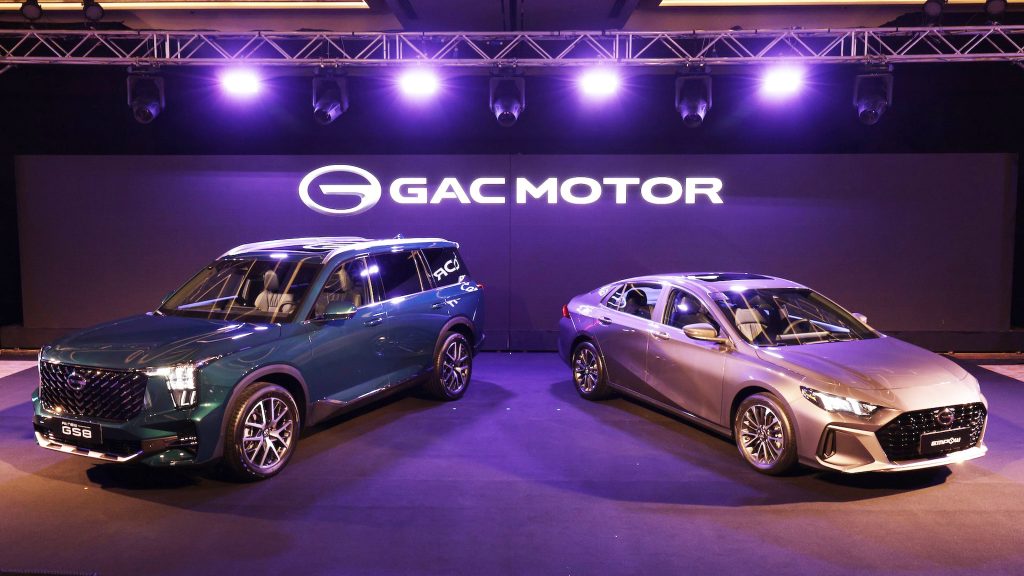
China has more than 100 competing vehicle brands, while years of rapid investment have created substantial manufacturing overcapacity.
The resulting competition has contributed to an aggressive price war that has compressed profit margins across the industry. Reuters reported that vehicle-manufacturing profit margins had fallen to 1.5%, the lowest level in nearly a decade according to official data.
That environment makes duplicated infrastructure increasingly difficult to justify. Automakers have historically maintained separate factories, sales organizations, and dealer networks because China’s enormous market could support multiple competing operations.
But when sales growth slows, and price competition becomes more intense, those parallel systems become expensive.
S&P Global Ratings told Reuters that weak demand, excess capacity, and the rapid shift toward EVs are putting pressure on state-owned automakers and foreign joint ventures. The ratings agency expects a broader wave of restructuring across the Chinese automotive industry over the next two to three years.
Toyota’s potential consolidation therefore appears to be part of a much larger trend. The Chinese government has also raised concerns about overcapacity and destructive price competition.
The country’s top economic planner recently reiterated support for mergers and restructuring among major automakers, reinforcing the idea that consolidation could become an important tool for improving efficiency.
For Toyota, combining sales operations could reduce duplication without immediately requiring a complete restructuring of its manufacturing footprint.
Dealer networks provide a clear example. FAW Toyota’s dealer network has fallen by more than 15%, from a peak of 773 stores in 2022 to 651 in 2026. GAC Toyota’s network has declined by more than 10%, from 693 to 620 dealerships over the same period.
Maintaining two shrinking networks becomes increasingly inefficient when both are selling products from the same global brand.
A unified network could allow Toyota to allocate dealers more efficiently, reduce duplicated operating costs, and provide customers with access to a wider range of Toyota products regardless of which former joint-venture network they originally belonged to.
Efficiency Alone Will Not Solve Toyota’s China Problem
The proposed restructuring could make Toyota’s Chinese operations leaner, but analysts warn that consolidation will not address every challenge facing the Japanese automaker.
Bill Russo, founder of Shanghai-based consultancy Automobility, told Reuters that the proposed changes have sound industrial logic because Toyota could improve sales and distribution efficiency while reducing overlapping investment.
He also cautioned that improving efficiency would not address the deeper issue. Global automakers are becoming less relevant to Chinese consumers in areas such as consumer technology and digital features. This may represent Toyota’s biggest challenge in the market.
China’s automotive market has changed from one where foreign brands could compete primarily through engineering reputation, reliability, and established dealer networks into one where software, connected services, rapid product development, and electrification increasingly influence purchasing decisions.
Local automakers have moved quickly in these areas. BYD, Geely, and Chery have expanded their electric and hybrid portfolios while developing technologies specifically for Chinese customers. They have also begun exporting aggressively, taking some of the advantages they developed in China into overseas markets.
Toyota therefore needs more than a streamlined sales organization. It must ensure that its vehicles remain competitive in a market where product cycles are becoming faster, and customers increasingly expect digital interfaces, advanced driver assistance, and intelligent vehicle functions.
The company has already been increasing its focus on electric vehicles in China. FAW Toyota produces the bZ3 and bZ5, while GAC Toyota produces models including the bZ4X, bZ3X, and bZ7.
However, competing with Chinese EV manufacturers requires more than adding battery-powered versions to an existing lineup. Toyota needs to match the speed at which local brands introduce new models, update software, and respond to changing consumer preferences.
That makes the proposed consolidation strategically important. A unified commercial structure could allow Toyota to make faster decisions and coordinate product launches more effectively, even if it does not solve the underlying technology challenge by itself.
The potential GAC-FAW transaction could also change the balance between Toyota and its Chinese partners. If GAC acquires part of FAW’s stake in the relevant joint venture, FAW would gain a major ownership position in GAC. Reuters reported that the arrangement could make FAW GAC’s second-largest shareholder.
That would create a broader relationship between two major Chinese automakers while simultaneously bringing Toyota’s separate partnerships closer together.
For Toyota, the priority is likely to be reducing unnecessary complexity while preserving enough local partnership strength to compete effectively.
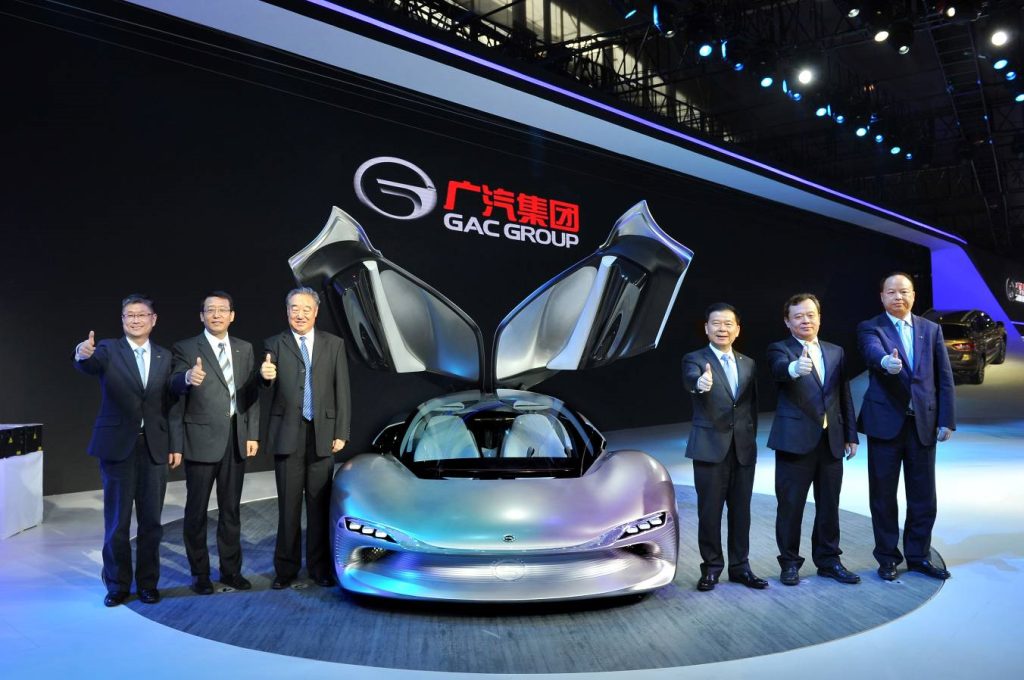
The shift reflects how dramatically China’s automotive industry has changed. The joint-venture model that once helped foreign automakers rapidly expand is now under pressure because the market is more crowded, local competitors are stronger, and EV technology is developing at a much faster pace.
Toyota’s two Chinese joint ventures were built for an era of expansion. The proposed restructuring is an attempt to adapt them for an era of consolidation.
The GAC-FAW letter of intent remains only an initial step, and the final ownership structure has not been approved. But the possibility of combining Toyota’s sales and dealer operations would represent one of the company’s most significant changes in China in years.
If completed, the new structure could reduce duplicated costs, simplify distribution, and give Toyota a more unified presence in the world’s largest auto market.
Yet the larger test will be whether those efficiencies can translate into more competitive vehicles. Toyota can streamline its operations, but it still has to win back Chinese customers in a market increasingly shaped by domestic EV manufacturers.
The potential restructuring therefore represents both a defensive move and a strategic reset. Toyota is trying to make its China business leaner at precisely the moment when the country’s automotive industry is moving toward a new competitive model defined by faster development, lower costs, electrification, and increasingly powerful local brands.