
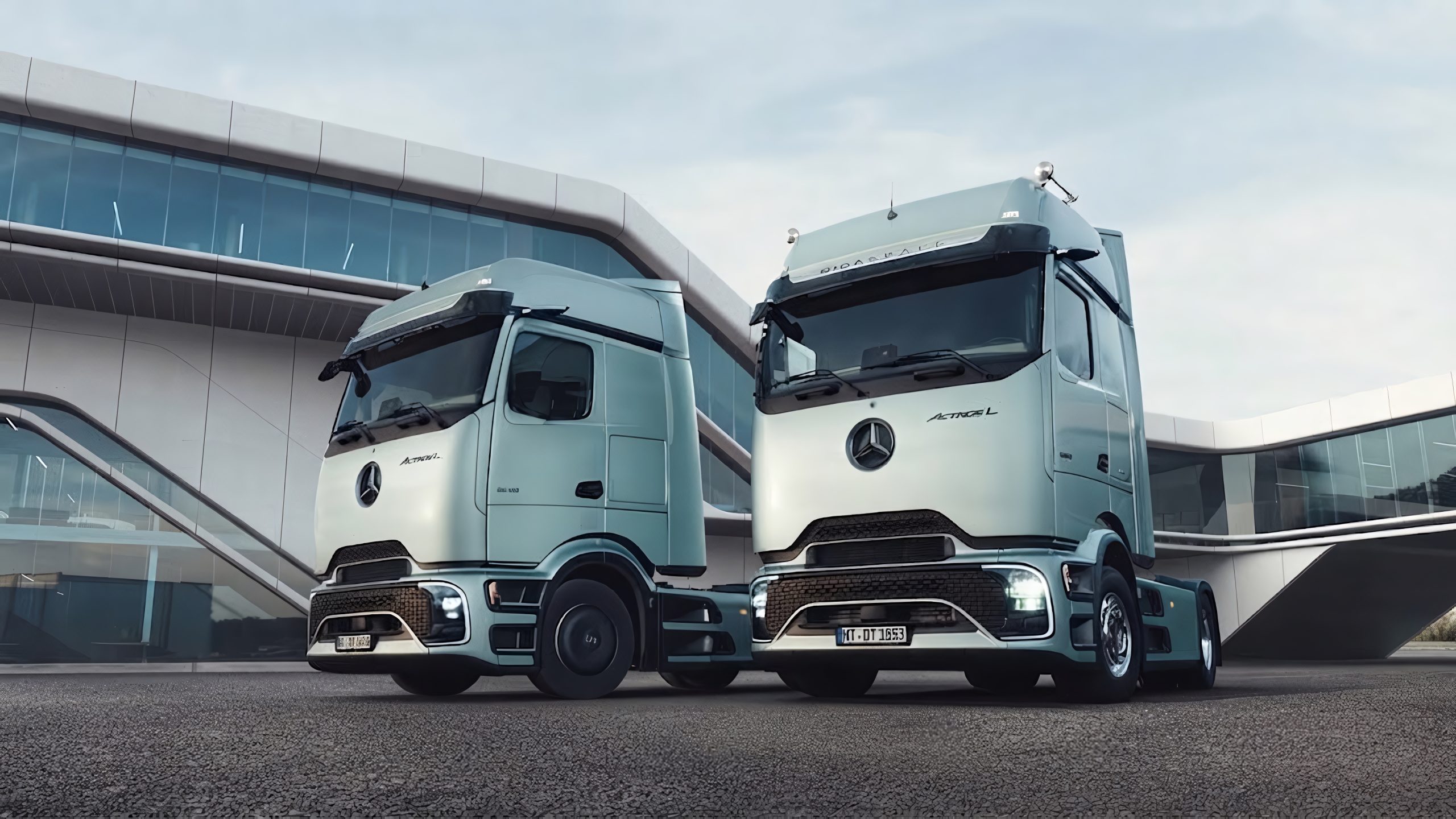
Europe’s leading truck manufacturers are asking the European Union to delay compliance with its 2030 heavy-duty vehicle CO₂ targets by three years, arguing that the market and infrastructure needed for a rapid shift to zero-emission trucks are not developing quickly enough.
The chief executives of seven major European truck and bus manufacturers, including DAF Trucks, Daimler Truck, Iveco, and Scania, requested on September 14.
According to Reuters, the manufacturers say insufficient charging infrastructure, high energy costs, and weak demand for zero-emission trucks are making the current timetable increasingly difficult to meet.
Under current EU rules, manufacturers must reduce the average CO₂ emissions of new heavy-duty vehicles by 43% in 2030 compared with 2025 levels. The requirement increases to 64% in 2035 and 90% in 2040.
Manufacturers can face financial penalties for missing the targets, although changes adopted earlier this year provide additional flexibility through emission credits for the 2025-2029 period.
The manufacturers are not calling for an end to electrification. Instead, they argue that Europe needs to build the conditions that make zero-emission trucks commercially viable before imposing increasingly demanding targets.
A Difficult Gap Between Regulation and Demand
The biggest problem is the gap between Europe’s regulatory targets and actual truck sales. The European Automobile Manufacturers’ Association, or ACEA, says only 2.4% of new heavy-duty vehicles currently sold in the EU are zero-emission. That is far below the market penetration needed to put manufacturers comfortably on course for the 2030 requirement.
For truck operators, the decision to purchase an electric or hydrogen-powered vehicle is fundamentally different from buying a passenger EV. Commercial trucks generate revenue only when they can reliably transport goods, often over long distances and for extended periods.
Charging time, range, payload, route availability, and energy prices therefore have a direct impact on a fleet’s profitability.
ACEA recently emphasized that fleet operators judge zero-emission trucks primarily through total cost of ownership, rather than purchase price alone.
Battery-electric and hydrogen trucks can have higher upfront costs than conventional diesel vehicles, and their financial case depends heavily on operating expenses, infrastructure availability, and the work they can perform.
That makes the transition particularly difficult for long-haul trucking. An electric truck may offer lower energy and maintenance costs under the right conditions, but those advantages can disappear if charging infrastructure is unavailable along important routes or electricity prices are too high.
A truck operator cannot simply choose a zero-emission vehicle if it cannot perform the same commercial work as a diesel equivalent. The truckmakers therefore want policymakers to address infrastructure and economics alongside emissions regulations.
Charging Infrastructure Is the Biggest Bottleneck
Heavy-duty trucks require a charging network that is fundamentally different from the one being developed for passenger cars.
A long-haul electric truck requires enormous amounts of energy, meaning charging stations need high-power connections and sufficient grid capacity. Operators also need charging locations along major freight corridors rather than stations concentrated primarily in cities.

ACEA estimated that Europe had only around 1,100 public charging points rated at 350 kW or above that were suitable for heavy-duty trucks. It said roughly 50,000 publicly accessible HDV chargers would be needed by 2030, including about 35,000 Megawatt Charging System chargers, alongside at least 700 hydrogen refueling stations.
The manufacturers are now asking the EU to accelerate that infrastructure rollout. They specifically want policymakers to speed up grid connections, expand charging availability, and use CO₂-based road tolls to create stronger economic incentives for cleaner trucks.
They also want revenue from emissions trading to be reinvested in infrastructure and zero-emission vehicle adoption.
These demands highlight a larger concern for European truck manufacturers. They are expected to produce zero-emission vehicles while having limited control over many of the conditions needed to make those trucks commercially viable.
A truckmaker can develop an electric tractor capable of covering a long route, but it cannot independently build every charging station, upgrade every electricity network, or determine energy prices across Europe.
The infrastructure problem is also more complicated than simply installing chargers. Heavy-duty charging sites require substantial grid connections, suitable land, and electrical capacity, while permitting and construction can take years.
For fleet operators planning to keep trucks in service for many years, uncertainty over where and when charging infrastructure will become available can discourage investment.
Manufacturers Also Face Growing Competitive Pressure
The request comes as Europe’s commercial-vehicle industry faces pressure from several directions.
European truckmakers are investing heavily in battery-electric and hydrogen technology while trying to keep conventional truck production competitive. They are also facing increasing competition from manufacturers outside Europe, including Chinese companies developing electric heavy-duty vehicles for the European market.
BYD, for example, has announced plans to introduce its first heavy-duty truck in Europe next year and eventually manufacture trucks locally. Other Chinese manufacturers are also preparing electric commercial vehicles for European customers.
That creates a difficult strategic situation for European manufacturers. They must invest in zero-emission technology to meet European regulations, but they also need to maintain competitive prices while demand for these vehicles remains relatively limited.
If production costs rise faster than customer willingness to pay, European manufacturers could lose market share at the same time they are spending billions on the transition.
The industry has already warned that its competitiveness is under pressure. In May, European truck and bus manufacturers and worker representatives jointly urged the European Commission to take action to protect the region’s commercial-vehicle manufacturing base.
The manufacturers have stressed that they remain committed to Europe’s climate objectives. Their argument is that achieving those objectives requires a stronger industrial and infrastructure framework rather than simply tougher vehicle standards.
The requested three-year delay would give the market additional time to develop before the 2030 requirement becomes fully binding.
What a Three-Year Delay Could Mean
A three-year delay would not eliminate the EU’s long-term emissions targets. Instead, it would push back the deadline for manufacturers to meet the 2030 reduction requirement, potentially giving fleet operators more time to adopt zero-emission trucks and infrastructure providers more time to expand charging networks.
For manufacturers, that could reduce the immediate risk of fines and give them additional flexibility while demand develops.
For environmental policymakers, however, delaying the target could raise concerns about whether Europe can decarbonize heavy road transport quickly enough to meet its climate objectives.
Heavy-duty vehicles are particularly important because trucks are harder to electrify than passenger cars. Long-distance freight requires more energy, larger batteries or alternative fuels, and much more powerful charging infrastructure.
The EU is therefore facing a difficult balancing act. Moving too slowly could delay emissions reductions and weaken Europe’s position in clean transportation technology.
Moving too quickly without sufficient infrastructure and customer demand could make European truck manufacturers less competitive and slow the adoption of zero-emission vehicles for economic reasons. The truckmakers’ request highlights that tension.
The industry is not asking the EU to abandon its decarbonization strategy. Instead, manufacturers want the timetable to reflect the pace at which infrastructure and the commercial market can realistically develop.
That distinction will become increasingly important as European policymakers consider their next steps.
The debate over trucks is also taking place alongside wider discussions about Europe’s vehicle-emissions policies. Reuters reports that the European Commission is facing pressure from the broader automotive industry to reconsider some elements of its 2035 combustion-engine policy for passenger cars.
For commercial operators, the issue is especially tied to economics. If zero-emission trucks cannot deliver competitive total costs and reliable routes, regulatory targets alone may not be enough to produce rapid market adoption.
The manufacturers therefore want Europe to focus on enabling conditions as much as vehicle mandates.
That means faster charging deployment, quicker grid connections, stronger financial incentives, appropriate road tolls, and continued investment in zero-emission technologies. If those measures succeed, demand for electric and hydrogen trucks could increase as their operating economics improve.
For now, the numbers explain why manufacturers are concerned. Only 2.4% of new heavy-duty vehicles are zero-emission, while the EU’s 2030 rules require a dramatic reduction in average fleet emissions within only a few years.
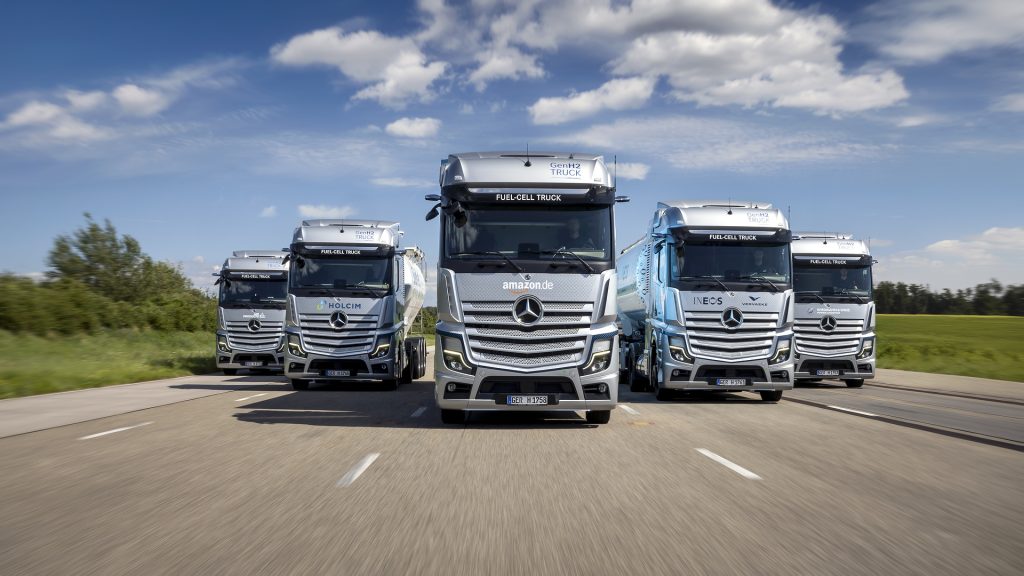
The three-year delay requested by Europe’s major truckmakers would give manufacturers and customers more time to close that gap.
It remains unclear whether the European Commission and member states will support the proposal. However, the request highlights an important reality. Europe’s shift toward zero-emission trucking involves more than simply developing cleaner vehicles.
The industry also needs the charging networks, electricity capacity, energy prices, incentives, and customer economics that allow those vehicles to work commercially.
Without those conditions, the truckmakers argue, increasingly strict emissions targets could put additional pressure on manufacturers without delivering the rapid shift to zero-emission freight that European policymakers want.
