
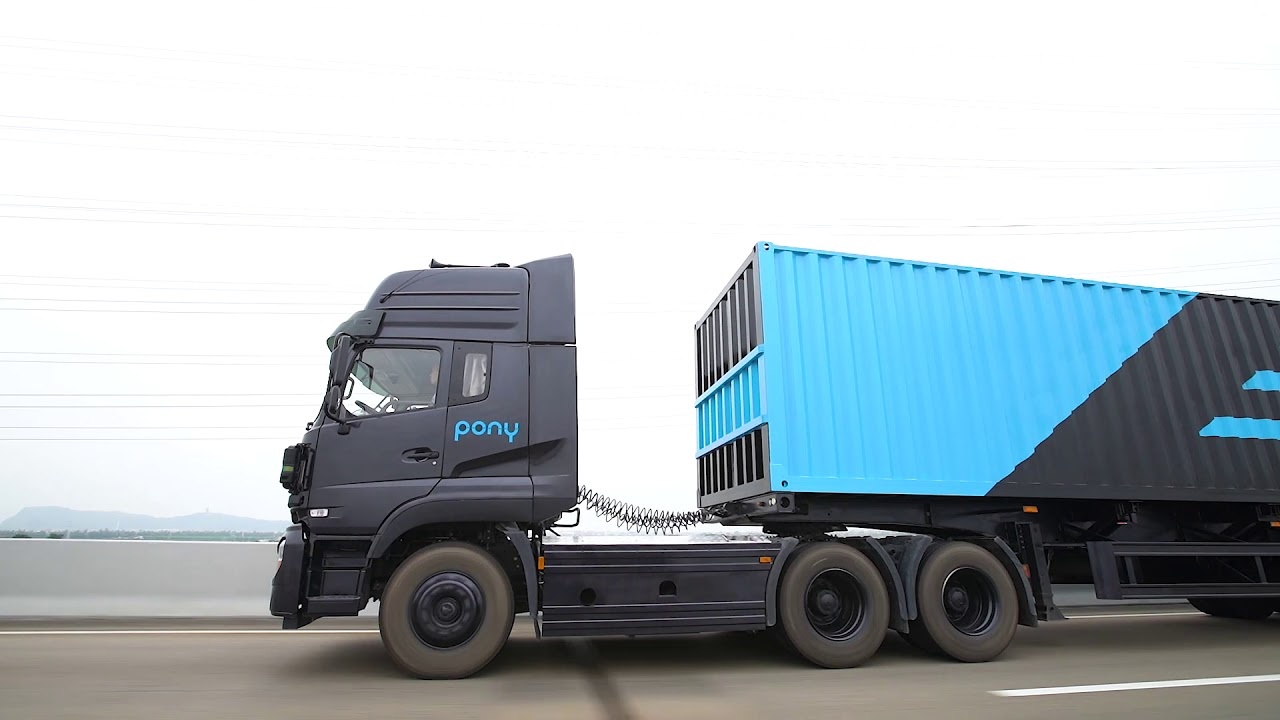
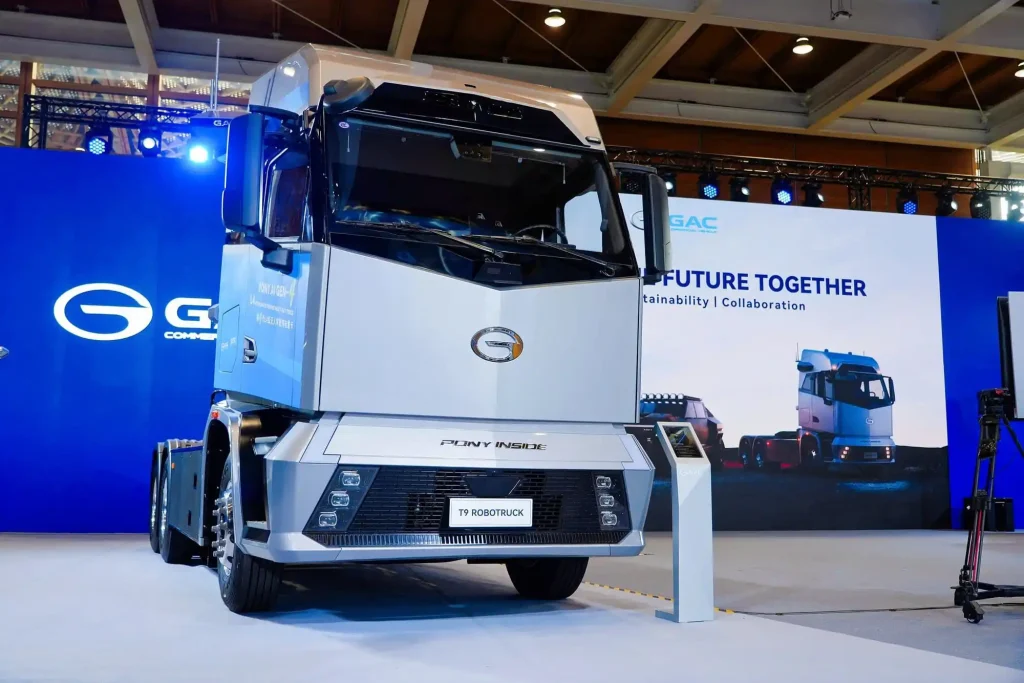
Pony.ai is taking its autonomous-driving technology into the European heavy-truck market with a new Level 4 electric robotruck unveiled at IAA Transportation 2026 in Hanover, Germany.
Developed with GAC Commercial Vehicle, the new heavy-duty truck combines a battery-electric platform with Pony.ai’s latest autonomous-driving system and is scheduled to enter volume production later this year.
The launch represents an important step in Pony.ai’s international expansion. The Chinese autonomous-driving company is already operating Level 4 trucks in China and is now talking with European governments, ports, and potential customers about testing its technology on European roads.
Reuters reports that Pony.ai intends to expand its robotruck business into Europe and the Middle East over the next two years.
The timing is significant. European freight operators are under pressure to reduce emissions while also dealing with high labor costs and driver shortages. Autonomous electric trucks could eventually address both problems, although regulatory approval, charging infrastructure, and real-world validation remain substantial challenges.
Pony.ai’s latest vehicle is therefore not simply another electric truck. It is an attempt to combine two major changes in commercial transportation electrification and autonomous driving into a single platform.
GAC T9 Provides the Electric Truck Foundation
The new robotruck is based on GAC Commercial Vehicle’s T9 battery-electric heavy-duty truck platform. Pony.ai supplies its fourth-generation autonomous-driving technology, while GAC contributes the vehicle architecture and a fully redundant drive-by-wire chassis.
The collaboration is important because autonomous trucking requires much more than adding cameras and software to a conventional vehicle.
The truck’s steering, braking, communications, power supply, computing, and sensing systems are designed with redundancy so that a failure in an individual component does not automatically prevent the vehicle from maintaining safe operation.
That architecture is particularly important for Level 4 applications because there is no requirement for a human driver to immediately take control when the autonomous system encounters a problem.
Pony.ai says the robotruck uses an automotive-grade autonomous-driving kit consisting of nine lidar sensors, three millimeter-wave radars, and 13 cameras. Together, those sensors provide 360-degree coverage around the vehicle.
The company has also reduced the cost of its autonomous-driving hardware significantly compared with its previous generation. Pony.ai says the bill-of-materials cost of the latest autonomous-driving kit has fallen by 70%, partly because the truck uses the same domain controller as the company’s seventh-generation robotaxi.
That common architecture could become an important part of Pony.ai’s business model. Rather than developing completely separate autonomous-driving computers for passenger vehicles and trucks, Pony.ai is attempting to use common technology across its robotaxi and robotruck programs.
The underlying virtual driver technology can therefore be adapted to different vehicle types while maintaining a common software-development foundation.
The company expects that approach to make autonomous trucks cheaper and easier to manufacture at scale.
Pony.ai also says its technology and the T9 platform’s aerodynamic characteristics can reduce energy consumption. Its algorithms combined with the truck’s claimed 0.4 drag coefficient are expected to lower energy consumption by about 10% compared with conventional trucks.
The company also estimates a 30% reduction in transportation cost per ton-kilometer. These are manufacturer projections rather than independently verified results.
Level 4 Autonomy Could Transform Freight Operations
The most important feature of the new truck is its Level 4 autonomous-driving capability. Level 4 means the vehicle can perform the entire driving task without human input within defined operating conditions, geographic areas, or routes.
It is therefore different from Level 2 driver-assistance systems, where the driver remains responsible for monitoring the vehicle and taking control.
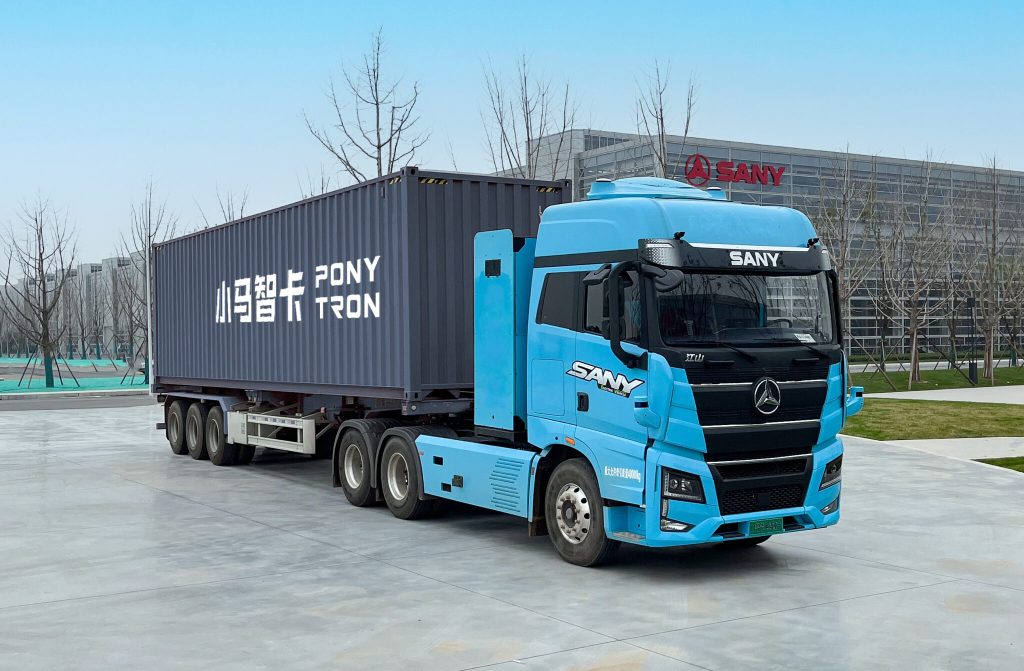
Pony.ai already has experience operating Level 4 trucks in China. Reuters reports that the company has a couple of hundred Level 4 trucks operating on routes there, with some running entirely without a human driver and others using safety drivers.
The experience gives Pony.ai a starting point as it approaches Europe, but the company still faces a very different regulatory environment.
Only a limited number of European countries currently have regulatory frameworks that allow autonomous vehicles to be tested on public roads. Pony.ai is therefore speaking with governments and potential customers about where and how its robotrucks could be evaluated.
The company is particularly interested in applications where autonomous driving could provide a clear economic benefit.
Long-haul freight is one possibility. Dedicated routes between logistics centers and ports are another. Port transportation could be especially suitable because vehicles can operate within defined environments and follow predictable routes, potentially simplifying the operational and regulatory requirements for autonomous deployment.
Pony.ai says the new truck will be used for long-haul freight, dedicated-route logistics, and port transportation once production begins.
That approach reflects a broader pattern in autonomous trucking. Companies do not necessarily need to solve every possible road situation before beginning commercial operations.
Instead, they can initially focus on carefully defined routes where the operating environment can be mapped, validated, and monitored. For freight companies, the potential economic benefit is significant.
A truck that can operate for longer periods without a human driver could reduce labor costs and help address shortages of professional drivers. Electric propulsion could simultaneously reduce fuel consumption and tailpipe emissions.
However, those benefits depend on the technology achieving extremely high reliability. A heavy truck traveling at highway speeds carries considerably more kinetic energy than a passenger vehicle, making autonomous-system failures particularly serious. That is why redundancy is such an important part of Pony.ai’s latest platform.
Europe Becomes Pony.ai’s Next Major Test
Pony.ai’s European ambitions extend beyond Germany. Reuters reports that the company is already discussing potential testing opportunities with European governments and ports. Pony.ai’s robotruck business is expected to enter European and Middle Eastern markets within the next two years.
The company can also draw on experience from its robotaxi operations outside China. Pony.ai recently began fully driverless robotaxi passenger testing with Verne in Zagreb, Croatia, along a 22-kilometer public-road route.
It also has robotaxi operations or partnerships underway in markets including the United Arab Emirates, Qatar, Luxembourg, Singapore, and South Korea.
That international experience could help Pony.ai understand the regulatory and operational requirements involved in bringing autonomous technology into different countries. But the robotruck market is becoming crowded.
Several Chinese manufacturers are also preparing electric commercial vehicles for Europe. Reuters identifies companies including BYD, Farizon, Sany, Sinotruk, Windrose, and SuperPanther as part of the growing Chinese presence in European electric trucking.
Established European truck manufacturers are also investing heavily in electric heavy-duty vehicles and autonomous-driving technology.
Pony.ai therefore needs to prove that its combination of autonomy, electric efficiency, and manufacturing economics can offer fleet operators a compelling advantage.
The partnership with GAC could help on the manufacturing side. GAC Commercial Vehicle has established truck-production capabilities and access to the wider GAC Group ecosystem, while Pony.ai contributes autonomous-driving software and hardware.
The companies can consequently divide the development challenge rather than attempting to build the entire vehicle independently.
Volume production later in 2026 will be an important milestone. Moving from prototypes and test fleets to mass production requires reliable component supply, repeatable manufacturing processes, and a cost structure that makes commercial deployment economically viable.
Pony.ai’s reduction in autonomous-driving hardware costs could help. The company says the new Gen-4 system uses fewer costly components than its predecessor while maintaining the sensor coverage and redundancy required for Level 4 operation.
The use of a common domain controller with the Gen-7 robotaxi could also create economies of scale across different vehicle programs. Still, European deployment will depend on more than vehicle technology.
Regulators will need to determine where Level 4 trucks can operate, how remote supervision should work, what safety standards manufacturers must meet, and how responsibility is assigned when an autonomous vehicle is involved in an incident.
Charging infrastructure is another consideration. Heavy electric trucks require considerably more energy than passenger EVs, making depot charging and high-power charging infrastructure essential for commercial operation.
Pony.ai’s initial focus on ports, dedicated routes, and other controlled logistics applications could allow operators to build the necessary charging infrastructure around predictable routes.
The new GAC-based robotruck therefore represents an important transition for Pony.ai from autonomous-driving demonstrations toward a potentially scalable commercial business.
The company has already accumulated substantial experience with Level 4 vehicles in China. Now it is attempting to transfer that experience to a European market where regulations, road environments, and customer requirements are different.
The truck’s scheduled production later this year will provide the first major test of whether Pony.ai can turn its autonomous-driving technology into a commercially viable heavy-duty vehicle.
If European testing approvals progress as planned, the company could begin establishing a foothold in freight markets where labor shortages and operating costs create strong incentives for automation.
The September 14 debut at IAA Transportation is therefore more than a product launch. It is a declaration that Pony.ai intends to compete internationally not only in robotaxis but also in the much larger logistics industry.
With its Level 4 autonomous system, electric GAC T9 platform, and planned expansion into Europe and the Middle East, Pony.ai is positioning robotrucks as the second major pillar of its global autonomous-driving strategy.
The challenge now is turning that technology into reliable, regulated, and economically viable freight operations on European roads.
