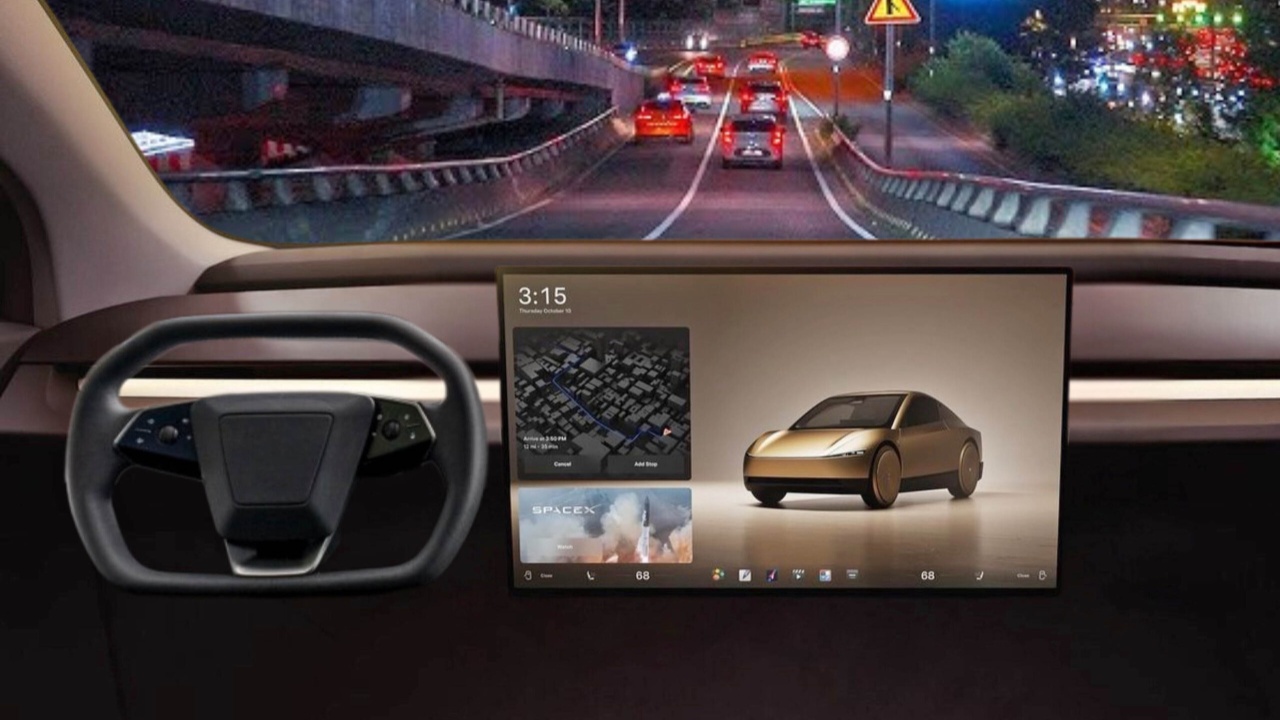
Federal regulators are examining how Tesla certified its steering-wheel-free Cybercab as compliant with U.S. vehicle safety standards after the autonomous taxi began commercial service in Austin, Texas.
The National Highway Traffic Safety Administration opened Audit Query AQ26002 on September 3, 2026, the same day Tesla began deploying Cybercabs commercially in Austin. The review is not a conventional defect investigation.
Instead, NHTSA is examining the process and technical information Tesla used to certify the vehicle as compliant with applicable Federal Motor Vehicle Safety Standards (FMVSS).
The issue centers on the Cybercab’s unusual design. Unlike conventional passenger vehicles, the purpose-built autonomous car has no permanently attached steering wheel, brake pedal, accelerator pedal, or conventional side mirrors.
NHTSA wants to understand how Tesla determined that requirements associated with those components either did not apply or could be satisfied in another way.
The investigation does not mean NHTSA has concluded that Tesla violated federal law. It is an examination of the company’s certification process, and existing federal safety standards remain in effect while the agency reviews the matter.
Why the Cybercab Creates a Regulatory Question
The U.S. vehicle certification system works differently from a system in which a government agency approves every new vehicle before it reaches customers.
Automakers are responsible for self-certifying that their vehicles comply with applicable FMVSS requirements. NHTSA then has authority to investigate compliance and safety issues after vehicles enter the market.
NHTSA’s own explanation of the Cybercab investigation confirms that Tesla certified the vehicle as meeting all applicable federal safety standards.
That framework becomes more complicated when a vehicle is designed without a human driver.
Many existing safety standards were written around assumptions that a driver would sit in a conventional driving position, operate a steering wheel and pedals, observe mirrors, and interact with physical controls. A vehicle such as the Cybercab changes those assumptions because its automated driving system is intended to perform the driving task.
NHTSA is therefore examining whether Tesla’s compliance framework appropriately determined that certain requirements were inapplicable to an automated vehicle.
The agency specifically said its audit would examine the technical data and processes Tesla relied upon and the extent to which its certification depended on determining that certain FMVSS requirements did not apply to the Cybercab.
This is an important distinction. NHTSA is not simply asking whether Tesla can build a car without a steering wheel. The question is how that design fits within safety standards that were largely developed around conventional vehicle layouts.
NHTSA has previously examined similar questions involving automated vehicles. In a 2016 interpretation concerning Google’s proposed self-driving vehicle, the agency acknowledged that existing standards sometimes assumed a human driver and conventional controls.
It also noted that manufacturers could potentially seek exemptions or other regulatory approaches when existing standards could not be directly applied to a vehicle controlled entirely by an automated driving system.
What NHTSA Is Looking at
The Cybercab audit covers approximately 1,000 vehicles, according to NHTSA’s investigation and reporting on the deployment. Texas records also showed 420 autonomous vehicles registered in the state, including 45 Cybercabs, around the time the federal review began.
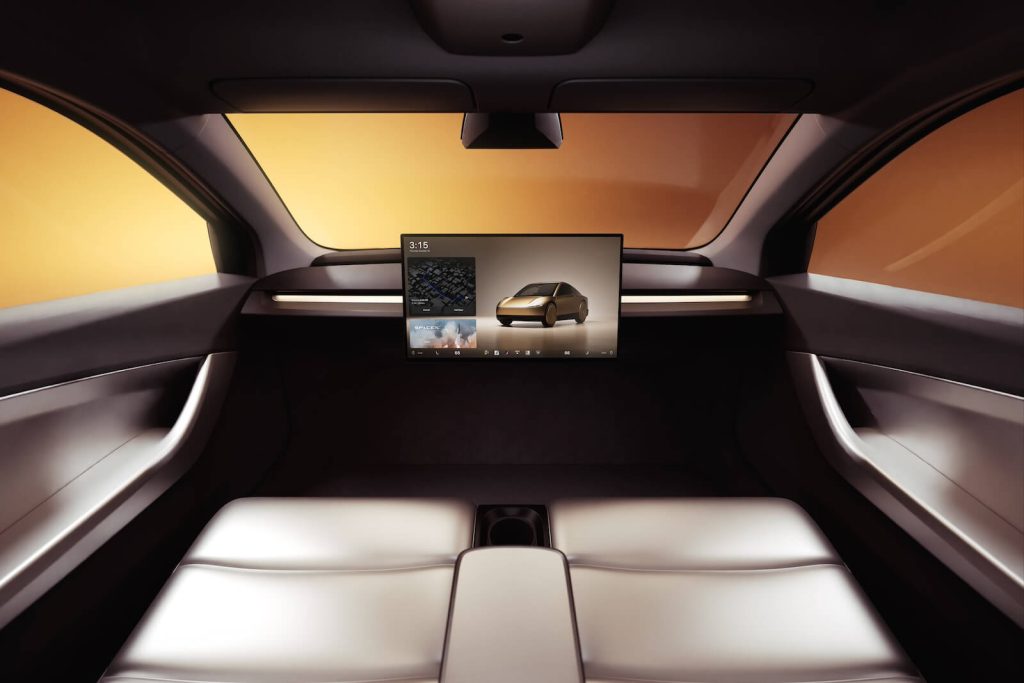
NHTSA’s concern is particularly relevant because several FMVSS provisions contain requirements or test procedures that refer directly or indirectly to conventional driver controls.
A vehicle without a steering wheel, for example, presents a different situation for standards that involve steering inputs. Similarly, removing brake and accelerator pedals raises questions about requirements involving their location, operation, and interaction with other vehicle systems.
Mirrors present another issue. Conventional vehicles use exterior mirrors to provide drivers with required rearward visibility. A fully automated vehicle can instead rely on cameras and other sensors, but the question is whether the alternative arrangement satisfies the existing regulatory requirements.
NHTSA has said that the federal government is already working on changes to several standards relevant to automated vehicles, including rules involving brake pedals, lighting, windshield wipers, and rearview mirrors. However, the agency emphasized that those existing standards remain in force until any changes are finalized.
That means the regulatory question is not simply whether a future rule might permit a steering-wheel-free vehicle. Tesla’s certification has to be considered against the requirements that apply to the vehicle under the current framework.
The timing has made the issue more prominent. Tesla began commercial Cybercab deployment in Austin immediately before the audit was announced, allowing NHTSA to examine the certification basis as the vehicle moved from development into actual passenger service.
What Happens Next for Tesla?
The audit query is an investigative step, not a recall or an immediate order to stop Cybercab operations.
NHTSA has not announced that Tesla’s Cybercab certification is invalid, nor has the agency concluded that the vehicle violates federal safety requirements. The regulator is seeking information that can help determine whether Tesla’s certification process was consistent with the applicable standards.
Tesla’s approach also differs from that taken by some other automated-vehicle developers. Reuters reported that Tesla had self-certified the Cybercab rather than obtaining a specific federal exemption before commercial deployment.
Insurance Journal reported that NHTSA was examining the basis for that certification and the company’s interpretation of which standards applied to the vehicle.
The comparison with other autonomous vehicles is relevant because regulators are still developing a framework for vehicles that cannot be manually driven by an occupant.
NHTSA has previously recognized that some existing standards can create difficulties for vehicles without traditional controls.
Its 2016 interpretation regarding Google’s autonomous vehicle project concluded that certain requirements could potentially be interpreted for automated driving systems, while other provisions could require additional regulatory action or an exemption.
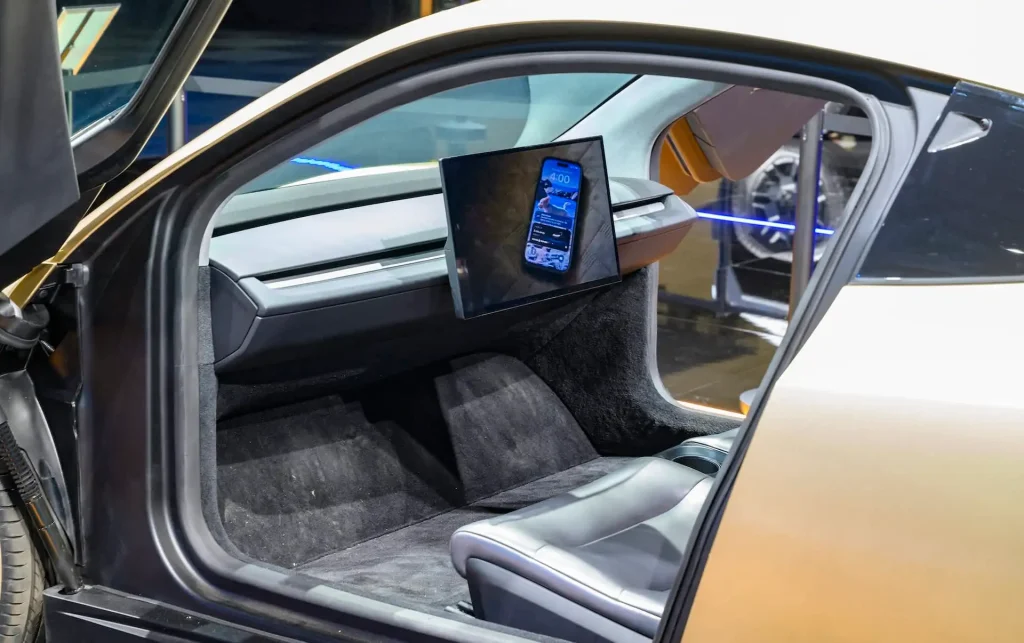
For Tesla, the outcome of the current audit could therefore have implications beyond the initial Cybercab fleet. If NHTSA determines that Tesla’s interpretation of certain FMVSS requirements is insufficient, the company could be required to address those issues through another regulatory pathway.
The agency is also working on broader automated-vehicle rules, meaning the Cybercab case is unfolding while federal regulations are being adapted to a technology that did not fit neatly into the assumptions behind many existing standards.
For now, the key issue is certification rather than a confirmed vehicle defect. NHTSA is asking how Tesla concluded that a vehicle without a steering wheel, pedals, and conventional mirrors complied with the federal standards that currently govern new vehicles.
The Cybercab’s commercial deployment has therefore become an important test of how America’s existing vehicle-safety framework handles purpose-built autonomous vehicles.
The federal review will determine whether Tesla’s self-certification adequately addressed the current rules or whether additional regulatory steps are necessary before the Cybercab can expand its commercial operation.