
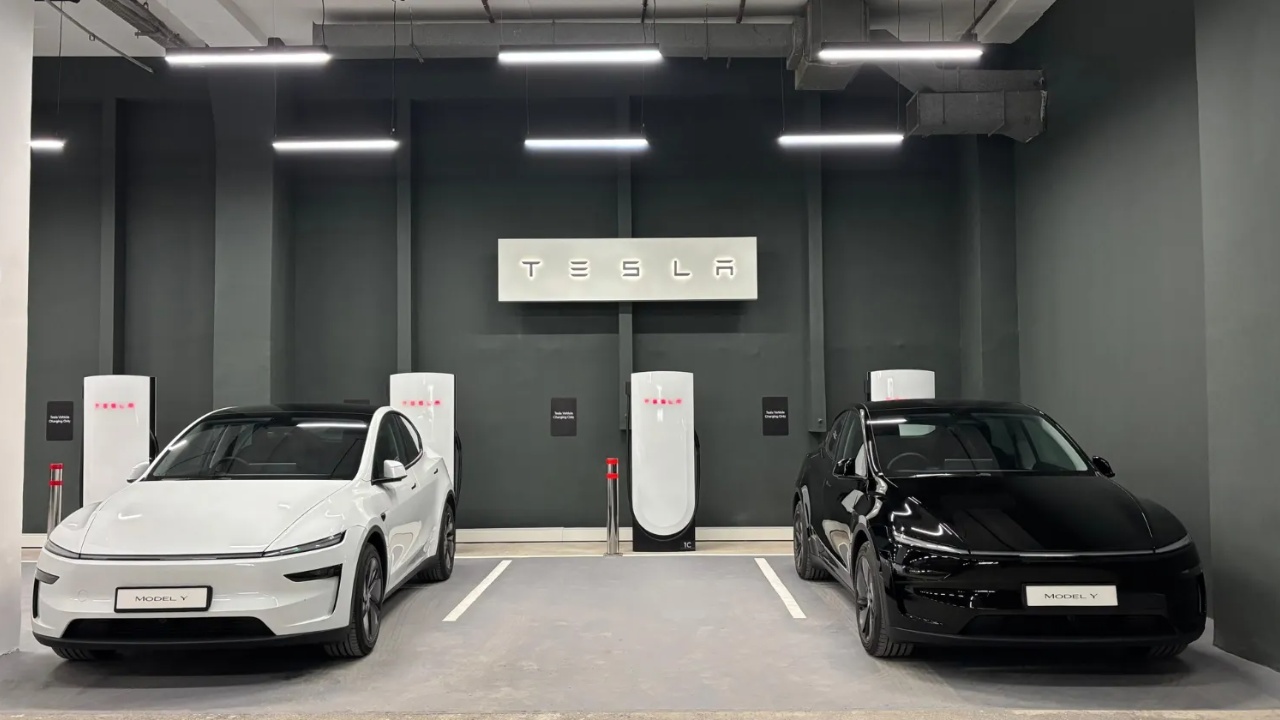
The National Highway Traffic Safety Administration (NHTSA) has opened a federal investigation into nearly 1.2 million Tesla vehicles after receiving 156 complaints alleging that a front suspension component can detach while the vehicle is being driven.
The preliminary evaluation, opened by NHTSA’s Office of Defects Investigation on July 29, covers 2018-2020 Tesla Model 3 vehicles and 2021-2023 Model Y vehicles. The agency estimates that approximately 1,198,300 vehicles are included in the investigation.
The component at the center of the investigation is the front lower lateral link, a structural part of the front suspension. If it separates from the vehicle, NHTSA says it can potentially cause a loss of directional control and leave the vehicle undriveable.
The agency has not determined that all vehicles in the population are defective, and the investigation is not a recall. NHTSA is currently trying to establish the cause, frequency, and severity of the reported failures.
One particularly concerning aspect of the complaints is that the failure can apparently occur without much warning. NHTSA says most of the complaints did not report an advance warning, although some owners described unusual noises before the suspension component failed.
What the Front Lower Lateral Link Does
The front lower lateral link is part of the suspension assembly that helps maintain the position and geometry of the front wheel relative to the vehicle.
It connects suspension components to the vehicle’s structure and helps control the wheel’s movement when the vehicle accelerates, brakes, and turns. Maintaining that geometry is essential because the suspension has to keep the tire properly positioned against the road while allowing it to move vertically over bumps.
When the lateral link remains securely attached, the front suspension can maintain the intended relationship between the wheel, steering knuckle, and vehicle body. If the link separates, that geometry can change suddenly.
NHTSA says such a failure can potentially result in a loss of vehicle directional control. In some cases reported to the agency, the vehicle could no longer be driven and required towing.
This is different from a worn suspension component that gradually affects ride quality. A component that physically separates can produce a much more immediate change in the vehicle’s handling.
The investigation is therefore focused not simply on whether the part wears out, but on why the lateral link is allegedly becoming detached and whether the problem affects a broader population than Tesla’s previous recalls. Tesla has already dealt with related lateral-link problems.
In 2021, the company recalled 2,791 Model 3 vehicles over lateral-link fasteners that could loosen. In 2023, Tesla recalled another 422 Model 3 vehicles after identifying a similar issue involving the front suspension lateral-link fasteners.
The 2023 recall notice said loosened fasteners could allow the lateral link to separate from the subframe, potentially shifting wheel alignment and increasing crash risk.
NHTSA says the failures now under investigation exceed the scope of those earlier recalls and do not appear to be related to the production issue that prompted the 2021 campaign.
That distinction is important because the new investigation is not simply a continuation of an existing recall.
What Could a Suspension Noise Mean?
Some of the complaints reviewed by NHTSA mention unusual noises before the lateral link failure. That makes unexpected sounds from the front suspension worth taking seriously, particularly on an older Model 3 or Model Y covered by the investigation.
A clunking, knocking, or popping sound from the front suspension can have many possible causes, so it does not automatically indicate a failing lateral link. Suspension systems contain numerous moving components, including control arms, bushings, ball joints, links, and other hardware that can produce similar noises when worn or damaged.
However, a new or progressively worsening noise should not simply be dismissed, especially if it occurs when turning, braking, accelerating, or driving over uneven surfaces.
Tesla’s earlier 2021 recall documentation specifically stated that loose lateral-link bolts could produce abnormal noise from the front suspension.
The important limitation is that noise is not a reliable warning system for this particular investigation. NHTSA says most complaints did not report a warning, and the vehicles did not provide visual warnings before the failure. In other words, a quiet front suspension does not establish that the component is secure.
If a driver notices a new suspension noise, changes in steering feel, unusual wheel alignment, pulling to one side, or a sudden change in handling, the vehicle should be inspected by a qualified technician rather than continuing to drive it and waiting for a dashboard warning.
A driver who experiences a sudden suspension failure should also avoid attempting to continue driving the vehicle if steering or directional stability has been affected. NHTSA’s investigation documents note that some vehicles became undriveable and required towing.
What NHTSA Is Investigating Now
NHTSA’s current investigation involves 156 complaints. The agency says it has not identified any crashes, fires, injuries, or fatalities associated with those complaints so far.
That does not mean the investigation has determined that the issue is harmless. The purpose of a preliminary evaluation is to determine whether there is a safety-related defect and establish its scope.
NHTSA will examine the reported failures, the affected vehicles, and the circumstances under which the lateral link allegedly separates. The agency can request technical information from Tesla and review complaint data as it determines whether additional action is necessary.
A preliminary evaluation is an early stage of NHTSA’s defect-investigation process. If regulators identify evidence of a safety defect, the investigation can progress to an engineering analysis and potentially result in a recall.
For Tesla owners, the current investigation does not mean that every affected Model 3 or Model Y requires an immediate recall repair. There is no recall associated with this particular investigation at this point.

Owners should nevertheless check their VIN for existing recalls and service campaigns, particularly because Tesla has previously conducted lateral-link recalls involving some Model 3 vehicles.
The new investigation also highlights an important issue with suspension failures: there may not always be a dashboard warning or obvious visual indication before a component separates.
For drivers of the affected Model 3 and Model Y model years, an unusual front-end noise or change in steering behavior should therefore receive attention rather than being treated as ordinary suspension wear.
NHTSA’s investigation will ultimately determine whether the 156 complaints represent isolated failures or evidence of a broader safety defect affecting the nearly 1.2 million vehicles included in the review. Until that work is complete, the agency has not announced a recall or concluded that Tesla’s entire affected vehicle population has a defect.
