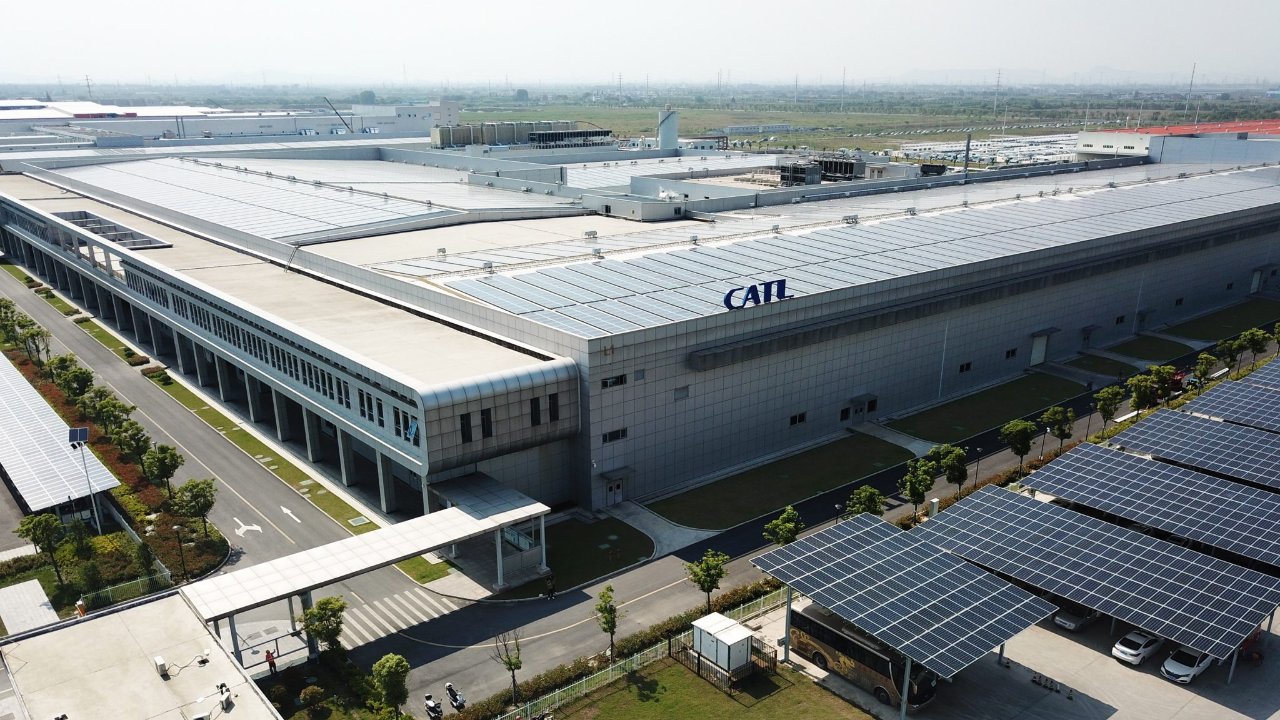
U.S. battery startup EnerVenue has opened its first high-volume manufacturing facility in China, choosing Changzhou as the location for production after previously considering Kentucky for its first factory.
The decision highlights the complicated economics facing emerging battery manufacturers as companies weigh domestic production incentives against China’s established industrial supply chains, engineering workforce, and manufacturing infrastructure.
According to Reuters, EnerVenue’s new factory in Changzhou has begun mass production as the company prepares to scale its technology for grid-scale energy storage.
The facility is opening at a particularly important moment for U.S.-China economic relations, with President Donald Trump and Chinese President Xi Jinping meeting for a summit while both countries continue negotiating over trade and supply-chain policies.
EnerVenue’s decision is notable because the company is American-founded and had previously announced plans for a $264 million manufacturing project in Kentucky. Instead, it has now put its first major production operation in China, where the company says the manufacturing ecosystem made it easier and less expensive to reach commercial production.
The development also provides a broader look at why bringing advanced battery manufacturing to the United States can be difficult even when government incentives are available.
Why EnerVenue Chose China
EnerVenue was founded around battery technology developed from research associated with Stanford University. Unlike most EV battery companies, it is focused primarily on stationary energy storage rather than automotive applications. Its technology uses an aqueous metal cell based on nickel and hydrogen chemistry.
The company says its fourth-generation Aqueous Metal Cell is designed for grid-scale applications and can operate for more than 30,000 cycles at 100% depth of discharge.
EnerVenue also says its technology does not require the same thermal-management and fire-suppression systems associated with conventional lithium-ion storage. Those are company claims, and independent project performance will be important as the technology is deployed at a larger scale.
The Changzhou factory is designed around highly automated production. Reuters reported that the facility is about 95% automated and is expected to employ approximately 400 workers by the end of 2026.
EnerVenue has raised more than $300 million from investors, including Full Vision Capital and Saudi Aramco, to support the manufacturing expansion.
The company plans to produce approximately 250 megawatt-hours of capacity in 2026 and expand to 1 gigawatt-hour by the third quarter of 2027, according to Reuters. EnerVenue has also indicated that it wants to expand globally from the Chinese manufacturing base beginning in 2028.
Chief Executive Henning Rath told Reuters that China’s manufacturing ecosystem was a major factor in the decision. The company found extensive local supplier networks, engineering expertise, and lower operating costs in Changzhou.
Reuters reported that some Chinese suppliers were even willing to contribute design work and provide prepayment arrangements, helping EnerVenue accelerate the industrialization of its technology.
Those factors can be difficult for a young American battery company to replicate in the United States.
China already has a dense network of battery-material suppliers, component manufacturers, automation companies, and specialized engineering firms. For a startup moving from laboratory-scale technology to mass production, access to that ecosystem can reduce the time and cost required to industrialize a new product.
EnerVenue’s own recent updates show how quickly its Changzhou operation has progressed. In September, the company said it was approaching the opening of its High Volume Manufacturing Line after installing and commissioning equipment and refining production processes.
What Happened to the Kentucky Plan?
EnerVenue’s move is particularly significant because the company had previously identified Kentucky as the location for its first major manufacturing facility.
Reuters reported that the company ultimately reconsidered the Kentucky project because of technological readiness and logistical challenges. Instead of building its initial production infrastructure in the United States, EnerVenue moved its manufacturing effort to China, where the supply chain was already established.
That decision demonstrates the difference between announcing a manufacturing investment and actually reaching commercial production.
A new U.S. battery factory can qualify for tax incentives and other forms of government support, but the factory still requires equipment, suppliers, trained workers, engineering expertise, transportation infrastructure, and customers.
A startup developing a relatively new battery technology must also develop manufacturing processes at the same time it is scaling the product itself. China’s existing industrial infrastructure can reduce some of those hurdles.
EnerVenue already maintains operations in both the United States and China. The company’s website identifies Silicon Valley and Changzhou as its two primary locations, while its high-volume manufacturing operation is now being developed in China.
The company has also been testing its technology in China. In May, EnerVenue announced a pilot project in Jintan, Changzhou, using its fourth-generation Aqueous Metal Cell technology for energy storage alongside renewable generation and electric-bus charging infrastructure.
That existing presence gave EnerVenue an established base from which to expand manufacturing.
However, the company’s decision does not mean it has abandoned North America permanently. Reuters reported that EnerVenue could consider returning to North American manufacturing depending on future regulatory and market conditions.
A Wider Test for U.S. Battery Manufacturing
EnerVenue’s experience comes as the United States attempts to strengthen domestic battery and energy-storage manufacturing while also tightening restrictions around Chinese supply chains.
The challenge is particularly complicated because battery production depends on long supply chains that stretch across mining, chemical processing, component manufacturing, cell production, and system integration. Building one factory in the United States does not automatically create the entire ecosystem required to support it.
Recent developments in the U.S. EV industry demonstrate the difficulty. Reuters reported earlier this month that several battery and EV manufacturing projects across the United States have been delayed, canceled, or reconfigured as automakers respond to weaker-than-expected EV demand and changing federal policies.
EnerVenue’s situation is different because its products are designed primarily for stationary energy storage, not electric vehicles.
Demand for grid-scale storage is being driven by renewable-energy deployment, electricity demand from data centers, and the need for greater grid flexibility. EnerVenue says its technology is intended for infrastructure applications requiring long operating lives.
The company is therefore entering a market with different growth drivers from the EV sector. Its manufacturing strategy also reflects the importance of reaching scale quickly.
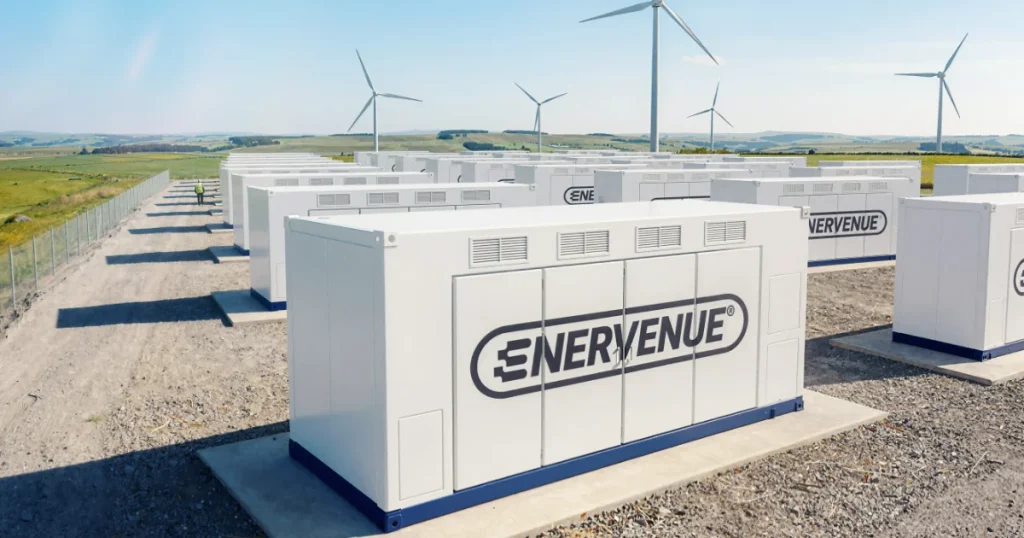
EnerVenue says its Energy Rack products use 150-kilowatt-hour battery units and are designed for large energy-storage installations. The company lists a design target of more than 30,000 cycles and says its systems can operate without the augmentation typically associated with lithium-ion systems.
Whether those claimed advantages translate into competitive project economics will depend on real-world deployments, production costs, and long-term reliability.
For the United States, meanwhile, the EnerVenue decision illustrates a difficult policy problem. Incentives can make domestic manufacturing more attractive, but they do not automatically recreate the supplier networks, workforce, and manufacturing expertise that have developed in China over decades.
EnerVenue’s Changzhou factory is now moving into commercial production, giving the company a concrete manufacturing base and a pathway toward its planned 1 GWh expansion in 2027. The company says it intends to use that capacity to serve a global energy-storage market.

The Kentucky project, by contrast, shows how an announced American manufacturing plan can change before production begins. As battery technologies diversify beyond lithium-ion and demand for grid storage grows, companies will continue weighing production costs, supply-chain security, government policy, and access to engineering talent.
EnerVenue’s choice of China does not necessarily determine where its long-term manufacturing will take place. The company has left open the possibility of future North American production.
For now, however, its first high-volume factory is in Changzhou, making it another example of how difficult it can be for emerging battery companies to balance the strategic goal of U.S. manufacturing with the immediate economics of reaching commercial scale.