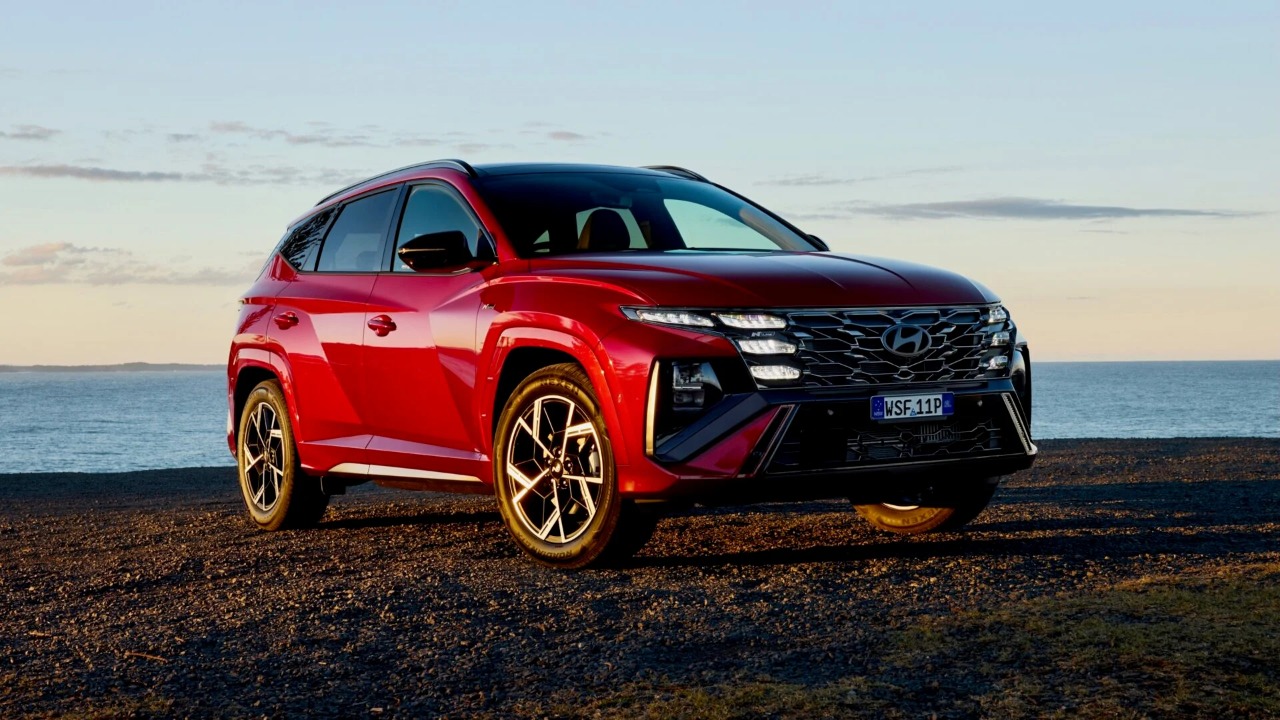
Hyundai is recalling more than 421,000 vehicles in the United States after an investigation found that software controlling the forward collision avoidance system could cause the vehicles to brake earlier than drivers expected.
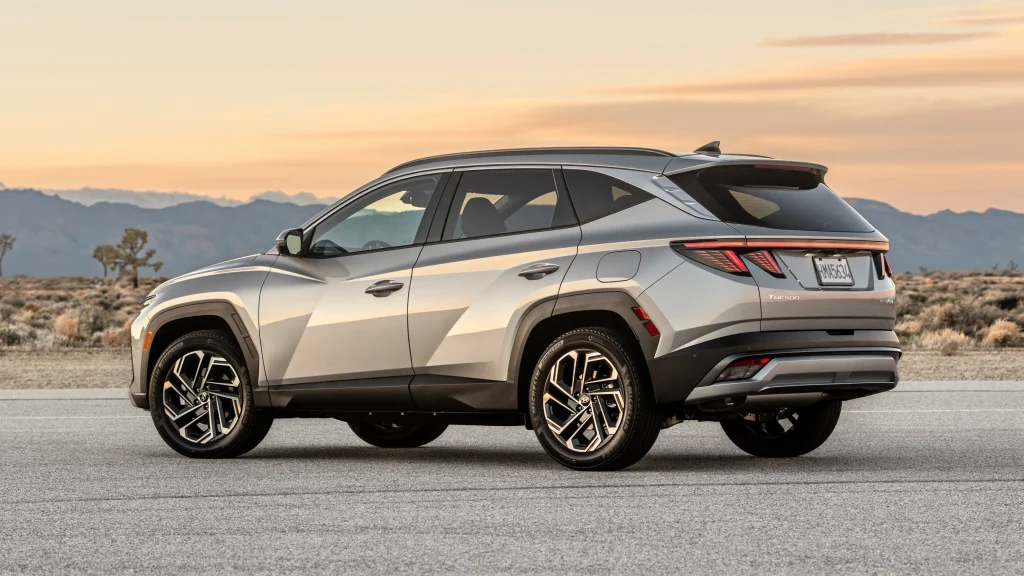
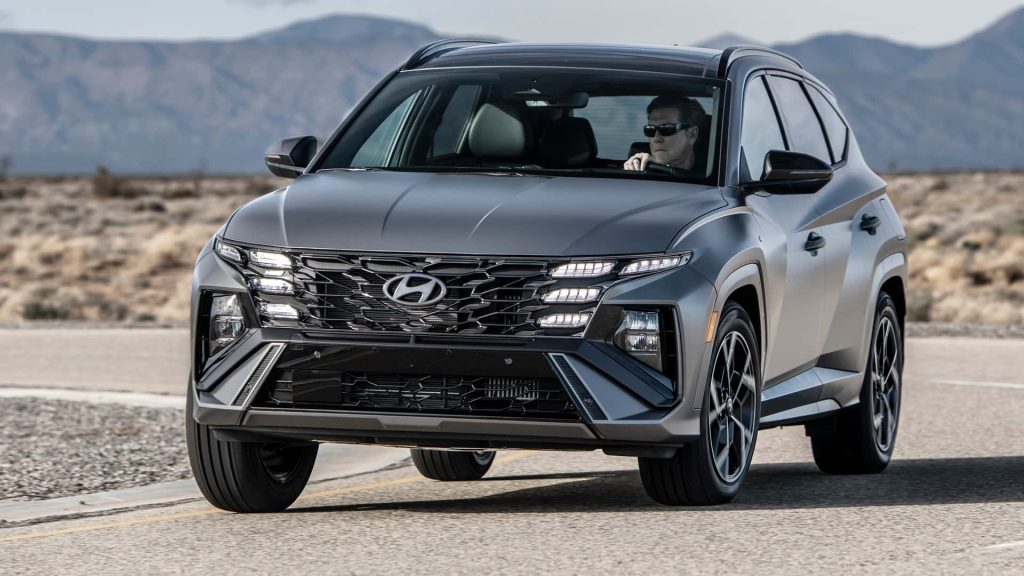
The campaign covers certain 2025 and 2026 Hyundai Tucson, Tucson Hybrid, Tucson Plug-In Hybrid, and Santa Cruz models, and the remedy is a software update for the vehicles’ multifunction front camera.
One of the most significant parts of the recall is not the software repair itself, but Hyundai’s reimbursement program for owners who already paid out of pocket to address the problem.
According to Hyundai’s Part 573 safety recall filing with the National Highway Traffic Safety Administration, owners will be reimbursed for eligible expenses incurred to obtain a remedy for the recall condition, according to a reimbursement plan submitted to NHTSA on March 2, 2026.
The campaign, recorded by NHTSA as Recall 26V316 and by Hyundai as Recall 302, illustrates how increasingly sophisticated driver-assistance systems can create safety problems through software calibration rather than a conventional mechanical failure.
Why Hyundai Recalled 421,078 Vehicles
The affected vehicles use a multifunction front camera to operate the Forward Collision Avoidance system, which is designed to detect potential collisions and automatically apply the brakes when necessary.
Hyundai’s investigation found that software in the front camera could be overly sensitive to the distance between the vehicle and an object or vehicle ahead.
Under certain circumstances, that calibration could cause Forward Collision Avoidance to activate prematurely and apply the brakes unexpectedly. NHTSA’s recall documentation states that unexpected braking can increase the risk of a crash.
The recall covers 421,078 U.S. vehicles, consisting of approximately 292,805 Tucson models, 110,844 Tucson Hybrid vehicles, 4,347 Tucson Plug-In Hybrids, and 13,082 Santa Cruz pickups. The affected vehicles are from the 2025 and 2026 model years.
Hyundai’s North America Safety Office began investigating unintended-braking allegations in January 2025.
According to the Part 573 filing, the company was able to reproduce the condition during testing in June 2025 and subsequently worked with Hyundai Motor Company and the camera supplier to investigate the behavior and develop potential software changes.
The investigation eventually involved NHTSA’s Office of Defects Investigation. NHTSA contacted Hyundai in September 2025 regarding the Tucson Forward Collision Avoidance complaints, and the companies conducted additional testing before Hyundai’s North America Safety Decision Authority decided on May 11, 2026, to conduct a safety recall.
By the time Hyundai made that decision, it had received 376 reports related to Forward Collision Avoidance operation between October 28, 2024, and April 27, 2026.
Four reports involved crashes in which Hyundai vehicles were rear-ended by closely following vehicles, with four alleged injuries. Hyundai reported no confirmed fatalities or fires associated with the condition in the United States.
The distinction between the reported complaints and confirmed failures is important. The recall does not mean that every vehicle in the affected population will unexpectedly brake. Rather, Hyundai determined that the software condition could create a safety risk under certain circumstances and initiated a recall to correct it.
The Fix Changes How the Camera Triggers Braking
The remedy is a software update rather than replacement of the front camera itself. Hyundai dealers will update the front-camera software at no charge to owners, regardless of whether the vehicle remains covered by Hyundai’s new-vehicle warranty.
The revised software has been tuned to better align forward collision avoidance activation timing and the distance to the vehicle ahead with what the driver would reasonably expect.
That detail is important because the problem was not identified as a physical defect in the camera. The issue was how the software interpreted information from the camera and determined when the Forward Collision Avoidance system should intervene.
Hyundai’s testing program included prototype software evaluations at its California Proving Grounds in February 2026. Further testing and joint evaluation of tuning improvements took place at test tracks in South Korea from March 31 through April 3. Hyundai subsequently discussed the findings with NHTSA before deciding to proceed with the recall.
The campaign demonstrates the increasingly important role that software plays in vehicle safety. Modern driver-assistance systems depend on cameras, radar, electronic control units, and algorithms working together to decide when a vehicle should warn the driver or intervene.
A calibration that is too aggressive can create one type of safety concern, while calibration that reacts too slowly could create another. In Hyundai’s case, the company determined that the affected software could activate braking sooner than expected in certain situations.
The reimbursement provision gives the campaign another important dimension. Hyundai’s filing specifically states that owners will be reimbursed for out-of-pocket expenses incurred to obtain a remedy for the recall condition, in accordance with the reimbursement plan submitted to NHTSA on March 2.
That means owners who independently paid for an eligible repair related to the recalled condition may have a path to recovering those costs.
The exact eligibility and documentation requirements are governed by Hyundai’s reimbursement plan, so owners should retain receipts and other repair records rather than assuming every previous repair will automatically qualify.
What Owners Need to Know
Hyundai’s recall affects four vehicle lines, but owners should verify their individual vehicle identification number rather than relying solely on the model and model year.
NHTSA maintains its recall database and allows owners to search for safety recalls by VIN, while Hyundai provides its own VIN-based recall lookup system. NHTSA notes that an unrepaired recall associated with a VIN will appear in its recall search, and Hyundai’s system provides information about applicable repairs and dealer service.
For affected vehicles, the repair involves updating the front-camera software at a Hyundai dealership. Hyundai says the repair will be performed without charge.
Owners who believe they previously paid to address the same condition should keep documentation showing what work was performed and what they paid. Hyundai’s filing confirms that reimbursement is part of the recall remedy, but the filing also makes clear that reimbursement is governed by the company’s submitted reimbursement plan.
The recall also shows why unexpected braking deserves attention even when a vehicle’s conventional braking hardware is operating normally.
Forward collision avoidance is intended to reduce the consequences of an impending frontal collision, but an unexpected intervention can itself create a hazard, particularly when another vehicle is following closely.
Hyundai’s investigation therefore focused not simply on whether the system worked, but on whether it activated at an appropriate time and distance. The updated software is intended to bring that behavior closer to driver expectations.
For Hyundai, the campaign is another example of the changing nature of vehicle recalls. Instead of replacing a failed mechanical component, dealers are correcting the software logic that controls an advanced safety feature.
As driver-assistance technology becomes standard across more vehicles, software validation and calibration will become increasingly important parts of automotive safety.
For Hyundai owners whose vehicles are affected, the next steps are simple. Check the VIN, have the software update completed by an authorized Hyundai dealer, and keep records of any previous repairs paid out of pocket that may be eligible for reimbursement.
The official NHTSA filing confirms that reimbursement is included in Hyundai’s remedy plan, making this more than a conventional software recall.