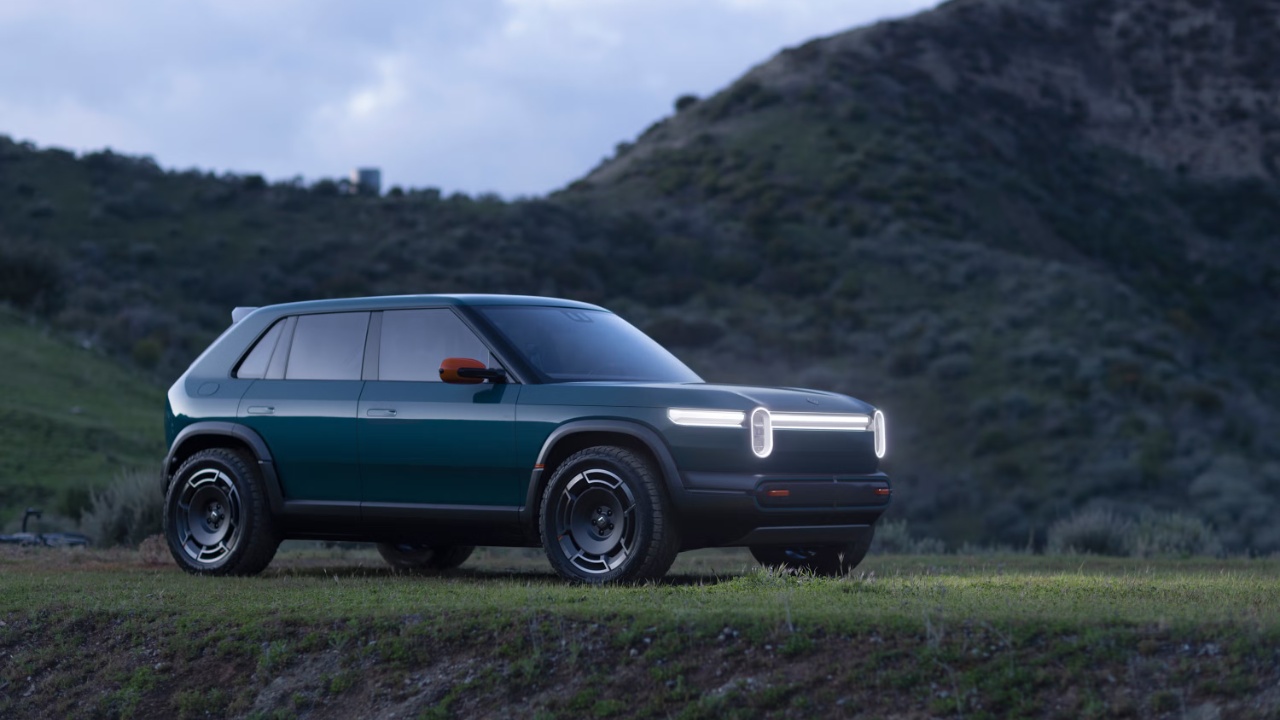
Rivian is preparing to move deeper into the mainstream electric-vehicle market, with CEO RJ Scaringe confirming that the upcoming R3 crossover will be priced materially below the company’s R2.
The company is also planning another step down with the R4, creating a future lineup that could reach customers far beyond the premium segment where Rivian established its reputation.
Scaringe did not reveal an exact price for either vehicle. However, his comments provide the clearest indication yet that Rivian intends to use its next-generation products to move down the U.S. EV price ladder.
According to CBT News, the CEO made the comments in a recent interview with The New York Times, saying the R3 would move the price point “materially lower” than the R2, while the R4 would push it lower again.
The strategy is important for Rivian because the R2 is only the beginning of the company’s attempt to build higher production volumes. Smaller and less expensive vehicles could give the automaker access to a much larger pool of American buyers while allowing it to spread development and manufacturing investments across more products.
R2 Sets the Starting Point for Rivian’s Lower-Priced EV Strategy
The R2 already represents a major change for Rivian. Unlike the larger R1T and R1S, which occupy substantially higher price points, the R2 was designed from the beginning as a higher-volume vehicle for a broader market.
Rivian’s current U.S. configurator lists the R2 Performance at $57,990, while the Premium version starts at $53,990. The standard version is listed at $44,990 and is scheduled for spring 2027.
That distinction matters when interpreting Scaringe’s statement. The company’s frequently cited $45,000 R2 price is not the same as the price of the vehicle currently available. Rivian is introducing the more expensive versions first and will bring the lower-priced configuration later.
That means the eventual R3 could sit substantially below the $44,990 R2 Standard without requiring Rivian to compete immediately with the least expensive EVs in the U.S. market.
Scaringe has previously discussed a mid-to-high-$30,000 target for the R3, although that figure has not been confirmed as its final MSRP. The latest comments do not establish a specific number, so any assumption about a sub-$40,000 starting price remains an estimate rather than an announced price.
The R3 is also expected to be smaller than the R2, making it possible for Rivian to reduce material and manufacturing costs while creating a different type of vehicle for urban and suburban buyers.
Rivian has already positioned the R2 as its first product designed specifically for high-volume production and the mass market. The company says the vehicle’s manufacturing approach, powertrain design, and material choices are intended to support production at scale. That approach will become even more important with the R3.
A lower price alone will not guarantee higher sales. Rivian will need to maintain enough range, charging capability, software functionality, and performance to make the smaller vehicle competitive with established EVs from Hyundai, Kia, Toyota, Chevrolet, and other manufacturers.
R3 and R4 Could Give Rivian a Much Broader Customer Base
The R3 is expected to be built at Rivian’s future Georgia manufacturing facility, with production currently scheduled to begin in 2028. The planned factory is designed for up to 400,000 vehicles of annual capacity across two phases, giving Rivian substantially more production headroom than it has today.

That facility will be central to Rivian’s strategy because lower-priced vehicles only make sense financially if they can be produced in significantly larger volumes.
The company’s existing Normal, Illinois, facility has been important to the R1 and R2 programs, but Rivian’s future growth depends on increasing manufacturing capacity while bringing down the cost per vehicle. The Georgia plant is expected to play a major role in that expansion.
The R3 also represents an opportunity to build on technology developed for the R2. Sharing platforms, software, electrical architecture, and manufacturing processes can reduce development costs compared with creating every model independently.
Scaringe’s comments about the R4 suggest that Rivian is thinking beyond a single affordable crossover. He said the R4 would move the price point down again after the R3. The company has previously discussed R4 and R5 as future products, but details about their body styles, specifications, and pricing remain limited.
That leaves the exact positioning of the R4 uncertain. Rivian has not announced a production specification or official price, and the company has not provided enough information to determine exactly how it will differ from the R3.
What is clearer is the direction of the product strategy. Instead of relying on one relatively expensive model to generate growth, Rivian is developing a ladder of vehicles at progressively lower price points.
The approach could also help Rivian respond to a U.S. EV market where affordability remains a major factor. A vehicle priced in the upper $30,000 range occupies a very different part of the market from an $80,000-plus R1T or R1S.
Rivian’s Next Challenge Is Making Affordable EVs at Scale
Rivian’s ability to move downmarket will ultimately depend on manufacturing economics as much as vehicle design.
The company has already acknowledged how expensive it was to operate as a young automaker. Scaringe told The New York Times that Rivian paid a significant premium for components during the early R1 program because suppliers viewed the company as a higher-risk customer.
He said the supplier relationship has since changed as Rivian has become a larger and more established manufacturer.
That experience could become important as the company develops the R3 and R4. Lower-priced vehicles leave less room for manufacturing inefficiencies, expensive components, and low production volumes.
The R2 is therefore more than another model for Rivian. It is effectively the company’s test of whether it can transition from producing relatively expensive adventure vehicles to building EVs in much greater numbers.
Rivian says R2 deliveries began in June 2026, and the company subsequently raised its 2026 delivery guidance to between 65,000 and 70,000 vehicles. The company has also guided to an adjusted EBITDA loss of $1.8 billion to $2 billion for the year, highlighting the financial pressure involved in scaling production.
The R3 will arrive later, but its importance is already clear. A vehicle priced materially below the R2 could bring Rivian’s design, software, and electric architecture to customers who may never have considered an R1 vehicle.
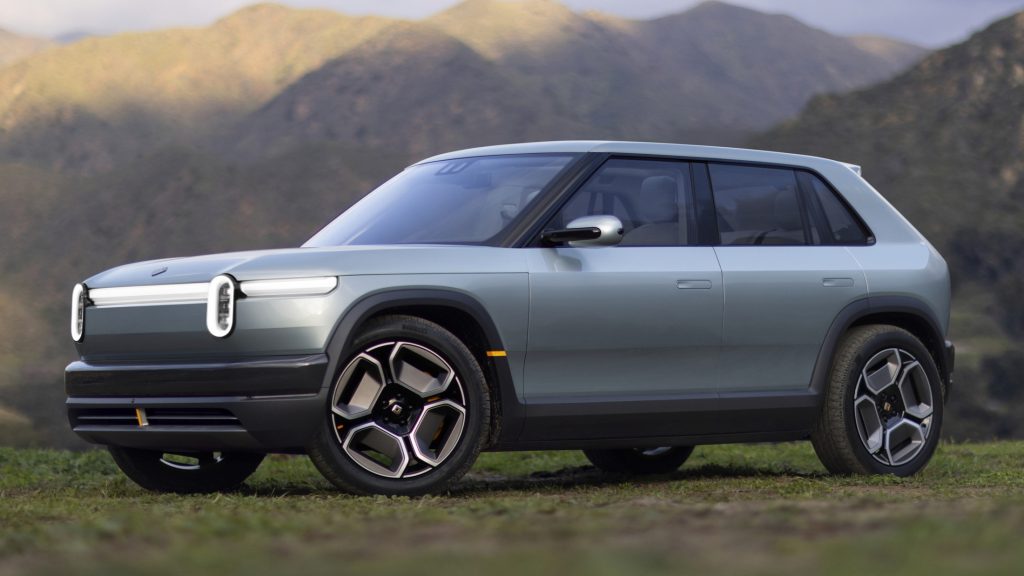
The timing will also matter. The R3 is not expected until 2028, leaving several years for battery costs, EV demand, competing products, and U.S. manufacturing economics to change.
For now, Rivian has confirmed the basic direction of its pricing strategy without providing specific figures. The R3 will be positioned below the R2, while the R4 will sit at an even lower price point. This creates a broader pricing structure that could extend Rivian’s lineup beyond its current premium offerings and reach a larger share of the American EV market.
Whether that strategy translates into the high production volumes Rivian is targeting will depend on how efficiently the company can manufacture these smaller vehicles.
But with the R2 already serving as Rivian’s first mass-market product, the R3 and R4 could become the next major steps in the automaker’s attempt to move from a niche EV manufacturer toward a broader U.S. automotive brand.