
Mercedes-Benz has issued one of its strongest warnings yet about the future of its German manufacturing footprint, telling employees that two plants could eventually be closed if the automaker cannot reduce production costs.
The warning concerns one vehicle assembly plant and one powertrain facility, although Mercedes has not identified which locations would be affected.
The message comes as the German automotive industry faces a combination of high labor costs, intense international competition, and pressure to make factories more productive. Mercedes says it wants to keep all of its German sites and the jobs associated with them, but management is now making their future conditional on achieving additional cost reductions.
According to Reuters, Mercedes production chief Michael Schiebe delivered the warning to workers at the company’s 111-year-old Sindelfingen plant on September 21.
He said the company’s clear goal was to maintain all German locations but warned that failure to agree on cost measures could force Mercedes to close one assembly facility and one powertrain plant.
The announcement represents a notable change from Mercedes’ earlier position. In February 2025, the company said it had no plans to close plants in Germany, even as it targeted a 10% reduction in production costs through 2027 and planned to reduce global passenger-car capacity.
Why Mercedes Is Putting German Plants Under Pressure
Mercedes’ central concern is the cost of producing vehicles in Germany compared with other manufacturing locations.
The company said in a statement to Reuters that German production is not competitive by international standards, particularly because of high labor costs. Mercedes also said it wants to maintain its German production sites and employment but believes Germany needs conditions that improve industrial productivity.
The warning comes as Mercedes has been restructuring its global production network. The company has increasingly emphasized locations where manufacturing costs are lower while attempting to retain flexibility in its German operations.
Mercedes’ own 2026 financial presentation shows the scale of that restructuring. The company lists approximately 900,000 units of German passenger-car capacity, equivalent to roughly 300,000 units per plant, while its Hungarian operation in Kecskemét is being expanded to approximately 400,000 units.
Mercedes previously said factor costs at its Kecskemét operation were roughly 70% lower than in Germany, a comparison that illustrates why production allocation has become such an important part of the company’s cost strategy.
The company has also been reducing its global manufacturing capacity. Mercedes said passenger-car production capacity was expected to decline from approximately 2.5 million units in 2024 to between 2 million and 2.2 million by 2027.
The company has described this as an effort to align capacity more closely with market demand rather than simply maximize factory output.
That adjustment becomes particularly important in Germany because the country has some of Mercedes’ most established manufacturing operations.
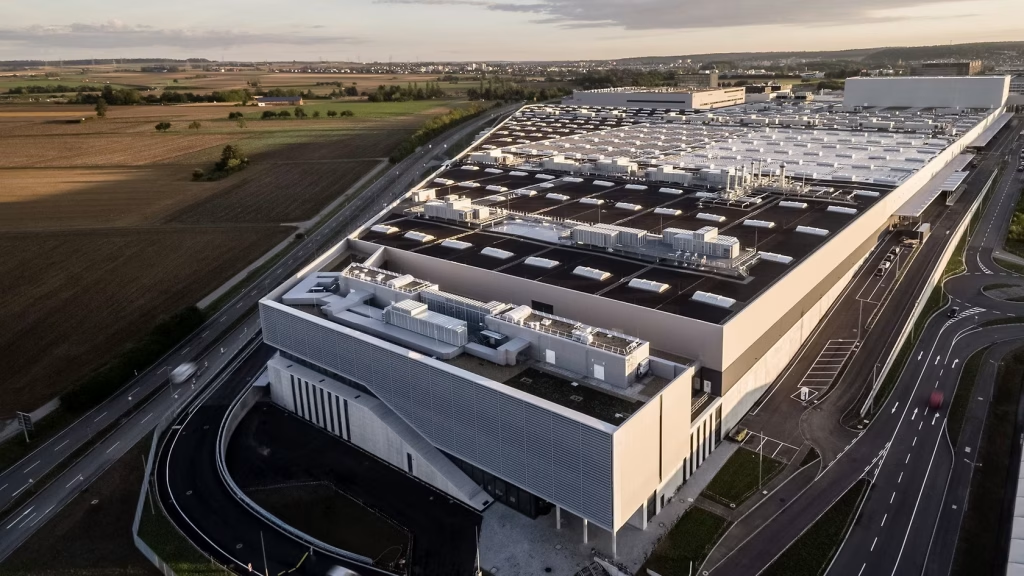
The company operates vehicle assembly plants in Sindelfingen, Bremen, and Rastatt, while major powertrain activities are located at sites including Untertürkheim, Berlin, and Hamburg. Mercedes has not said which of those locations could be affected by the latest warning.
That uncertainty matters because each plant performs a different role in the company’s manufacturing network. Sindelfingen, for example, produces major Mercedes passenger cars and is undergoing a transition involving electric vehicles as well as conventional models.
Untertürkheim is a major powertrain location and has been expanded into electric-drive components and other technologies as Mercedes adapts its manufacturing operations.
The potential closures are therefore not simply about reducing the number of buildings in Germany. They would represent another step in Mercedes’ effort to determine where different vehicles and components should be produced in a global manufacturing network.
Competition Is Changing the Economics of German Manufacturing
Mercedes’ warning comes at a difficult time for the German automotive industry. German manufacturers are competing against companies operating in countries with lower production costs while also facing increasing competition from Chinese automakers in the global vehicle market.
At the same time, European manufacturers have had to absorb the cost of developing electric vehicles, upgrading factories, and adapting supply chains.
Reuters reported that the Mercedes warning came against the backdrop of nationwide protests organized by IG Metall, Germany’s powerful industrial union. Tens of thousands of automotive workers demonstrated against job cuts and the broader pressure facing the country’s auto industry.
For workers, the issue is not simply whether individual factories are profitable. Factory closures can affect entire regions because automotive plants support suppliers, logistics companies, and other businesses that depend on vehicle production.
Mercedes’ management is therefore entering a difficult negotiation with employee representatives. The company’s stated objective is to preserve all German locations, but management is simultaneously warning that maintaining them requires significant changes to the cost structure.
The company’s earlier restructuring plans provide some context. Mercedes said in 2025 that it intended to cut production costs by 10% by 2027. The company had already reduced fixed costs substantially since 2019 and planned additional productivity improvements. The latest warning indicates that management believes additional measures are necessary.
There is also a broader question about how much manufacturing should remain in Germany as Mercedes expands lower-cost production elsewhere. The company’s Kecskemét facility in Hungary is being expanded, while Mercedes has said it wants to increase local-for-local production, meaning vehicles are increasingly built closer to their final markets.
That strategy can reduce transportation and supply-chain costs, but it can also shift production away from traditional manufacturing centers.
Mercedes has emphasized that it still values its German industrial base. The company told Reuters that it wants to maintain both its German plants and employment. The current warning is therefore conditional rather than an announcement that two facilities will definitely close. That distinction is important.
No specific assembly plant or powertrain facility has been selected for closure, and Mercedes has not announced a shutdown timetable. The immediate objective is to reach agreements that lower costs and improve productivity enough to keep the current network viable.
The situation also shows how quickly manufacturing strategies can change. When Mercedes announced its earlier capacity plans, it explicitly said there were no plans to close German plants. Less than two years later, management is warning that two could be at risk if the company cannot achieve further savings.
For Mercedes, the pressure extends beyond wages. Factory utilization, product allocation, energy expenses, supplier costs, working practices, and the efficiency of individual production lines all influence whether a plant remains competitive.
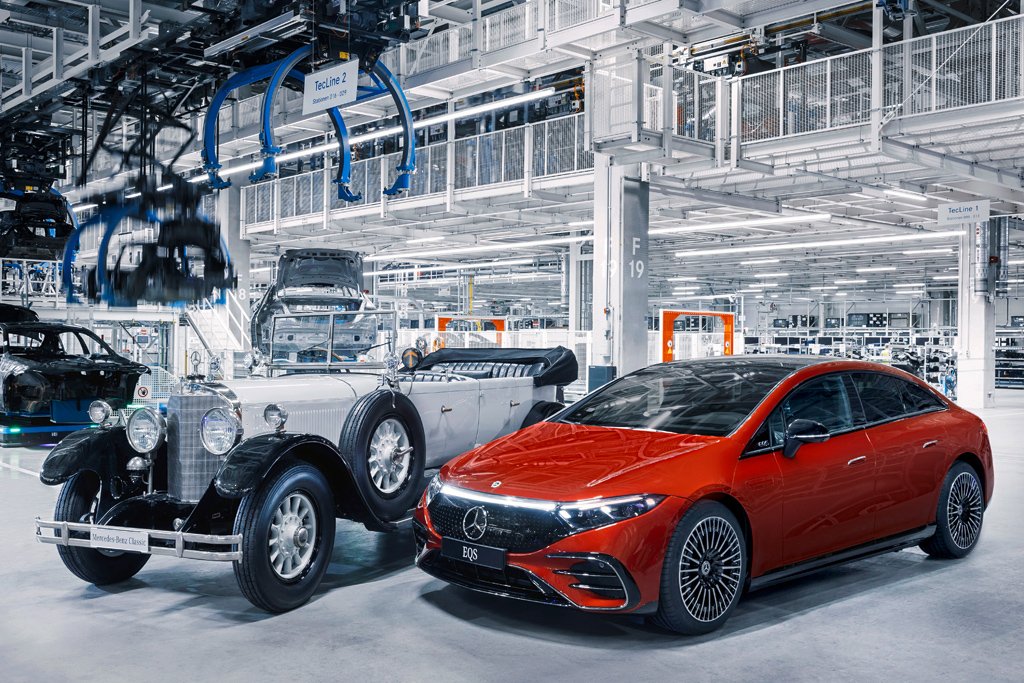
The company’s ability to produce both internal-combustion and battery-electric vehicles on flexible production lines is also becoming increasingly important as demand for different powertrains changes. Mercedes has said its German plants are being structured to retain production flexibility rather than commit every facility to one powertrain technology.
The next phase will depend largely on negotiations between Mercedes management and its workers. For now, the automaker is not planning to close the two German plants. Instead, it has set clear conditions for maintaining its current manufacturing footprint. Costs will need to fall, while productivity must improve.
The warning nevertheless marks a significant moment for one of Germany’s most important industrial companies. If Mercedes ultimately closes an assembly plant and a powertrain facility, it would represent a major change to its German manufacturing network.
If management and workers reach agreements that deliver the required savings, the existing plants could remain in operation.
The outcome will help determine not only Mercedes’ future production footprint but also how Germany’s high-cost automotive manufacturing sector adapts to a global industry increasingly shaped by lower-cost production, Chinese competition, and the transition toward new vehicle technologies.
