
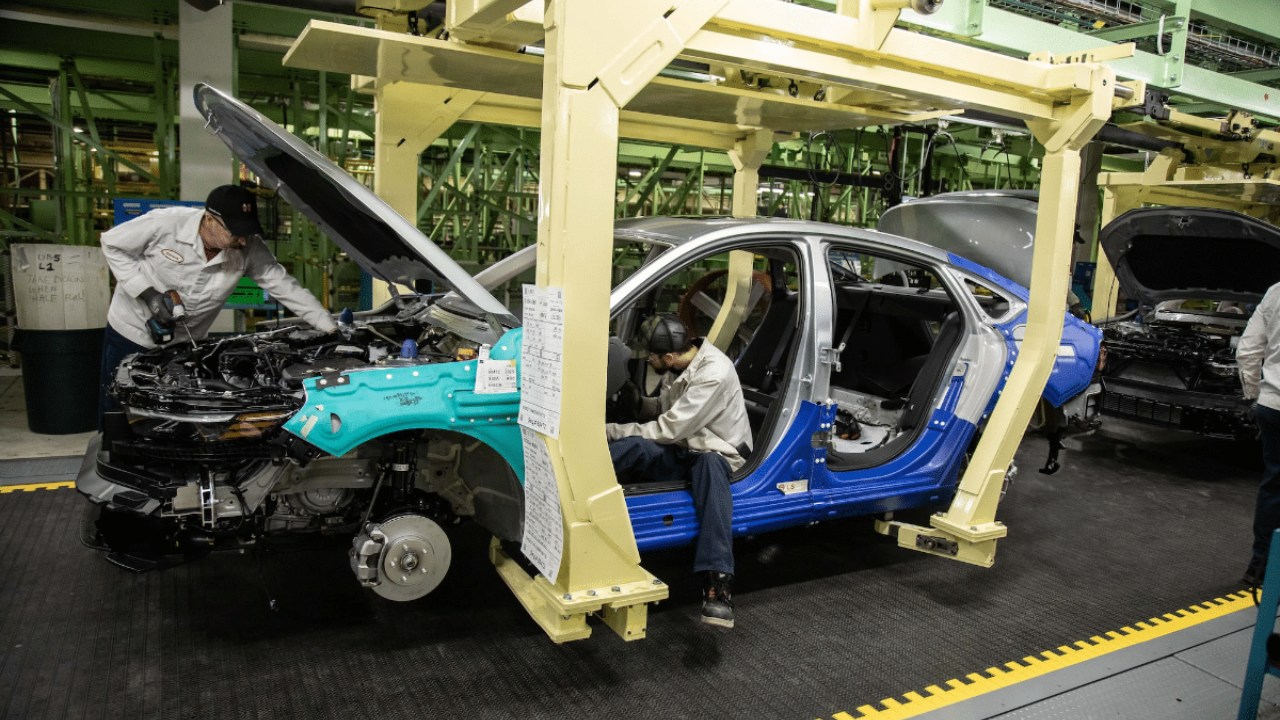
Honda is reportedly preparing for a major expansion of its U.S. hybrid manufacturing operations, with the Japanese automaker potentially investing as much as $2.5 billion in a new vehicle plant in Ohio.
The reported project would give Honda additional capacity at a time when its existing North American factories are approaching their limits, and the company is shifting more of its product strategy toward hybrids.
According to Reuters, citing Japan’s Nikkei business daily, Honda is in the final stages of preparing the project, which could involve an investment of roughly 300 billion to 400 billion yen, equivalent to about $1.90 billion to $2.53 billion. Production is expected to begin around 2030.
There is an important caveat, however. Honda has not officially confirmed that it will build the plant. An American Honda spokesperson told Reuters that no decision had been made regarding a new U.S. factory.
That distinction is important because the reported investment remains a potential project rather than a formally announced Honda manufacturing program.
Ohio Could Become the Center of Honda’s Next Hybrid Push
If the project moves forward, Ohio would be a logical location for Honda because the automaker already has a substantial manufacturing presence in the state.
Honda operates vehicle production facilities in Marysville and East Liberty, along with its Anna engine plant and Russells Point transmission facility. The company has also invested heavily in electrification-related manufacturing across its Ohio operations.
Honda’s existing Ohio manufacturing network is already capable of producing components used in hybrid vehicles.
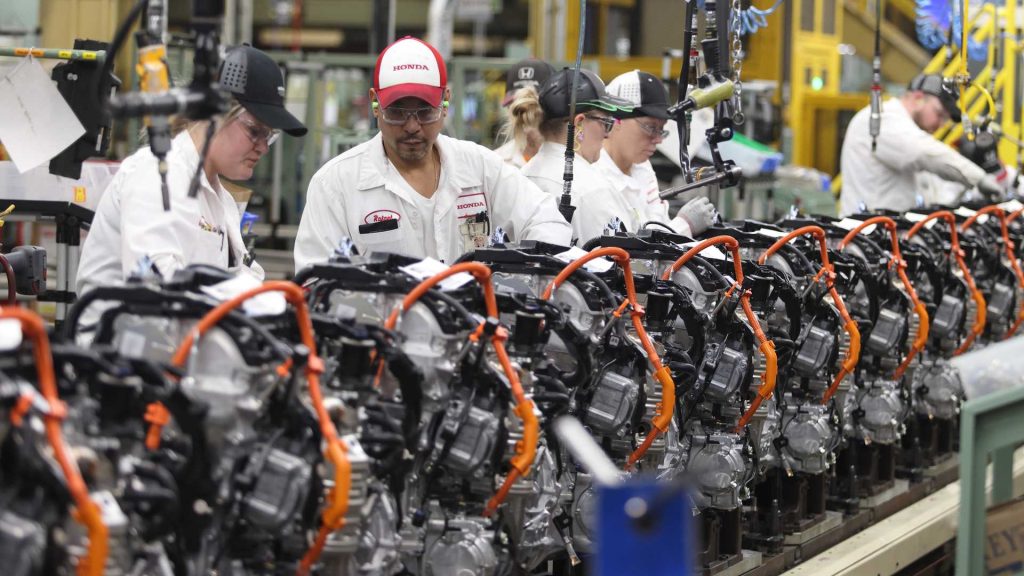
At the Russells Point plant, Honda manufactures two-motor hybrid power units, while the facility has annual capacity for up to 400,000 hybrid power systems as part of its broader production capabilities.
Honda has also been converting existing manufacturing facilities to support multiple powertrain types rather than dedicating every factory to a single technology.
The company’s 2026 business briefing outlined plans to increase hybrid-related production and expand local content for hybrid components. Honda has been retooling Ohio plants so they can produce gasoline-powered, hybrid, and battery-electric vehicles on the same manufacturing lines.
A new plant would therefore represent a significant expansion of an existing strategy rather than a complete departure from Honda’s current manufacturing structure.
The reported facility could be particularly important for larger vehicles. Reuters reported that the new factory is expected to produce hybrid vehicles, while other reports have suggested that large Honda and Acura crossovers could be among the products assigned to the facility.
Those model details have not been confirmed by Honda, so they should be treated as reported possibilities rather than final production plans. That potential product mix would make sense within Honda’s North American lineup.
Larger crossovers and SUVs have become critical products for automakers selling in the United States. Producing those vehicles locally would also allow Honda to increase domestic capacity without relying on additional imports.
Honda already builds important U.S.-market vehicles in Ohio, Indiana, and Alabama, and its American manufacturing footprint has grown substantially over several decades.
According to Honda, more than 60% of the vehicles it sold in the United States in 2025 were manufactured in America. The company currently lists 12 manufacturing plants across its U.S. operations and says it has invested $25.7 billion in manufacturing, research and development, parts centers, and related operations.
A new Ohio assembly plant would represent another major step in that localization strategy.
Honda Is Increasing Its Focus on Hybrids
The potential factory also reflects a broader change in Honda’s electrification strategy. Honda has invested heavily in EV development, including a previously announced plan involving EV and battery production in Canada.
But the company has since suspended that project and adjusted several planned EV programs as market conditions have changed. Reuters reported that Honda also canceled three planned U.S. EVs this year.
Hybrids have consequently become a more prominent part of Honda’s North American strategy.
The company’s existing two-motor hybrid system is already used in vehicles such as the Accord and CR-V, and Honda has been expanding hybrid production in the United States. Its current manufacturing approach allows factories to adjust the mix of gasoline, hybrid, and electric vehicles depending on market demand.
Honda has also said it intends to expand its next-generation hybrid lineup significantly. That makes additional manufacturing capacity increasingly important. Existing factories can be retooled, but there are limits to how much additional production can be squeezed from facilities already operating near capacity.
Honda Executive Vice President Noriya Kaihara said previously that the automaker was approaching full production capacity in North America and needed additional capacity. He also indicated that Honda would need to consider its investment direction in light of the future of the United States-Mexico-Canada Agreement, or USMCA.
Reuters reported that Honda’s North American plants are close to full utilization, adding another reason a new factory could become necessary as hybrid demand grows.
The timing also matters because Honda wants to produce more vehicles close to the customers who buy them.
For a manufacturer with a large North American customer base, building additional vehicles in the United States can reduce dependence on imported finished vehicles and give the company greater flexibility when trade policies change.
Trade uncertainty is particularly relevant to Honda because the company operates manufacturing facilities across the United States, Canada, and Mexico. Changes to USMCA could affect how efficiently vehicles and components move across those borders.
The reported Ohio project could serve several purposes for Honda. It could expand production capacity, support the company’s growing hybrid lineup, and strengthen its ability to build more vehicles domestically in the United States.
The $2.5 Billion Project Is Still Not Official.
Despite the scale of the reported investment, Honda has been careful not to confirm the project. That makes the wording surrounding the potential plant important.
Reuters reported that Honda is in the final stages of preparations based on Nikkei’s reporting, but an American Honda spokesperson explicitly said that no decision had been made regarding a new U.S. plant.
Other reports have suggested that negotiations involving the state and possible incentives are part of the process. Some reports have also put potential annual production at approximately 250,000 vehicles, but Honda has not publicly confirmed that capacity figure.
The reported $1.90 billion to $2.53 billion investment range is therefore more accurate than simply saying Honda has committed $2.5 billion.
If Honda ultimately approves the project at the upper end of that range, it would become one of the company’s largest recent U.S. manufacturing investments.
It would also strengthen Ohio’s position as one of Honda’s most important manufacturing bases outside Japan.
For Honda, the potential plant arrives at an interesting point in the company’s electrification transition. The automaker is not abandoning electrification, but its strategy increasingly emphasizes a flexible mix of hybrids and EVs rather than relying on battery-electric vehicles alone.
That flexibility is visible in its existing factories, where Honda is developing the ability to build different powertrain types on shared production lines.
A dedicated new facility would provide another layer of capacity if hybrid demand continues to grow.
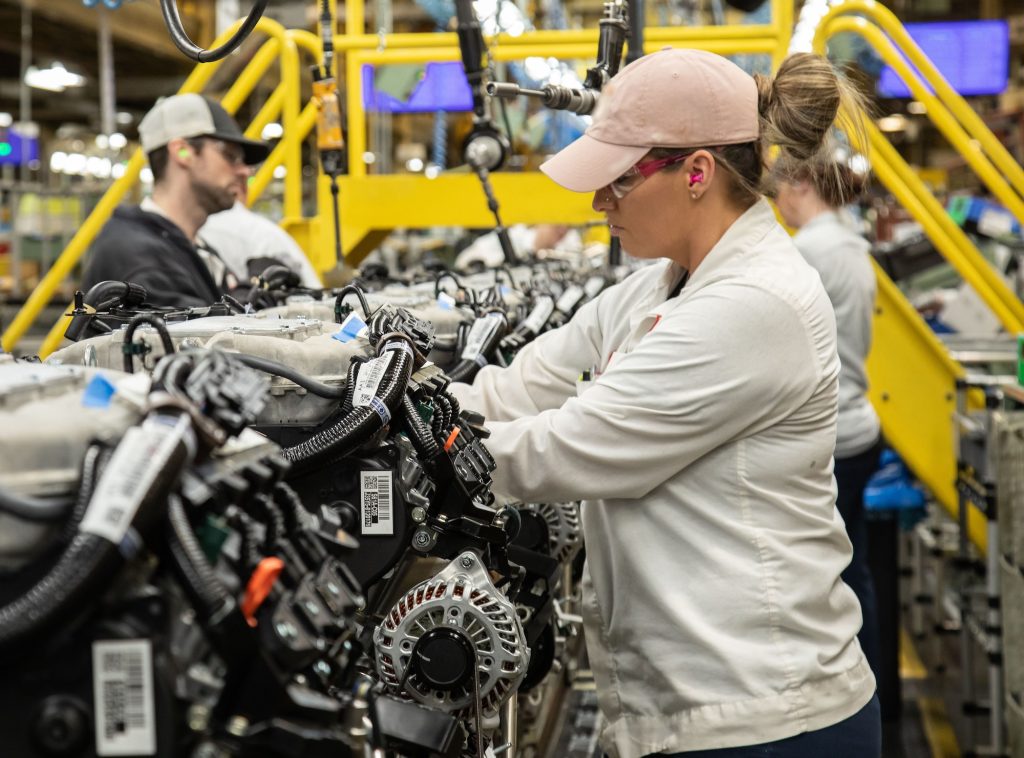
For American consumers, the potential impact would eventually be visible through Honda and Acura’s vehicle lineups. If larger hybrid crossovers are assigned to the plant, the factory could become an important source of domestically produced electrified SUVs for the U.S. market.
But there is still a significant step between preparing an investment and formally committing to construction.
For now, the most accurate description is that Honda is reportedly considering an Ohio hybrid plant requiring up to $2.5 billion, with production potentially beginning around 2030. Honda itself has not confirmed the project.
If approved, the facility would align closely with Honda’s existing strategy. The project could support expanded U.S. manufacturing, increase hybrid production, make greater use of flexible factory operations, and give the company more flexibility as demand shifts among gasoline, hybrid, and electric vehicles.
The potential Ohio investment therefore represents more than another factory. It could become a major piece of Honda’s next phase of U.S. manufacturing, provided the company ultimately gives the project the green light.
