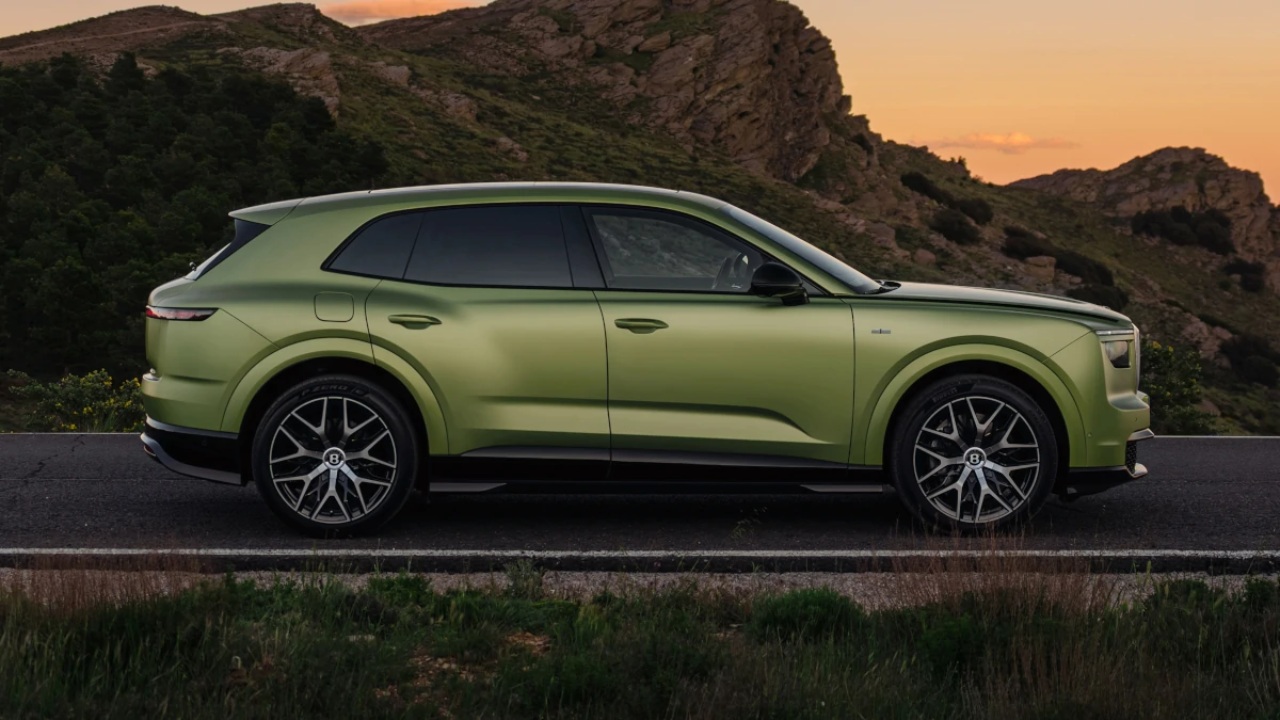
Bentley has taken a major step into the EV market with the debut of the Torcal, its first production battery-electric model. The luxury SUV brings Bentley’s signature focus on performance, handcrafted quality, and comfort to a new generation of electric vehicles.
Revealed in London on September 23, the Torcal becomes the fourth model line in Bentley’s current range, joining the Bentayga, Continental GT, and Flying Spur.
It is positioned below the Bentayga in Bentley’s lineup and will compete in the growing market for high-end electric SUVs, including the Range Rover Electric. The starting price in the UK is £173,300.
The numbers immediately separate the Torcal from many luxury EVs. Bentley says it can deliver up to 375 miles of range on the WLTP testing cycle, while the performance-focused Torcal S produces as much as 876 horsepower and 996 lb-ft of torque when launch control is active. The regular Torcal produces 809 hp and 852 lb-ft.
The Torcal also represents a major investment in Bentley’s home manufacturing operation. The company has committed £350 million to its Crewe facility, including a new production line, as it prepares to build the electric SUV alongside its existing models.
Bentley’s First EV Is Built Around Performance
Bentley has not attempted to make a conservative first step into electric vehicles. The Torcal is designed to deliver the kind of acceleration expected from a modern performance luxury vehicle while retaining the refinement associated with the brand.
The standard Torcal uses two electric motors producing a combined 809 hp and 852 lb-ft of torque. Bentley says it can accelerate from zero to 60 mph in 3.3 seconds. The more powerful Torcal S raises output to as much as 876 hp and 996 lb-ft, cutting the claimed 0-to-60-mph time to 2.8 seconds.
Those figures put the Torcal firmly into performance-car territory despite its luxury-SUV proportions.
Power comes from a large 800-volt battery system. Bentley’s published specifications show a 113-kWh battery, while the company claims up to 375 miles of WLTP range. Because WLTP testing is generally more generous than U.S. EPA testing, an official U.S. range figure cannot be assumed from the 375-mile claim.
Charging is another area where Bentley has pushed the Torcal beyond the conventional luxury-car formula. The company says the vehicle can add more than 150 miles of range in 10 minutes when connected to a 350-kW charging station.
Other published specifications put peak charging capability at 400 kW, with a 10-to-80% charging session possible in roughly 16 minutes under suitable conditions.
The exact charging time a customer experiences will depend on the charger, battery temperature, state of charge, and available infrastructure.
The Torcal is also built around sophisticated chassis technology. Bentley’s Active Ride system uses electronically controlled hydraulic pumps and individually controlled dampers at each wheel. The system can adjust suspension behavior rapidly while helping control body movement during acceleration, braking, and cornering.
All-wheel drive and all-wheel steering are also part of the Torcal’s technology package. Bentley says the vehicle is intended to combine long-distance comfort with more responsive handling, allowing the electric powertrain to provide instant performance without sacrificing the relaxed character expected from a Bentley.
A New Design Direction for Bentley
The Torcal is more than an electric version of an existing Bentley. It introduces a new design direction for the company.
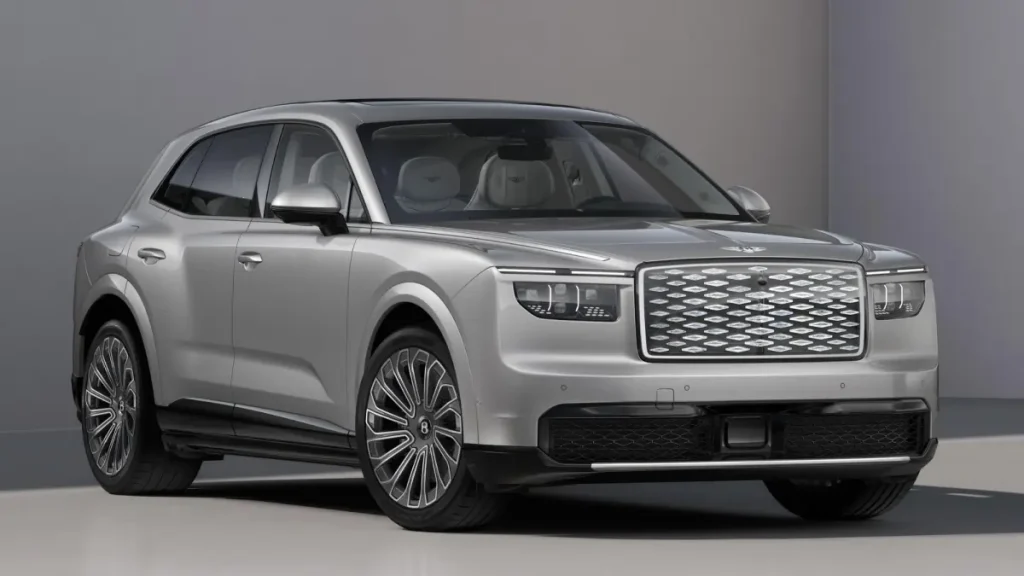
At around five meters long, it is shorter than the Bentayga while maintaining the imposing proportions expected from a luxury SUV. Autocar reports that the Torcal is approximately 135 millimeters shorter than the Bentayga, giving Bentley a model that is intended to have a somewhat more urban focus.
The front end features Bentley’s new illuminated diamond grille, which incorporates 76 individually applied LED diamonds. The design combines traditional Bentley cues with a much more technical appearance, reflecting the fact that the Torcal does not have a conventional combustion engine beneath its hood.
Inside, Bentley has attempted to maintain the handcrafted character that defines its more traditional vehicles. The cabin combines premium materials with a significantly greater emphasis on digital technology and passenger comfort.
One of the more unusual features is the vehicle’s sound system designed to provide an artificial performance soundtrack. Bentley has developed a synthetic sound inspired by the character of its historic engines, allowing the company to give the Torcal an audible personality despite its silent electric powertrain.
The Guardian reported that Bentley used recordings and musical elements to create the system rather than attempting to reproduce a conventional engine sound exactly.
That illustrates the challenge Bentley faces with the Torcal. An electric powertrain changes the fundamental driving experience, but Bentley still wants the vehicle to feel emotionally connected to the company’s history.
The Torcal also uses the Volkswagen Group’s Premium Platform Electric architecture, the same broader platform family used by the Porsche Cayenne Electric.
Bentley has adapted the underlying technology to its own requirements rather than simply producing a rebadged Porsche. Autocar reports that Bentley’s engineering team in Crewe was involved in developing the platform for its specific needs.
That approach gives Bentley access to advanced 800-volt electric technology while allowing the company to differentiate the vehicle through its own suspension tuning, design, interior craftsmanship, and software.
Bentley’s Electric Strategy Is Changing
The arrival of the Torcal is particularly significant because Bentley’s path toward electrification has changed during the past several years.
The company previously planned a much faster transition toward an all-electric lineup, but it subsequently adjusted that strategy after luxury-car customers continued to show demand for combustion and hybrid powertrains.
Bentley now intends to maintain a mixture of powertrain technologies rather than immediately abandon internal-combustion models.
The company has said its hybridized models will remain available into at least 2035, while it continues to maintain flexibility around combustion-powered vehicles.
That makes the Torcal an important addition rather than a replacement for Bentley’s existing product strategy.
Production will take place at Bentley’s Crewe factory in England. The £350 million investment in the facility includes a new assembly line and is intended to support production of the electric SUV while preserving Bentley’s existing manufacturing operations. The company says the investment supports approximately 4,000 jobs at the site.
Bentley is entering the electric luxury-SUV market at a time when competition is expanding. The Range Rover Electric is approaching the same customer group from a different direction, while Porsche already has an electric Cayenne. Other luxury manufacturers are also adding high-performance electric SUVs to their portfolios.
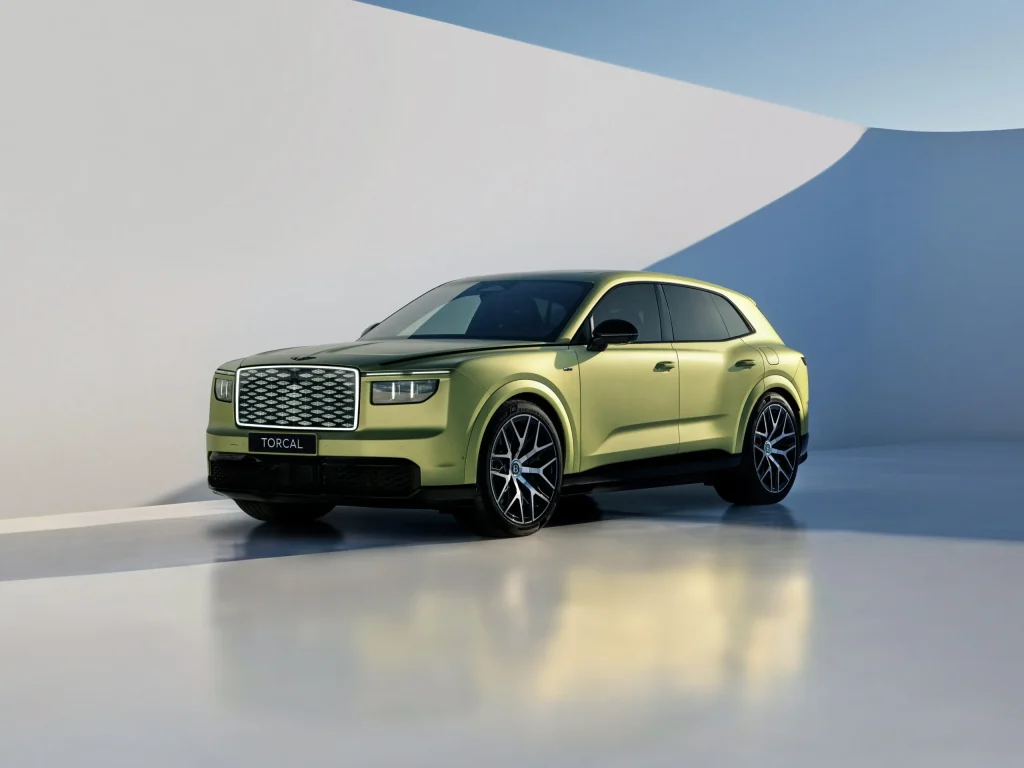
The Torcal therefore needs to deliver more than speed and range. Bentley is using it to demonstrate that its traditional approach to craftsmanship can coexist with high-voltage electric technology.
With a claimed 375-mile WLTP range, up to 876 hp, rapid charging, and a handcrafted cabin, the Torcal gives Bentley a substantial first entry into the EV market. It also establishes a technical and manufacturing foundation for the company’s next phase.
For a company that has spent more than a century building its identity around powerful engines, the Torcal represents a fundamental change.
There is no V8 or W12 under its hood. Instead, Bentley is betting that electric motors, advanced suspension technology, and traditional craftsmanship can deliver a distinctly Bentley experience in a new era of luxury vehicles.