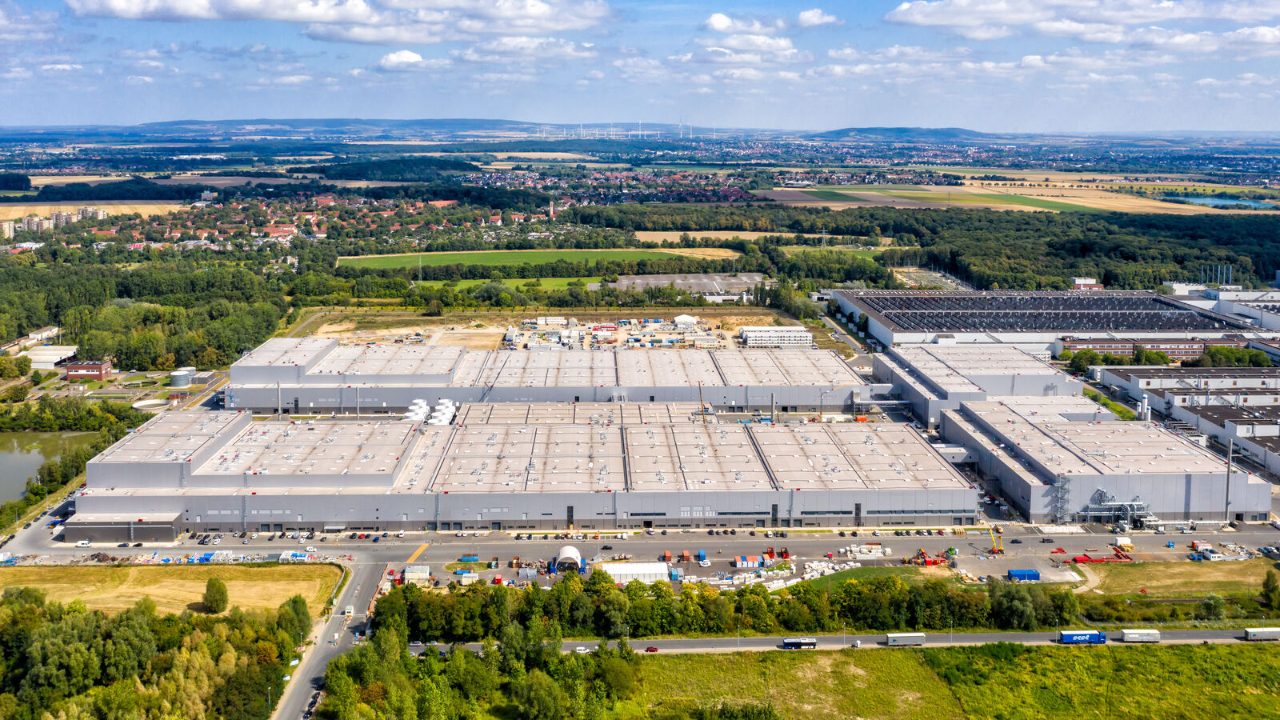
Volkswagen is pushing back the opening of its planned battery manufacturing plant in St. Thomas, Ontario, to 2029, extending the timeline for a project that was originally expected to become one of the company’s most important battery production centers in North America.
According to MarkLines and Volkswagen’s PowerCo battery division, the St. Thomas facility has been delayed as Volkswagen adjusts its battery manufacturing plans to changing electric-vehicle market conditions.
The decision reflects a broader shift among automakers that are trying to balance long-term electrification targets with slower-than-expected EV growth in some markets.
The Ontario project is significant because Volkswagen had planned to establish a major North American battery manufacturing operation through PowerCo, its dedicated battery company. The factory was intended to supply batteries for electric vehicles built in the region and strengthen Volkswagen’s ability to localize a crucial part of EV production.
The delay does not mean Volkswagen has abandoned the project. Instead, the company is changing the timetable as it reassesses demand, production requirements, and the pace at which its North American electric-vehicle operations are expected to expand.
That distinction is important because battery plants require enormous upfront investment. Building a factory years before vehicle demand reaches the expected level can leave an automaker carrying substantial unused capacity.
For Volkswagen, delaying St. Thomas gives the company additional time to match battery production with actual market requirements.
St. Thomas Was Designed as a Major Battery Hub
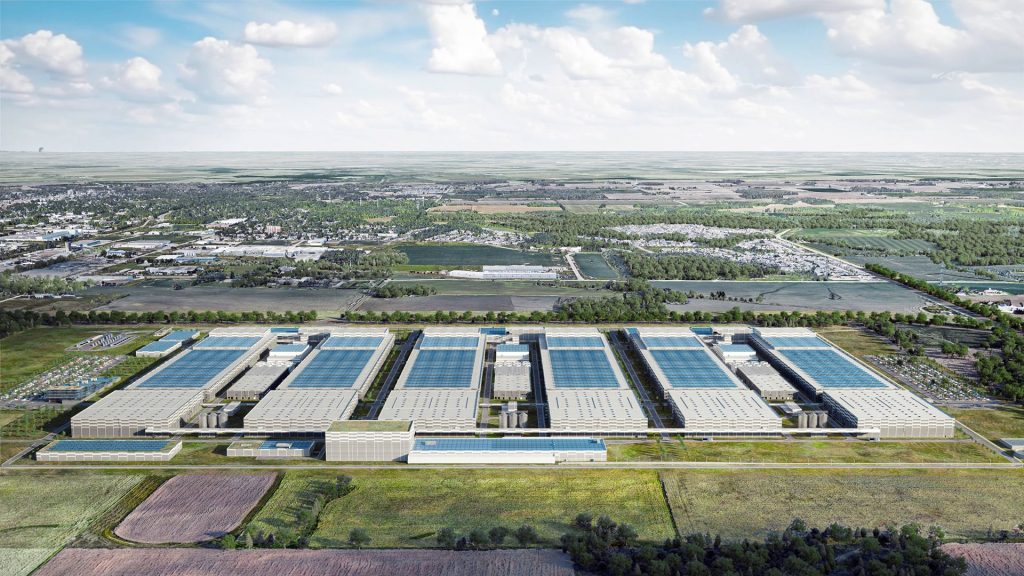
Volkswagen selected St. Thomas, Ontario, for its first PowerCo battery factory in North America, giving Canada an important role in the company’s global electrification strategy.
The planned facility was expected to become a large-scale battery manufacturing site capable of supplying Volkswagen’s future electric vehicles. The company had previously described the project as one of its largest investments in Canada and positioned it as a key element of its North American battery strategy.
The location also offered several advantages. Canada has significant access to electricity and raw materials needed for battery production, while Ontario already has an established automotive manufacturing industry.
The province has attracted major investments from automakers and battery manufacturers as North America attempts to build a more localized EV supply chain.
Volkswagen’s decision to build the facility in Ontario therefore fits into a much broader industrial trend. However, the EV market has changed since the original plans were announced.
Automakers initially expected electric-vehicle demand to accelerate rapidly across North America. Instead, growth has become less predictable, with consumers in some segments continuing to favor gasoline-powered vehicles and hybrids.
That has forced manufacturers to reconsider how quickly they need additional battery capacity.
A battery factory cannot easily be adjusted after construction begins. Its economics depend on achieving high utilization because the equipment and infrastructure require billions of dollars of investment.
If EV production grows more slowly than expected, a new battery plant can become financially inefficient before it has reached its intended production level.
Volkswagen’s decision to push the St. Thomas opening to 2029 therefore gives PowerCo greater flexibility.
Rather than building capacity too early, the company can wait for clearer evidence about future EV volumes.
The move also highlights how automakers are changing their approach to electrification. The transition to electric vehicles is continuing, but manufacturers are increasingly trying to avoid assuming that every market will adopt EVs at the same speed.
Why the Delay Matters for Volkswagen
The St. Thomas delay comes at an important point for Volkswagen’s global battery strategy. PowerCo was created to coordinate Volkswagen’s battery activities and reduce the company’s dependence on outside suppliers. Controlling more of the battery supply chain can help an automaker manage costs, technology development, and production planning.
Batteries are one of the most expensive components of an electric vehicle, meaning improvements in battery manufacturing can directly influence vehicle profitability.
Volkswagen has therefore invested heavily in developing a broader battery production network.
The company has also worked with partners and considered multiple manufacturing locations as it builds its battery strategy. Delaying St. Thomas allows PowerCo to coordinate those facilities with expected vehicle production rather than simply expanding capacity according to earlier forecasts.
The North American market is particularly important. Volkswagen has been trying to increase its electric-vehicle presence in the United States and Canada while dealing with intense competition from Tesla, Hyundai, Kia, General Motors, Ford, and an expanding group of Chinese-linked EV manufacturers competing internationally.
The company has also been working to develop vehicles specifically suited to regional demand.
Battery localization can help Volkswagen reduce transportation costs and potentially qualify vehicles for incentives tied to local manufacturing and supply chains, depending on applicable regulations when production begins. The St. Thomas facility was expected to support that strategy.
However, delaying the launch could give Volkswagen more time to avoid committing significant battery capacity before its North American EV production needs it. Another factor is the rapid pace of change in battery technology, which could make waiting strategically useful.
Battery chemistry, manufacturing techniques, and cell formats continue to evolve. A factory designed around one set of assumptions can face disadvantages if the market shifts toward another technology before the facility reaches full production.
By pushing the opening further into the future, Volkswagen has additional time to determine which battery technologies and production methods will be most competitive when the Ontario factory becomes operational.
That could be particularly important if the company changes the types of cells or battery systems it plans to manufacture.
A Sign of a More Cautious EV Expansion
Volkswagen’s decision is part of a broader pattern across the global auto industry. Several manufacturers have slowed, postponed, or adjusted EV investments as consumer demand has developed differently from the most aggressive forecasts made earlier in the decade.
The issue is not simply whether consumers want electric vehicles. Demand varies significantly by market, vehicle segment, charging availability, electricity costs, and government policy.
Hybrids have become especially important in the transition. Many consumers who are interested in reducing fuel consumption but remain concerned about charging infrastructure are choosing hybrids and plug-in hybrids instead of fully electric vehicles.
Automakers have responded by maintaining or increasing investment in hybrid powertrains while adjusting the pace of some battery-electric projects. That creates a difficult planning problem for manufacturers such as Volkswagen.
Battery plants are typically designed around long-term demand forecasts, while consumer preferences can change much faster.
The St. Thomas delay provides Volkswagen with more time to understand where North American EV demand is heading before committing the facility to a 2029 production schedule. It also demonstrates the importance of flexibility in Volkswagen’s battery strategy.
PowerCo will need to coordinate factory timing with vehicle launches, battery demand, supply agreements, and local production plans. If any one of those elements changes, the economics of the entire manufacturing network can change with it.
For Ontario, the delay means the expected economic benefits of the battery project will take longer to materialize. Large battery factories can create construction activity, manufacturing jobs, and demand for local suppliers, making their timing important not only to automakers but also to regional economies.
For Volkswagen, however, financial discipline is becoming increasingly important. The company is competing in a rapidly changing global EV market while simultaneously managing investment in combustion-engine vehicles, hybrids, software, batteries, and new electric models.
The St. Thomas delay gives Volkswagen more room to adjust those investments. The project remains strategically important, but the company is no longer treating the original timetable as fixed.
A 2029 opening also gives Volkswagen several additional years to assess battery technology and North American EV demand. By the time the facility begins production, the market could look significantly different from the one Volkswagen was planning for when the project was originally announced.
That could work in the company’s favor if PowerCo uses the additional time to improve efficiency and select the most competitive battery technology. The risk is that competitors could move faster.
Other automakers and battery manufacturers are continuing to establish production capacity across North America. If Volkswagen waits too long, it could find itself relying more heavily on external suppliers while competitors develop larger localized battery ecosystems.
For now, the company appears willing to accept that trade-off. The St. Thomas plant is not being abandoned. Instead, Volkswagen is moving its expected opening to 2029, reflecting a more cautious approach to battery investment and EV demand.
The decision illustrates how the automotive industry’s electric transition is entering a more measured phase. Automakers are still investing billions in batteries and electric vehicles, but they are becoming more careful about when and where that capacity comes online.
For Volkswagen, the Ontario project remains an important part of its North American strategy. The difference is that the company now has more time to ensure the factory is built for the market that actually exists in 2029, rather than the market manufacturers once expected to arrive much sooner.