
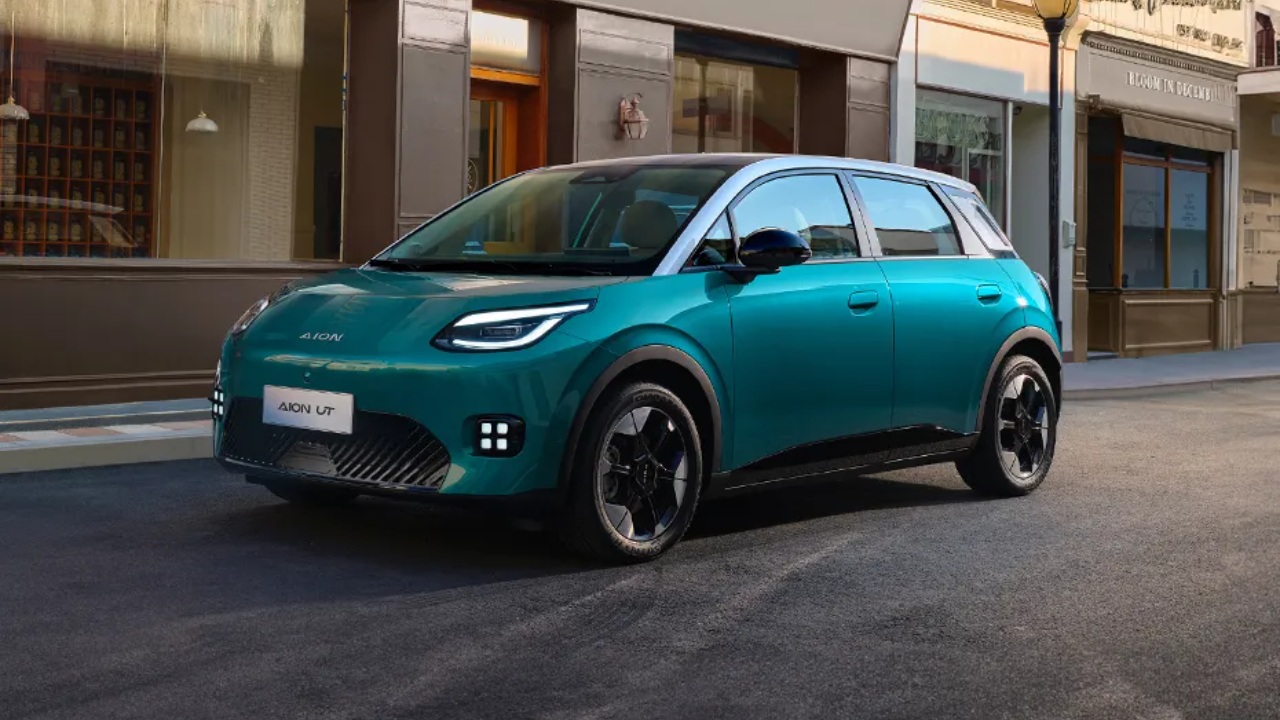
GAC is taking another step into the European automotive market with the launch of its AION UT electric hatchback in Denmark and Norway, expanding a strategy that is increasingly focused on establishing a broader regional presence rather than simply exporting vehicles into Europe’s largest markets.
The Chinese automaker’s AION brand has been expanding across Europe throughout 2026, and the latest move gives it access to two countries where electric vehicles already have a particularly strong position.
GAC’s local distribution partner, Electric Way, has begun taking orders for the AION UT in both Denmark and Norway, with customer deliveries expected to begin in November.
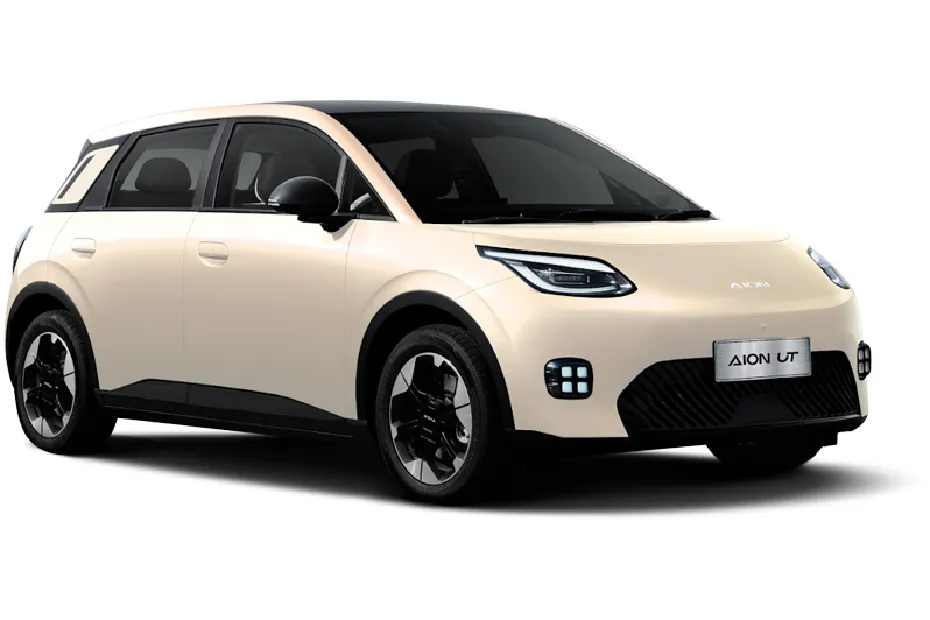
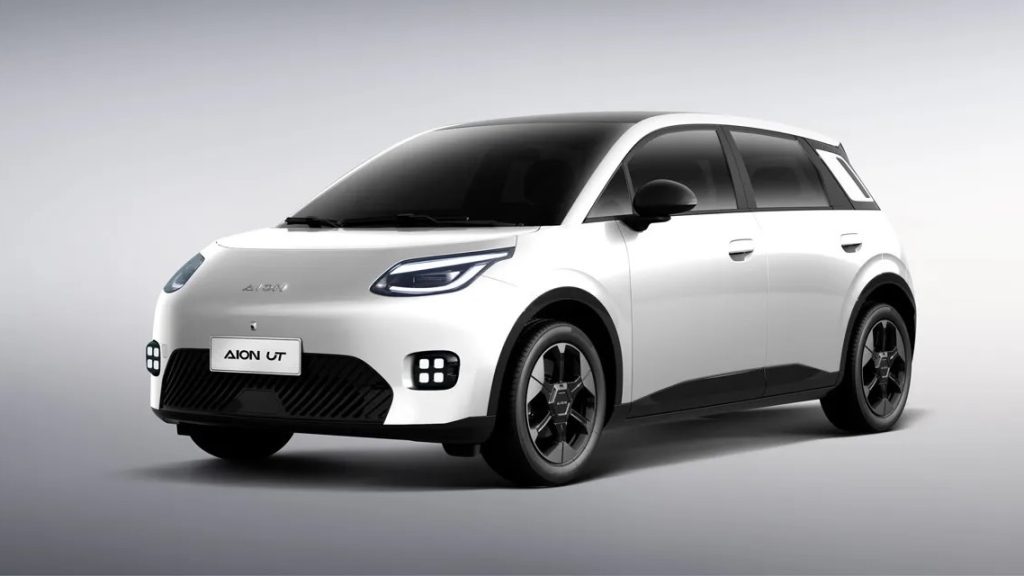
The AION UT is a compact electric hatchback designed with European buyers in mind. GAC says the model was designed at its Milan design center and assembled at Magna’s facility in Graz, Austria.
That European connection is important because GAC is attempting to establish itself as a genuine European-market competitor rather than simply bringing Chinese-market vehicles across the continent.
The launch also demonstrates how Chinese automakers are gradually building distribution networks across multiple European countries.
Instead of concentrating exclusively on major markets such as Germany, France, or the United Kingdom, manufacturers are increasingly targeting countries where EV adoption is already high, and consumers are familiar with electrified vehicles.
For GAC, Denmark and Norway provide two particularly interesting markets in which to establish the AION name.
A Compact EV Designed Around European Buyers
The AION UT is positioned as a compact hatchback, but its dimensions give it more interior space than its exterior footprint might suggest.
According to GAC’s European specifications, the vehicle measures approximately 4.27 meters long, with a 2.75-meter wheelbase. It has five seats and a 440-liter luggage compartment, while folding the rear seats expands available cargo space to as much as 1,600 liters. That packaging is one of the vehicle’s major selling points.
The AION UT is small enough to suit urban driving but offers a relatively long wheelbase for its size. GAC says the model was specifically developed for European urban mobility, where compact exterior dimensions and practical interior space are increasingly important.
The powertrain is fully electric. European-market versions use a front-mounted permanent-magnet synchronous motor producing 150 kW, or 204 horsepower, and 210 Nm of torque. The motor drives the front wheels through a single-speed transmission.
There are different battery configurations depending on the market. In Norway, the entry-level City version uses a 44-kWh battery and has a claimed 320-kilometer WLTP range, while the Luxury version receives a 60-kWh battery and offers up to 430 kilometers of WLTP range.
Norwegian pricing starts at 229,990 kroner, with the larger-battery version listed at 249,990 kroner.
Denmark receives a similar strategy, although its pricing structure differs. Electric Way announced a starting price of 159,990 Danish kroner for the City model, which also uses the 44-kWh battery and provides a 320-kilometer WLTP range.
The larger battery is likely to be particularly attractive to customers who regularly travel outside major cities.
GAC’s European specification for the 60-kWh version gives a combined WLTP range of 430 kilometers, equivalent to roughly 267 miles. The company lists energy consumption at 16.4 kWh per 100 kilometers, while DC charging can take the battery from 30% to 80% in about 24 minutes under the relevant European specification.
That combination puts the AION UT directly into one of Europe’s most competitive EV segments.
It is not simply competing against other Chinese brands. Established manufacturers such as Volkswagen, Renault, Peugeot, and Hyundai already have compact electric models aimed at similar customers. GAC therefore needs more than a competitive price to gain meaningful market share.
Why Denmark and Norway Matter to GAC
The decision to enter Denmark and Norway is significant because both countries have highly developed EV markets.
Norway is particularly important. Battery-electric vehicles have become the dominant form of new-car registration there, giving manufacturers a market in which consumers are already accustomed to electric powertrains. That makes Norway an attractive environment for a new EV-focused brand.
GAC’s AION UT also arrives with equipment intended to make it competitive beyond its basic powertrain. European specifications include a 14.6-inch central touchscreen, an 8.8-inch digital instrument display, wireless Apple CarPlay and Android Auto, adaptive cruise control, and a range of driver-assistance systems.
Depending on the specification, buyers can also receive features such as a 360-degree camera, a heated steering wheel, heated seats, wireless smartphone charging, and a panoramic roof.
GAC has also emphasized warranty coverage. The European AION UT receives an eight-year or 160,000-kilometer vehicle warranty, while the high-voltage battery warranty extends to eight years or 200,000 kilometers, subject to the applicable battery health conditions.
That kind of warranty can be particularly important for a relatively unfamiliar brand trying to persuade European consumers to move away from established manufacturers. Brand recognition is one of the biggest challenges facing Chinese automakers in Europe.
Consumers may be familiar with Volkswagen, Renault, BMW, or Toyota without needing to research their history. A newer brand such as AION has to establish trust through pricing, warranty coverage, dealer support, safety performance, and ownership experience.
GAC is attempting to address that challenge through local distribution. Electric Way’s agreement with GAC covers both Denmark and Norway, giving the Chinese manufacturer a dedicated regional partner rather than requiring it to establish separate operations independently in each market.
The company has also been building its European presence in other countries during 2026. The AION UT had already launched in Finland, Greece, Poland, and Portugal earlier in the year. GAC announced those launches in May, describing the UT as its first compact EV specifically developed around European urban mobility.
That sequence shows the company’s strategy. Instead of waiting for one major European launch, GAC is gradually adding individual markets and establishing a wider footprint.
GAC Wants More Than a Single European Launch
The AION UT is important because it is not arriving in Europe as an isolated experiment. GAC already sells the AION V in several European markets, while the UT gives the company access to a smaller and potentially higher-volume segment.
The AION V is a larger electric SUV with a 75.26-kWh LFP battery and up to 510 kilometers of WLTP range, according to GAC’s European information. The UT therefore complements the SUV rather than replacing it.
That growing range of products will be important if GAC wants to become a meaningful European manufacturer.
A single model can establish brand awareness, but a broader lineup gives customers more reasons to visit dealerships and gives the manufacturer opportunities to capture different parts of the market. GAC’s European production arrangements are also noteworthy.
The AION UT is assembled by Magna in Austria, according to GAC, giving the model a European manufacturing connection.
That could become increasingly valuable as European policymakers scrutinize Chinese automotive imports and as manufacturers consider how to reduce exposure to trade restrictions.
Producing vehicles within Europe can also improve supply logistics and potentially reduce delivery times compared with importing every vehicle from China.
The broader European market is becoming increasingly competitive for Chinese manufacturers, but GAC’s approach shows why the companies are still investing heavily in the region.
Chinese brands are no longer relying solely on low prices. They are offering increasingly sophisticated vehicles with modern battery technology, extensive standard equipment, long warranties, and European-specific design and engineering. The AION UT demonstrates that strategy clearly.
It has been designed in Milan, assembled in Austria, and adapted for European markets while remaining part of a Chinese automaker’s global product strategy.
For European consumers, the arrival of another competitor could mean more choice in the compact EV segment.
For established manufacturers, it represents another warning that competition is expanding beyond traditional European, Japanese, and Korean brands. GAC still has significant work ahead.
Building a dealership network, establishing after-sales support, developing brand recognition, and convincing buyers to trust a relatively new name will take time. Strong EV markets such as Norway and Denmark can provide a useful starting point, but success will ultimately depend on how well the company performs after customers begin taking delivery.
The AION UT gives GAC a credible product with a competitive range, substantial equipment, and European-oriented packaging.
More importantly, the launch shows that GAC’s European strategy is becoming broader and more deliberate.
The company is adding countries, expanding its model range, and developing local partnerships rather than treating Europe as a market that can be served purely through exports. That approach could become increasingly common among Chinese automakers.
If GAC can turn the AION UT into a recognizable and trusted compact EV in Denmark and Norway, those markets could become stepping stones toward a much larger European operation.
The real significance of this launch, therefore, may not be the number of AION UTs sold during its first year. It is the fact that another Chinese manufacturer is steadily building the infrastructure needed to compete across Europe, one market at a time.
