Europe’s automotive industry is facing a new competitive challenge from China, and this time the pressure is not coming only from battery-electric vehicles.
Chinese automakers are rapidly expanding their sales of hybrid and plug-in hybrid vehicles across the European Union, creating a problem for established manufacturers and policymakers that is becoming increasingly difficult to ignore.
The issue has gained attention because Chinese-made hybrids have largely avoided the additional European tariffs imposed on battery-electric vehicles from China.
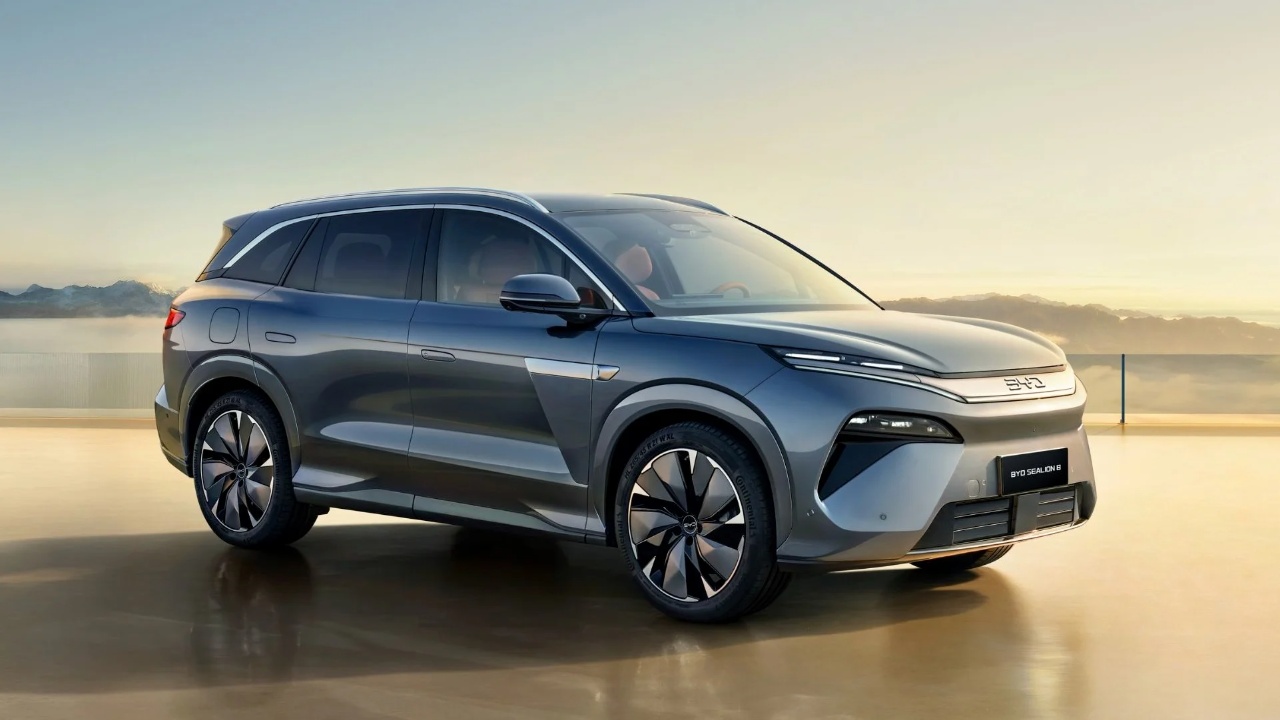
That difference has created an opening for manufacturers such as BYD, Chery, Geely, and SAIC to expand their presence with electrified vehicles that combine batteries with gasoline engines.
According to data reported by The Guardian, Chinese-made full hybrids sold in the European Union increased from just 659 vehicles in 2022 to 160,662 in the first seven months of 2026. Chinese-made plug-in hybrids have also grown dramatically, rising from 56,706 units in 2022 to 217,764 between January and July 2026.
Those numbers are still small compared with the total European market, but the speed of the increase is what has caught policymakers’ attention.
The development also comes as European consumers continue moving toward electrified vehicles. That means Chinese manufacturers are increasingly competing in the exact segment that European automakers are relying on to navigate the transition away from traditional gasoline and diesel powertrains.
Chinese Hybrids Are Finding a Tariff Advantage
The roots of the current situation go back to the European Union’s decision to impose additional anti-subsidy tariffs on battery-electric vehicles manufactured in China in 2024.
The European Commission argued that Chinese EV manufacturers benefited from unfair subsidies, creating competitive advantages over European producers. The additional duties were imposed on top of the EU’s standard 10% import tariff for passenger vehicles, with the exact rate varying by manufacturer.
But those additional measures focused on battery-electric vehicles. Hybrid vehicles were not treated in the same way.
That distinction has become increasingly important as Chinese automakers have expanded their European product strategies.
The Guardian reported that Chinese-made plug-in hybrids are particularly attractive because they combine an electric driving capability with an internal-combustion engine, making them suitable for customers who want lower fuel consumption without depending entirely on charging infrastructure.
For Chinese manufacturers, that creates a potential route into the European market that does not face the same tariff burden as imported battery-electric vehicles.
Matthias Schmidt of Schmidt Automotive Research previously warned that Chinese manufacturers could shift more attention toward plug-in hybrids as the market for imported battery-electric vehicles becomes more difficult.
The Guardian reported in August that Chinese brands already accounted for 14.2% of battery-electric vehicle sales across Western European markets during the first five months of 2026, representing about 171,800 vehicles.
That earlier growth was significant on its own. The surge in hybrids adds another dimension. It also explains why European manufacturers are increasingly concerned about the competitive landscape.
Chinese companies are not arriving in Europe with only one type of vehicle. They are building portfolios that include battery-electric cars, plug-in hybrids, and conventional hybrids, allowing them to respond to different consumer preferences and regulatory conditions.
That flexibility could become particularly valuable while Europe’s transition to full electrification remains uneven.
BYD, Geely, and Other Chinese Brands Are Gaining Ground
The growing hybrid presence is part of a much larger expansion by Chinese automakers. According to the European Automobile Manufacturers’ Association data cited by The Guardian, hybrids now account for almost 37% of the European market, while battery-electric vehicles represent slightly more than 21%.
That means hybrids are not a niche technology in Europe. They have become one of the largest parts of the new-car market. Chinese companies are therefore entering a segment with substantial existing demand.
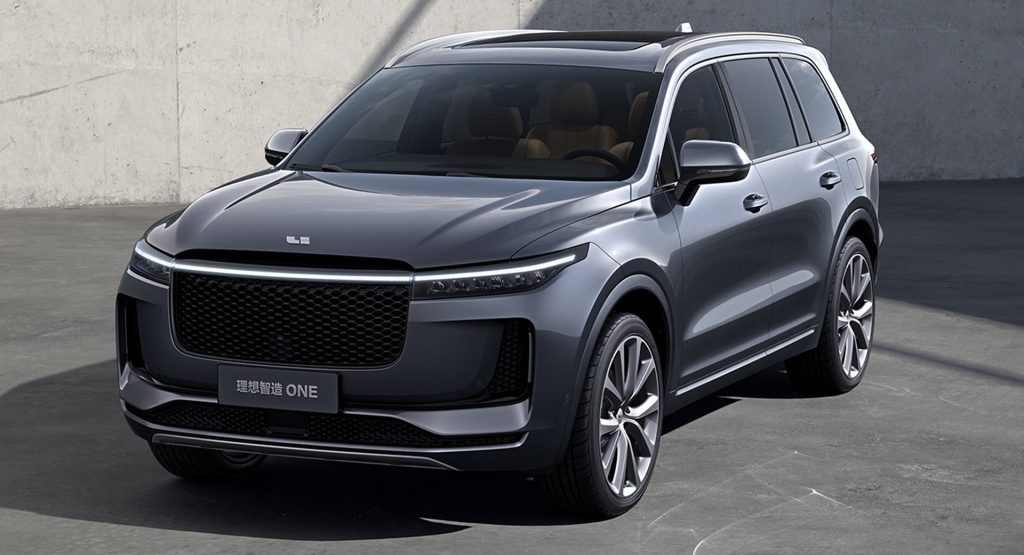
BYD has emerged as one of the most aggressive competitors. The Guardian reported that BYD’s European sales increased 163% year over year, reaching about 177,000 vehicles in the first eight months of 2026. Geely remained the leading Chinese brand in the region, with about 205,000 vehicles sold during the same period, while its sales increased 8%.
Other manufacturers are also expanding rapidly. Chery and Leapmotor have recorded triple-digit growth in the European Union, according to the same ACEA data cited by The Guardian. SAIC has also established a significant presence.
The growth is notable because European manufacturers still dominate the market by a substantial margin. Volkswagen Group alone sold around 2 million vehicles in the first eight months of 2026, according to the figures reported by The Guardian.
Chinese brands therefore do not represent an immediate replacement for Europe’s established manufacturers. The concern is what happens if their growth continues at the current pace.
A manufacturer does not need to dominate an entire market to disrupt it. Gaining a relatively small share can force competitors to reduce prices, increase incentives, or accelerate the development of new products.
That is particularly important for European manufacturers already facing high labor costs, expensive vehicle development programs, and the enormous investment required for electrification.
Chinese automakers can also compete aggressively on equipment and technology. Many Chinese vehicles arrive with large infotainment displays, extensive driver-assistance systems, advanced connectivity, and increasingly sophisticated hybrid powertrains. Competitive pricing can make those features particularly attractive to European consumers.
The challenge for established manufacturers is therefore not simply about matching vehicle prices. They must also compete on technology, software, efficiency, and product development speed.
Brussels Faces a Difficult Policy Decision
The rapid increase in Chinese hybrid imports has now moved beyond an automotive industry issue and into European trade policy.
According to The Guardian, Brussels has asked China to voluntarily reduce its hybrid exports to the European Union, with safeguards such as quotas potentially being considered if an agreement cannot be reached.
That is a significant development because imposing additional restrictions on hybrids could trigger another trade dispute with Beijing. European policymakers must balance several competing interests.
Protecting domestic manufacturers and their workers is one priority. European automakers employ hundreds of thousands of people directly and support extensive supplier networks. A rapid loss of market share could affect manufacturing investment, employment, and regional economies.
Consumers, however, have an interest in competition. Chinese manufacturers can put downward pressure on prices and offer products that may be attractive to buyers. Restricting those vehicles could reduce consumer choice or make electrified cars more expensive.
There is also a question about whether tariffs would simply encourage Chinese companies to manufacture inside Europe. That possibility is already emerging.
Reuters reported on September 22 that China’s commerce minister Wang Wentao expressed support for Chinese automakers investing in Europe. The comments came as Chinese companies consider European manufacturing operations partly in response to pressure over imports and potential local-content requirements.
Reuters also noted that Chinese plug-in hybrids currently avoid the EU’s additional tariffs applied to Chinese-made battery-electric vehicles. European production could therefore change the debate.
If Chinese manufacturers build vehicles inside the European Union, tariffs aimed at imported vehicles would become less effective. At the same time, local factories could create European jobs and increase investment.
That is one reason the issue is becoming more complicated than simply deciding whether Chinese cars should face higher duties.
The EU is also dealing with a much broader trade imbalance with China. The Guardian reported that the bloc’s trade deficit with China reached €36.5 billion in July 2026, or approximately €1.18 billion per day, with the imbalance becoming an increasingly important political issue.
The automotive industry sits directly in the middle of that discussion. For European manufacturers, the immediate concern is that Chinese companies are becoming competitive across more categories at precisely the moment established brands are attempting to restructure their businesses around electrification.
The hybrid surge is particularly important because it shows that Chinese automakers are adapting to European market conditions rather than relying on one technology.
They can sell battery-electric vehicles where charging infrastructure and incentives make them attractive, while offering plug-in hybrids and conventional hybrids to customers who remain hesitant about full electrification.
European manufacturers have traditionally had an advantage in understanding local customers, regulations, and dealer networks. That advantage remains substantial.
But the gap is narrowing. Chinese brands are expanding their distribution networks, increasing European sales and considering local manufacturing. At the same time, their products are becoming more familiar to European consumers.
The next stage of the competition could therefore be much more intense. The European Union’s response will help determine how quickly that happens. If Brussels introduces additional restrictions on Chinese hybrids, it could give European manufacturers more time to adjust.
If policymakers allow unrestricted growth, consumers could benefit from greater competition, but established manufacturers could face additional pressure. Neither path is simple.
What is clear is that the Chinese automotive challenge in Europe has moved beyond battery-electric vehicles. The rapid rise of hybrids shows that Chinese manufacturers are willing to follow demand wherever it develops.
For Europe’s automakers, that means the competitive battle is no longer simply about who can build the best electric car.
It is about who can offer the right combination of price, technology, efficiency, and powertrain choice while the industry undergoes one of its biggest transformations in decades.