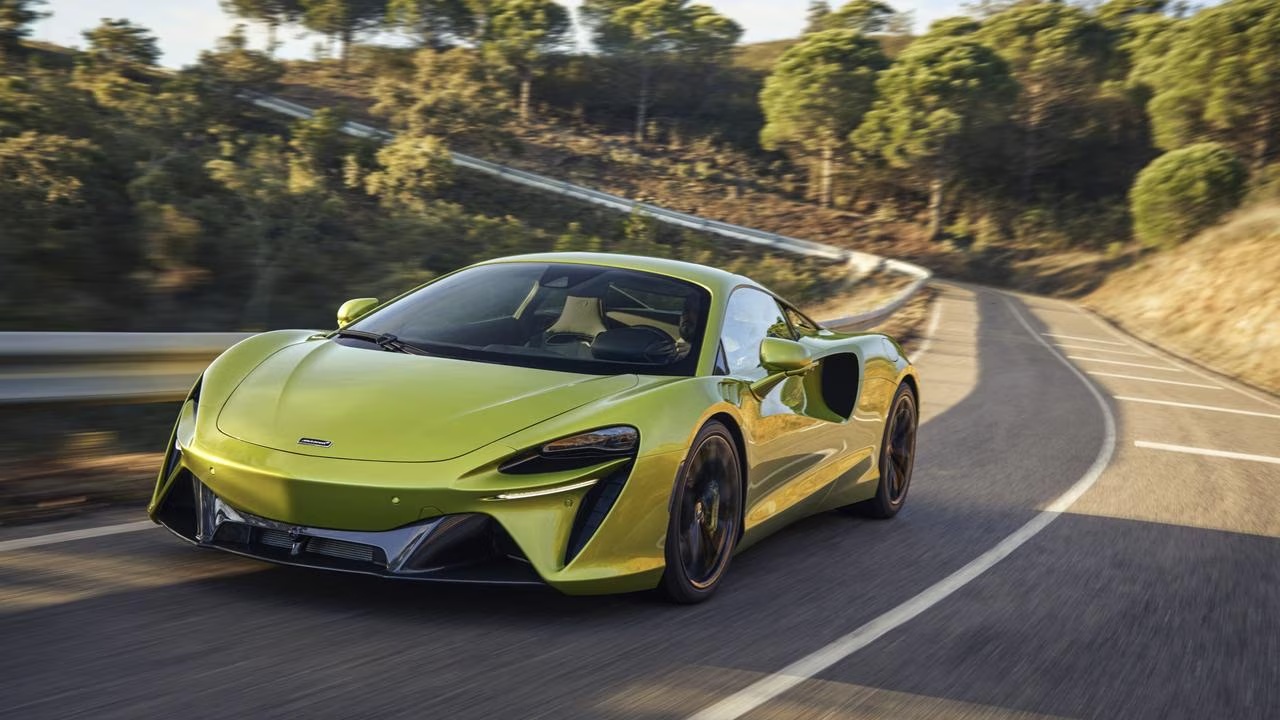
McLaren has given enthusiasts another reason to watch its future product strategy closely after filing trademark applications for two names rooted deeply in founder Bruce McLaren’s New Zealand history.
The names are Remuera and Muriwai, and McLaren filed applications for both with the UK Intellectual Property Office on September 21, 2026. The applications were also filed in the European Union, according to reporting by Motor1.
Neither name has been assigned to a confirmed production vehicle, but their appearance comes at an interesting moment for McLaren as the company prepares to expand its product portfolio and reshape its brand identity.
The timing is particularly notable because McLaren revealed an updated global brand identity on September 22, just one day after the trademark applications were submitted. The revised identity includes a new McLaren wordmark inspired by the sign that once stood above the McLaren family service station in Remuera, Auckland.
That connection makes the Remuera trademark especially meaningful, but it does not prove that a future McLaren road car will wear the name. The same is true of Muriwai.
For now, McLaren has not confirmed either name as a model, trim, special edition, or future vehicle program. Trademark filings are often defensive or strategic, allowing companies to protect names that might eventually be used without committing to a particular product.
Still, the two filings provide an intriguing glimpse at how McLaren could approach naming as it moves into a new phase of growth.
Two Names With Deep McLaren Connections
Remuera is directly connected to Bruce McLaren’s childhood and the origins of the McLaren name.
Bruce McLaren grew up in Auckland, where his parents, Les and Ruth McLaren, operated a family service station in the Remuera suburb. The garage became an important part of his early mechanical education and was the place where he began developing the engineering and racing interests that would eventually define his career.
According to McLaren’s own account of its new brand identity, the original family garage sign became the inspiration for the company’s updated wordmark. The manufacturer says the revised identity is intended to connect McLaren’s past, present, and future across both its automotive and racing operations. The connection goes beyond branding.
Bruce McLaren built the car that delivered his first racing victory using the resources and environment surrounding the family garage. That makes Remuera one of the most direct links between today’s global supercar company and the founder’s earliest automotive ambitions.
Muriwai has an equally important connection, although its story is centered more directly on racing.
In 1952, at only 15 years old, Bruce McLaren made his competitive racing debut in a hill climb near Muriwai Beach in New Zealand. He drove an Austin Ulster prepared by his family at the Remuera garage, according to Motor1’s reporting on the trademark filings.
Muriwai subsequently remained part of McLaren’s personal history. He later named his home in England after the New Zealand location. The two names therefore represent two different elements of Bruce McLaren’s early life.
Remuera represents the family garage, engineering, and the beginnings of his mechanical career. Muriwai represents competition and the moment when his interest in cars became a racing career.
That gives McLaren a considerable amount of historical material to draw from if it eventually decides to use either name on a vehicle. However, there is an important distinction between protecting a name and announcing a car. McLaren has made no such announcement.
Why the Filings Are Interesting Now
The trademark filings would be notable at any time, but their timing makes them more significant.
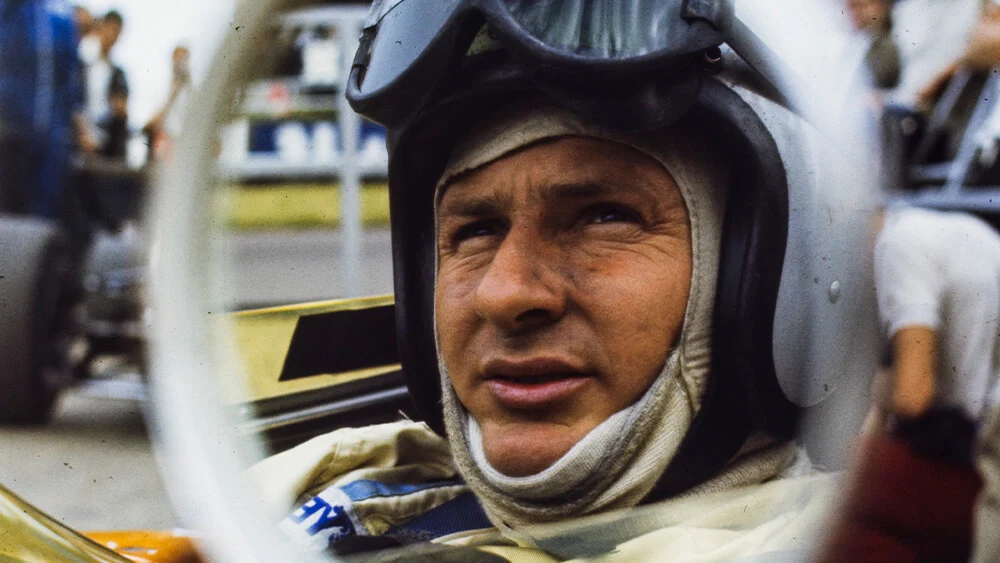
McLaren is preparing for a broader product strategy that will eventually move the company beyond its traditional focus on two-seat supercars.
The automaker has confirmed plans for a major expansion of its UK manufacturing and engineering footprint through a £500 million investment program, which McLaren says will support its next stage of growth, including an upcoming performance SUV.
That expansion could create a need for a different naming strategy. McLaren’s current road-car lineup has relied heavily on combinations of numbers and letters. Models such as the 750S have followed a naming philosophy that emphasizes performance specifications and product positioning rather than historical place names.
A move toward names such as Remuera or Muriwai would represent a noticeable departure. But it would be premature to conclude that McLaren is abandoning its alphanumeric system.
CarFwd reported that the company has not said whether either trademark will appear on a future production car. The filings could instead protect names for potential special projects, limited editions, technology programs, merchandise, or products that never reach the showroom.
Automakers regularly register trademarks that never become consumer-facing products. That is why the filings should be viewed as evidence of McLaren’s planning rather than confirmation of future models. The broader context is nevertheless important.
McLaren’s updated identity is deliberately reconnecting the modern company with Bruce McLaren’s origins. The new wordmark is based on the family service station signage, while the brand continues to use the familiar Speedmark and Speedy Kiwi elements. Papaya also remains a defining part of McLaren’s visual identity.
The company has therefore made a conscious decision to emphasize its history while preparing for future expansion. That makes heritage-inspired trademarks logical.
Rather than simply assigning another number to every future vehicle, McLaren could eventually use historically meaningful names to distinguish different parts of a broader lineup.
Such a strategy could become especially useful if the company expands beyond its traditional two-seat sports cars.
An SUV, for example, could potentially benefit from a name that gives it a stronger emotional identity rather than making it feel like another numerical derivative. But that remains speculation.
McLaren’s Future Could Look Very Different
The most important development is not necessarily whether Remuera or Muriwai becomes a badge. It is the fact that McLaren is entering a period in which its product strategy appears to be changing substantially.
For decades, McLaren Automotive has been associated primarily with high-performance two-seat cars. The McLaren F1 established the company’s reputation as a road-car manufacturer, while later models such as the 12C, 570S, 720S, and 750S developed that identity further.
The company now appears interested in reaching beyond that traditional formula. McLaren’s own September announcement specifically confirmed that its £500 million investment program will support an expansion beyond two-seat supercars, including an upcoming performance SUV.
That is a major strategic change. An SUV could dramatically increase McLaren’s potential customer base, but it would also introduce the company to buyers who may have very different expectations from traditional supercar customers.
Naming could become part of that challenge. A distinctive historical name can communicate personality in a way that a number cannot.
Porsche has built enormous value around names such as 911 and Cayenne, while Ferrari has historically used a mixture of numerical designations and names associated with people, places, and heritage.
McLaren has traditionally leaned more heavily toward numerical naming. The Remuera and Muriwai filings therefore raise the possibility that the company is considering a broader approach. There is also a marketing advantage to using names connected to Bruce McLaren.
The founder remains central to the company’s identity, and McLaren’s latest branding exercise demonstrates that the company wants to emphasize his influence. A future vehicle carrying a name connected to his life could give the product an immediate historical story.
Muriwai would be particularly powerful in that respect because it connects directly to his first competitive racing experience.
Remuera could be equally meaningful because the family garage represents the environment where Bruce McLaren first developed the mechanical skills that eventually led to the creation of the racing team bearing his name.
The two trademarks could therefore provide McLaren with a ready-made heritage vocabulary. But the company has not yet said that it will use either name. For now, the confirmed change is the brand identity. The trademarks are clues, not announcements.
That distinction will matter as McLaren continues developing its next generation of vehicles. The company is investing in manufacturing and engineering, preparing an expanded product range and placing greater emphasis on its founder’s legacy.
If either Remuera or Muriwai eventually appears on a production McLaren, the name would carry considerably more meaning than a randomly selected badge.
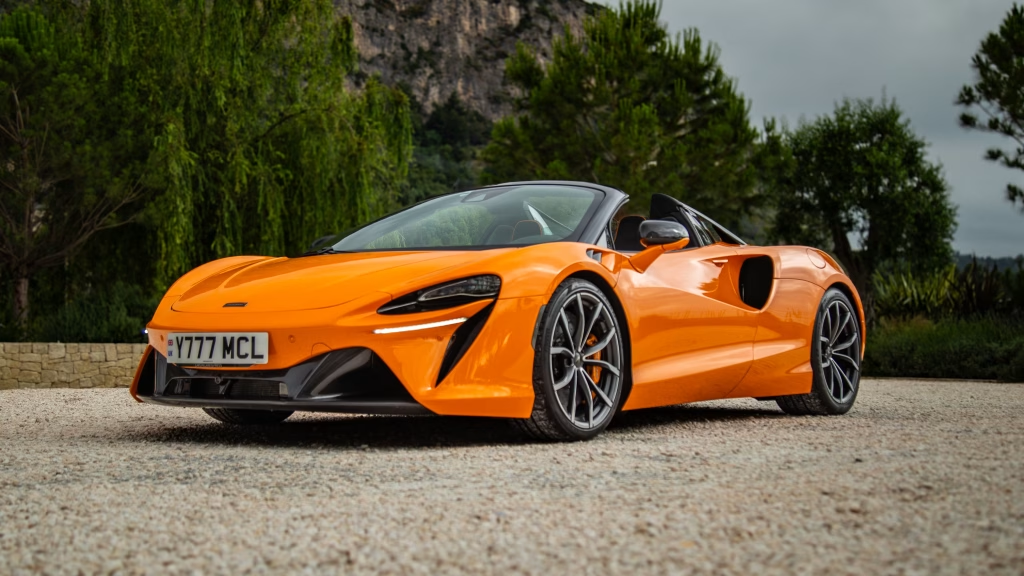
It would connect a modern supercar or performance vehicle directly to the places where Bruce McLaren’s journey began. For enthusiasts, that is what makes these otherwise routine trademark filings worth watching.
McLaren may ultimately decide that its existing numerical naming system remains the best approach. It may use one of these names for a special edition, or it may never use them publicly at all.
But the filings show that the company is protecting historically significant names at precisely the moment it is redefining its identity and expanding beyond its traditional product boundaries.
The next McLaren chapter is therefore becoming clearer, even if the names of the cars remain uncertain.
And if Remuera or Muriwai eventually appears on a McLaren badge, it would represent more than a new model name. It would bring two important pieces of Bruce McLaren’s New Zealand story back onto the road.