Alpine has provided its most detailed look yet at the next-generation A110, with the French sports-car manufacturer pursuing an unconventional solution to a major challenge for electric performance cars. The goal is to add significant battery capacity while preserving the low, lightweight character that defines a sports car.
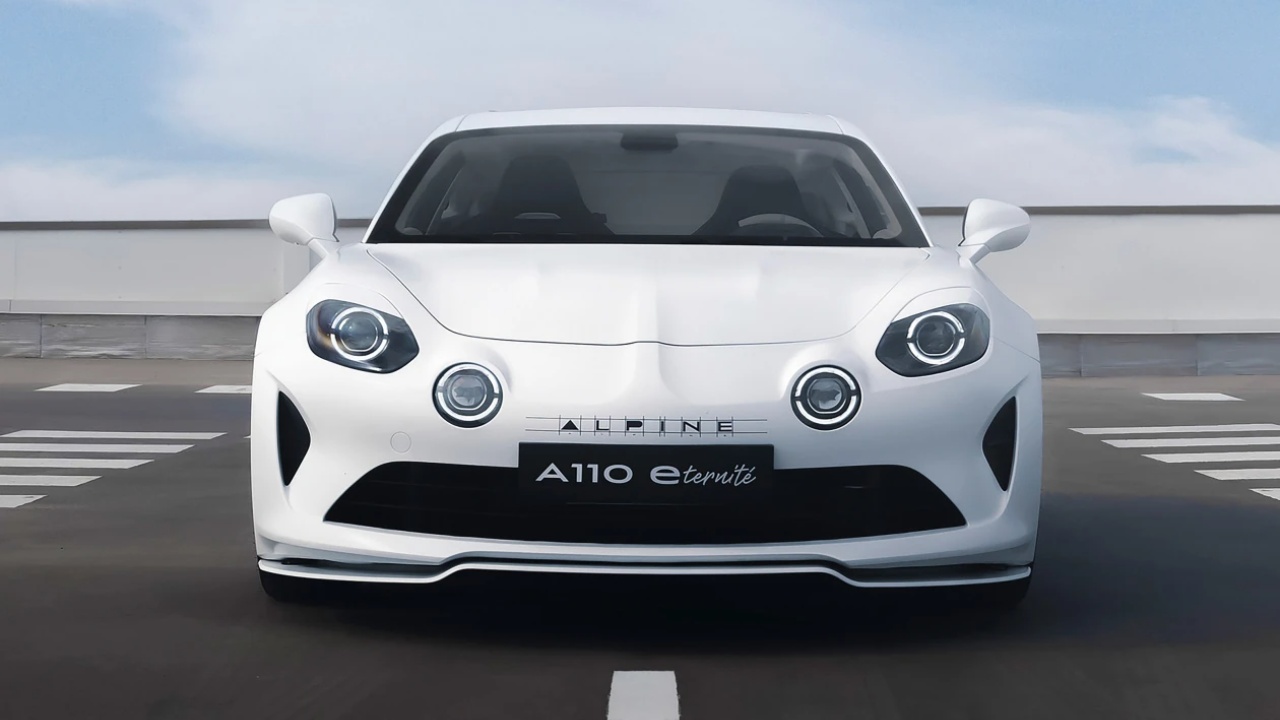
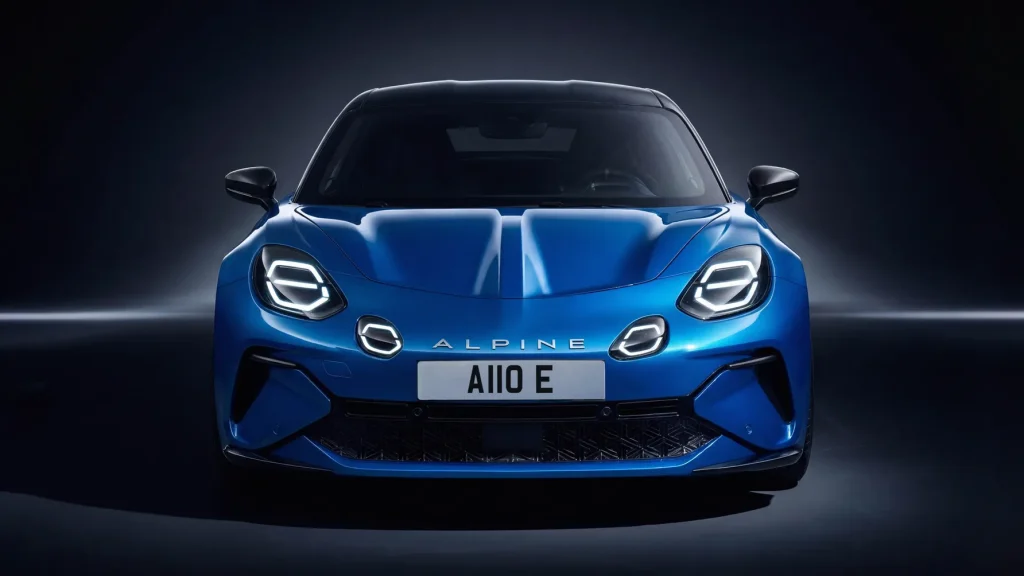
On September 28, Alpine presented a full-size sculpture offering a preview of the third-generation A110. The iconic two-seat sports car is set to enter the electric era, with the production model expected to arrive in 2027. It will be based on Alpine’s dedicated Performance Platform, known as APP.
The most significant engineering feature sits underneath the body. Rather than using one large battery pack beneath the entire passenger compartment, Alpine has developed a two-section battery arrangement, with one pack positioned toward the front and the other toward the rear.
The approach is intended to preserve the A110’s low seating position and familiar sports-car proportions.
That decision addresses a major challenge created by conventional EV architecture. Large flat batteries are normally installed beneath the passenger compartment, but doing so can raise the floor. While that compromise is easier to accept in a crossover or sedan, it can fundamentally alter the driving position and proportions of a low two-seat sports car.
Alpine is attempting to avoid that problem while keeping the qualities that have defined the A110.
Why Alpine Is Splitting the Battery
The current A110 has long followed a straightforward philosophy of staying light, low, and agile. That principle has defined the modern A110 since its introduction in 2017, meaning the electric successor cannot simply follow the formula of a heavy performance EV fitted with a massive battery.
Alpine says the APP architecture was developed specifically to address the challenges of weight, packaging, and electrification. Splitting the battery into two sections helps maintain a targeted 40:60 front-to-rear weight distribution, which is important for preserving the balanced handling expected of a sports car.
The system uses 800-volt cell-to-pack technology, with the battery energy divided between the two sections. Earlier technical information from Alpine indicates that the front section contains about 25% of the battery’s energy, while the rear section carries the remaining 75%.
The uneven distribution reflects the vehicle’s architecture. The larger rear section sits closer to the rear axle and works with the electric powertrain, while the smaller front section allows Alpine to distribute battery mass without raising the entire passenger compartment.
The battery packs are integrated into aluminum structures within the APP platform. Alpine says the architecture is designed to contribute to structural stiffness while keeping the package compact.
That distinction is important because Alpine is not simply trying to make an electric A110 that accelerates quickly. It wants the new car to retain the driving character associated with the name.
Electric motors can deliver enormous acceleration relatively easily, but Alpine’s challenge is preserving the light-footed behavior that has traditionally separated the A110 from heavier performance cars.
The company is therefore developing the platform around weight distribution, suspension response, steering, braking, and torque control rather than focusing only on horsepower.
The technology is already being tested dynamically. At the 2026 Goodwood Festival of Speed, Alpine development driver and Formula 1 driver Pierre Gasly drove an A110 FUTURE development mule up the famous hill climb.
The development vehicle used a modified version of the existing A110 body, allowing Alpine to test the new architecture while keeping the final production design hidden.
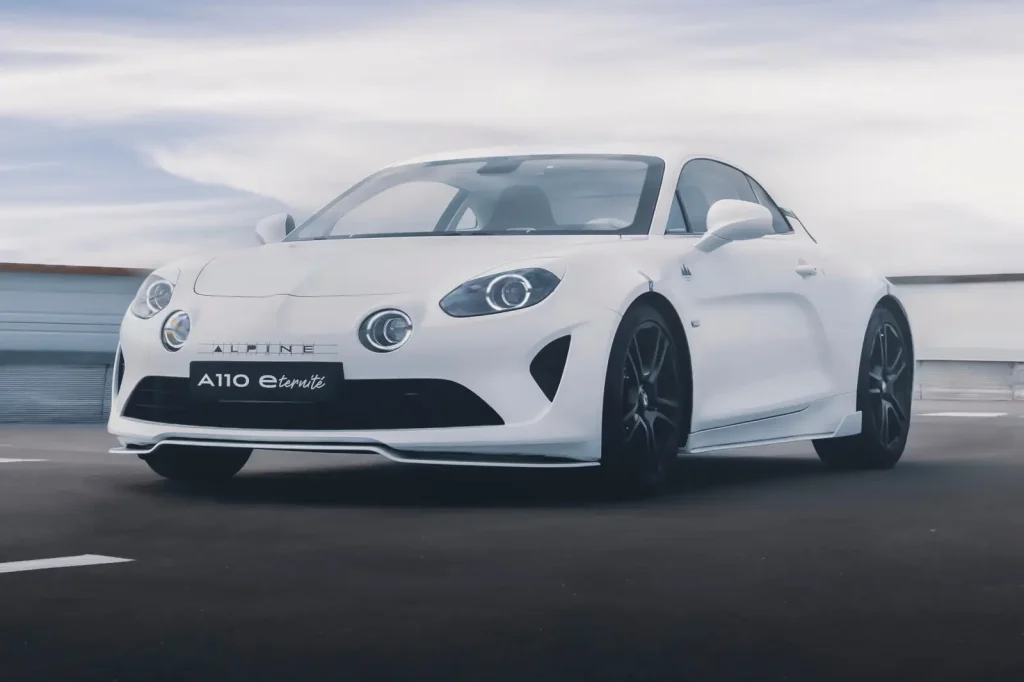
The September 28 sculpture now provides the first official preview of that design. Alpine says the third-generation car will retain the recognizable proportions and stance associated with the A110 while introducing a more contemporary interpretation. The sculpture is also scheduled to appear at the Paris Motor Show beginning October 12.
The Electric A110 Is Being Engineered Around Agility
The battery is only one part of Alpine’s strategy. The APP platform will also use a dual-motor rear electric powertrain, giving the car independent control of torque at the rear wheels. The system combines silicon-carbide inverters with an 800-volt electrical architecture.
This allows Alpine to control the car’s behavior more precisely than a conventional mechanical differential can. The company calls the system Active Torque Vectoring 2.0, and its purpose is to improve cornering behavior while reducing understeer.
For a lightweight sports car, that capability can be particularly important. A heavy EV can use enormous power to compensate for its mass, but Alpine is pursuing a different formula. The company wants the driver to feel the car rotate into corners and respond naturally to steering inputs.
The permanent-magnet synchronous motors can reportedly reach speeds of up to 21,500 rpm. Alpine has not yet released final production power or acceleration figures, so claims about the finished car’s ultimate performance remain premature.
What is already clear is the vehicle’s basic philosophy. The A110 will remain a two-seat, rear-wheel-drive-oriented sports car, while the APP platform itself can support both rear-wheel-drive and all-wheel-drive configurations. Alpine says the A110’s version uses the rear dual-motor setup and is being developed around precise torque control.
That suggests the electric A110 is being engineered as a driver’s car rather than simply another high-performance EV.
The APP platform is also modular, giving Alpine the potential to apply its technology to other body styles and drivetrain configurations in the future. The A110 is arguably its most demanding application because it places the greatest emphasis on low weight, compact dimensions, and handling.
If Alpine can make a low-electric sports car work without sacrificing usability or driving character, the architecture could influence future performance products from the brand.
There is also a strategic reason for taking such an unusual approach. The A110 is one of Alpine’s strongest brand assets. Its identity is closely associated with lightweight construction, compact dimensions, and motorsport heritage. Simply replacing it with a conventional electric coupe could risk losing the characteristics that make the car distinctive.
The two-battery layout is therefore more than an engineering curiosity. It represents an attempt to make electrification fit around the identity of the A110 rather than forcing the A110 to conform to a conventional EV architecture.
A Different Answer to the Electric Sports-Car Problem
The next-generation A110 arrives as performance-car manufacturers face a difficult tradeoff. Electric power can produce extraordinary acceleration, but adding more battery capacity also adds weight. More battery can increase range, yet more mass can reduce agility.
Alpine is attacking that problem by redesigning the vehicle around battery packaging rather than simply increasing battery size and accepting the consequences.
Dividing the battery into two sections allows Alpine to position the energy storage in different parts of the chassis. This helps lower the driving position and preserve the proportions of a traditional sports car while still delivering the benefits of modern EV technology.
The company is also emphasizing lightweight construction. The APP platform uses an aluminum architecture intended to provide high stiffness without unnecessary mass. Alpine’s objective is to produce an electric sports car that feels lighter and more responsive than conventional performance EVs.
Whether that strategy succeeds will ultimately depend on specifications Alpine has not yet revealed. The company has not fully disclosed the production car’s final battery capacity, range, power output, or curb weight. U.S. availability and pricing have also not been announced.
For now, the clearest message is that Alpine does not want the electric A110 to become a generic battery-powered sports coupe.
The design preview reinforces that goal. The third-generation model is expected to retain recognizable elements of the original Berlinette and current A110 while introducing a modern design language.
That balance will be critical when the production car arrives in 2027. The current A110 has earned its reputation through qualities that cannot be measured by horsepower alone. It is compact, relatively light, and focused on steering feel and agility. Its successor must preserve those qualities while carrying the additional technology required for electrification.
Alpine’s two-battery architecture suggests the company understands the challenge. Instead of treating the battery as something that simply occupies space beneath the floor, engineers have made battery placement part of the vehicle’s performance strategy.
The result could make the next A110 one of the more interesting electric sports cars of the next few years.
Important details remain unknown, but the basic engineering direction is already clear. The next A110 will be electric, yet Alpine is attempting to prevent electrification from dictating the entire character of the car.
By splitting the battery into two sections, maintaining a low seating position, targeting a 40:60 weight distribution, and combining the architecture with advanced rear torque control, Alpine is taking a distinctly different approach to the electric sports-car problem.
If the production model delivers on that promise, the 2027 A110 could demonstrate that an electric sports car does not have to become large and heavy to remain engaging to drive. Its success may ultimately be measured not by acceleration alone, but by whether it still feels unmistakably like an A110.