
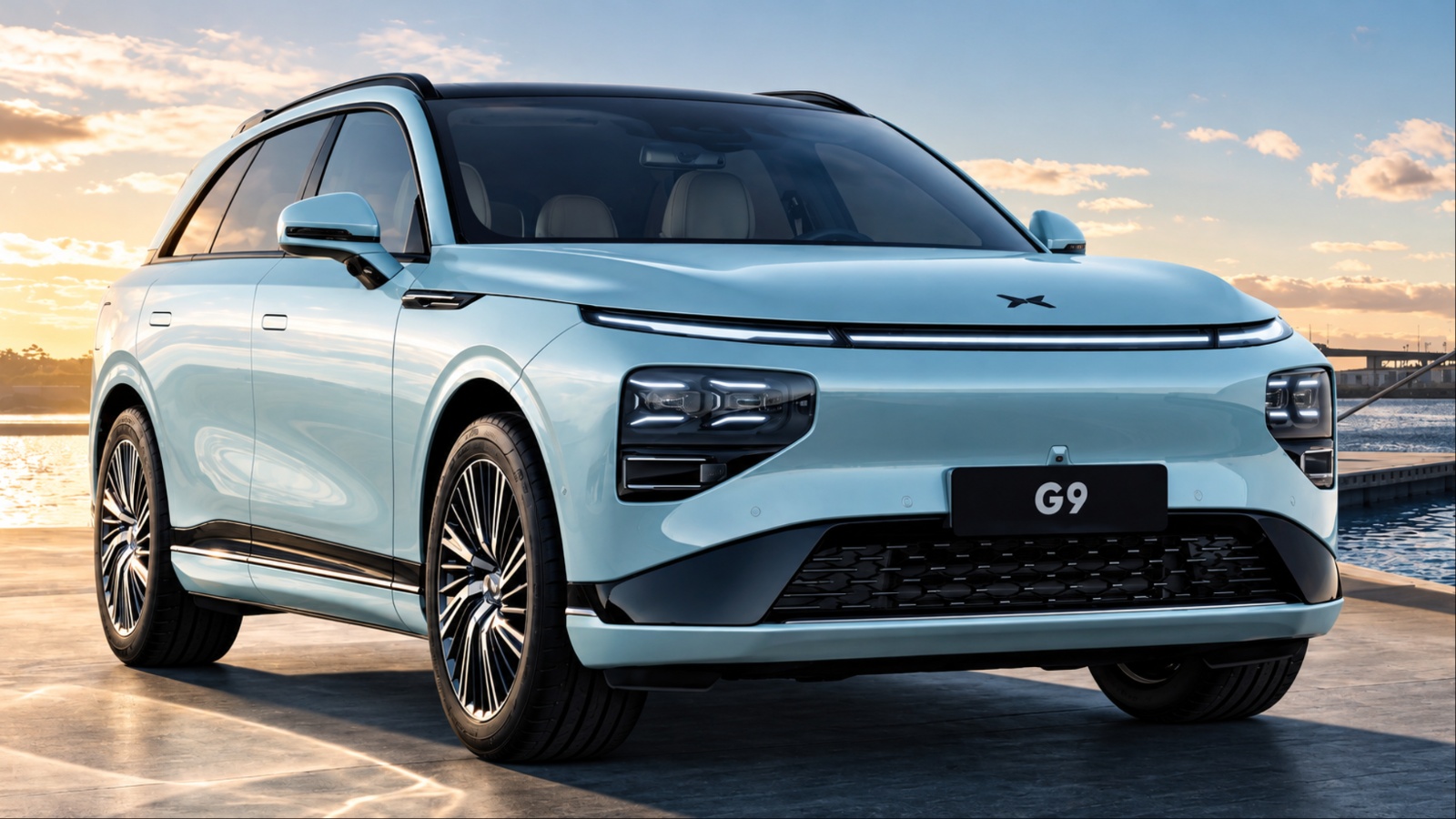
XPeng is turning one of its biggest advantages in the electric vehicle market into a new source of business as the Chinese automaker expands into carbon-credit trading with global manufacturers.
The company has signed carbon-credit agreements with Porsche and other international automakers covering markets including the European Union, the United Kingdom, and Australia.
According to Gasgoo, the agreements are worth more than 1 billion yuan, or roughly $140 million at recent exchange rates.
These transactions point to a growing trend in the global automotive industry. Automakers that sell large numbers of electrified vehicles can accumulate regulatory credits, creating another potential source of revenue for manufacturers working to meet increasingly strict emissions requirements.
For XPeng, the deals represent more than an additional revenue stream. They demonstrate how China’s rapid expansion in electric vehicles is creating commercial opportunities beyond the direct sale of cars.
Automakers with strong EV production and sales can potentially monetize their regulatory position by transferring credits to companies that need them to satisfy environmental requirements.
The arrangement with Porsche is particularly notable because it connects a fast-growing Chinese EV manufacturer with one of Europe’s most established performance and luxury brands.
XPeng Turns EV Growth Into a New Business Opportunity
Carbon-credit systems vary between countries and regions, but the basic principle is relatively straightforward.
Governments and regulators establish emissions targets for manufacturers, while companies that exceed certain requirements can generate credits or other compliance benefits. Automakers that fall short may need to purchase credits or take other measures to meet regulatory obligations.
Electric vehicles can be particularly valuable within these systems because they produce no tailpipe emissions during operation.
Manufacturers selling significant numbers of battery-electric vehicles can therefore find themselves in a stronger compliance position than companies whose portfolios remain heavily dependent on gasoline and hybrid models. XPeng’s rapidly expanding EV business puts the company in that position.
Rather than allowing the regulatory value of its electrification strategy to remain an indirect benefit, XPeng is now monetizing part of it through agreements with other automakers. Gasgoo reported that the latest transactions cover multiple international markets, including the EU, UK, and Australia.
The reported value of more than 1 billion yuan gives the deals considerable significance. It also suggests that carbon compliance is becoming a meaningful commercial consideration for automakers as emissions regulations become more demanding.
The development is particularly interesting because XPeng is still primarily known as an EV manufacturer. The company has invested heavily in electric vehicles, advanced driver-assistance technology, and intelligent vehicle systems as it competes with other Chinese manufacturers and established global automakers.
Carbon-credit trading adds another dimension to that strategy. The company can potentially use its position as a high-volume EV producer to generate additional financial returns without necessarily increasing vehicle prices or introducing a new consumer product.
For an industry facing substantial development costs, manufacturing investment, and intense price competition, this can provide a useful source of supplementary revenue.
Porsche and Global Automakers Face Different Regulatory Pressures
Porsche’s involvement illustrates why carbon credits can have value for established automakers.
The German manufacturer has expanded its electric lineup with vehicles such as the Taycan and electric Macan, but it continues to sell a broad range of combustion-powered performance vehicles. Its product mix is therefore different from that of an EV-focused company such as XPeng.
Luxury and performance brands also face a particular challenge when tightening emissions rules collide with customer demand for high-performance vehicles. Larger engines, higher power outputs, and heavier vehicles can make regulatory compliance more difficult compared with a portfolio dominated by smaller electric vehicles.
Purchasing credits from another manufacturer can provide one way of managing that gap. The economics become more complicated across different jurisdictions because emissions rules are not identical worldwide.
The EU has its own fleet-emissions framework, while the UK operates its own regulatory system following Brexit. Australia has also introduced increasingly stringent vehicle-efficiency requirements.
XPeng’s reported agreements covering these markets therefore demonstrate that carbon credits are becoming part of a broader international compliance market rather than remaining limited to a single country’s regulatory system.
For manufacturers, the financial value of credits can change depending on supply, demand, and regulatory requirements. If more companies struggle to meet emissions targets, demand for credits can increase. Conversely, if manufacturers rapidly expand EV production, the supply of credits can grow and potentially reduce their value.
That creates an unusual situation in which the success of electric vehicles can influence the economics of competitors that still rely heavily on combustion engines.
For XPeng, this is potentially advantageous. Every additional EV sold can contribute to the company’s core automotive business while strengthening its position in regulatory markets where credits are valuable.
China’s EV Advantage Is Expanding Beyond Vehicle Sales
The XPeng deals also highlight the increasingly international consequences of China’s dominance in electric vehicle manufacturing.
Chinese automakers have spent years building EV production capacity, battery supply chains, and software capabilities. Companies including XPeng, BYD, NIO, and others have expanded their electric lineups while competing aggressively on price, technology, and features.
That investment has created a different competitive position from that of many traditional automakers.
Legacy manufacturers are simultaneously trying to transition their fleets toward electric vehicles while continuing to support existing gasoline and hybrid businesses.
The transition requires enormous capital investment because companies must develop new platforms, batteries, software systems, and manufacturing processes while maintaining their existing operations.
Chinese EV manufacturers that were built around electrification do not face the same transition.
XPeng can therefore potentially benefit from its EV-focused business in two separate ways. The company can sell electric vehicles directly to consumers while also using the regulatory benefits associated with those vehicles to participate in carbon-credit markets.
The reported value of the latest agreements shows why this opportunity deserves attention. More than 1 billion yuan would be a relatively small figure compared with the global automotive industry’s total revenues, but it is substantial enough to demonstrate that carbon compliance can become a meaningful business rather than simply an administrative requirement.
It also raises the possibility that other EV manufacturers could pursue similar strategies as international regulations become more complex.
The emergence of carbon-credit trading as an automotive business opportunity could eventually make regulatory performance another competitive advantage. Automakers would not only compete on vehicle efficiency, battery range, charging speeds, or software. Their ability to generate compliance value could also affect their financial performance.
For Porsche and other manufacturers purchasing credits, the deals provide flexibility as they manage the transition toward lower-emission vehicle portfolios. Rather than immediately restructuring every part of their product strategy to eliminate regulatory gaps, they can use credits as one component of their compliance approach.
However, credits cannot replace the need for long-term electrification. Regulations in major markets are generally becoming more demanding, meaning manufacturers will ultimately need to reduce the emissions intensity of their fleets rather than depend indefinitely on purchased credits.
That makes XPeng’s position potentially temporary as well as commercially attractive. As Porsche and other established automakers sell more EVs and introduce increasingly electrified product portfolios, their need for external credits could decline.
For now, though, XPeng has an opportunity to benefit from the gap between EV-focused manufacturers and companies still navigating the transition.
The agreements with Porsche and other global automakers demonstrate how the consequences of the EV transition are spreading beyond traditional vehicle sales.
XPeng is effectively monetizing part of the regulatory advantage created by its electric vehicle business, while international automakers gain another tool for managing emissions requirements.
The reported 1 billion yuan-plus value of the deals makes them particularly significant. It suggests that carbon compliance is developing into a market with enough financial scale to attract major automotive players.
As global emissions regulations continue to tighten and electric vehicle sales increase, similar transactions could become more common. The result could be a new layer of competition in which an automaker’s ability to generate and trade environmental credits becomes a valuable extension of its underlying vehicle business.
For XPeng, that could turn the company’s EV expertise into something larger than a manufacturing advantage. It could become another source of revenue in an industry where electrification is reshaping not only the cars being sold but also the economics surrounding their production and ownership.
