Norwegian synthetic-graphite producer Vianode is searching for a new strategic partner to provide capital and industrial expertise as it works to expand battery-material production for the electric-vehicle industry.
The company is also considering a potential sale, highlighting the financial pressure facing battery-material businesses as automakers adjust their EV investment plans.
According to Reuters, Vianode has hired JPMorgan to help identify potential partners and wants to secure a new arrangement by the end of 2026. Chief executive Burkhard Straube said the company is considering both a strategic partnership and a sale.
The search comes as battery-material companies face a more difficult funding environment. EV demand has grown more slowly than many manufacturers expected, while major battery projects require enormous investment before they begin generating significant revenue.
Vianode’s situation is particularly important to General Motors, which signed a multibillion-dollar agreement with the Norwegian company in 2025 to secure synthetic graphite for future EV batteries.
Vianode Needs Capital to Scale Production
Vianode specializes in synthetic graphite, a material used in the anodes of lithium-ion batteries. Graphite is required in substantial quantities, making secure supplies increasingly important as global battery production expands.
The company has developed a production process designed to reduce the carbon footprint of synthetic graphite. Vianode says its technology can produce anode graphite with up to 90% lower greenhouse-gas emissions than conventional synthetic-graphite production, depending on the comparison and energy source.
That environmental advantage is an important part of Vianode’s proposition to automakers. As manufacturers attempt to reduce emissions across their supply chains, lower-carbon battery materials could become increasingly valuable. The challenge is scaling the technology economically.
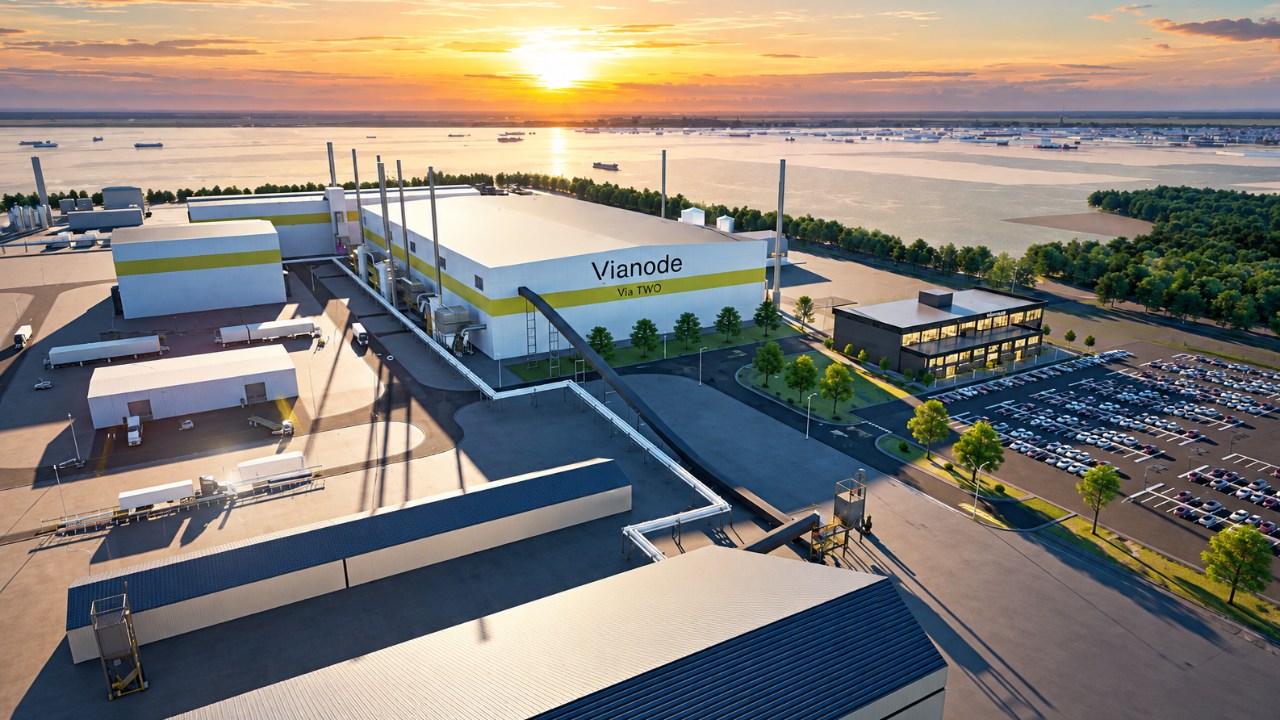
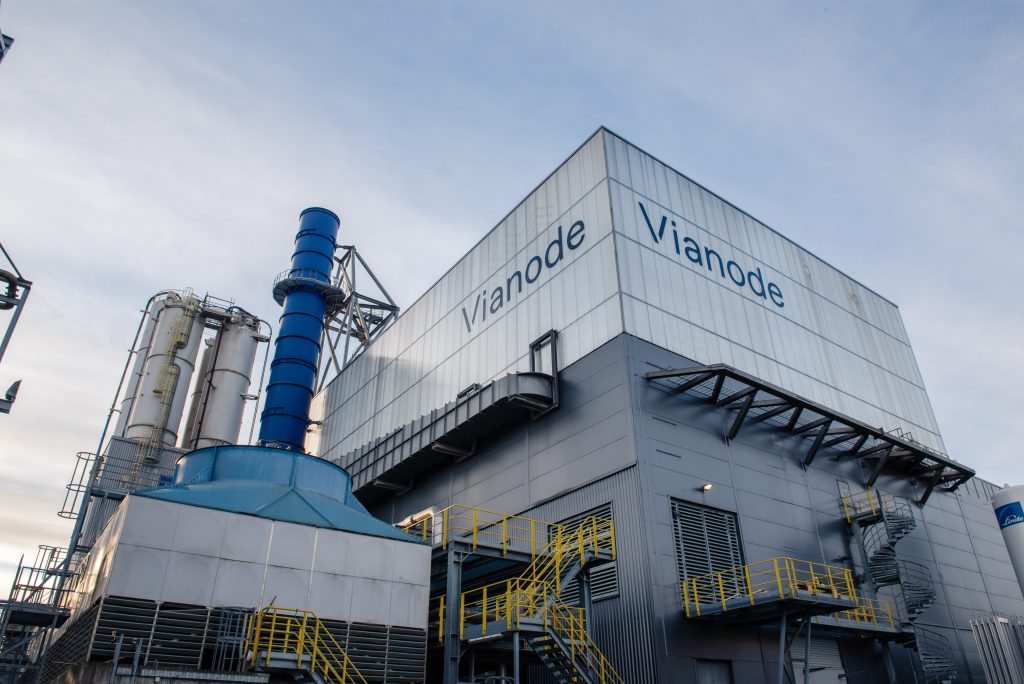
Vianode already operates Via ONE at Herøya in Norway, which provides an industrial base for its technology. The company is now developing Via TWO in St. Thomas, Ontario, as a much larger facility intended to serve the North American battery market.
The Ontario project is central to Vianode’s growth plans, but Reuters reported that production has been delayed and is now expected to begin in 2029. That increases the importance of finding a financially strong partner capable of supporting construction and the production ramp-up.
A suitable partner could provide more than capital. Industrial expertise could help with manufacturing, procurement, supply chain management, and customer development. A full acquisition could provide an even stronger balance sheet, while a strategic partnership could allow Vianode to retain greater independence.
GM Has a Strategic Interest in the Outcome
Vianode’s financial search matters to GM because graphite is an essential material in lithium-ion batteries.
GM’s multibillion-dollar agreement with Vianode was intended to provide the automaker with a secure source of synthetic graphite as it develops its electric-vehicle battery operations. The agreement also fits GM’s broader effort to diversify and regionalize its battery supply chain.
Graphite has become a strategic concern because China has a dominant position in the global graphite industry, particularly in processing material for battery applications.
Automakers and governments in North America and Europe are therefore looking for alternative sources that can reduce exposure to trade restrictions, geopolitical tensions, and supply disruptions.
Vianode’s planned Canadian operation could provide GM with a regional source of battery-grade graphite produced outside China’s dominant supply chain. Its location would also put production closer to North American battery plants and vehicle factories.
However, a customer agreement does not remove the challenge of building production capacity. Vianode still has to finance the Ontario facility, complete construction, and demonstrate reliable large-scale output.
If additional delays or financing problems emerge, GM could face uncertainty around the timing of future graphite supplies. That makes the outcome of Vianode’s current partner search relevant to the automaker’s longer-term battery strategy.
Why Synthetic Graphite Matters
Graphite is used in the anode of lithium-ion battery cells, where it stores and releases lithium ions during charging and discharging. Although lithium often receives more attention, graphite is equally important to battery manufacturing.
There are two principal sources of battery-grade graphite. Natural graphite is mined and processed, while synthetic graphite is manufactured from carbon-based feedstocks.
Synthetic graphite can provide consistent properties and can be engineered for particular battery applications, but conventional production can require significant energy. Vianode is attempting to differentiate its product through a lower-emissions manufacturing process that relies on efficient production and renewable electricity.
The company says its process can sharply reduce emissions compared with traditional synthetic-graphite manufacturing. That could become increasingly relevant as automakers examine the carbon footprint of batteries beyond the vehicles’ tailpipes.
Battery-Material Funding Has Become More Difficult
Vianode’s search for backing comes during a broader reassessment of investment across the battery industry.
Many automakers and investors previously committed billions of dollars to battery factories and raw-material projects on expectations that EV adoption would accelerate rapidly.
Demand has since become more uneven, and manufacturers have responded by delaying some investments, adjusting production targets, and placing greater emphasis on profitability.
Those changes affect material suppliers because their business cases depend on long-term growth in battery production. A graphite producer can have major customer agreements and promising technology but still require substantial financing before a large factory becomes commercially productive.
The collapse of Swedish battery manufacturer Northvolt has become a major warning about the difficulties involved in scaling new battery businesses.
Northvolt had major customers and significant financial backing but ultimately faced serious production and funding challenges. For Vianode, that environment makes the choice of partner especially important.
Canada Is Central to Vianode’s Expansion
Via TWO in Ontario is the centerpiece of Vianode’s North American strategy. The planned facility is intended to supply synthetic graphite to battery manufacturers and automakers in the region, helping create a more localized supply chain for a material that currently depends heavily on Asian processing.
But the benefits depend on the project reaching commercial production. With output now expected in 2029, Vianode must secure financing, maintain customer confidence, and manage development for several more years.
Finding a partner by the end of 2026 could therefore become a crucial milestone. A new investor could help keep the Ontario project moving while giving Vianode additional resources to develop its wider business.
Vianode’s search is about more than its ownership structure. It reflects the larger challenge of building a battery supply chain that is secure, regional, and less carbon-intensive.
For GM, Vianode could become an important source of synthetic graphite for future batteries. For Vianode, GM’s agreement provides evidence that major automakers are willing to commit to its technology.

The remaining challenge is turning those commercial relationships into reliable industrial production.
A successful strategic partnership could accelerate Via TWO, strengthen Vianode’s finances, and provide the manufacturing expertise needed to reach large-scale output. A sale to a well-capitalized industrial buyer could achieve similar goals while changing the company’s ownership and strategic direction.
Vianode has an operating facility, proprietary technology, major customer interest, and an ambitious North American expansion plan. What it needs now is the financial and industrial backing to connect those pieces.
That search for a partner or buyer is a critical moment for the company. If Vianode secures the right backing, it could strengthen an alternative source of battery-grade graphite for North America and help GM build a more diversified battery supply chain. If financing remains difficult, however, the Ontario expansion could face further pressure.
For an EV industry increasingly focused on cost, supply security, and lower-carbon manufacturing, Vianode’s next corporate decision could have consequences well beyond one Norwegian battery-material producer.