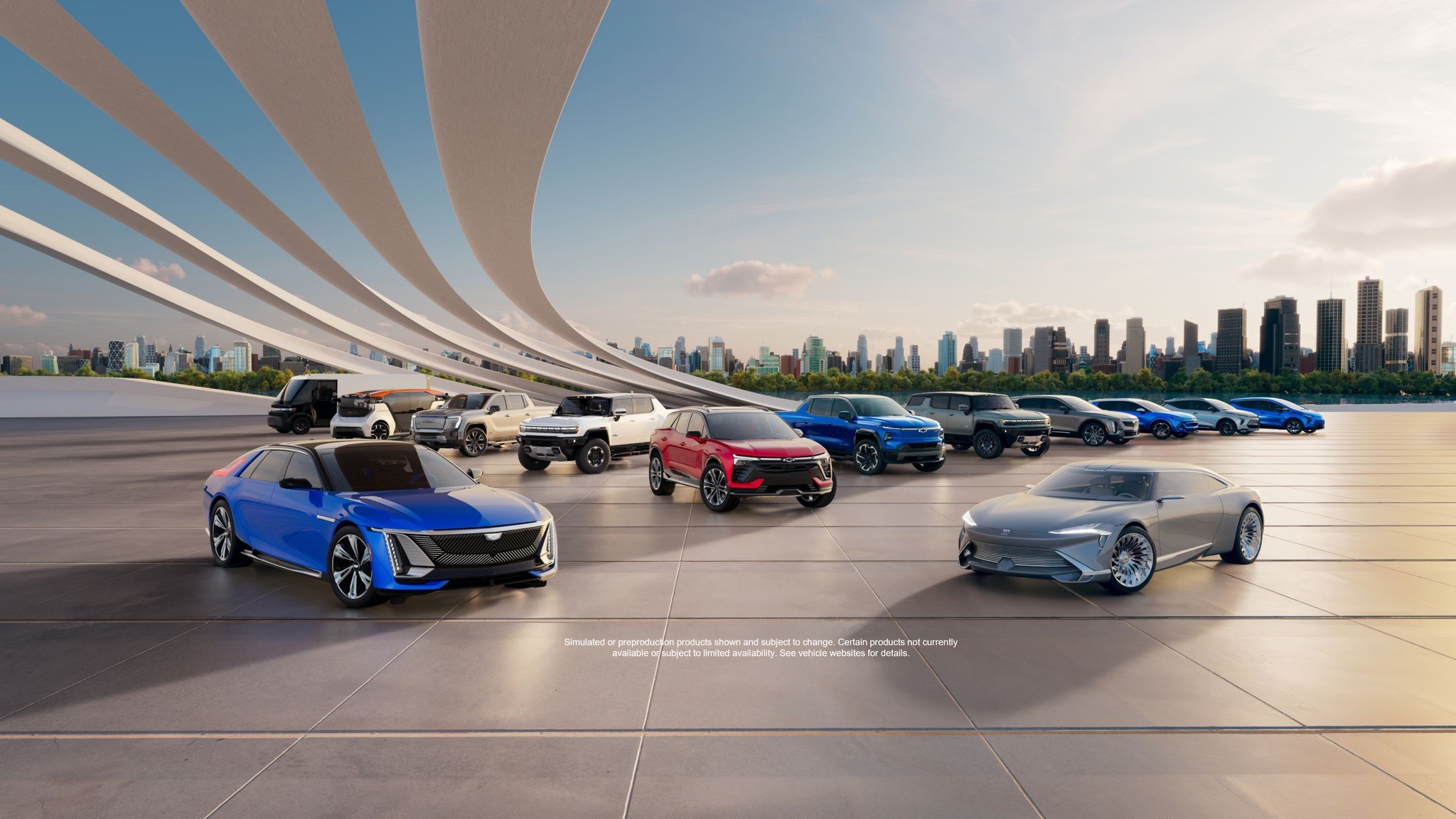
General Motors and LG Energy Solution are upgrading their battery manufacturing operation in Tennessee as the automaker looks for ways to lower electric-vehicle costs and make future EVs more competitive in a U.S. market where demand has developed more slowly than many manufacturers expected.
The companies announced September 29 that their Ultium Cells joint venture will modify its Spring Hill, Tennessee, facility to produce lithium manganese-rich, or LMR, prismatic battery cells for future GM electric vehicles. Construction and facility modifications are expected to begin later in 2026 and be completed in 2028.
GM and LG say LMR cells could deliver 33% greater energy density than lithium iron phosphate, or LFP, cells at a comparable cost. If that advantage can be achieved in mass production, GM could lower battery costs without giving up as much range as it might with a conventional low-cost cell.
The Tennessee project is also expected to create about 500 additional jobs. Ultium Cells says Spring Hill is expected to become the first facility in the world to mass-produce prismatic LMR battery cells.
The investment comes as GM adjusts its EV plans following slower demand growth, changing federal incentives, and increased pressure to make electric vehicles more affordable.
GM Wants a Middle Ground on Battery Cost and Range
Battery chemistry has become one of the most important decisions in EV development because the battery pack represents a major portion of vehicle manufacturing cost. Improving energy density or lowering material costs can therefore affect both the price paid by customers and the profit an automaker earns.
LFP batteries have become popular for lower-cost EVs because they avoid expensive nickel and cobalt and offer strong durability and safety characteristics. Their energy density, however, is generally lower than that of some nickel-rich batteries.
GM has already begun producing LFP cells at Spring Hill for LG Energy Solution’s energy-storage business. The company is now preparing the facility for LMR production aimed at future electric vehicles.
LMR is intended to occupy a middle position between lower-cost LFP technology and more expensive high-nickel chemistries. Manganese can be less expensive than some of the materials used in high-nickel cells, while LMR can potentially offer greater energy density than LFP.
That combination could give GM several options. If the technology performs as expected, the company could use a smaller battery to achieve a similar driving range, reducing weight and material requirements. Alternatively, GM could use the higher energy density to increase range without making the battery pack substantially larger.
There are still technical challenges. LMR cells must demonstrate long-term durability, capacity retention, and reliable charging performance before they can become a major automotive technology.
A development target does not automatically translate into a production battery that can withstand years of real-world use. The companies have not yet identified which specific GM models will use the new cells.
Spring Hill Is Becoming a Flexible Battery Hub
The LMR upgrade is part of a much larger investment in the Tennessee facility. Ultium Cells says the combined investment connected with LMR production, energy storage, and additional improvements at Spring Hill will reach approximately $1 billion by 2030.
The plant is expected to support high-nickel, LFP, and LMR battery technologies, allowing GM to match battery chemistry with the needs of individual vehicles.
The energy-storage operation adds another layer of flexibility. LFP cells produced at Spring Hill are being used for stationary energy-storage applications, giving the facility a market beyond vehicle production.
That diversification matters because automotive demand can fluctuate. The U.S. EV market continues to expand, but adoption has not followed the extremely aggressive trajectory many automakers anticipated earlier in the decade.
Several manufacturers have consequently adjusted production schedules and investment plans while continuing to develop battery technology.
A factory capable of producing multiple chemistries can potentially respond more effectively to those changes than a facility dedicated to one type of cell.
Slower EV Demand Is Forcing a New Cost Strategy
GM’s Tennessee investment comes during a broad reassessment of electric-vehicle economics across the U.S. auto industry.
Automakers committed billions of dollars to EV platforms, battery factories, and supply chains after anticipating rapid consumer adoption. In practice, buyers have remained sensitive to vehicle prices, charging convenience, range, and the availability of incentives.
That has made cost reduction a central priority. GM needs future EVs to provide enough range and performance to compete with gasoline-powered vehicles while becoming affordable enough to attract mainstream customers. Battery chemistry offers one of the clearest opportunities to achieve both goals.
If LMR can provide substantially greater energy density than LFP without a major cost increase, GM could use the technology in several ways. It could lower vehicle prices, improve margins, increase range, or divide the benefit between the customer and the company.
American manufacturers are under pressure to control costs at every stage of production, from raw materials to cells and vehicle assembly.
GM’s investment in LMR is therefore not simply about developing a new battery. It is an attempt to improve the economics of the entire EV business.
Domestic Battery Production Remains Important
The Spring Hill project also strengthens GM’s domestic battery manufacturing network. Producing cells in Tennessee gives the automaker greater control over its supply chain and supports the broader U.S. EV manufacturing base. The expected addition of roughly 500 jobs also reinforces the facility’s importance to the local economy.
The project arrives as the U.S. battery industry is becoming more diverse. Manufacturers are no longer simply building factories around established chemistries. They are increasingly trying to make facilities adaptable enough to accommodate new cell designs and changing market requirements.
That adaptability could prove valuable as battery technology continues to evolve. No single chemistry is guaranteed to dominate the EV market. LFP remains attractive where low cost is the priority, high-nickel cells remain useful for applications demanding high energy density, and LMR could offer a compromise between the two.
GM’s strategy reflects that reality. Instead of betting its entire EV program on one technology, it is building a system in which different cells can serve different purposes.
A Major Test for GM’s Future EV Lineup
The real test will begin when LMR cells move from development into vehicle production. GM needs the technology to deliver more than a strong specification. The cells must remain reliable through years of charging cycles, operate across different temperatures, and maintain predictable performance in real-world conditions.

Manufacturing cost will be equally important. If LMR proves more expensive than expected, some of its potential advantage could disappear. If the chemistry reaches its cost and energy-density targets, however, GM could gain an important tool for making EVs more affordable.
For now, GM and LG are making a substantial bet on battery diversification. The approximately $1 billion investment, planned addition of 500 jobs, and introduction of LMR production show that GM continues to see electrification as a major part of its long-term strategy, even as the U.S. market enters a slower and more uncertain phase.
If LMR delivers the promised combination of lower cost and higher energy density, the Tennessee facility could become an important part of GM’s effort to produce electric vehicles that are less expensive without sacrificing the range customers expect.
The project ultimately shows how GM’s EV strategy is changing. The company is not simply trying to build more electric vehicles. It is increasingly focused on making the underlying technology economical enough for those vehicles to compete in the mainstream market.